North Korea's Nuclear Navy Developments
Kim Jong Un unveils plans for a nuclear-armed fleet.
Model Diplomat3 min readAsia
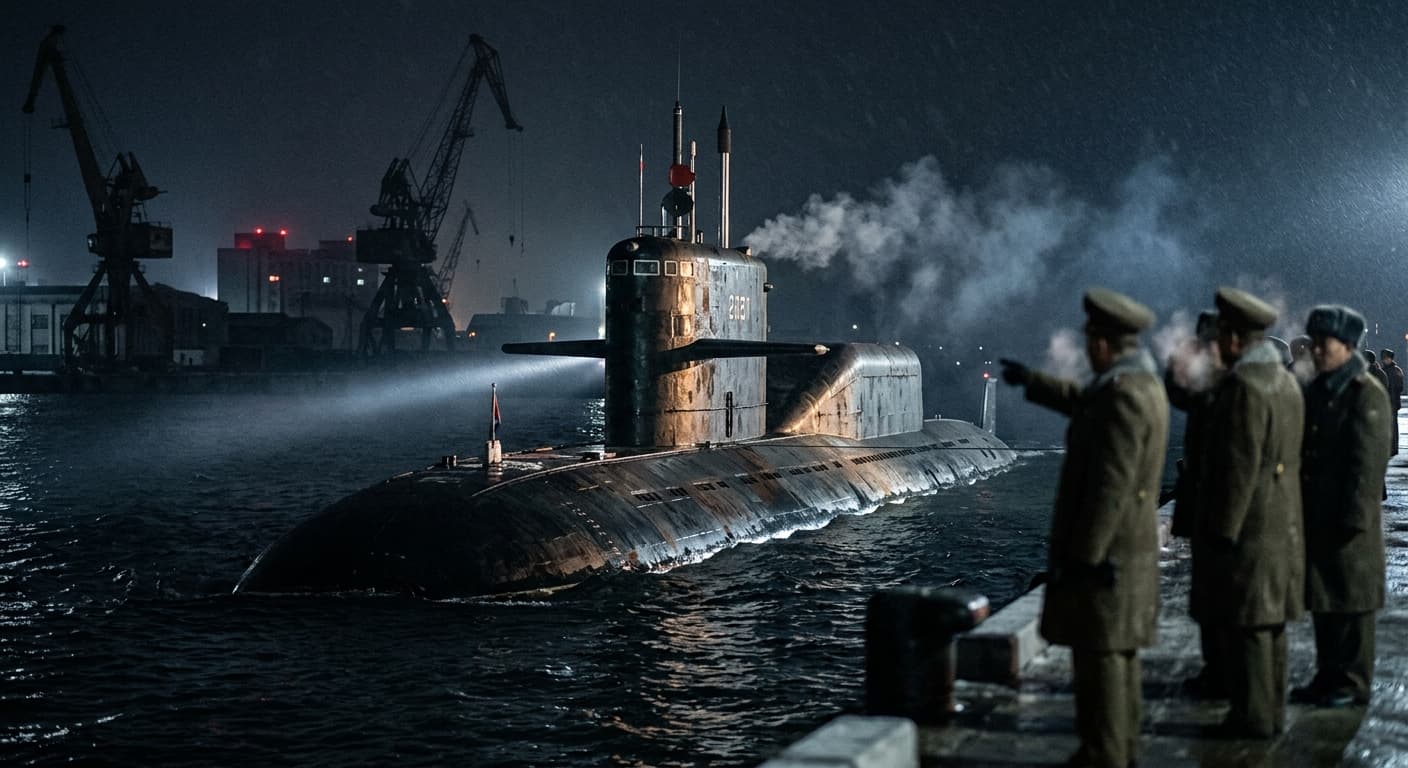
North Korea's Nuclear Navy Takes Shape as Kim Courts Moscow
Kim Jong Un commissions warship Choe Hyon, signals plans for 10,000-ton destroyers and hints at challenging Seoul's maritime boundary.
North Korea on Tuesday commissioned the Choe Hyon, a 5,000-ton destroyer armed with nuclear-capable cruise missiles, marking the first credible operational step toward Kim Jong Un's stated goal of a nuclear-armed navy. The move consolidates a strategic pivot away from coastal defense toward power projection and raises the stakes in an already fraught maritime rivalry with the
United States and South Korea.
At the Nampo shipyard ceremony, Kim declared the era of a purely defensive North Korean navy "over," framing nuclear-equipped warships as essential to what he called "maritime sovereignty"—language analysts read as preparation to unilaterally redraw the Northern Limit Line that separates North and South Korea, a boundary that has hosted multiple armed clashes since the Korean War. According to Al Jazeera, Kim said the nuclear arming of his fleet represents a "strategic course" to enable "multifaceted and efficient operation," though state media gave no details on his maritime sovereignty claim.
France 24 reported that analysts believe North Korea may be preparing to formally declare a boundary that encroaches on South Korean-controlled waters.
The Arsenal and the Rate of Build
The Choe Hyon carries anti-aircraft and anti-ship weapons, plus ship-launched ballistic and cruise missiles that Pyongyang says can carry tactical nuclear warheads. According to CNN, external experts acknowledge the system could pose burdens to South Korean security if used as a missile platform or crisis escalation tool, though its survivability in actual conflict remains unproven. North Korea tested the missiles aboard the vessel in March 2026.
Kim's ambition reaches well beyond a single destroyer. A France 24 report notes that the Kang Kon, a sister ship of the same class, capsized during launch in May 2025 but was refloated and relaunched in June; Kim announced it would enter service "soon." He also pledged to begin construction of 10,000-ton cruisers—vessels double the displacement of the Choe Hyon and closer to South Korean and US standards.
CNN reported that Kim called for shipyards to produce two new surface ships annually.
The pace suggests foreign assistance. Ewha University analyst Leif-Eric Easley told CNN that the speed and scale of construction "could indicate" significant "material and technological assistance from Russia." Deepening Moscow-Pyongyang ties—driven by North Korea's role in Ukraine—provide both the need and the means. France 24 and PT both note that South Korean officials believe the Choe Hyon was built with Russian help.
What Comes Next
Watch two developments. First, the Kang Kon's operational readiness before year-end—skepticism about its seaworthiness remains, and if it fails, Kim's timeline fractures. Second, any formal statement from Pyongyang on maritime boundaries in the western sea. A redraw would force Seoul and Washington into an immediate choice between acceptance (legitimizing the move) and interdiction (risking escalation). Kim has already rejected the Northern Limit Line and used previous naval assertiveness as cover for provocations. A nuclear-capable destroyer gives him tools to back words with steel.
Discover more

Global Politics
US Seizes Iranian Ship, Tensions Surge
The US seizure of the Iranian ship Touska highlights a shift in control over the Strait of Hormuz, favoring Iran's strategic position.

India
India-South Korea $50B Trade Expansion Plan
India and South Korea target $50 billion in bilateral trade by 2030, focusing on industrial cooperation and strategic alignment amid US pressures.
Global Politics
Trump's Conflicting Messages on Iran War
Trump's mixed messages on Iran reflect a strategy of audience management, benefiting Tehran amid a complex geopolitical landscape.

Conflict & Security
Drone Warfare Killing Aid Workers at Unprec
Over 1,000 humanitarian workers killed in three years as cheap armed drones collapse legal protections. Gaza, Sudan, Ukraine, and DRC see deliberate targeting of aid convoys and hospitals with zero prosecutions.