North Korea's Nuclear Navy Ambitions
Kim Jong Un unveils plans for a nuclear-armed fleet.
Model Diplomat3 min readAsia
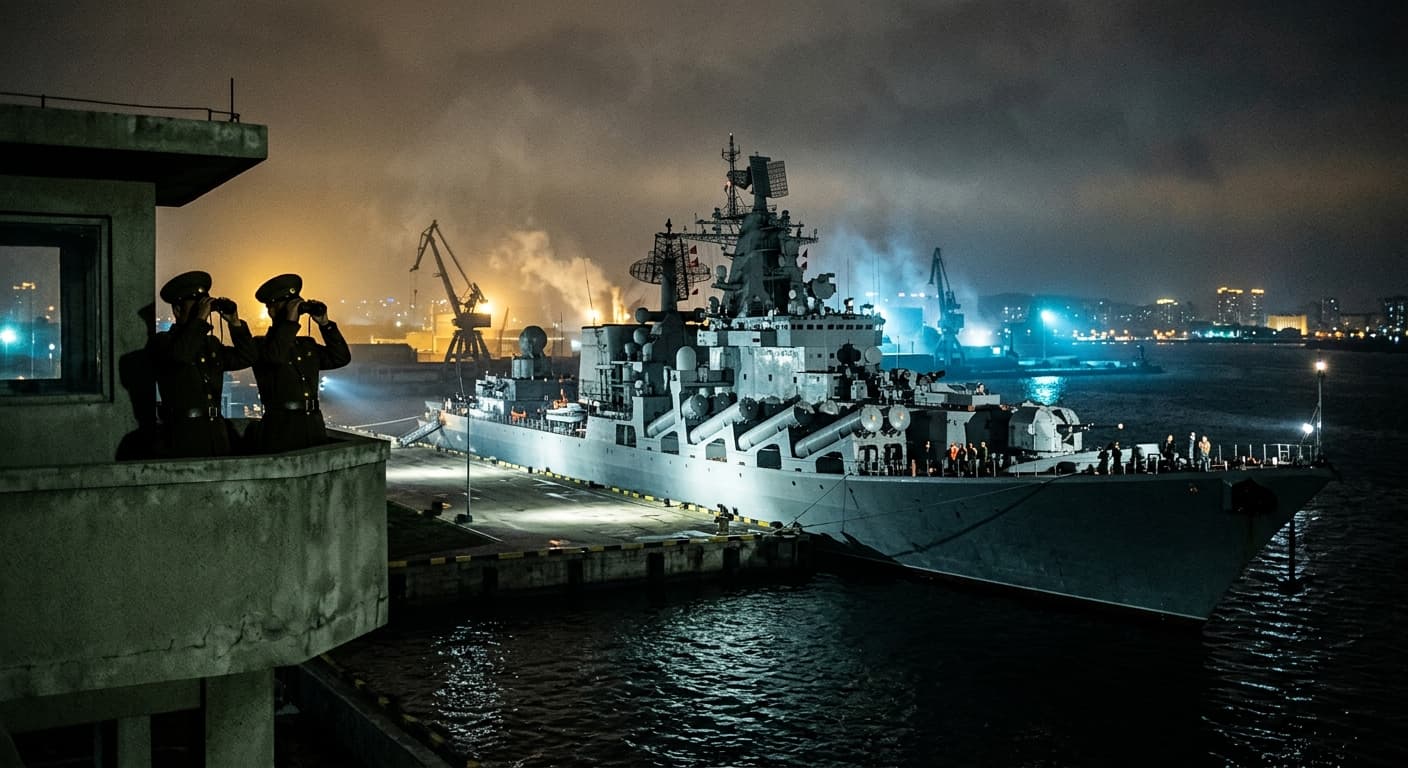
Kim's Nuclear Navy Makes a Statement on the Seas
North Korea commissions its largest warship as a 5,000-ton destroyer signals accelerating ambitions for a nuclear-armed fleet.
North Korea commissioned its largest warship to date on June 23, the destroyer Choe Hyon, a 5,000-ton vessel that leader Kim Jong Un explicitly tied to advancing a nuclear-armed navy. At the ceremony in Nampho, Kim announced an ambitious five-year shipbuilding program: two new surface vessels annually, culminating in 10,000-ton strategic warships that would match the displacement of major US Navy destroyers. The move signals Pyongyang's determination to project sea-based nuclear strike capacity directly into a deterrence calculus it believes is destined for escalation.
The Choe Hyon is no symbolic vessel. According to KCNA, the destroyer is equipped with anti-aircraft missiles, anti-ship missiles, cruise missiles, and ballistic missiles capable of carrying nuclear warheads. Kim oversaw a cruise missile test from the ship in April and stressed that the platform had passed 14 months of operational trials with "satisfying results." The warship represents the tangible outcome of a nuclear strategy Kim has pursued since the 2019 Hanoi summit collapsed—evidence that Pyongyang treats its nuclear arsenal as permanent, not negotiable.
Why North Korea Needs a Navy
For decades, the North Korean navy was a coastal defensive force, crippled by obsolescence and resource scarcity. Kim now explicitly frames that weakness as a liability the regime can no longer afford. In remarks to the commissioning ceremony, he said warships like the Choe Hyon showed the navy had become "something incredible beyond imagination" and announced that building modernized naval bases was now an "urgent and essential task."
The context matters: South Korea operates over 10 vessels displacing more than 5,000 tons. North Korea now has two. The 10,000-ton target carries heavy symbolism—it sends a message that Pyongyang will not acquiesce to southern naval dominance. But the strategic rationale cuts deeper. Lim Eul-chul, a North Korea expert at Kyungnam University, told AFP that ship-launched cruise missiles armed with tactical nuclear warheads would "significantly increase the burden on South Korean and US militaries and drive up the costs of defence and deterrence." With the United States maintaining roughly 28,500 troops in South Korea, Pyongyang's logic is clear: make intervention more expensive, less calculable, more risky to the alliance.
The Five-Year Timeline
Kim's announcement came days after a Workers' Party meeting where he pledged to accelerate military modernization broadly, accusing Washington and Seoul of pushing the peninsula "to the brink of a nuclear war." The shipbuilding plan is explicit: one 5,000-ton-class destroyer (the Kang Kon, already under repair after a launch accident last year) will be commissioned soon, followed by annual launches of larger vessels, including at least one 10,000-ton cruiser per year. If executed, this would constitute a qualitative shift in North Korea's naval posture by 2031.
However stated those goals, execution matters. North Korea's industrial base has never sustained a shipbuilding rate of two major warships annually. Sanctions target dual-use materials, welding technology, and propulsion systems. Yet the announcement signals both ambition and resolve—Kim is staking his military modernization strategy on a capability that, once realized, would reshape the balance in the Yellow Sea and Korea Strait.
What to Watch
The Kang Kon commissioning is the next test. If it follows the Choe Hyon into operational service within the announced timeframe, the program gains credibility. Watch also for US and South Korean countermeasures: expanded naval deployments, acceleration of Seoul's independent submarine program, or upgrades to air defense systems. And monitor sanctions enforcement—whether Beijing or Moscow tighten controls on materials North Korea needs, or whether the regime finds new channels. The five-year window matters: it forces a reckoning on whether Pyongyang can bridge the gap between declarative ambition and industrial reality.
Discover more

Global Politics
US Seizes Iranian Ship, Tensions Surge
The US seizure of the Iranian ship Touska highlights a shift in control over the Strait of Hormuz, favoring Iran's strategic position.

India
India-South Korea $50B Trade Expansion Plan
India and South Korea target $50 billion in bilateral trade by 2030, focusing on industrial cooperation and strategic alignment amid US pressures.
Global Politics
Trump's Conflicting Messages on Iran War
Trump's mixed messages on Iran reflect a strategy of audience management, benefiting Tehran amid a complex geopolitical landscape.

Conflict & Security
Drone Warfare Killing Aid Workers at Unprec
Over 1,000 humanitarian workers killed in three years as cheap armed drones collapse legal protections. Gaza, Sudan, Ukraine, and DRC see deliberate targeting of aid convoys and hospitals with zero prosecutions.