Nigeria's Oil Windfall Fuels Hunger Crisis
IMF warns of rising poverty amid oil price surge
Model Diplomat8 min readAfrica
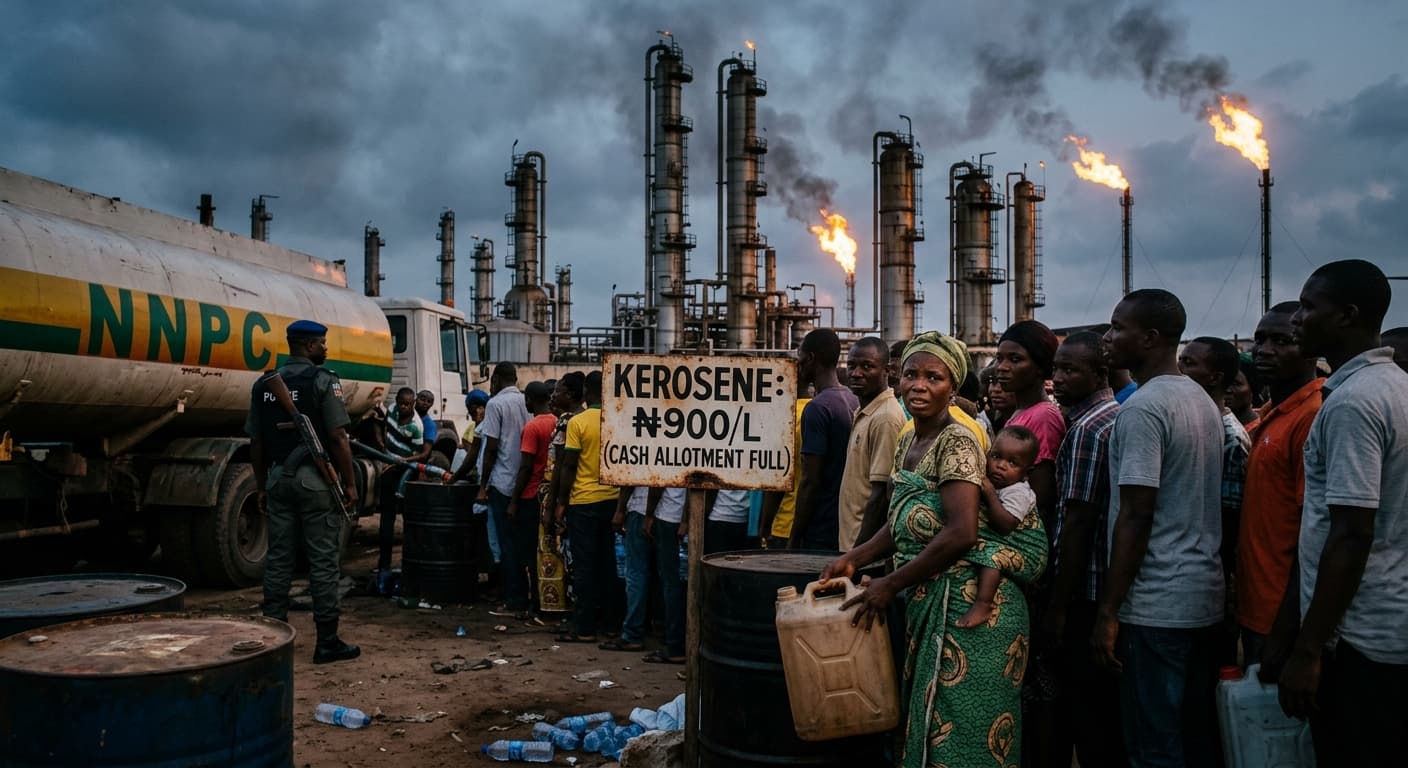
Nigeria's Oil Windfall Is Feeding Its Hunger Crisis, IMF Warns
The IMF's July 2026 outlook holds Nigeria's growth at 4.1% but says higher fuel and food prices will push more of its 230 million people into poverty and acute hunger.
The International Monetary Fund on July 8, 2026 held Nigeria's growth forecast at 4.1% for this year and 4.3% for 2027, yet used the same World Economic Outlook Update to warn that higher prices for essential commodities will deepen poverty and food insecurity in Africa's largest economy. The paradox at the centre of the report is Nigeria's alone: the oil-price surge from the Middle East war has delivered a fiscal windfall to Abuja while simultaneously pushing an additional 7.6 million Nigerians toward acute hunger by mid-year, according to the
Cadre Harmonisé food-security framework. The stabilisation Bola Tinubu paid political capital for is holding at the top of the economy and cracking at the bottom.
The number that matters is not 4.1%
The IMF's headline growth figure is the least interesting line in the report. What matters is the reversal on inflation. The Fund's May 2026 Article IV staff report now projects end-2026 headline inflation at 17% year-on-year — roughly 3.5 percentage points higher than staff had pencilled in before the February 28, 2026 outbreak of the US–Israel–Iran war shut down shipping through the Strait of Hormuz.
That is a Nigeria-specific inflation shock riding on a global commodity shock. The World Bank's April 2026 Commodity Markets Outlook forecast Brent averaging $86 per barrel in 2026, up from $69 in 2025, with energy prices rising 24% and overall commodities up 16% — the biggest energy-price surge since Russia's 2022 invasion of Ukraine. The report's special focus is the load-bearing finding: a geopolitically driven 1% decline in oil output raises prices by an average of 11.5%, with a fertiliser price peak roughly a year later. For a country whose poor households spend up to 70% of income on food, per the
World Bank Nigeria brief, that pass-through is the poverty channel.
Inflation had been the Tinubu government's clearest reform win. It fell from 34.8% at end-2024 to 15.06% by February 2026 on the rebased CPI series, per a Hequation Review macro assessment by economist Olaniyi Evans. The IMF now expects it to rise again before resuming its downward path — a political inconvenience for a government heading into a 2027 election cycle that Tinubu has already told the party he intends to contest.
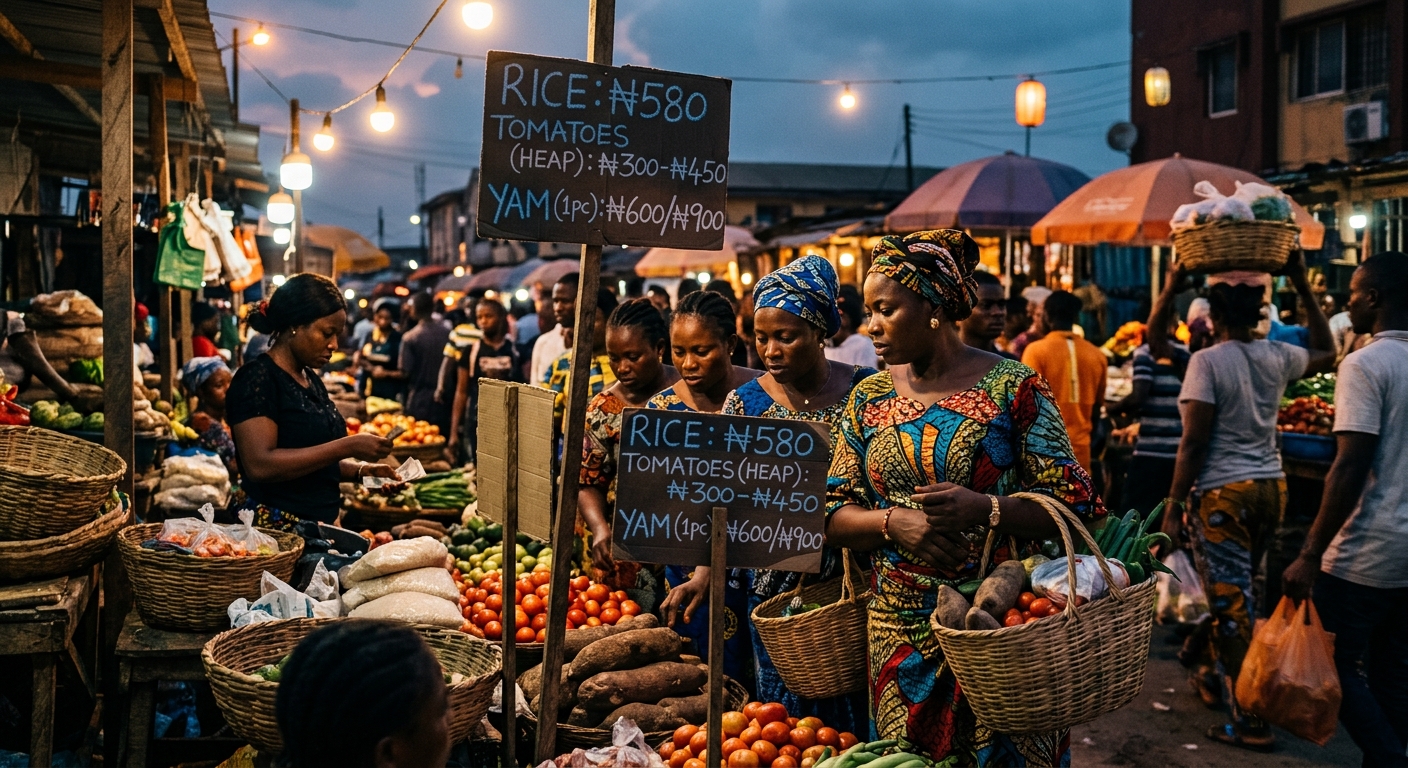
The hunger map is drawn by insecurity, not by oil
The IMF is diplomatic about it. The Executive Board's June 1, 2026 communiqué states that poverty reached 63% on the national line in 2025 and that 27 million Nigerians faced food insecurity that autumn. The
Cadre Harmonisé analysis published in October 2025 puts the projected mid-2026 figure at 34.8 million. Field data from the World Food Programme, published in a
May 2026 UNifeed briefing, shows the reason more starkly: 17 million people across nine conflict-affected northern states are in crisis, emergency or catastrophic hunger, with over 10,000 people in Borno state now in IPC Phase 5 — catastrophic — the first such reading in nearly a decade.
That is not a commodity-price story alone. It is what the IMF politely calls "deterioration in domestic security." Boko Haram and ISWAP attacks on displaced-persons camps have compounded the shrinking of humanitarian pipelines. The UN reported on January 24, 2026 that West and Central Africa aid cuts would leave 55 million people at crisis-level hunger during the June–August lean season, with Nigeria, Chad, Cameroon and Niger accounting for 77% of the caseload. WFP requires $89 million over the next six months just to sustain northern Nigeria operations, per the same
UNifeed brief — a figure it does not yet have.
Where the windfall goes, and who does not see it
Nigeria's terms of trade are, on paper, improving. The May 2026 IMF Article IV staff report projects the Nigerian oil price averaging $80.2/bbl in 2026, up from $68.3 in 2025, boosting exports of goods and services by 18.3% and pushing gross international reserves toward $58 billion. Executive Order 09, cited by Fund staff, has limited the Nigerian National Petroleum Corporation's upfront deductions and channelled more crude revenue into the Federation Account.
The problem is transmission. Nigeria removed its fuel subsidy on May 29, 2023, exposing pump prices to the global crude curve in real time — the structural point made by Evans in Hequation Review. When Brent spiked above $118/bbl in late March, according to a
World Bank blog on the war's commodity effects, Dangote Refinery lifted its ex-depot petrol price to ₦1,175/litre, cutting it only to ₦1,075 on March 10 after ceasefire signals from Washington, per
BBC News Pidgin. Diesel briefly touched ₦1,620/litre. Fertiliser and transport costs move next — with the World Bank pointing to a peak fertiliser-price effect roughly a year after an oil shock.
The distributional consequence sits in the World Bank's Macro Poverty Outlook: an additional 10 million Nigerians fell into extreme poverty (below the new $3.00/day 2021 PPP line) during 2025, taking the international poverty rate to 50.9%. The Bank projects a slow decline to 46.6% by 2028 — but only if food inflation continues to ease. The July 2026 IMF update is now flagging the opposite risk.
The safety net is not scaled to the shock
If the diagnosis is that commodity prices are hurting the poor, the treatment the IMF has prescribed for two years is the conditional and unconditional cash transfer programme funded by an $800 million IDA credit from the World Bank's NASSP-SU project. Progress is real, and inadequate. According to the Article IV staff report, 9.2 million households have been enrolled against a 15 million target, and each enrolled household has received at most three ₦25,000 (~$18) tranches since 2023. That is roughly $54 in cumulative cash relief per household over almost three years — against a food-price shock that has cut real household consumption by double digits.
The World Bank's own project monitoring document confirms rollout has run behind the December 2025 targets, held up by the integration of the National Social Register with biometric National Identification Numbers. Only households whose adult recipients pass biometric verification remain eligible — a rule the government adopted in March 2024 to plug leakages. It also slowed disbursement.
The IMF's Executive Directors, in the June 1, 2026 press release, pushed the point in unusually direct language:
"Completing the roll-out and budgeting for the cash transfer system is needed to alleviate poverty and food insecurity."
Translated: the fiscal windfall from higher oil prices must be recycled into transfers, not into off-budget spending or into reversing the subsidy reform — a temptation the authorities have again ruled out, per the staff report. On present arithmetic, the transfers do not close the gap. A ₦25,000 tranche in 2023 was worth about $32 at the parallel rate; the same tranche today is worth about $18 after the naira's depreciation. The nominal figure has not been indexed.
The regional dimension the IMF understates
Nigeria's hunger crisis is regionally networked. The same WFP data brief that flagged Borno's Phase 5 caseload noted that funding shortfalls forced WFP to cut its Nigeria caseload from 1.3 million people in the 2025 lean season to just 72,000 in February 2026, per UN News. US and European aid cuts announced across late 2025 are the proximate cause. When food assistance retreats, the WFP's David Stevenson
warned in July 2025, families face impossible choices: "endure increasingly severe hunger, migrate, or even risk possible exploitation by extremist groups."
That last phrase is the security economist's tell. In the Sahel and Lake Chad basin, hunger and insurgent recruitment are not parallel curves — they intersect. The African Union's Peace and Security Council has repeatedly flagged food insecurity as a driver of the coup belt from Bamako to Ouagadougou to Niamey. Nigeria — the AU's largest economy, ECOWAS's largest army — is the anchor state. A poverty shock in its north-east that pushes 34.8 million people into acute food insecurity is not just a Nigerian problem. It is the demand-side of the Sahel's supply of jihadist and criminal manpower.
What to watch
- September 2026 CBN Monetary Policy Committee meeting. The Central Bank of Nigeria has kept policy tight. If end-2026 inflation prints closer to 17% than to the pre-war disinflation path, expect a hold or a hike — and continued pressure on non-oil growth.
- October–November 2026 Cadre Harmonisé update. The next authoritative food-security count will show whether the mid-year 34.8 million projection undershot or overshot. A revision above 36 million would put Nigeria into its worst hunger year on record.
- 2027 federal budget submission. Watch the cash-transfer allocation line: the IMF and World Bank benchmark is a fully funded 15-million-household programme with indexed tranches. Anything less is a de facto choice to let the windfall bypass the poor.
- Strait of Hormuz throughput. The World Bank baseline assumes near-prewar shipping by late 2026. Every month of delay past October adds directly to Nigerian food and fertiliser prices.
Diplomat View
The IMF's July 2026 update is being read in Abuja as vindication — growth held, macro stability intact, the reformers still winning the argument. That reading is too generous. The reforms have stabilised the top of the Nigerian economy while allowing the shock-absorbing layer at the bottom to thin. The oil-price windfall is real, but so is the fact that Nigeria has 34.8 million acutely food-insecure people, an under-scaled cash-transfer system paying $18 tranches, and a security theatre in the north-east that WFP can no longer fully supply.
Our call: absent a doubling of cash-transfer coverage and an indexation of the tranche by end-2026, the 2027 election will be fought against a backdrop of hunger metrics visibly worse than in 2023, when Tinubu took office promising to end them. The forecast revises if two things happen — Strait of Hormuz shipping fully normalises before October 2026, and the 2027 budget lifts NASSP allocations by at least 50% in real terms. Both are possible. Neither is the base case.
The Bottom Line
The IMF is telling Abuja that Nigeria can grow at 4.1% and still send millions more of its citizens into hunger, because higher commodity prices lift the fiscus and squeeze the household at the same time. The reform dividend is real at the macro level and absent at the plate. Whether the Tinubu government recycles the oil windfall into indexed cash transfers, or lets it flow into the general budget, is the decision that will define both Nigeria's poverty trajectory and the Sahel's security one.
Discover more
US Politics
Congress Targets AI Chatbot Access for Terror
The House passed the Generative AI Terrorism Risk Assessment Act, focusing on AI's role in terrorism and potential surveillance implications.
Global Politics
Xi Jinping Calls China-Russia Ties 'Precious'
Xi Jinping's description of China-Russia ties as 'precious' reflects a strategic imbalance, with Beijing dictating terms in the partnership.

US Politics
House Ethics Committee Pushes Sexual Miscond.
The House Ethics Committee has shifted responsibility for sexual harassment settlement records to the Office of Congressional Workplace Rights, complicating disclosure efforts.

Conflict & Security
Drone Warfare Killing Aid Workers at Unprec
Over 1,000 humanitarian workers killed in three years as cheap armed drones collapse legal protections. Gaza, Sudan, Ukraine, and DRC see deliberate targeting of aid convoys and hospitals with zero prosecutions.