New Caledonia's Loyalists Win South
Pro-France bloc claims 28 of 40 Southern Province seats.
Model Diplomat3 min readoceania
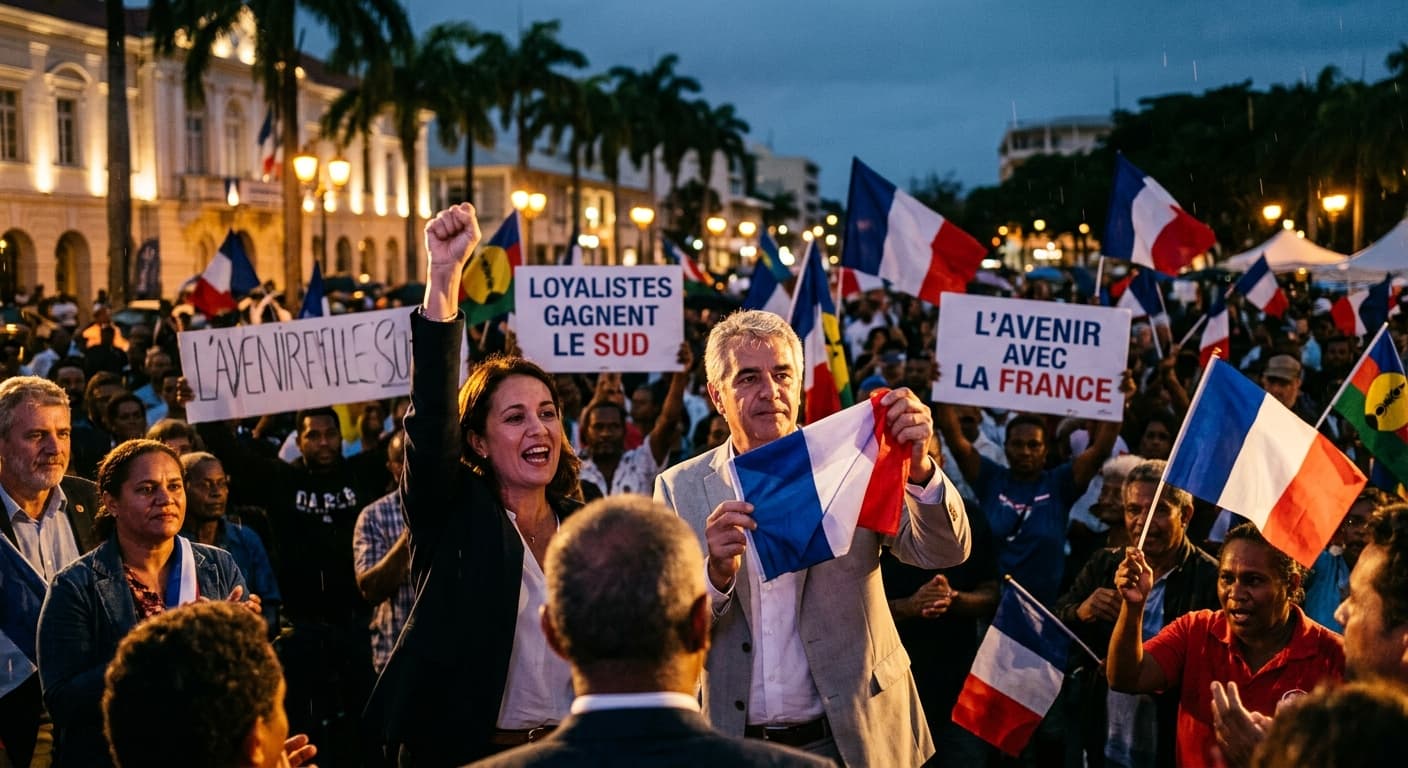
New Caledonia's Loyalists Win the South — But the Real Fight Begins in July
Pro-France bloc seizes 28 of 40 Southern Province seats as turnout dips. The result hands Paris a negotiating partner, not a mandate.
The joint list of Les Loyalistes and Le Rassemblement secured roughly 50% of the vote in New Caledonia's Southern Province elections on Sunday, projected to claim 28 of 40 seats in the territory's wealthiest and most populous region, according to preliminary results reported by Anadolu Agency. The pro-independence FLNKS is expected to take seven seats, with the centrist Oceanian Awakening party capturing about five.
The outcome was never in serious doubt. What matters is how it was achieved — and what it means for the talks that follow.
The vote, held under the watch of 2,500 police officers deployed across the archipelago, was the first provincial election since 2019 and had been delayed since 2024, when France's push to expand the electoral roll triggered the worst violence New Caledonia had seen since the 1980s. Turnout landed at 63.7%, down from 66.5% in 2019 — a drop that, in a territory where abstention has long been a political statement, signals that the election did not resolve the underlying legitimacy crisis.
Structure rewarded unity
The loyalist bloc's dominance owes as much to electoral arithmetic as to voter preference. The Southern Province fielded 11 competing lists, but a 5% threshold — roughly 6,300 votes — meant that only the largest blocs could clear the bar. Several middle-ground lists, including one led by veteran Kanak journalist Walles Kotra and another backed by dissident French Senator Georges Naturel, attempted to carve a path between the historic pro- and anti-independence poles, as PINA / Islands Business reported. None appear to have crossed the threshold.
The fragmentation among centrist and pro-independence forces is a structural gift to Sonia Backès and the loyalist camp. A united conservative list facing a splintered field is the oldest story in electoral politics — and it worked exactly as designed. Votes that might have gone to parties advocating a "free association" middle path were effectively wasted, padding the loyalist seat share without a corresponding surge in popular support.
What Paris wanted
France needed this result. The Bougival Accord of July 2025 — a 13-page compromise that would have created a "State of New Caledonia" within the French republic, with its own nationality and control over foreign policy — was rejected by the pro-independence Caledonian Union (UC) party as "an agreement to integrate [New Caledonia] into France under the guise of decolonization," as
IPS News reported. The French Parliament also balked at the deal. Both sides killed it.
French Prime Minister Sébastien Lecornu has since secured a commitment from all parties to resume negotiations in July, according to RNZ. The loyalist win in the South — the province that concentrates New Caledonia's population, nickel industry, and French expatriate community — gives Paris an interlocutor with a clear electoral mandate to hold the line: the three independence referendums (2018, 2020, 2021) all returned majorities for remaining French, and the loyalists have said they will not budge from that result.
But that mandate has a clock. The French presidential election in April 2027 means the window for legislating any new status arrangement is narrow — perhaps six to nine months once the collegial government is formed in July.
What to watch
The Southern Province result is only one piece of the chessboard. The composition of New Caledonia's territorial Congress — determined proportionally from all three provincial assemblies — will set the balance of power for the collegial government and its president. The North and Loyalty Islands provinces lean pro-independence, which could deny the loyalists an outright majority at the territorial level despite their Southern dominance, as Al Jazeera flagged in its coverage.
The immediate test is whether the FLNKS enters the July talks with France in good faith or uses the electoral roll expansion — which added 10,500 voters born after 1998 — as grounds to delegitimize the process. The UC party has already walked once. A second walkout would leave Paris negotiating with itself.
The nickel industry is the unspoken variable. Two of three smelters are inoperational. Economic desperation in Kanak communities is rising. The security presence that delivered a peaceful vote on Sunday does nothing to address the material conditions that produced the 2024 riots. France can secure a ballot box. It cannot secure consent.
Discover more

US Politics
SNAP Food Assistance Faces Legal Challenges
In 2026, SNAP faces stricter eligibility rules and mounting legal challenges, threatening food assistance for the millions of Americans who rely on the program.
US Politics
Congress Targets AI Chatbot Access for Terror
The House passed the Generative AI Terrorism Risk Assessment Act, focusing on AI's role in terrorism and potential surveillance implications.
India
Modi's Women’s Convention in Varanasi
Modi's Varanasi rally frames women's reservation as a national mission, targeting the 2027 Uttar Pradesh elections with a strategic narrative.

Conflict & Security
Drone Warfare Killing Aid Workers at Unprec
Over 1,000 humanitarian workers killed in three years as cheap armed drones collapse legal protections. Gaza, Sudan, Ukraine, and DRC see deliberate targeting of aid convoys and hospitals with zero prosecutions.