NATO's Article 5 Crisis
Trump's skepticism challenges NATO's core mutual defense promise.
Model Diplomat3 min readEurope
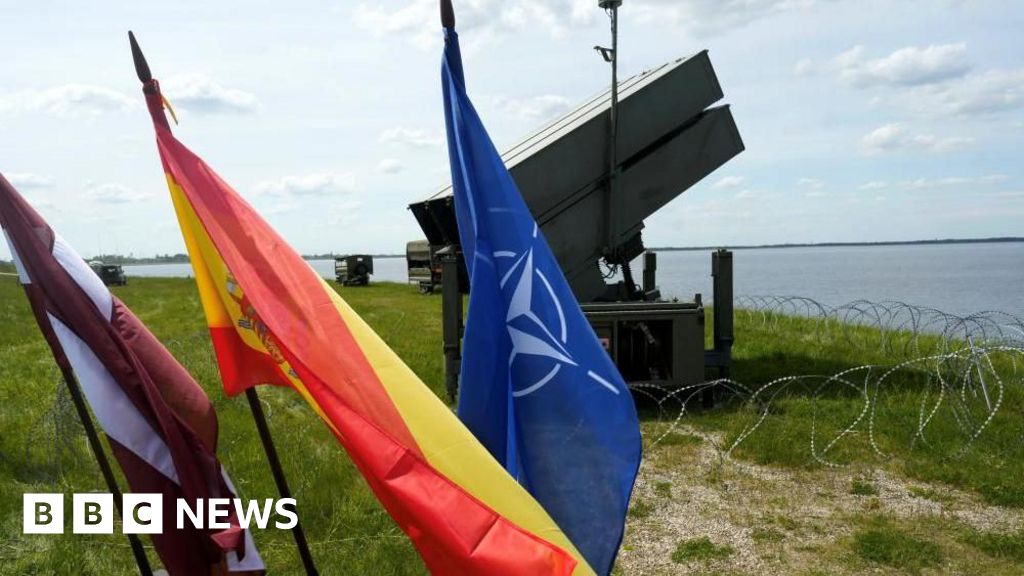
NATO's Article 5 Crisis: When the Alliance's Core Promise Rings Hollow
Trump's open skepticism about collective defense has turned NATO's founding guarantee into a live political variable — and Europe is scrambling to adapt.
The BBC's September 2025 explainer on NATO's founding articles landed at an inflection point: for the first time since the alliance was signed in 1949, the credibility of Article 5 — the mutual defense clause that treats an attack on one member as an attack on all — is being eroded not by an adversary, but by the alliance's own dominant power.
The Leverage Problem
The United States contributes roughly 62% of NATO's total defense spending. That numerical dominance is the structural fact that makes Trump's rhetorical skepticism so damaging. He doesn't need to formally withdraw — Reuters reported in April 2026 that legal and constitutional hurdles make unilateral exit unlikely without a two-thirds Senate vote. What he can do is degrade the alliance from within: redeploying the 84,000 U.S. troops stationed in Europe, closing bases, or simply repeating publicly that he's unsure Washington would honor Article 5.
At the Hague Summit in June 2025, Secretary-General Mark Rutte insisted there was "no doubt" about U.S. commitment. But the fact that he had to say it at all illustrates the damage. NATO's deterrence is ultimately psychological — it works only if adversaries believe Article 5 is automatic. Al Jazeera's April 2026 analysis concluded the alliance is "closer to a break than ever," with U.S. credibility already structurally weakened regardless of formal membership status.
Who Loses, Who Adapts
The clearest loser is NATO's eastern flank — the Baltic states, Poland, and Romania — which rely most heavily on the Article 5 guarantee as a deterrent against Russia. Their security calculus is built on the assumption that an attack triggers an automatic American military response. Trump's ambiguity hollows that out.
The secondary casualty is alliance cohesion on spending. Czech Republic lawmakers approved a 2026 defense budget at just 1.7% of GDP, below the 2% NATO target, despite direct warnings from the U.S. ambassador. Prague's Babiš-led government is betting that free-riding carries limited consequences — a calculation made easier by America's own mixed signals.
The unexpected winner: European strategic autonomy. France and Germany — historically divided on bypassing NATO structures — are now aligning on independent European defense frameworks, accelerating an EU defense spending push that Ursula von der Leyen called a "once-in-a-generation tectonic shift" at the Hague summit.
What Article 4 Now Does That Article 5 Can't
Article 4 — which allows any member to call consultations when it feels threatened — has quietly become the more operationally reliable mechanism. It requires only a request, not consensus on military response, making it a lower-stakes escalation tool that doesn't depend on U.S. political will. Expect Article 4 invocations to increase as a diplomatic signaling tool in international relations precisely because Article 5's deterrent weight has become conditional.
What to Watch Next
The next hard deadline is NATO's 2026 summit, where members are expected to formally raise the defense spending floor beyond 2%. If Trump conditions U.S. participation on allies hitting a 5% GDP target — the figure he floated at The Hague — expect at least six member states to fall short, handing Washington a fresh pretext to reduce its commitment. Watch whether Poland, now spending above 4% of GDP, breaks from the consensus to back Trump's threshold, isolating Germany and the southern flank states. That split, not a formal U.S. withdrawal, is the scenario most likely to reshape the alliance's future.
Discover more
Global Politics
Trump's Conflicting Messages on Iran War
Trump's mixed messages on Iran reflect a strategy of audience management, benefiting Tehran amid a complex geopolitical landscape.
India
Romanian Coalition Party Demands PM Resign
Romania's Social Democrats withdrew from coalition, joining far-right AUR to topple PM Bolojan, risking €10 billion in EU funds by August 2026.

International Relations
Pakistan's Key Role in US-Israel-Iran Meddle
Pakistan is seeking to mediate the US-Israel-Iran conflict, balancing high-stakes diplomacy against severe economic pressures and steep regional challenges.

Conflict & Security
Drone Warfare Killing Aid Workers at Unprec
Over 1,000 humanitarian workers killed in three years as cheap armed drones collapse legal protections. Gaza, Sudan, Ukraine, and DRC see deliberate targeting of aid convoys and hospitals with zero prosecutions.