NATO's 12-Nation Minerals Pact Explained
A new alliance project to stockpile critical raw materials
Model Diplomat8 min readEurope
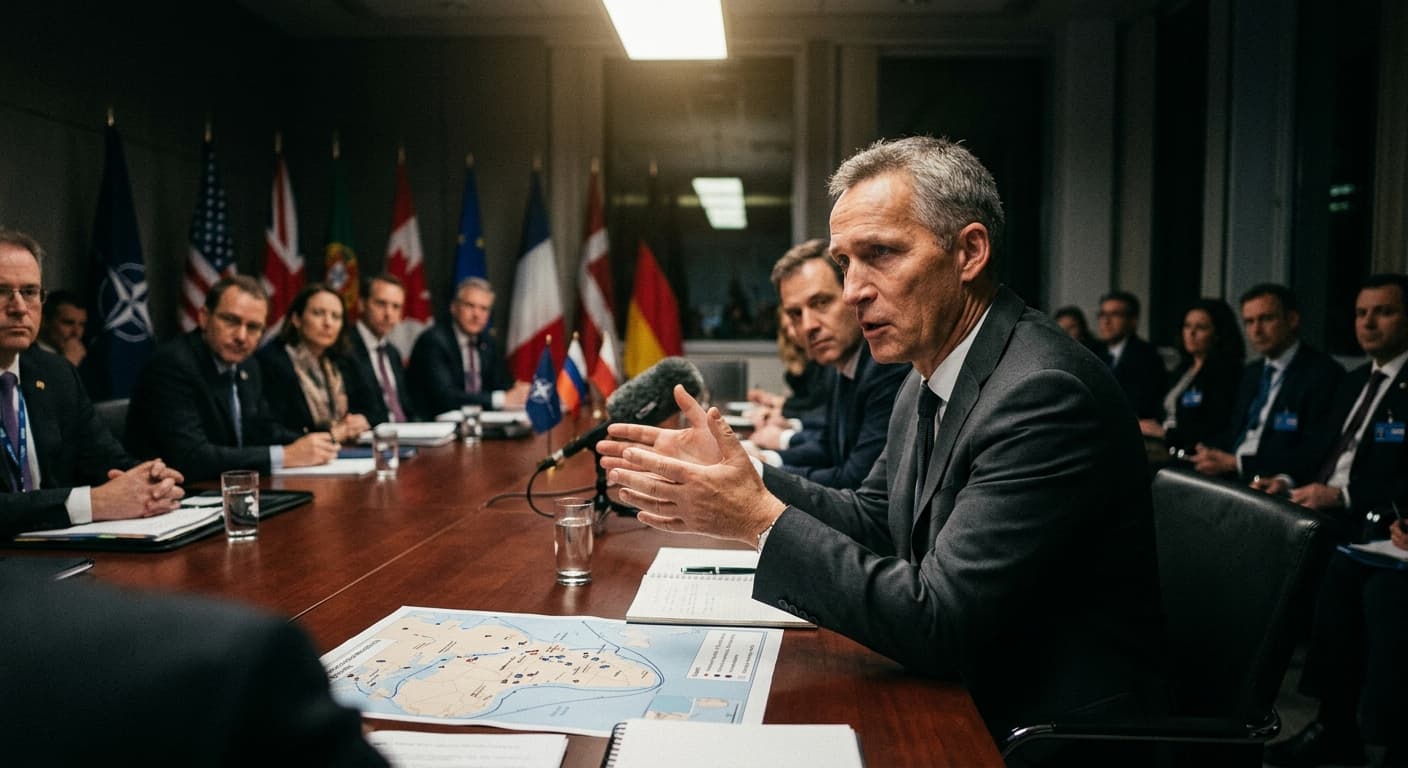
NATO's 12-Nation Minerals Pact: Stockpiles Without Refineries
NATO's July 2026 Ankara critical raw materials project unites 12 allies to stockpile rare earths and tungsten — but the absent five reveal a deeper split in Western supply-chain strategy.
NATO Secretary General Mark Rutte on July 7, 2026 launched a 12-nation High Visibility Project on defence critical raw materials at the Ankara summit — and the most consequential fact about it is who is not in the room. The United States, United Kingdom, France, Germany and Poland — the five allies that spend the most, buy the most, and set the technology frontier for Western defence — all declined to join. The pact is real, useful, and defensively rational. It is also an insurance policy for the middle of the alliance, not a strategic answer to China's rare-earth chokehold, because it stockpiles ore and ingots but does almost nothing about the refining bottleneck where Beijing's leverage actually sits.
What was signed, and what it does not do
The project brings together Belgium, Canada, Denmark, Finland, Greece, Italy, Luxembourg, the Netherlands, Norway, Spain, Sweden and Türkiye to coordinate "the acquisition, storage, transport, and management of critical raw materials, components, and recycled products essential for defence production," according to the NATO press release. It is scaffolded on the alliance's December 2024
list of 12 defence-critical materials — aluminium, beryllium, cobalt, gallium, germanium, graphite, lithium, manganese, platinum, rare earth elements, titanium and tungsten — and on the June 2024 Defence-Critical Supply Chain Security Roadmap.
The Ankara Summit Declaration frames the project as one strand of a broader industrial push, alongside more than $50 billion in new procurements and a EUR 27 billion investment to modernise NATO fuel storage and pipelines extending into the eastern flank. Rutte, at the same forum, also unveiled the NATO Engine — a factory-matching network — and the
NATO Front Door for Industry, a single procurement gateway for companies.
The materials focus, however, is narrower than it looks. NATO's updated Defence Production Action Plan commits allies to "explore the establishment of multinational stockpiling initiatives" and to "identify… suitable substitute materials." What it does not do — and the Ankara text does not do either — is fund refineries, separation plants, or magnet-manufacturing capacity at scale. That is the load-bearing gap.
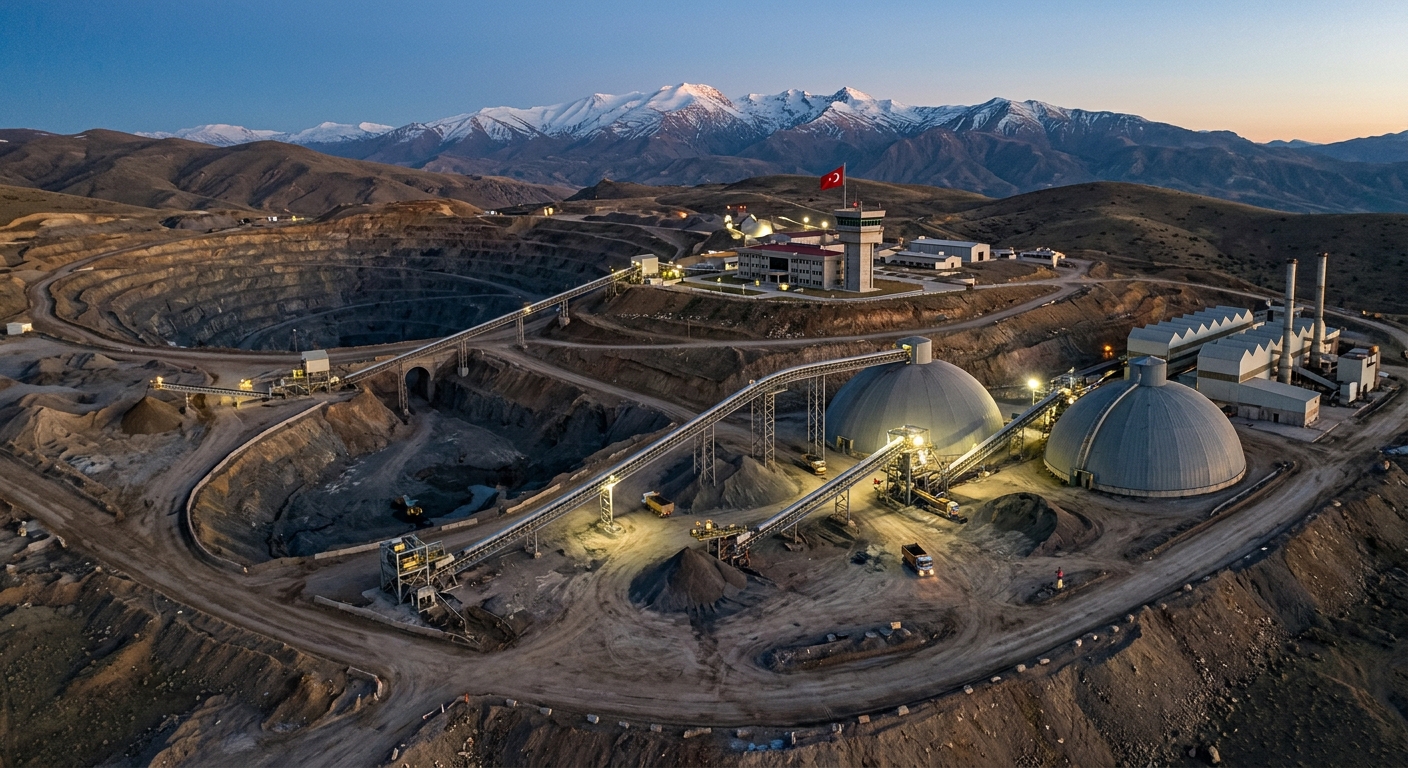
Why the chokepoint is refining, not extraction
China's dominance is not primarily geological. It is metallurgical. A June 2026 RUSI report by Henry Sanderson notes that Beijing "dominates all stages of the rare earth supply chain — from extraction, to separation, to the processing and manufacturing of magnets," and has "only tightened its grip," according to the RUSI paper on rare earth supply chains. ETH Zurich's Center for Security Studies puts the numbers at "around 60 per cent of global mining and 92 per cent of global production" for refined rare earths, per its
April 2026 analysis.
Beijing's coercion architecture has moved just as fast. According to a Council of the EU working document, the EU-US Critical Minerals Action Plan records that on April 4, 2025 China imposed licence controls on seven rare earths — samarium, gadolinium, terbium, dysprosium, lutetium, scandium and yttrium — plus permanent magnets. In October 2025, MOFCOM extended controls with extraterritorial reach, requiring foreign entities to obtain Chinese licences even for third-country re-exports, notes a July 2025
European Parliament resolution tackling China's export restrictions. In January 2026, Beijing banned dual-use exports to Japanese military end-users after Prime Minister Sanae Takaichi's Taiwan remarks, per a
SIPRI backgrounder on China's export control framework.
Stockpiling helps for a first shock — but the U.S. Geological Survey has estimated that a full Chinese gallium-and-germanium cut-off would cost the U.S. up to $8.2 billion in GDP in the short term, with the more consequential effect being "constrained production of specific key products, especially those crucial for the military," per the Swedish Institute of International Affairs analysis of China's mineral export controls. Stockpiles buy months. Only refineries buy independence.
The five that stayed out — and why
Read the roster carefully. The five biggest NATO defence economies are absent. The United States is running its own parallel architecture: Section 232 tariffs on critical minerals concluded in October 2025, then the Trump-era Pax Silica and FORGE frameworks, plus federal equity in MP Materials, the country's only operating rare-earths mine. The Observer Research Foundation's June 2026 study describes Washington's approach as multilateral solutions "with like-minded partners" — but on U.S. terms, through minilateral vehicles it controls.
The United Kingdom is publishing its own Critical Minerals Strategy, a track it has kept national since discontinuing its strategic stockpile in 1984, according to a Carnegie Endowment analysis of NATO mineral risks. France maintains a sovereign stockpile through Orano and Eramet and has historically resisted delegating strategic-materials policy to Brussels or NATO. Germany just unlocked a EUR 500 billion special defence and infrastructure fund and prefers bilateral offtake through Rheinmetall and BASF, per the Danish Institute for International Studies'
military-minerals briefing. Poland — Europe's most aggressive arms buyer since 2022 — is focused on immediate deliveries from Seoul and Washington, not stockpile diplomacy.
That leaves the Ankara pact as, effectively, a club of midsized upstream holders and refining hubs — with Türkiye's Beylikova rare-earths deposit as the geological trump card, Belgium's Umicore as the recycling anchor, Canada, Norway, Sweden and Finland as the raw-materials backstop, and Italy and Spain as demand aggregators.
The Ankara subtext: Türkiye's mineral bid
Choosing Ankara as venue is not decorative. Türkiye announced the 694-million-tonne Beylikova rare-earth deposit in Eskişehir in 2022 — described as the world's second-largest single-site reserve, with 12.5 million tonnes of rare-earth oxides in situ, in an MP-IDSA assessment of Türkiye's rare-earth prospects. Ankara wants to be a top-five producer.
But the deposit is unprocessed and technologically stranded. Türkiye's Eti Maden pilot plant handles 1,200 tonnes of ore annually — a rounding error against Chinese capacity. An October 2025 EDAM paper notes that Türkiye signed a 2024 mining MoU with China that has offered "limited prospects for technology transfer," while a May 2024 U.S.–Türkiye joint statement opened separate talks on Beylikova — a track that has attracted "both domestic and international attention", according to EDAM analyst Çiğdem Üstün. The European Commission has not designated a single Turkish project among its 47 strategic CRM projects announced in March 2025, nor the 13 extra-EU projects added in June, per
IISS's 2025 assessment of Europe's defence supply chains.
Ankara reads the NATO project as its European entry ticket. Rutte reads Ankara as a hedge against U.S. unilateralism on minerals. Both bets are transactional, and both are readable in real time.
The energy-security spillover
The materials story cannot be separated from the energy story — a point the Ankara Summit Declaration essentially concedes. The EUR 27 billion NATO fuel-pipeline investment, the counter-drone Drone Edge programme (over USD 40 billion over five years), and integrated air-and-missile defence procurements all consume the same twelve materials.
The IISS calculates that EU rare-earth demand alone is "expected to increase six-fold by 2030 and seven-fold by 2050," and lithium demand "twelve-fold by 2030 and twenty-one-fold by 2050," according to its March 2025 study of critical raw materials and European defence. That demand curve is the collision point: energy-transition build-out, rearmament, and semiconductor policy are all bidding for the same tonnes.
Bruegel's June 2026 analysis notes that "even where direct EU dependence on Chinese processed CRMs appears limited, China may still have a hold over downstream chokepoints in intermediate products, such as magnets," in its policy brief on CRM supply security. Neodymium-iron-boron magnets sit in F-35 actuators, Tomahawk guidance, offshore wind gearboxes and EV drive motors. The NATO project's recycling emphasis — "recycled products essential for defence production," per the alliance's own language — is a tacit acknowledgment that new supply cannot scale fast enough.
The counter-view: incrementalism as strategy
The defence of the Ankara pact, articulated by NATO officials on background, is that a smaller, faster club moves quicker than a 32-nation consensus. The 12 signatories can pilot joint stockpile mechanics, offtake contracts and recycling infrastructure without waiting for Washington's pricing tools — the EU-U.S. plan floats "border-adjusted price floors, standards-based markets, price gap subsidies, or offtake-agreements," but those instruments remain notional in the EU-U.S. Action Plan text.
There is also a WTO dimension. At the March 2025 WTO Committee on Market Access, both the EU and U.S. formally logged concerns that China's licensing regime lacks transparency and may breach Article XI of GATT 1994, per the WTO Trade Concerns registry. Prior WTO rulings — DS431/432/433 — went against Beijing on rare-earth restrictions. Legal challenge is on the table; it is slow, but it is coming.
Analysts at the South China Morning Post's Ankara coverage frame the projects as squarely aimed at "counter[ing] Russia and China," a reading confirmed by NATO's own materials, according to the South China Morning Post's summit dispatch. What is less noted is that the counter-China piece is being run by the alliance's second tier, not its first.
Diplomat View
The Ankara critical-materials pact is a real accomplishment for the 12 countries that signed it — and a diagnostic finding for everyone else. It confirms that NATO, as an institution, cannot yet run an alliance-wide industrial-security policy for defence materials, because the largest members prefer bilateral leverage to multilateral solidarity. It also confirms that Türkiye has purchased itself a seat at the Western critical-minerals table without conceding on any of the political disputes that keep it out of EU strategic projects.
The specific, falsifiable call: within 18 months, the Ankara pact will produce joint stockpile agreements on tungsten, antimony and heavy rare-earth magnets — but it will not fund a single greenfield separation plant on allied territory. Refining capacity will remain the binding constraint on Western rearmament through the end of the decade. What would change this forecast: a U.S. decision to join the High Visibility Project (unlikely under current White House unilateralism); a Franco-German push to fold the pact into the EU Critical Raw Materials Facility (possible if Berlin's EUR 500 billion fund is redirected); or a Chinese export shock severe enough to force Washington and Brussels into a single procurement architecture. Absent those, the pact remains what it is: a serious insurance policy on a problem that requires reconstruction.
What to watch next
- November 2026: The one-year suspension of China's October 2025 extraterritorial rare-earth controls, agreed at the Trump-Xi summit, expires. Renewal or lapse will set the price signal for every stockpile decision in Europe.
- December 2026: NATO Defence Ministerial — first review of Ankara-summit deliverables, including whether additional allies join the High Visibility Project or launch parallel tracks.
- Q1 2027: EU Critical Raw Materials Facility investment decisions on the first tranche of strategic project financing — the moment when Türkiye's Beylikova deposit either receives European capital or is left to Washington and Beijing to fight over.
The Global Politics question embedded in Ankara is not whether the West can stockpile enough tungsten. It is whether it can still build one supply chain, or is now building three.
The Bottom Line
NATO's 12-nation critical raw materials project is a defensively rational stockpile pact that quietly reveals the alliance's strategic fracture: the U.S., U.K., France, Germany and Poland all opted out, leaving the middle of NATO to insure itself against Chinese coercion while Washington runs a parallel track. The Ankara venue is not about Turkish leadership — it is about Türkiye buying its way into Western supply chains while the alliance's heavyweights build their own. Until someone funds refining, not just storage, China's 92% share of rare-earth processing means the West is stockpiling ingots on top of a bottleneck it has not yet begun to break.
Discover more

US Politics
House Ethics Committee Pushes Sexual Miscond.
The House Ethics Committee has shifted responsibility for sexual harassment settlement records to the Office of Congressional Workplace Rights, complicating disclosure efforts.

US Politics
SNAP Food Assistance Faces Legal Challenges
In 2026, SNAP faces stricter eligibility rules and mounting legal challenges, threatening food assistance for the millions of Americans who rely on the program.
US Politics
Congress Targets AI Chatbot Access for Terror
The House passed the Generative AI Terrorism Risk Assessment Act, focusing on AI's role in terrorism and potential surveillance implications.

Economics
Fed's Amex AML order puts correspondent banking on notice
Federal Reserve's Amex AML order requires board-level controls and a 90-day plan; OCC fined the bank $350 million over enterprise-wide deficiencies.