Nabha Security Incident Exposes Punjab Issues
Armyman's involvement raises concerns over Punjab's stability.
Model Diplomat3 min readPunjab

Nabha Security Incident Sheds Light on Punjab's Persistent Challenges
An armyman's involvement in a recent security incident in Nabha highlights ongoing political and security tensions in Punjab.
Nabha, a city in Punjab with a complex political landscape, recently made headlines when an armyman was reportedly connected to a security incident. Though details remain sparse, the episode underscores the fragile security situation in Punjab, where politics and law enforcement frequently intersect. This event, reported by Hindustan Times on April 17, 2026, raises important questions about Punjab’s stability and governance as well as the broader implications for India's internal security apparatus.
Why Nabha Matters
Nabha, though a smaller city, occupies a crucial position in Punjab’s political and strategic framework. Historically, the region has wrestled with insurgency, communal tensions, and caste-based political rivalries. Punjab’s significance to the central government, especially under the Narendra Modi administration, has increased as it balances security concerns with addressing the political demands of a restive electorate.
The involvement of a military personnel in a local security incident is particularly noteworthy. It suggests potential fissures in the relationship between the armed forces and civil administration or points to deeper societal grievances seeping into security forces. This event could either be an isolated case of indiscipline or reflect broader systemic issues in recruitment, training, or political entanglement of security personnel in Punjab.
The Political and Security Context in Punjab
Punjab’s politics are currently in flux, with the Aam Aadmi Party (AAP) holding power and tense competition with the Congress and the BJP. Security incidents like the one in Nabha often become symbolic flashpoints. They feed narratives about law and order failures or political manipulation of the police and paramilitary forces, which are key themes in Punjab’s local elections and central government scrutiny.
Moreover, Punjab has seen periodic waves of militancy since the 1980s, and while the insurgency was largely quelled in the 1990s, the state remains on alert for any resurgence. The armyman’s involvement could stoke fears about a return of unrest or about radicalization among uniformed services, which are vital to maintaining peace.
What to Watch Next
Three developments will be crucial to monitor post-incident:
-
Official investigations and transparency: How quickly and transparently local and central authorities handle the inquiry will speak volumes about governance efficacy. Will the incident trigger deeper probes into security force conduct?
-
Political fallout: Punjab’s political parties will likely leverage the incident for electoral and legislative advantage, impacting state-center relations. Watch how the Modi government responds amid Punjab’s sensitive electoral calendar.
-
Security posture: Any changes in security deployment or policy shifts in Punjab could signal attempts to recalibrate civil-military relations or to tighten controls ahead of elections.
In a state that remains a litmus test for India’s internal security policies, even a localized incident such as the one in Nabha sends ripples beyond Punjab. The Modi government’s handling of this case could hint at its broader approach to managing security, federalism, and political stability in critical regions.
For a deeper dive into India’s political landscape and Punjab’s role, see more at India Politics and
Global Politics.
Discover more

India
India's 2026 Assembly Elections
India's 2026 assembly elections will reshape state and national politics, exposing voter trends and party dynamics that prove crucial for future contests.
US Politics
Escalating Violence
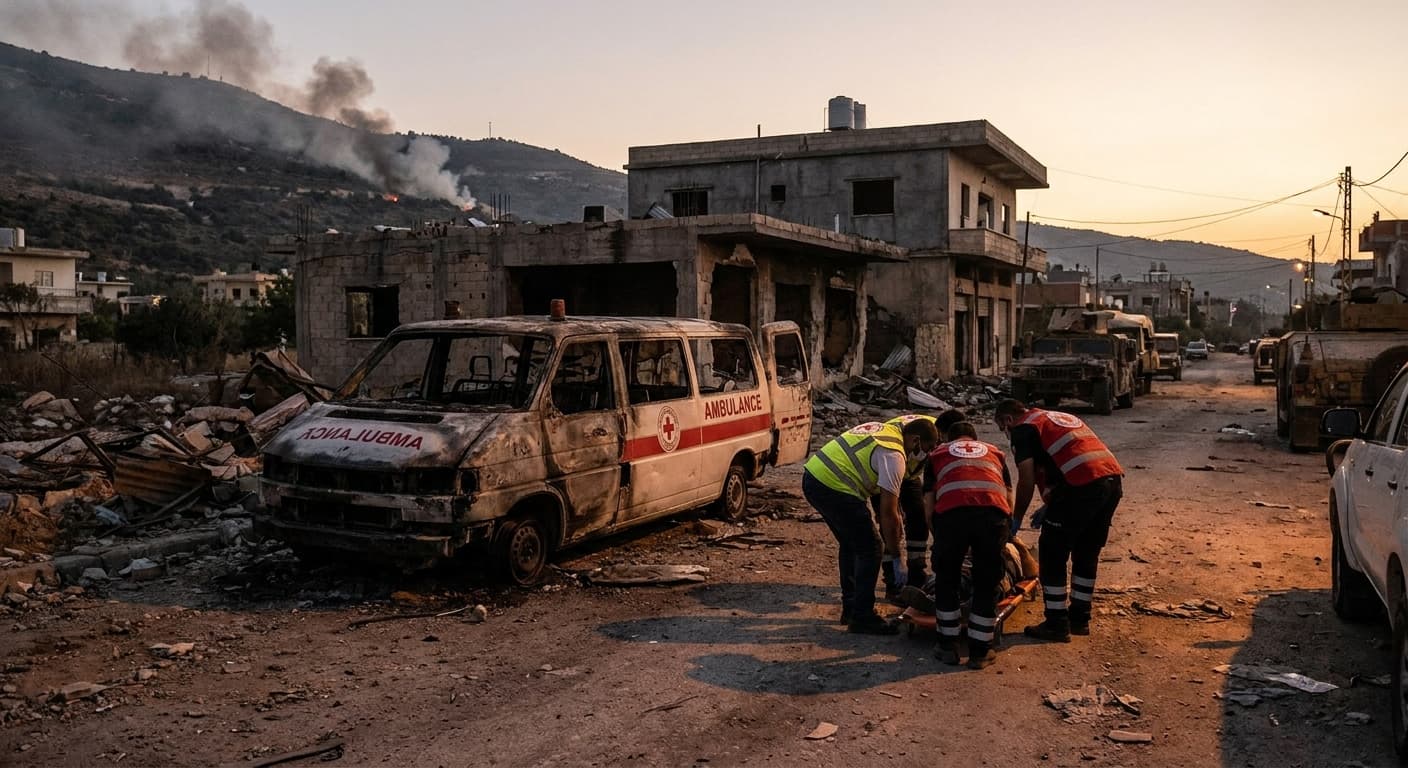
Three paramedic teams in southern Lebanon were struck by Israeli attacks, escalating violence and deepening the humanitarian crisis amid the ongoing conflict.

Conflict & Security
Drone Warfare Killing Aid Workers at Unprec
Over 1,000 humanitarian workers killed in three years as cheap armed drones collapse legal protections. Gaza, Sudan, Ukraine, and DRC see deliberate targeting of aid convoys and hospitals with zero prosecutions.

Global
World Normalises Taliban as Afghan Women Eras
UN data shows Afghan women erased from public life as Russia recognises the Taliban, EU hosts officials in Brussels, and ICC warrants for gender persecution go unenforced.