Mozambique's Crisis: SADC's Irrelevance
A fragile dialogue averts state collapse in Mozambique.
Model Diplomat4 min readafrica
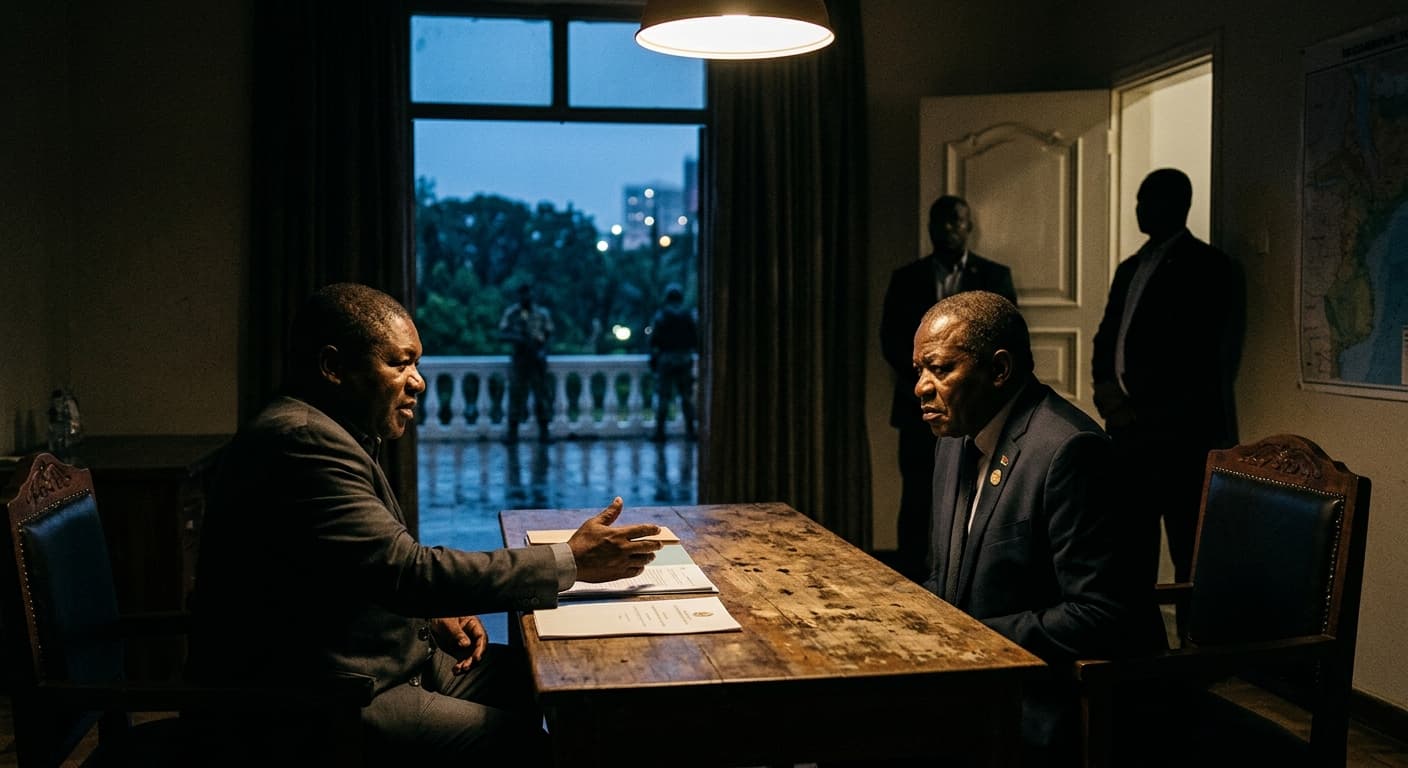
Mozambique's Post-Election Crisis: SADC Was the Wrong Lifeline
Mozambique's near-failed-state moment in early 2025 was real — but the crisis was ultimately contained not by SADC intervention, but by a fragile, bilateral dialogue between President Chapo and opposition leader Mondlane. The structural rot remains.
In February 2025, when Al Jazeera published Tafi Mhaka's blunt warning that only SADC intervention could save Mozambique from state collapse, the evidence was overwhelming: 300 dead, 1,500 prisoners escaped in a Christmas Day jailbreak, the Lebombo border with South Africa intermittently closed, and Mozambican civil society so distrustful of SADC that they petitioned Cyril Ramaphosa directly rather than the regional body meant to arbitrate such crises. Al Jazeera
Seventeen months later, the failed state hasn't materialized — but not because SADC rode to the rescue. The regional body made itself irrelevant to the resolution, and the heavy lifting fell instead to a grudging, stop-start dialogue between President Daniel Chapo and opposition leader Venâncio Mondlane that remains profoundly fragile.
SADC disqualified itself before the crisis even began
The regional body's election observer mission declared the October 2024 polls "professionally organised" and conducted in an "orderly, peaceful and free atmosphere" — a verdict at odds with every other major observer. The European Union mission condemned "unjustified alteration of election results." The Episcopal Conference of Mozambique reached the same conclusion. Local civil society group Plataforma Decide tallied close to 400 deaths in the ensuing crackdown. BBC
That endorsement from SADC wasn't a diplomatic nicety — it was a self-inflicted wound that stripped the body of any credibility as a mediator. When Mozambican organizations delivered their plea to Pretoria on January 6, 2025, they were making a strategic calculation: South Africa, whose mining sector was hemorrhaging 10 million rand daily from border disruptions, had skin in the game that SADC's Troika members — Tanzania, Malawi, Zambia — simply didn't. Al Jazeera
The Troika did convene a virtual summit and mandate a Panel of Elders. But that Panel produced no public breakthroughs. The real channel emerged elsewhere.
The Chapo-Mondlane channel: enough to avert collapse, not enough to fix it
Chapo's early moves suggested a leader who understood the danger. He sacked police chief Bernadino Rafael, whom opposition figures had accused of orchestrating kidnappings and killings of protesters. He signaled openness to an "inclusive" government.
But it wasn't until March 2025 that Chapo and Mondlane sat down directly — a pivot that surprised analysts who had watched Frelimo's hardliners stonewall for months. According to CSIS analysis, the two leaders agreed to pursue de-escalation at both national and local levels, with promises to compensate victims of police violence and provide amnesty for thousands detained during the protests. They met again in May. CSIS
Then, on September 10, 2025, Chapo launched a two-year "inclusive national dialogue" with Mondlane in the room. "All voices count, all hands help to build, and all dreams have their place," Chapo declared. Al Jazeera
The framing is telling. Chapo repeatedly invokes Mozambique's 16-year civil war as precedent: "peace only came through dialogue." He's positioning himself as the president who breaks Frelimo's cycle of electoral violence — not by reforming the electoral system (Mondlane's core demand), but by co-opting the opposition into governance.
The structural bargain hasn't been struck. Mondlane's original three conditions — release 5,000 detainees, compensate victims' families, provide medical care for the injured — have been partially addressed through dialogue commitments, but the electoral architecture remains unreformed. GDP growth slumped from 5.4% in 2023 to 1.8% in 2024, with a projected 3% for 2025. Al Jazeera TotalEnergies' $20 billion LNG project in Cabo Delgado remains frozen. And the insurgency in the north has shifted tactics to economic disruption — targeting mining interests and transportation corridors — while the state remains absent from vast stretches of the province.
What to watch
The dialogue's two-year timeline runs to September 2027, which happens to be roughly when the next electoral cycle heats up. The test is whether Chapo can deliver institutional reform — not just personal engagement with Mondlane — before the country faces another disputed poll. If he can't, the question Mhaka raised in February 2025 will return, and next time the streets may not settle for dialogue.
South Africa holds the most usable leverage, given its economic exposure, but Pretoria has shown no appetite for leading a regional intervention that SADC won't authorize. The quiet reality is that Mozambique's stability now depends on one man's political survival instinct — Chapo's calculation that co-opting Mondlane is cheaper than facing another insurrection — not on any institutional mechanism. That's not a resolution. It's a reprieve.
Discover more

US Politics
White House Pressures Congress for Crypto Leg
The Trump administration's push for the CLARITY Act aims to reshape crypto regulation, impacting trillions in market value and the Trump family's wealth.
US Politics
Washington's Scrutiny of Iran War Prediction
The Iran war prediction market scandal exposes political ties and regulatory challenges in Washington, as insider trading concerns rise.
India
Women's Reservation Bill 2026: A Political Sh
India's Lok Sabha rejected the Women's Reservation Bill, exposing a political maneuver to redraw electoral maps favoring the north over the south.
Global
Zimbabwe's 2030 Gambit: Mnangagwa's Rule
Zimbabwe's Constitutional Amendment No. 3 ends direct presidential elections, extending Mnangagwa's rule to 2030 and raising concerns over democratic integrity.