Moscow Mobile Internet Throttled for Victory
Mobile internet shutdown in Moscow for May 9 parade raises censorship concerns.
Model Diplomat7 min readEurope
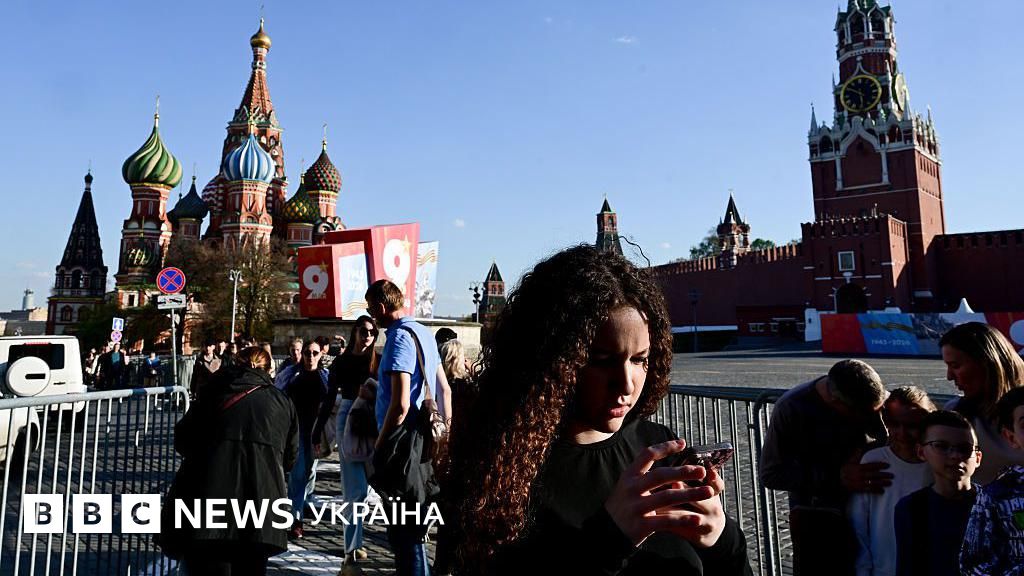
Moscow Mobile Internet Throttled for Victory Day 2026
Russia shut down mobile internet, SMS and even whitelisted sites across Moscow for the May 9 parade — the drone-defense pretext masks a whitelist rollout.
For six hours on the morning of May 9, 2026, roughly 13 million people inside Moscow's ring road could not send an SMS, hail a taxi, tap a card at a corner shop or open a state-approved website on their phone. The Russian Digital Development Ministry framed the shutdown as drone defense; the pattern of the last twelve months says otherwise. The Victory Day blackout was a live nationwide test of the Kremlin's whitelist internet — the technical scaffolding for a permanent, sanitized Runet the FSB now controls directly. Ukrainian long-range drones are the excuse; the payload is a censorship regime that will outlast the war.
What actually happened, May 5–9
Mobile data disappeared in central Moscow and central St Petersburg at roughly 08:00 on Tuesday, May 5, and stayed intermittently dark until after the parade on Saturday. Even the "whitelisted" services — the state-approved sites meant to remain reachable during blackouts — went offline that first morning, according to Meduza. Sources close to Rostelecom told the
BBC Russian Service that operators had been instructed to enforce "more powerful" restrictions on May 5, 7 and 9, with the deepest cuts on parade day between 05:00 and 13:00.
The Ministry of Digital Development, Communications and Mass Media confirmed the shutdown in a post on Max — the state-run messenger that Russians must now have pre-installed on every device sold in the country. "Targeted mobile internet shutdowns in Russian regions are carried out during security threats, including from enemy UAVs," the ministry wrote on its Max channel. "This makes it possible to reduce the accuracy of drone guidance and counter attacks." Bilayn, one of the "big four" operators, told subscribers to switch to Wi-Fi and enable VoLTE for voice calls, Ukrainska Pravda reported.
On the day itself, the ceasefire brokered by US President Donald Trump made the drone threat moot. Yet as NPR documented, the Digital Development Ministry ordered "restrictions on all mobile internet access and text messaging services" in the capital anyway. Sberbank and VTB, Russia's two largest banks, warned customers that ATMs and POS terminals using wireless channels might fail. Vending machines, taxi apps and paid public toilets stopped working,
The Moscow Times reported. The BBC's
regional survey found parallel shutdowns in at least 14 other regions, from Kaliningrad to Kamchatka.
The drone-defense story does not survive contact with the evidence
The security framing has a technical problem: mobile internet shutdowns do not reliably disable Ukrainian long-range strike drones. The Iranian-designed Geran and its variants use inertial navigation and GNSS with anti-jam antennas, and — as Al Jazeera has reported — increasingly Starlink terminals for mid-flight retargeting. The
BBC noted the obvious: "attacks have continued even in areas where the internet has been switched off." Belgorod governor Vyacheslav Gladkov, hardly a dissident, publicly demanded Roskomnadzor "be put on trial" for cutting mobile data during air-raid alerts. "Who will answer for the deaths of people who were unable to get information about drones," he asked in a live broadcast quoted by
Al Jazeera.
The tell is the whitelist. Since autumn 2025, Russia has rolled out a system that keeps a curated set of approved sites — currently more than 500, per Digital Development Ministry data cited by the BBC — reachable when everything else is dark. The OSW Centre for Eastern Studies calls this the operational core of Kremlin internet policy: "the aim is to ensure that the public can access only selected websites, services, and online platforms." The
Great Russian Firewall report published by OSW in December 2025 documents whitelists active in at least 30 Russian regions before Victory Day 2026. That inverts the principle of the Russian internet: what is not on the list is forbidden.
Drone defense would not require a whitelist. Censorship does.
Who ordered it: the FSB's Second Service, not the ministry
The most consequential reporting on this year's blackouts came from The Bell and Carnegie: mid-2025, oversight of the Runet moved inside the FSB from the Scientific-Technical Service, which had run internet control since the 2019 "sovereign internet" law, to the counterintelligence-oriented Second Service. As Carnegie's Andrei Soldatov wrote in an April 2026 analysis, when mobile internet was cut for nearly three weeks in Moscow this March, "it was STS officers who issued the order to telecom operators" — but the initiative came from above. Kremlin spokesman Dmitry Peskov confirmed the policy is not tactical: "the internet restrictions will remain in place for as long as necessary."
The Duma has been busy insulating the enforcers. In February 2026, deputies passed a law absolving telecom operators of civil liability for security-motivated outages, according to a Carnegie briefing citing the legal-reference service Garant. Operators are now legally free to comply with FSB shutdown orders without customer claims. That is the missing structural piece: Russia has built the legal, technical and institutional plumbing to switch its cities offline on command, and Victory Day is the ritual where that plumbing gets stress-tested.
The economic cost is not incidental — it is the message
Kommersant estimated Moscow business losses at 3–5 billion rubles ($36m–$65m) over five days of March 2026 shutdowns, according to Al Jazeera. OSW puts the daily figure at roughly 1 billion rubles for Moscow alone — and warns that headline numbers understate the damage, because they exclude adaptation costs and small-business bankruptcies. That matters because Moscow is not a backwater: the city's own authorities report the IT and digital-services sector produced 36% of gross regional product in 2024, and small and medium enterprises accounted for around 30% of Moscow tax revenue in 2025.
The Russian Union of Industrialists and Entrepreneurs, headed by Alexander Shokhin, went to Putin directly in March to complain, the BBC documented. Kremlin polling has picked up the anger: Bloomberg reported in April that senior officials have privately criticized the crackdown as voter-alienating in the run-up to the September 2026 Duma elections. That the shutdowns continue anyway is itself the signal — the security apparatus, not the economic bloc, sets internet policy.

The primary document: what the Kremlin is actually doing to Russians
The most authoritative accounting is Human Rights Watch's July 2025 report Disrupted, Throttled, and Blocked, which documented the first Victory Day-linked shutdowns of May 2025 as the trigger for what has since become a nationwide system. HRW recorded users in "over 30 regions" reporting communication disruptions between May 5 and May 9, 2025 — a template repeated and expanded in 2026. Freedom House's
Freedom on the Net 2025 scored Russia at 17/100, the steepest 15-year decline in the index, noting that since September 2025 "a select number of websites… have remained online during these shutdowns" — the mechanical definition of a whitelist. Access Now's
KeepItOn coalition counted 296 documented shutdowns worldwide in 2024 across 54 countries; Russia's 2025–26 pattern is on pace to make Moscow the year's most-shuttered global capital.
The Meduza announcement text of the Digital Development Ministry's May 7 order captures the escalation in one line: the ministry acknowledged for the first time that even whitelisted sites and SMS would be suspended, "given the heightened level of threat." Once whitelists themselves can be switched off, the distinction between security shutdown and total blackout collapses.
Diplomat View
The Victory Day parade of 2026 was scaled back to a video montage, held under a US-brokered three-day ceasefire, watched by four heads of state and one EU prime minister — Slovakia's Robert Fico, the BBC reported. Twenty-seven leaders came in 2025. The optics of Russian strength collapsed. What the Kremlin retained instead was internal control: the demonstrated ability to switch off Moscow at will, without political cost inside the security vertical.
The defensible thesis: Russia's Victory Day shutdown was not primarily about drones. It was the dress rehearsal for a permanent, whitelist-based Runet — the same architecture Iran uses, engineered around the September 2026 Duma elections and any protests that follow. Expect the whitelist system to be codified in law before autumn, expect blackouts to lengthen and expand from central Moscow to the whole MKAD ring, and expect the Duma to grant the FSB explicit statutory authority over civilian telecoms that it currently exercises through informal orders. The forecast changes if two things happen together: sustained business pressure forces the Kremlin to compensate SME losses (unlikely under Second Service oversight), and a Ukrainian drone strike inside Moscow succeeds despite an active shutdown, publicly discrediting the security rationale. Absent both, the Runet Russians used in early 2025 is not coming back.
What to watch
- September 2026 Duma elections: watch for blackouts framed as protection against "foreign interference"; OSW predicts a major whitelist push in the campaign window.
- Codification of whitelists in federal law: currently the system has no statutory basis, per BBC Russian; a bill would signal permanence over emergency use.
- Next parade dress rehearsal — the Navy Day parade in late July: if St Petersburg gets the same May 5–9 treatment, the "Victory Day exception" framing is finished.
- Cloudflare and VPN throttling escalation: throttling that began in June 2025 has since become the second front; further restrictions will indicate the whitelist model is scaling to fixed-line broadband.
The Bottom Line
Russia did not throttle Moscow's mobile internet on May 9 to disorient Ukrainian drones — it threw the switch to prove the switch works. The Victory Day blackout was a live stress test of the FSB's new whitelist Runet, engineered by the counterintelligence Second Service and legally shielded by a February 2026 Duma law. The parade shrank; the censorship infrastructure expanded. That is the trade the Kremlin has decided it can afford, and the September Duma elections will be run on the new system, not the old one.
Discover more
Global Politics
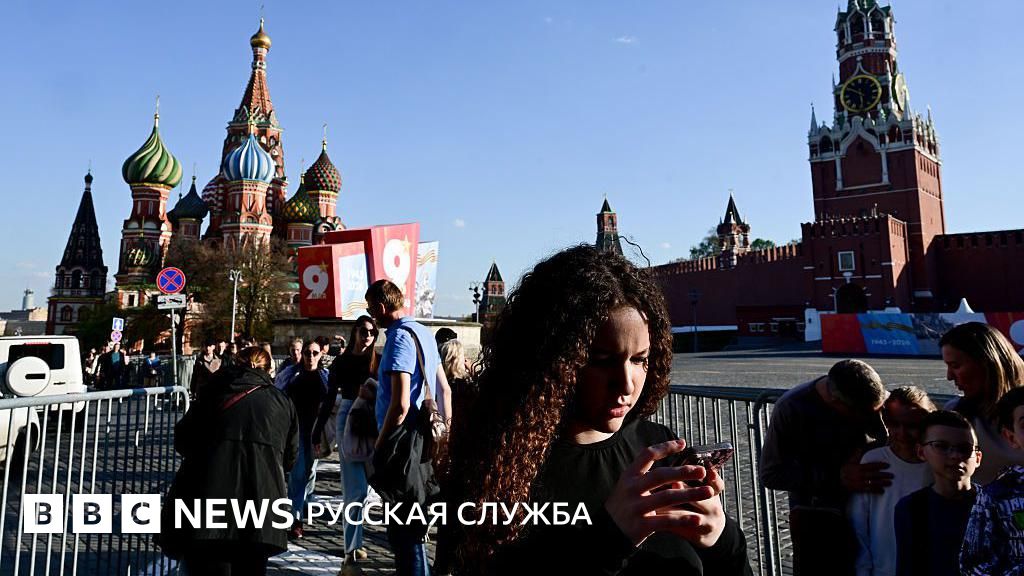
Moscow, St. Petersburg Mobile Internet Blacko
Mobile internet blackouts in Moscow and St. Petersburg reveal a new censorship strategy by Russia, testing a whitelist system for state control.
Global Politics
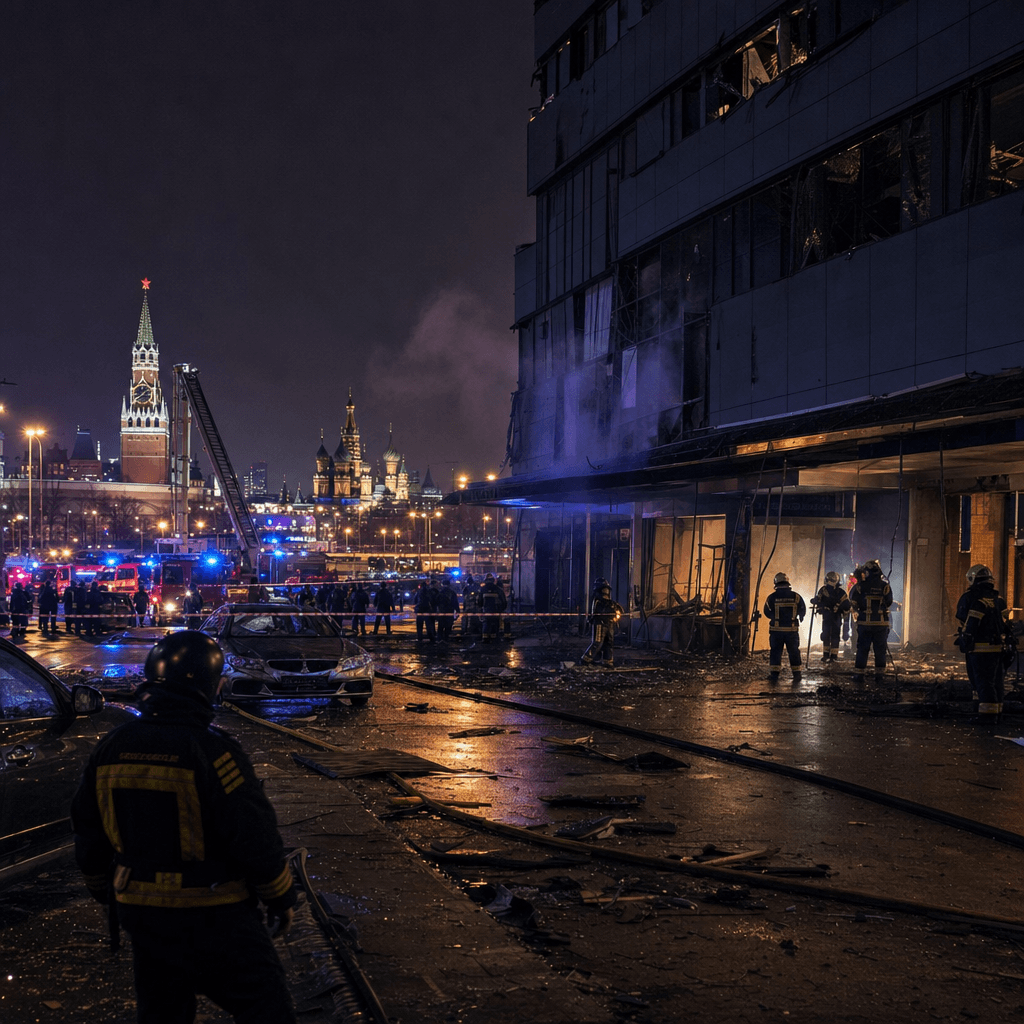
Drone Attack on Moscow Escalates Ukraine War
Ukraine's drone campaign has knocked out a third of Russia's refining capacity, forcing Putin to admit fuel shortages ahead of the NATO summit.

Conflict & Security
Drone Warfare Killing Aid Workers at Unprec
Over 1,000 humanitarian workers killed in three years as cheap armed drones collapse legal protections. Gaza, Sudan, Ukraine, and DRC see deliberate targeting of aid convoys and hospitals with zero prosecutions.
Global
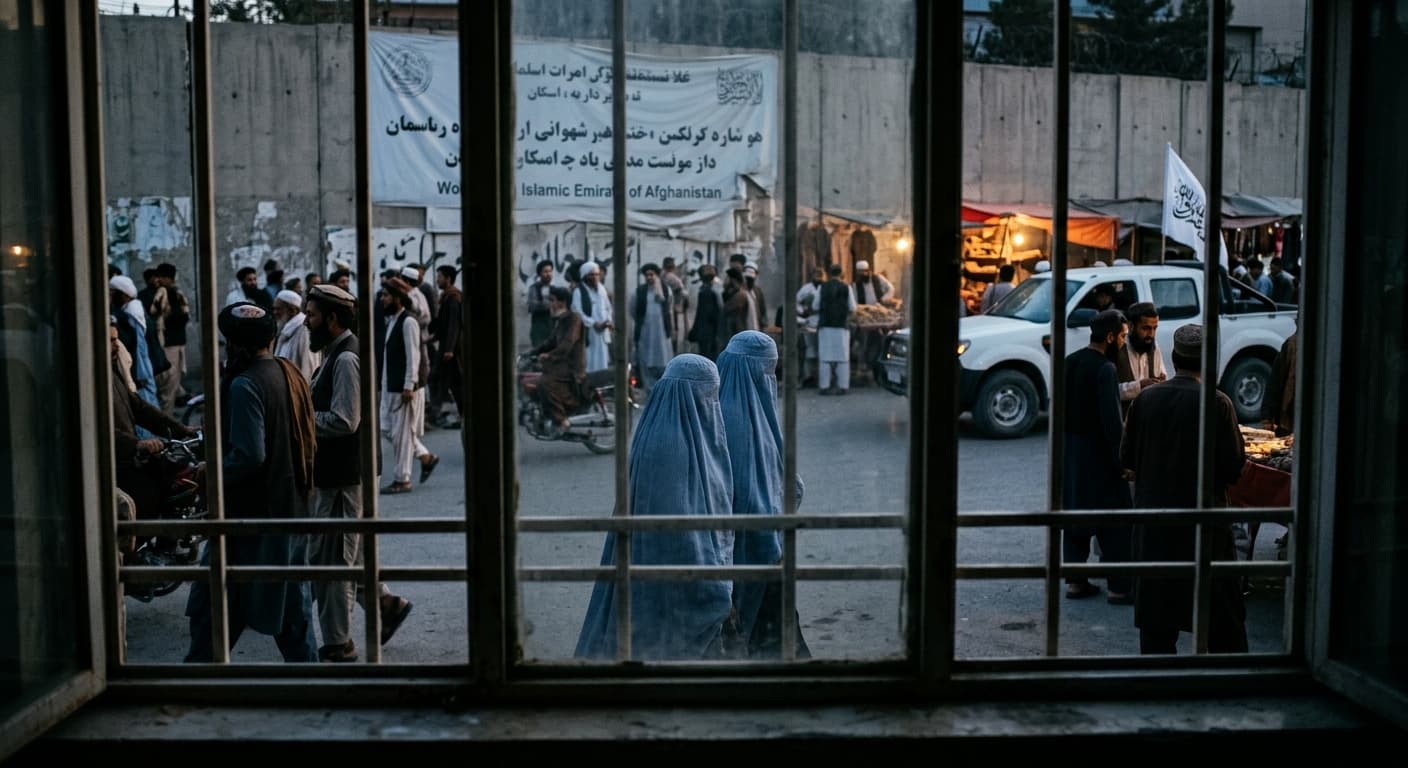
World Normalises Taliban as Afghan Women Eras
UN data shows Afghan women erased from public life as Russia recognises the Taliban, EU hosts officials in Brussels, and ICC warrants for gender persecution go unenforced.