Moscow, St. Petersburg Mobile Internet Blacko
Exploring Russia's mobile data blackouts and censorship.
Model Diplomat8 min readEurope
Moscow and St. Petersburg Mobile Internet Blackouts: Anatomy of a New Censorship Machine
Why Russia keeps switching off mobile data in Moscow and St. Petersburg — the drone story is real, but the whitelist rollout behind it is the real story.
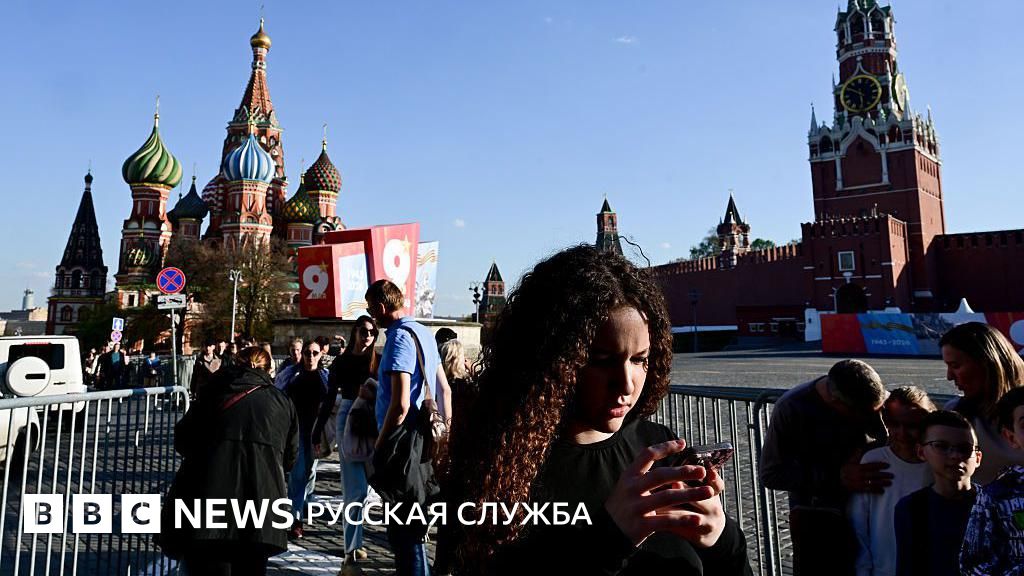
Russia's rolling mobile-internet blackouts in Moscow and St. Petersburg — including the coordinated shutdown on May 5, 2026, ahead of a scaled-down Victory Day parade — are being sold as counter-drone measures. They are also something else: a live-fire test of a nationwide "whitelist" internet that lets the Kremlin sever mobile data at will while keeping the state's own super-app, banks, and propaganda outlets online. The drone rationale explains the timing; it does not explain why the same architecture keeps expanding on days when no drones are flying, or why Vladimir Putin gave the FSB and government until July 1, 2026 to make the shutdowns compatible with everyday life rather than end them.
What actually happened, in precise detail
At around 8 a.m. on May 5, 2026, mobile data disappeared across large parts of Moscow and St. Petersburg. Even sites on the official "белые списки" (whitelist) — meant to remain reachable during blackouts — briefly went dark in the capital, according to BBC News Russian. By midday the Ministry of Digital Development (Mintsifry) confirmed that "temporary mobile internet blockages" had been lifted in Moscow, as
Meduza reported, then telegraphed that operators would cut service again on May 7 and 9 during rehearsals and the parade itself.
The May episode was not an outlier. It was the third act of a pattern that began in early March 2026, when central Moscow lost mobile data for nineteen consecutive days. The Bell, cited by both Carnegie and BBC Russian, identified the order as coming from the FSB's Scientific and Technical Service (STS, the "Third Service") — the unit that hands mobile carriers maps of base stations to disable. Officers told operators the initiative did not originate with them.
Officially, Mintsifry justifies each shutdown as a measure to "reduce the accuracy of enemy drone navigation." That framing is codified in the ministry's May 5 statement carried by TASS and echoed by MP Andrei Svintsov: "mobile internet — yes, it can be switched off to ensure the security of our citizens." Kremlin spokesman Dmitry Peskov told the
BBC that "security considerations dictate the need for certain measures... once the need for such measures disappears, services will be fully restored."
The drone story is real. It is also a cover.
Ukrainian long-range drones do use LTE cell-tower signals for terminal navigation, and Ukraine's July 4, 2026 strike on the Kirishi oil terminal near St. Petersburg — reported by the BBC and
Al Jazeera — underlines why Russian air defence takes that vector seriously. But three data points make the "counter-drone" account insufficient on its own.
First, scale. There are now roughly 2,000 mobile-internet shutdowns a month across Russia, more than the rest of the world combined in 2024, according to Access Now figures cited by Carnegie. At the summer peak, the Na Svyazi monitor tracked 77 of Russia's 80-plus regions dark simultaneously,
BBC reported — including cities like Krasnoyarsk in Siberia, a thousand kilometres from any drone.
Second, geography. Belgorod governor Vyacheslav Gladkov — sitting in the region most exposed to Ukrainian attacks — publicly called for Roskomnadzor to be "put on trial" for the shutdowns, telling Al Jazeera: "Who will answer for the deaths of people who were unable to get information about drones because mobile internet was shut down?" The people closest to the drone threat consider the blackouts counter-productive.
Third, timing. The March 2026 Moscow shutdown began the day telecoms industry sources say Roskomnadzor moved to full-scale testing of the whitelist system — the same technology being rolled out since autumn 2025. RBC and Vedomosti sources, cited by BBC News Russian, described what happened in central Moscow as "an offline debug session for whitelists."
The whitelist: a Chinese playbook, badly executed
Since autumn 2025, Roskomnadzor has flipped the default of the Russian internet. Alexandra Zhyrmont of the Access Now digital-rights group told Al Jazeera that the principle "everything not forbidden is permitted" is being replaced by "only what is explicitly permitted is accessible" — the Iranian model, not the Chinese one. According to Poland's
OSW Centre for Eastern Studies, mobile data carries 50–70% of all Russian internet traffic; the whitelist decides what still moves when the pipe is closed.
The list is maintained by Mintsifry and, according to the OSW December 2025 report, has been technically deployed in at least 57 of Russia's regions, limited so far only because not every operator has installed the Deep Packet Inspection kit required. The permitted sites include Gosuslugi (state services), major banks like Sberbank, Yandex, Wildberries, propagandistic state media, and — crucially — the Kremlin's own messenger, Max.
Max is the payoff. Launched in mid-2025 by VK, the social-media holding controlled by Gazprom-linked billionaire Yuri Kovalchuk, Max is pre-installed on every device sold in Russia since September 1, 2025 and had over 55 million users by November, per OSW. Its privacy policy, as BBC noted, permits data-sharing with government bodies. In practical terms: when mobile internet dies, Max still works. When Telegram and WhatsApp are throttled — as they have been in earnest since August 2025 — Max is the only calling app the whitelist allows.
The design is coherent. Shut the pipe; approve a state-controlled substitute; watch adoption climb by necessity, not preference. Only 4% of Max users actively follow content on it, per independent research cited by OSW — the app is a distribution channel for surveillance and dependency, not a chosen product.

Who pays: Moscow's SMEs, and the ruble
The blackouts land hardest on the wealthiest region. According to Moscow city authorities cited by OSW, the IT and digital services sector accounted for 36% of the capital's gross regional product in 2024. Small and medium-sized enterprises — roughly 30% of Moscow's 2025 tax base — cannot pivot to Wi-Fi and landline as fast as Sberbank or Gazprom.
OSW's preliminary estimate puts Moscow business losses at around 1 billion rubles a day (about $12.5 million) during the March 2026 blackout — and notes the actual figure is "likely several times higher." The newspaper Kommersant, cited by Al Jazeera, pegged the five-day toll at 3–5 billion rubles ($36–65 million). The Russian Union of Industrialists and Entrepreneurs told OSW that 85% of surveyed companies described the restrictions as "critical" or "significant" for their operations. Cash in circulation has jumped roughly fivefold in three months, according to Carnegie's
December 2025 briefing, because payment terminals require mobile data. The Henry Jackson Society
estimates the aggregate hit at roughly $250 million per month.
The elite fight — and why the security bloc won
For six weeks this spring, Moscow watchers wondered whether the blackouts had finally cracked the elite. Deputy Duma speaker Vladislav Davankov (New People) launched a petition against the shutdowns; loyal in-system parties joined in; Alexander Shokhin, head of the industrialists' union, complained directly to Putin. On April 14, 2026, Reuters reported the Kremlin acknowledging "some restrictions are necessary."
Then it ended. As Carnegie's Andrei Pertsev wrote on June 5, 2026, "Russia's security establishment came out on top. The online restrictions have become normalized." Putin's April order — deadline July 1, 2026 — did not rescind the shutdowns. It instructed the government and the FSB to co-ordinate so that "critical services" (payments, state services, Max) keep working during shutdowns. That is the whitelist, retrofitted into a presidential directive. It hands Prime Minister Mikhail Mishustin a formal role in a domain the FSB monopolises — a Putinesque delegation that manages the conflict rather than resolving it — but it institutionalises, rather than reverses, the practice.
The civilian bloc's consolation prize, per Carnegie: a delay of paid tariffs for VPN traffic until after the September 2026 Duma elections. That is the political horizon the whole architecture is built to survive.
The parallel that reframes it
The received analytical wisdom — inside Russia and out — is that Moscow is building a Chinese-style Great Firewall. That is half right. Beijing built its firewall in the 1990s and 2000s before mass mobile-internet adoption; Chinese users never had unfiltered Instagram or Google to lose. Russians did, for two decades. What is being built now is closer to the Iranian model that Foreign Affairs sketched years ago: shutdowns first, permanent architecture second, retrofitted onto a population that remembers the open internet and resents the loss.
That is the Kremlin's real tactical problem, and why the shutdowns keep expanding rather than settling into a stable equilibrium. As Russia's independent Human Rights Watch report documents, the sovereign-internet law's "technological means for countering threats" (TSPU) hardware installed in every provider gives the FSB the switch. Roskomnadzor gets sole legal authority to disconnect the Runet from the global network from March 1, 2027, per amendments tracked by
BBC News Russian. By January 2026, mobile operators were already obliged to store user message metadata for three years, up from one.
The Council on Foreign Relations describes Roskomnadzor as "not just an internet censor but a surveillance machine" — filing dossiers to the Federal Protective Service and Interior Ministry. Freedom House's
Freedom on the Net 2025 marked the year as a new low for Russian internet freedom, citing precisely the pattern that culminated in the Moscow and St. Petersburg blackouts.
Diplomat View
The Moscow and St. Petersburg blackouts are not primarily a counter-drone measure and never were. They are the field-test phase of a permanent whitelist internet built to carry the Russian state through the September 2026 Duma elections and past them. The drone rationale is what makes the pain politically survivable — no elite bloc can openly oppose a "security" measure while Ukrainian Geran-2s are hitting oil terminals near St. Petersburg. Once the architecture is normalised, the drone story will not need to be retired; it will simply matter less.
The falsifiable call: by year-end 2026, the number of monthly regional shutdowns will remain at four-digit levels regardless of the pace of Ukrainian drone attacks, and whitelist coverage will pass 70 regions. Two developments would force revision. If Putin publicly rescinds the FSB's Third Service authority over base-station orders after the September vote, the security bloc's grip has cracked. If Max adoption stalls below 70 million active users by December — despite pre-installation and government-services lock-in — the coercive strategy is failing on its own terms, and the Kremlin will have to choose between softening restrictions and forcing an outright block of WhatsApp and Telegram.
What to watch next
- July 1, 2026 — Deadline for the Mishustin government and FSB to certify "uninterrupted operation" of critical services during blackouts. The list of what counts as "critical" is the real policy document.
- September 2026 — Duma elections. If whitelist-only mobile internet is deployed nationwide during voting day, the test phase is over.
- March 1, 2027 — Roskomnadzor's unilateral authority to disconnect the Runet from the global internet takes effect under the amended sovereign-internet law. The switch will exist; the question is who is willing to flip it.
Discover more
US Politics
Congress Targets AI Chatbot Access for Terror
The House passed the Generative AI Terrorism Risk Assessment Act, focusing on AI's role in terrorism and potential surveillance implications.

Conflict & Security
Drone Warfare Killing Aid Workers at Unprec
Over 1,000 humanitarian workers killed in three years as cheap armed drones collapse legal protections. Gaza, Sudan, Ukraine, and DRC see deliberate targeting of aid convoys and hospitals with zero prosecutions.

Global
World Normalises Taliban as Afghan Women Eras
UN data shows Afghan women erased from public life as Russia recognises the Taliban, EU hosts officials in Brussels, and ICC warrants for gender persecution go unenforced.
Conflict & Security
West Africa Food Crisis: Three Shocks in 2026
Conflict, climate extremes, and the Strait of Hormuz closure drive a severe food crisis in West and Central Africa, with fertilizer prices surging 80% and millions displaced.