Modi's Women's Reservation Bill
Exploring the impact of the Women's Reservation Bill in India
Model Diplomat3 min readIndia
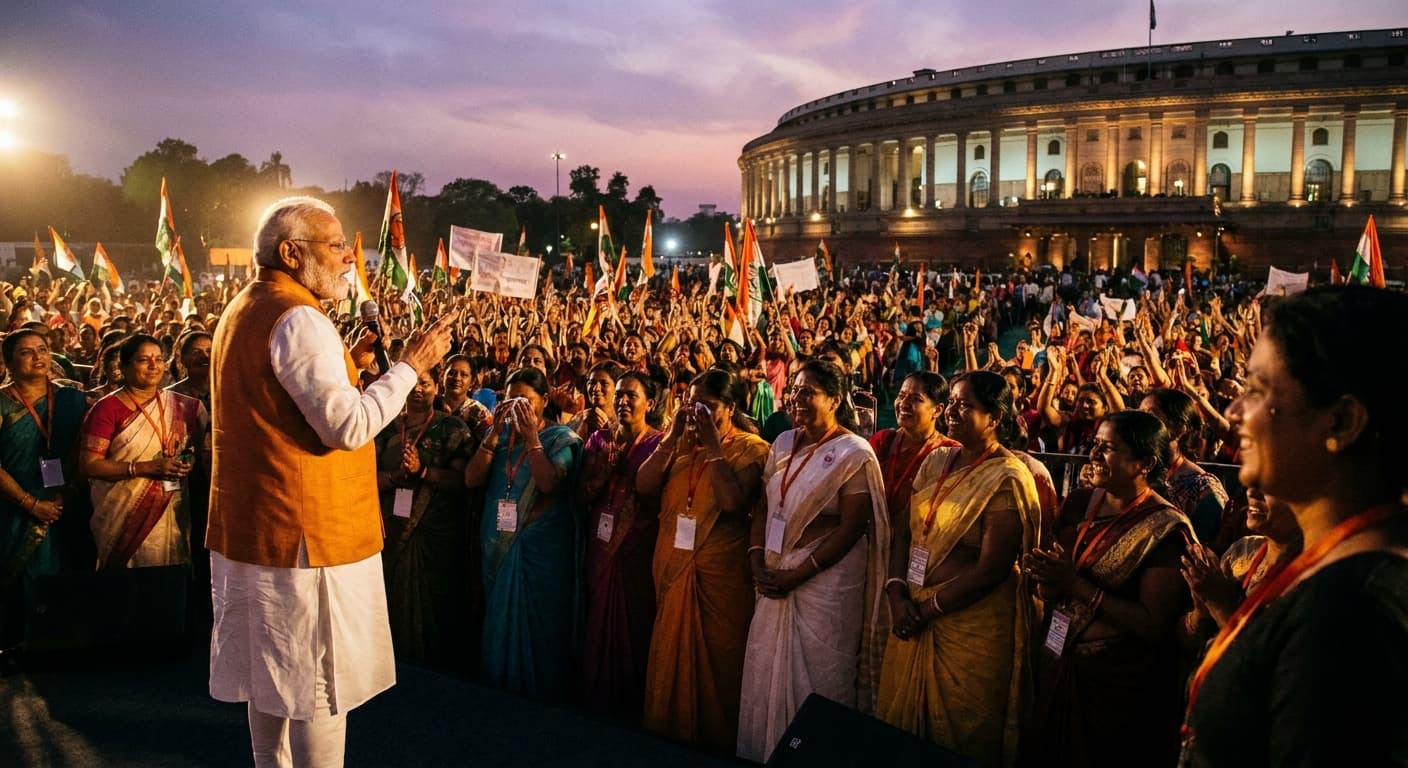
Modi on Women’s Reservation Bill: A Defining Moment for Indian Democracy
Prime Minister Narendra Modi calls the 33% women's quota a historic shift, emphasizing its democratic and grassroots empowerment potential.
In a recent address, Prime Minister Narendra Modi framed the Women's Reservation Bill—which proposes reserving 33% of parliamentary seats for women—as a defining milestone in India's democracy. Modi remarked the quota should have been implemented 25-30 years ago, underscoring the delay and the long road to legislative progress. He portrayed the bill not just as a measure for gender representation but as fundamental to strengthening democracy by empowering women at the grassroots level.
Why the Women’s Reservation Bill Matters
India’s parliament and state legislative assemblies have long been criticized for the stark underrepresentation of women. Currently, women hold approximately 14% of parliamentary seats—far below the 33% quota the bill seeks to reserve. The bill’s passage would mark one of the most significant increases in female political representation in India’s history.
Modi’s emphasis on grassroots leadership signals the deeper impact beyond mere numbers. Women’s political participation at local government levels, especially under the 73rd and 74th constitutional amendments granting seats to women in panchayats (village councils), has shown how inclusion reshapes policy priorities. Extending this reservation to national politics could bring similar shifts in policy, with greater focus on issues like education, healthcare, and social welfare, crucial for India’s development agenda.
Moreover, the bill’s political journey has been fraught with resistance. Several parties and politicians have opposed it, fearing threat to established power structures. Modi’s pointed comment that “those who opposed have not been forgiven by women” signals an astute political calculus: gender inclusivity is not just a social cause but a rising political force that could reshape party dynamics and electoral calculations.
This moment also reflects wider global trends toward gender quotas as a proven way to boost women’s political presence. Countries with mandated quotas, such as Rwanda and Sweden, consistently rank high in gender parity and policymaking inclusivity. India’s adoption of a similar policy late but now decisively could revitalize its democratic credentials on the world stage.
What to Watch Next
The bill still must navigate parliamentary hurdles and potential legal challenges. Its passage will require careful political negotiation, especially considering the resistance from some regional parties wary of losing influence. Monitoring which states and parties support or oppose the measure will be key to predicting its viability.
Beyond legislation, the real test will be implementation and societal acceptance. Increasing women’s numbers in elected offices is only the first step; enabling their effective agency—through training, party support, and combating societal biases—will determine if the bill’s democratic promise is fulfilled.
Finally, this move could ripple beyond parliament. If effectively enacted, it may pressure other institutions—corporate boards, public sector bodies—to adopt similar gender quotas, furthering women’s empowerment in India’s socio-economic fabric.
India’s Women’s Reservation Bill is not just a policy initiative; it is a potential turning point for democratic representation and social transformation. Modi’s framing of it as delayed yet inevitable underscores a larger narrative: India is stepping toward a more inclusive democracy, driven by the rising political voice of women.
For a deeper dive into India's evolving political landscape, visit India and for broader insights, see
Global Politics.
Discover more

India
Modi's Women’s Reservation Bill
PM Modi's Women's Reservation Bill aims to expand women's seats in India's Parliament, a reform poised to reshape democracy and shift electoral dynamics.

India
Modi's Women’s Reservation Bill
PM Modi framed the Women's Reservation Bill as a democratic win, challenging opposition claims and signaling a call for cross-party support across the aisle.

India
Modi's Women's Quota
PM Modi insisted India's 33% women's quota in Parliament won't disadvantage others, framing it as a vital step toward closing the gender gap in politics.

Conflict & Security
Drone Warfare Killing Aid Workers at Unprec
Over 1,000 humanitarian workers killed in three years as cheap armed drones collapse legal protections. Gaza, Sudan, Ukraine, and DRC see deliberate targeting of aid convoys and hospitals with zero prosecutions.