Modi's Trade Gamble at G7: Trump's Warmth
Modi and Trump signal thaw in relations amid tariff pressures.
Model Diplomat3 min readAsia
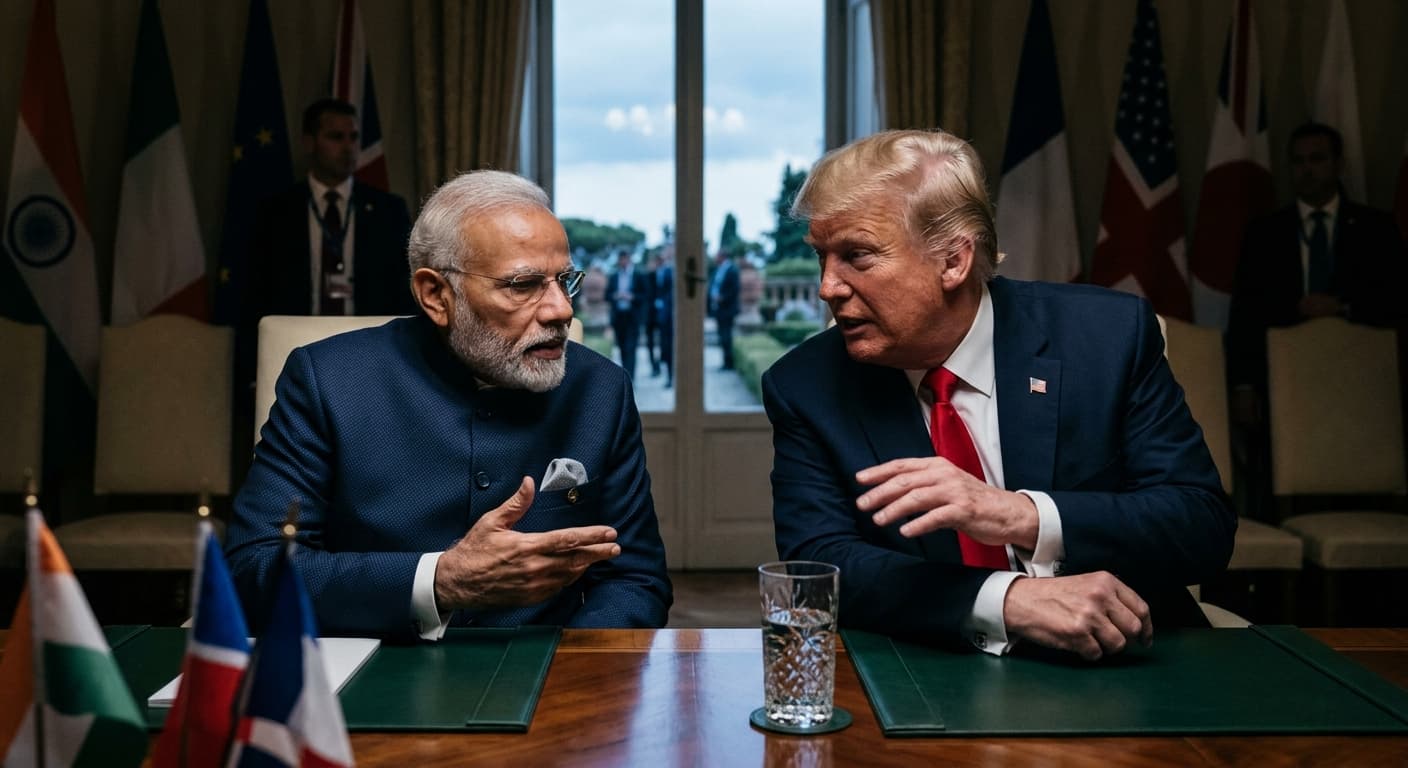
Modi's Trade Gamble at G7: Trump's Warmth Masks Tariff Reality
Modi and Trump signal a thaw in relations, but India's bilateral trade deal faces fresh pressure from new forced-labour tariffs.
Personal affection and negotiating leverage are not the same thing. That distinction sits at the heart of the Modi-Trump meeting at the G7 summit in France on June 18, when the two leaders met for the first time in 16 months. Trump called Modi a "tough trader" and promised a future visit to India, remarks that New Delhi has seized as evidence of a relationship reset. But beneath the bonhomie lies a sharper reality: the forced-labour tariff threat that the US announced just weeks ago has become the new pressure tool in what has become a grueling trade negotiation.
The bilateral trade agreement (BTA) between India and the US has been stalled for over a year, with multiple informal deadlines missed. Both sides agreed to a framework in February 2026, but the US Supreme Court's invalidation of Trump's reciprocal tariffs in February left Washington scrambling for negotiating power. On June 2, the Trump administration proposed new tariffs of up to 12.5 percent on Indian goods under Section 301 of the Trade Act, citing inadequate efforts to stop forced labour. India is among 45 countries facing this specific tier of penalties.
The Leverage Shift
What happened at the G7 matters less than what comes next. US Trade Representative Jamieson Greer is scheduled to visit New Delhi next week to finalize the "final touches" of the trade deal, according to India's commerce secretary. This is the real negotiation. Trump's warm words—calling Modi a "great friend" and pledging that the two countries were "very close" to a deal—serve a tactical purpose: they soften India's resistance before the tariff threat becomes enforceable.
India has good reason to resist. The country committed in February to buying $500 billion of American goods, including energy, aircraft, and agricultural products, a massive commitment designed to balance the US trade deficit. But agriculture remains the sticking point. Washington has pushed for greater access to India's farm sector, which New Delhi fiercely protects.
The US trade representative himself acknowledged in December that India is a "tough nut to crack," and previous tariff escalations—including rates as high as 50 percent in August 2025—have poisoned the atmosphere.
What Modi Secured, What He Didn't
Modi did win one concession: Trump acknowledged that maritime safety is "a collective responsibility," responding to India's insistence on raising the death of three Indian seafarers in a US military strike in the Strait of Oman. The Indian leader raised the issue twice in Trump's presence, demonstrating that personal relationships can still move the needle on non-trade matters.
But on the three larger issues New Delhi faced heading into the summit—the forced-labour tariff threat, the US-Pakistan rapprochement, and the seafarer deaths—Modi secured an acknowledgment on one. The Trump administration's growing closeness with Pakistani army chief Asim Munir remains unchanged, and Trump's track record of overruling his own commitments is notorious.
Business leaders and analysts noted that the meeting signaled "a pathway to progress," but progress remains contingent on the bargain struck behind closed doors.
What to Watch
The Greer visit next week is the decisive moment. If India agrees to greater agricultural access, the forced-labour tariff threat will likely be shelved. If not, the tariffs become effective as early as late June, and the BTA talks collapse again. Modi's challenge is to extract maximum concessions on sectors that matter domestically—agriculture, pharmaceuticals, and digital services—while accepting enough on American priorities to claim victory. Trump's unpredictability makes this calculation genuinely uncertain. He promised Modi a visit "sometime in the future," but that future is conditional on a deal. Personal warmth at the G7 translates into leverage only if the underlying economic interests align.
Discover more

India
India-South Korea $50B Trade Expansion Plan
India and South Korea target $50 billion in bilateral trade by 2030, focusing on industrial cooperation and strategic alignment amid US pressures.
India
Modi's Women’s Convention in Varanasi
Modi's Varanasi rally frames women's reservation as a national mission, targeting the 2027 Uttar Pradesh elections with a strategic narrative.

Conflict & Security
Drone Warfare Killing Aid Workers at Unprec
Over 1,000 humanitarian workers killed in three years as cheap armed drones collapse legal protections. Gaza, Sudan, Ukraine, and DRC see deliberate targeting of aid convoys and hospitals with zero prosecutions.

Global
World Normalises Taliban as Afghan Women Eras
UN data shows Afghan women erased from public life as Russia recognises the Taliban, EU hosts officials in Brussels, and ICC warrants for gender persecution go unenforced.