Modi’s Sacrifice Pitch Signals India’s Real Vulnerability
The Hindu says citizen restraint cannot replace state capacity; recent fuel-price hikes and trade curbs show New Delhi is already moving from exhortation to management.
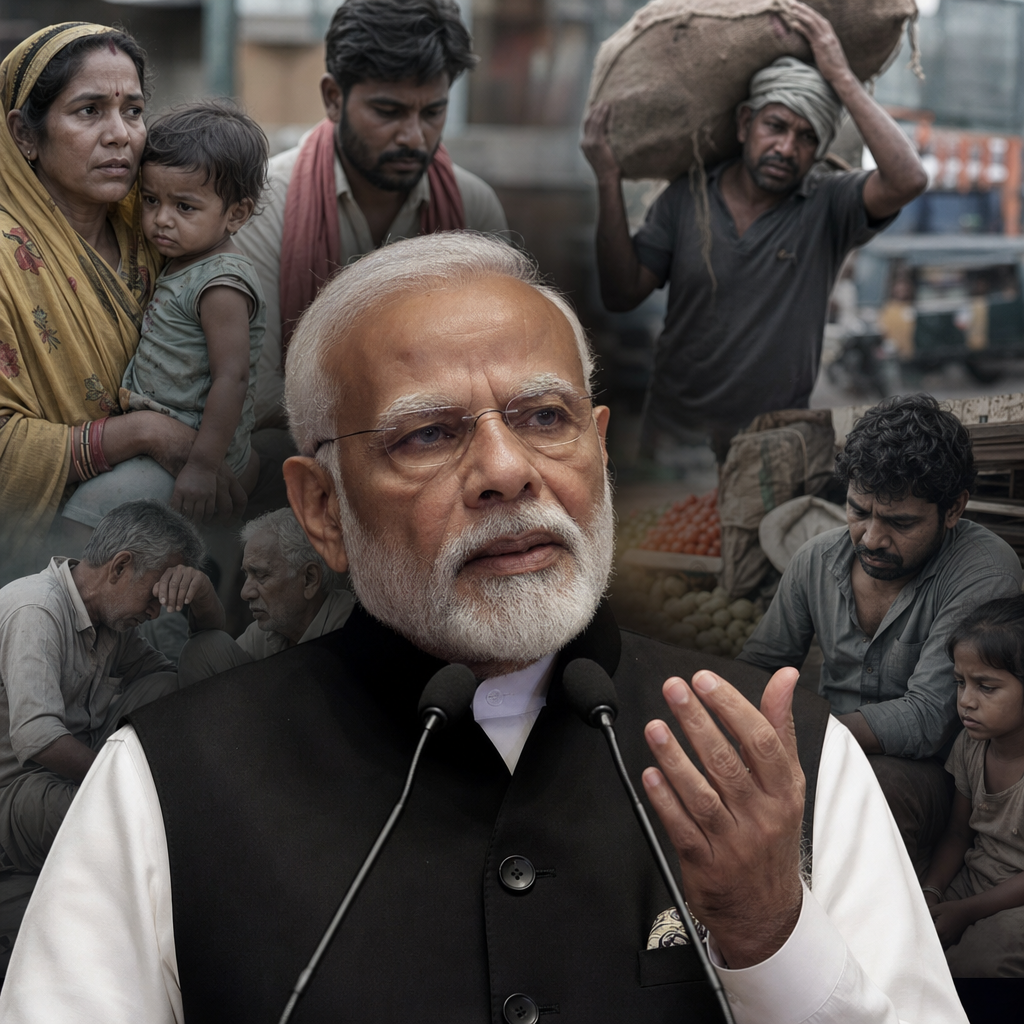
India’s leverage in this crisis is limited, and Prime Minister Narendra Modi’s answer tells you as much. The Hindu argues that his appeal for citizens to buy local, conserve fuel, travel less, and work from home is not a substitute for policy; it is an admission that the shock is structural, not just psychological ( The Hindu). That matters because India is not facing a one-off disruption. It is confronting a supply-chain and balance-of-payments problem driven by West Asia, where oil, freight, fertiliser, and the rupee all move together.
What the appeal really says
The government’s public message has been clear: reduce petroleum consumption, avoid unnecessary foreign travel, support local products, and defer discretionary imports (The Hindu). But the policy response is already broader than rhetoric. Delhi has announced work-from-home days for government staff, “no-vehicle” days, and limits on official travel as part of a 90-day fuel-saving drive ( CNA). India has also raised import taxes on gold and silver to support the rupee and foreign exchange reserves, while state-run oil companies have lifted retail petrol and diesel prices after a four-year freeze (
 BERNAMA; CNA).
That sequence is revealing. New Delhi is trying to dampen demand without triggering panic, but it is also beginning to pass through some of the cost. For markets, that is the real signal: the government wants households to absorb part of the external shock rather than fiscal accounts or state firms. For a country profiled on  India, that is a familiar but dangerous move.
The real pressure points are not rhetorical
The Hindu’s core point is that “behavioral nationalism” cannot solve problems that are built into the economy: heavy import dependence, weak public systems, fragile urban infrastructure, and uneven investment in health and education (The Hindu). CNA’s reporting shows how quickly that vulnerability turns practical: airlines are already warning that higher fuel costs and longer routes are squeezing margins, while Delhi’s fuel-saving measures are a sign that the pressure is not hypothetical (CNA; CNA).
The politics are just as important as the economics. Modi benefits if he can frame sacrifice as discipline and national unity. He loses if the public reads the message as evidence that the state has few tools beyond moral appeal. The Hindu’s warning is that the second interpretation becomes more likely when governments keep asking citizens to adjust while underinvesting in the institutions that would make those adjustments unnecessary (The Hindu).
What to watch next
Watch three decisions. First, whether fuel prices are allowed to keep moving up, or whether the government uses tax relief to soften the blow (BERNAMA). Second, whether import restrictions widen beyond gold into other discretionary goods. Third, whether the Reserve Bank of India tolerates a weaker rupee or moves to defend it. If those choices all point in the same direction, the “citizen sacrifice” pitch will have been only the first phase of a broader stabilization effort, not a political slogan.