Modi's Lok Sabha Bill Defeat
How a failed amendment led to BJP's state election wins
Model Diplomat8 min readIndia
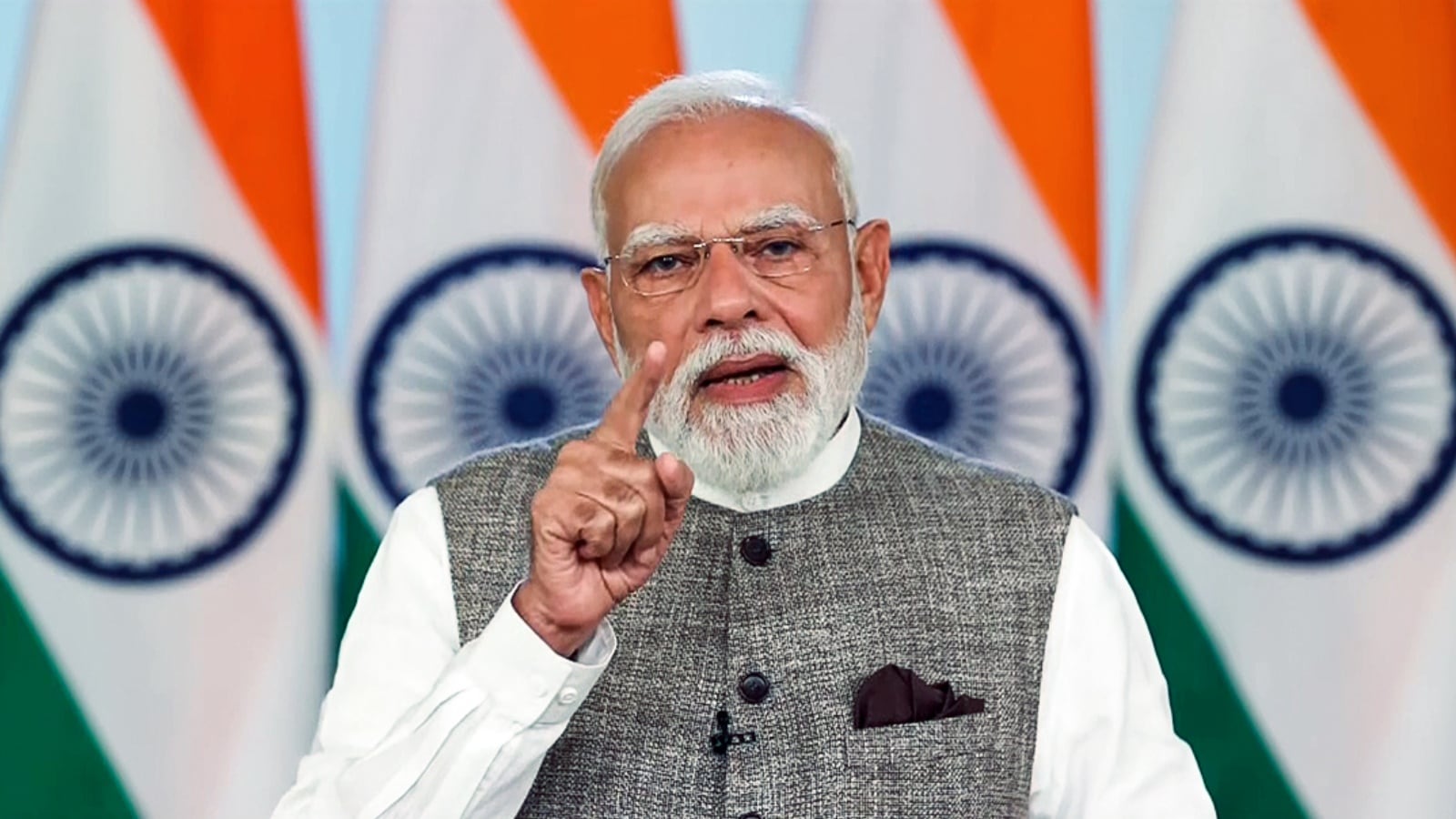
Modi's Lok Sabha Bill Defeat Reshaped India's Political Map
How the 131st Amendment fell 54 votes short on April 17, 2026 — and why the loser of that vote just swept the state elections that followed.
Narendra Modi lost his first constitutional amendment vote in 12 years on April 17, 2026, when the Constitution (131st Amendment) Bill fell 298–230 in the Lok Sabha — 54 votes short of the two-thirds threshold — yet within three weeks his Bharatiya Janata Party (BJP) had captured West Bengal for the first time and watched every major opposition welfarist regime lose power. The defeat that opposition leaders celebrated as the beginning of the end for Modi turned out to be the electoral weapon he needed: by forcing a floor vote he knew he could not win, Modi handed himself a campaign narrative — that a "united opposition killed women's reservation" — that the BJP then rode into the country's most consequential state elections since 2024.
That is the story that a headline count of "first legislative defeat" misses. This was not an accident of arithmetic. It was, on the available evidence, a scripted defeat.
The vote, in precise detail
The government convened a three-day special session between April 16 and 18, 2026, to move a package of three bills — the Constitution (131st Amendment) Bill, the Delimitation Bill and the Union Territories Laws (Amendment) Bill. In a rare primary-source confirmation, Lok Sabha Speaker Om Birla told the House at the session's close that the three bills were debated for 21 hours and 27 minutes with 131 members participating, according to the Press Information Bureau, and that "the Constitution Amendment Bill was not passed by the House."
The amendment sought to raise the Lok Sabha's maximum strength from 550 to 850 seats — 815 for states, 35 for Union Territories — and to strip Article 82's automatic post-census delimitation requirement, letting Parliament decide by simple majority which census to use, the Carnegie Endowment for International Peace reported in a May 14, 2026 paper by Louise Tillin, Milan Vaishnav and Andy Robaina. It also served as the enabling vehicle for the 2023 Nari Shakti Vandan Adhiniyam — the 106th Amendment reserving one-third of Lok Sabha and assembly seats for women — which has sat unimplemented for three years.
Modi's National Democratic Alliance (NDA) holds 293 seats in the current Lok Sabha, Al Jazeera reported on April 16, 2026, well below the roughly 360 needed for a two-thirds majority. The Speaker's ruling, as recounted by
The Print, was blunt: out of 489 members present, 298 voted for and 230 against, and the bill was accordingly rejected. Union Parliamentary Affairs Minister Kiren Rijiju then withdrew the two companion bills, saying they were "interrelated."
The trap door: why a losing bill was ever tabled
The obvious question is why any government moves a constitutional amendment it knows it will lose. The evidence points to three converging incentives.
First, timing. The special session was called days before polling closed in Tamil Nadu and West Bengal — a schedule the NUS Institute of South Asian Studies flagged as inexplicable except as election theatre. "The special session could have been convened after the polls or the law introduced in the coming monsoon session," ISAS noted. It was not. Modi went to television on April 18, 2026, and accused the opposition of committing "foeticide" against women's representation.
Second, the framing. The BJP fused a politically unassailable idea — 33% reservation for women — with the deeply divisive one of population-based delimitation, which threatens to shift seats from the southern and eastern states to the Hindi heartland. Rahul Gandhi captured the trap on the floor of the House, Al Jazeera reported: the proposal, he said, "has no connection to women's reservation. It is merely an attempt to seize power through delimitation and gerrymandering." Opposition parties then had to vote against a bill labelled "women's reservation" to stop a delimitation they saw as existential.
Third, the arithmetic of "one person, one vote." Since Indira Gandhi's 42nd Amendment froze reapportionment in 1976, and the 84th Amendment in 2002 extended the freeze to the first census "after 2026," India's political map has diverged sharply from its population map. Bihar's population has grown roughly 215 percent since 1971; Kerala's has grown 70 percent, Carnegie calculates. An MP from Madhya Pradesh now represents 2.5 million people on average; an MP from Tamil Nadu, roughly 1.85 million,
The Diplomat noted in its April 2026 dispatch. On strict proportionality, the BJP-dominated north gains; the south loses. That is what the numbers show, and that is what the south organised to stop.
Amit Shah's floor gambit — and why it failed
Home Minister Amit Shah delivered the government's reply and, as Carnegie documented, told the House in the closing hours that if needed he could "return in an hour with an amendment" guaranteeing no state's seat share would fall — a uniform 50 percent expansion across all states. The offer was oral, never codified in the bill text. The
Times of India reported that Modi personally appealed for a "conscience vote"; Shah offered to write in the 50 percent uniform-increase guarantee on the floor. In an official record of the debate, the
Press Information Bureau reproduced Shah's argument that Articles 81, 82 and 170 already required periodic delimitation and that opposing the amendment was, "in effect, opposing the increase in seats for Scheduled Castes and Scheduled Tribes."
The offer failed because the opposition read it as a floor concession without legal force. Tamil Nadu Chief Minister MK Stalin had already burned a copy of the delimitation bill and called the plan a "massive historic injustice," according to the BBC. Southern MPs turned up dressed in black. Congress, the DMK, the Samajwadi Party and the CPI(M) held. John Brittas of the CPI(M) had told the BBC beforehand that his party would support 33 percent reservation "based on the current strength of parliament" and demanded a "further freeze on expanding overall seats … until population trends stabilise." That was the fault line — and it did not move.
The counter-intuitive twist: Modi lost the bill, then won the states
Three weeks after the defeat, the political effect flipped. On May 4, 2026, the BJP won West Bengal for the first time in the party's history, ending Mamata Banerjee's 15-year Trinamool Congress reign, the BBC reported. The DMK was swept out of Tamil Nadu by actor Vijay's fledgling Tamilaga Vettri Kazhagam (TVK), which won 108 of 234 assembly seats, per the
BBC. Congress-led UDF took Kerala. The BJP retained Assam. Every welfarist incumbent — Banerjee, Stalin, the Kerala Left — lost,
the BBC noted in its post-poll analysis.
Correlation is not causation. But the sequencing rewards a second look. As senior journalist Sharad Gupta told the BBC's Hindi service days after the vote: "This is a setback for the government because they knew they didn't have the numbers, yet they brought it in the middle of elections — because they wanted to secure the votes of women in West Bengal in large numbers. Now the BJP will say repeatedly in the elections that the opposition prevented us from working for women's rights." The strategy, in other words, was legible on the floor of the House on April 17. It also worked at the ballot box on May 4.
Al Jazeera columnist Nilanjan Mukhopadhyay, writing on May 7, 2026, linked the delimitation push to two other structural moves — a "special intensive revision" of electoral rolls that removed millions of voters in Bengal, and the mooted "One Nation, One Election" plan — as a coordinated recalibration after the BJP's 2024 loss of its outright Lok Sabha majority. The delimitation push, on this reading, is not one bill but a programme.
The unfinished federal argument
The Carnegie paper — the most rigorous piece of analysis in the aftermath — argues that the defeat "sharpened, rather than settled" the debate. Modelled on the government's own "50 percent uniform increase" pledge, a proportionality-preserving Lok Sabha would total roughly 775 members, not the 850 in the bill; a strict one-person-one-vote reapportionment would swing seats toward Uttar Pradesh (which would rise to 131 seats) and Bihar at the expense of Tamil Nadu, Kerala and West Bengal. That is the real fight. Women's reservation was the ribbon around it. The Takshashila Institution, in an April 28, 2026 analysis, called the 850-seat proposal a partial fix that "does not solve and may actually worsen the institutional problem of Parliament's effectiveness" — noting that a larger house does nothing to increase sitting days, strengthen committees or fix the anti-defection law.
There is a structural point buried here. India's constitutional framers designed the Lok Sabha to reflect population; Indira Gandhi's Emergency-era amendment paused that design; a half-century later, the country runs a lower house whose seat allocation is based on 1971 headcounts. Modi's bill would have unpaused it — and the government now has both a mandate boost in the states and a defeated bill to blame the opposition for. The next attempt is a question of when, not whether.
Diplomat View
The received wisdom that April 17 marked "Modi's first defeat in 12 years" reads the vote count and ignores the calendar. Our thesis: the defeat was the mechanism, not the setback. Modi engineered a floor vote on a package he knew was 54 votes short in order to (a) brand every opposition MP a saboteur of women's rights, (b) put southern chief ministers on the record against a reform framed as women's empowerment, and (c) test-run the delimitation coalition ahead of a re-introduction after the next census. Within three weeks the BJP had breached Bengal for the first time, and every opposition welfarist regime except Kerala's incoming UDF had fallen. That is not the shape of a party that lost the exchange.
The forecast: the BJP will re-introduce a repackaged 131st Amendment within the current Lok Sabha term, most likely after the 2026 census enumeration closes but before delimitation data is finalised — using the same women's-reservation shell but with the uniform 50 percent seat-increase now written into the statute rather than left to Shah's oral guarantee. This forecast fails if (i) the BJP concludes that its Bengal breakthrough is durable enough that it no longer needs the delimitation lever, or (ii) southern chief ministers succeed in constitutionalising the state-share guarantee through a Supreme Court reference before the government moves again.
What to watch:
- Monsoon session, July–August 2026: whether the government re-tables a narrower women's reservation bill delinked from delimitation, calling the opposition's stated bluff.
- 2026 census enumeration closure (expected late 2026): the trigger event under the constitutional freeze; delimitation becomes legally permissible immediately thereafter.
- Any Supreme Court reference from Tamil Nadu or Kerala seeking to lock the pre-2026 state seat shares — the most credible legal firebreak against a straight re-run.
Modi lost the vote. He may already have won the argument.
Related: India.
Discover more
India
Gandhi Challenges Modi's Nicobar Project
Rahul Gandhi escalates his campaign against the Great Nicobar project, targeting Modi and turning it into a flashpoint in India's environmental politics debate.

India
Modi’s Australia Visit Signals a Quad Reset
Modi's upcoming visit to Australia signals a strategic reset of Quad ties, deepening India-Australia cooperation as the bloc recalibrates against rivals.
India
Trump’s Delhi Phone-In Signals Thaw
Trump's phone call to India signals a strategic thaw with Modi's government, hinting at warmer US-India relations even as unresolved trade tensions cloud ties.
India
Modi's Gift Diplomacy Boosts India's Global T
Modi's gift diplomacy is turning India's regional brands and cultural heritage into trade leverage, showcasing local craft while courting deeper economic ties.