Modi’s fuel plea collides with convoy politics
Citizens support the conservation message, but the sharper test is whether India’s political class will cut VIP fuel burn and lead by example.
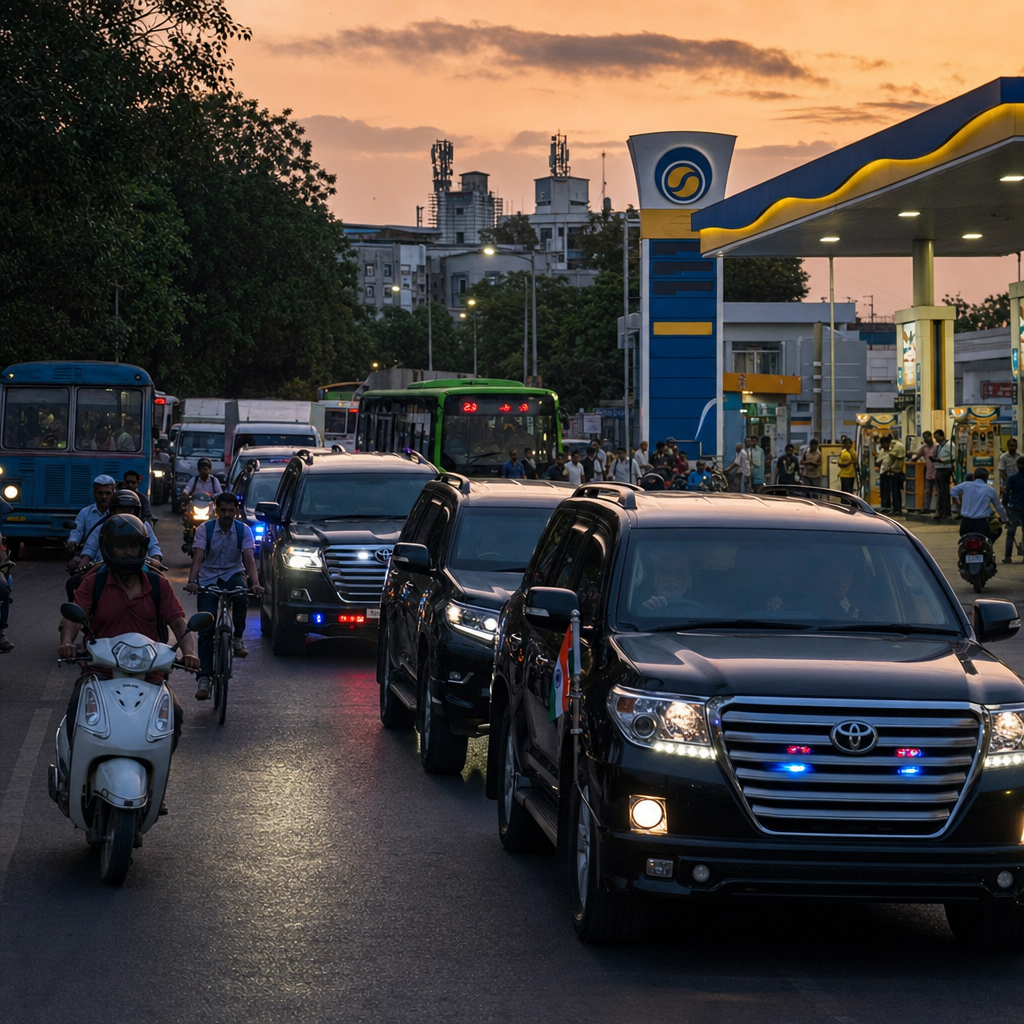
Prime Minister Narendra Modi’s call to save fuel by using public transport, working from home and trimming unnecessary travel has landed as a familiar Indian paradox: the public likes the idea, but leaders are being asked to prove they mean it. In Pune, residents told  The Indian Express they back the appeal in principle, but want ministers to ditch 10- to 15-car convoys, private choppers and short flights that burn fuel in the name of protocol. Modi made the appeal in Hyderabad as global energy shocks pushed up pressure on India’s import bill and foreign exchange reserves,
  The Hindu reported.
The leverage is political, not just economic
The government’s message is straightforward: conserve imported fuel, reduce forex outflows and absorb external shocks with cheaper behavior at home. That is why Modi paired fuel restraint with calls to avoid non-essential foreign travel, cut gold purchases and revive pandemic-era work-from-home habits, according to The Hindu. The power dynamic, though, runs both ways. By framing conservation as national duty, the Centre is trying to shift some of the burden of a West Asia-linked energy squeeze onto households and firms.
That works only if the state itself looks disciplined. Pune residents’ complaint is not about the economics; it is about credibility. If ordinary commuters are told to take the metro while ministers keep convoy culture intact, the message becomes symbolic politics rather than policy discipline. That is why the criticism cuts through: it exposes a visible mismatch between austerity rhetoric and official behavior. For more on how this intersects with domestic political management, see  India.
Why the appeal resonates anyway
There is a real macroeconomic logic behind the pitch. India remains heavily dependent on imported oil, so every uptick in crude prices can worsen inflation, pressure the rupee and widen the current account gap. The Hindu linked the warning to weaker markets and rupee pressure as crude rose. In that sense, the appeal is not performative; it is a preemptive demand-management signal.
But the Pune reaction also shows where the policy runs into friction. Residents pointed to high EV purchase costs, weak charging usage and the need for formal government guidance before companies can reliably shift back to work-from-home. That matters because India can ask for behavioral restraint, but it cannot command it unless the infrastructure and administrative machinery are in place. The message is easiest to say and hardest to implement where commuting, business travel and protocol habits are already entrenched.
What to watch next
The next test is whether the Centre or state governments issue any formal protocol cutback or work-from-home circulars, rather than leaving the appeal at the level of a speech. Watch for whether ministries reduce convoy sizes, whether public-sector offices revive remote work guidance, and whether the government turns this into an enforceable austerity campaign before fuel prices or the West Asia shock worsen further. If it stays rhetorical, the convoy criticism will only harden.