Modi's Employment Promises in Bengal
BJP targets youth with job guarantees ahead of key elections.
Model Diplomat3 min readWest Bengal

Modi's Bengal Jobs Blitz: Five Promises, One Deadline
With Phase 2 polling on April 29 and counting on May 4, BJP is betting that employment pledges can crack Mamata's dominance across 142 seats.
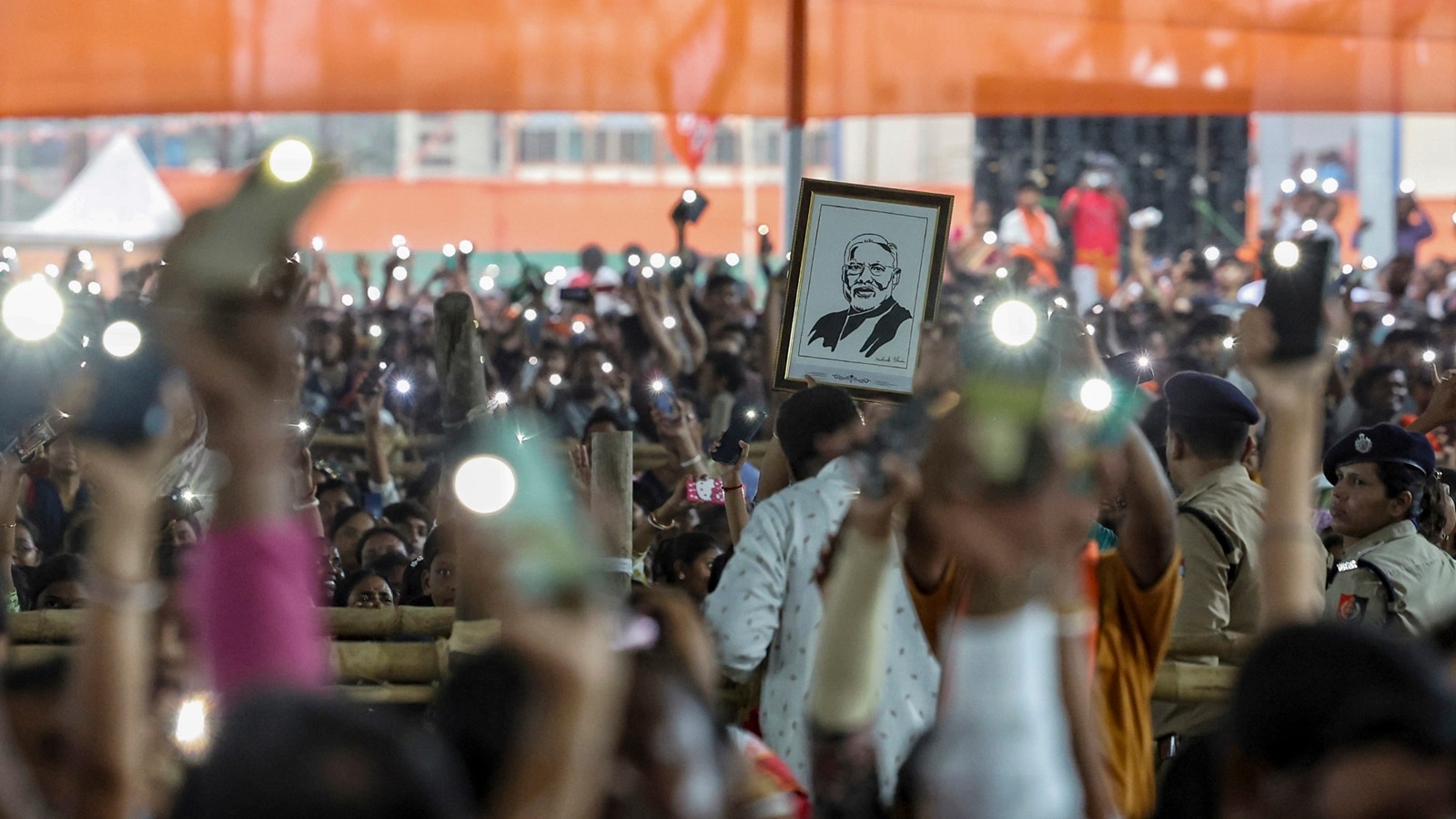
PM Narendra Modi arrived in West Bengal this week with a tightly packaged five-point employment guarantee — on-time government recruitment, 7th Pay Commission implementation, ₹3,000/month unemployment allowance, expedited vacancy filling, and job security protections — aimed squarely at the state's large youth voter bloc ahead of Phase 2 polling on April 29. It's a direct counter-programme to the ruling Trinamool Congress, and the stakes are the clearest they've been in years: vote counts land May 4.
The Leverage Play
The employment pitch is calibrated for a specific vulnerability. West Bengal's government recruitment apparatus has been paralyzed by scandal — the teachers' recruitment scam, which saw mass arrests including former minister Partha Chatterjee in 2022, poisoned TMC's credibility on exactly the jobs issue Modi is now weaponizing. BJP's ₹3,000/month unemployment allowance directly doubles TMC's own manifesto promise of ₹1,500 — the BJP is explicitly out-bidding Mamata on her home turf welfare model, according to The Hindu's manifesto comparison.
The Left Front is also in the field with a "one government job per family" pledge, but with CPI(M) unlikely to win power outright, their role is vote-splitter rather than government-former — which may actually help BJP by pulling anti-TMC votes away from TMC in close districts.
Context: Why Phase 2 Is the Real Test
Phase 1 covered 152 seats across North Bengal on April 23 — traditionally more BJP-friendly terrain including Cooch Behar and Darjeeling. Phase 2's 142 seats dig deeper into South Bengal heartland: districts like Murshidabad, Howrah, and the Kolkata periphery where TMC's organizational machine is at its strongest. Modi's employment guarantees are timed for maximum pre-poll saturation in precisely these harder-to-crack constituencies.
Mamata Banerjee's TMC is contesting 291 of 294 seats and has publicly targeted 226+ seats — a figure that would represent a commanding majority. That confidence reflects genuine organizational depth, but also the pressure of having to defend a record rather than simply attack one. The recruitment scandal, ongoing cost-of-living pressures, and a youth unemployment rate that consistently outpaces national averages give BJP a credible line of attack.
Who Benefits, Who Loses
BJP gains if the employment frame sticks in urban semi-skilled and educated youth demographics — the demographic most directly burned by the recruitment scandal. Mamata loses if turnout in Kolkata's peripheral belts drops among young voters who feel her government failed them.
The wild card is Congress, whose ₹2,000 allowance offer carves out a middle position that could dilute the anti-TMC consolidation BJP needs. Every Congress vote in a tight seat is effectively a TMC lifeline.
Explore the broader India political landscape and how this fits into BJP's national state-level strategy on
International Affairs.
What to Watch
April 29 turnout figures from South Bengal districts — specifically Murshidabad and North 24 Parganas — will signal whether Modi's employment pitch moved voters or was absorbed by TMC's ground machine. May 4 counting is the verdict. If BJP clears 100 seats, it's a structural shift. If TMC holds 180+, Mamata enters a third term with a mandate that resets Bengal politics through the 2029 general election cycle.
Discover more
India
Modi's Women’s Convention in Varanasi
Modi's Varanasi rally frames women's reservation as a national mission, targeting the 2027 Uttar Pradesh elections with a strategic narrative.
India
Women’s Reservation Bill 2026
The Constitution (131st Amendment) Bill, 2026 was defeated in Lok Sabha, revealing deeper political conflicts over women's reservation and delimitation.

Conflict & Security
Drone Warfare Killing Aid Workers at Unprec
Over 1,000 humanitarian workers killed in three years as cheap armed drones collapse legal protections. Gaza, Sudan, Ukraine, and DRC see deliberate targeting of aid convoys and hospitals with zero prosecutions.

Global
World Normalises Taliban as Afghan Women Eras
UN data shows Afghan women erased from public life as Russia recognises the Taliban, EU hosts officials in Brussels, and ICC warrants for gender persecution go unenforced.