Modi Critiques TMC's Women's Reservation Stal
Exploring the political implications of Modi's rhetoric.
Model Diplomat8 min readWest Bengal
Modi's TMC Attack on Women's Reservation: The Real Target Was Delimitation
The 131st Amendment defeat gave Modi his sharpest 2026 campaign line — that the TMC "betrayed" women. The Lok Sabha vote and the Bengal result say something else.
On April 19, 2026, Prime Minister Narendra Modi told a crowd in Bankura that the Trinamool Congress had "betrayed the sisters of Bengal" by helping sink the Constitution (131st Amendment) Bill, 2026 two days earlier — 298 for, 230 against, sixty-two votes short of the two-thirds needed. The line stuck. Three weeks later the BJP took 207 of 294 seats in West Bengal, ending Mamata Banerjee's 15-year rule. But the story the treasury benches do not want told is this: Modi's women's-reservation critique was a rhetorical shield for a delimitation gambit the opposition correctly killed — and Bengal was won on male voters, a shattered welfare coalition and a contested electoral roll, not on the quota bill. That gap between the campaign line and the ballot arithmetic will define what the government does next, because the monsoon session is where it must decide whether to reintroduce the quota alone — which every major opposition party has said it will pass — or keep the linkage that gives Modi his weapon.
What Modi actually said, and where
Addressing rallies across Purulia, Bankura and Paschim Medinipur on April 19, Modi accused the Trinamool Congress of conspiring with Congress to block "the passage of the Constitution (131st Amendment) Bill, 2026 in Parliament," and told women voters they would "punish" the ruling party in the state assembly polls that began four days later, The Economic Times reported. In Bishnupur the same day, he framed the TMC as "an establishment terrified of the change that female empowerment would bring to Bengal," per
Telegraph India, while Banerjee threw the delimitation charge back — the southern argument that a redraw pegged to the 2011 census would gut regional influence. The prime minister's televised address the night before had been more theatrical: opposition parties, he said, had committed "foeticide" by killing women's representation, according to a post-vote analysis by the
NUS Institute of South Asian Studies. NDTV's account of the same rally circuit captured the register: "Maha Jungle Raj," Modi called the TMC's stance, tying quota opposition to what his party has painted as lawlessness in Bengal,
per NDTV.
The bill Modi says the TMC killed
The Constitution (131st Amendment) Bill, 2026 was not a stand-alone women's quota. It was one leg of a three-bill package — the 131st Amendment, the Delimitation Bill, 2026 and the Union Territories Laws (Amendment) Bill, 2026 — that would have raised the Lok Sabha's maximum strength from 550 to 850 seats and used the 2011 census as the basis for redrawing constituency boundaries. The Ministry of Parliamentary Affairs confirmed the outcome on the record: the 131st Amendment "could not have the required majority as per Article 368(2) of the Constitution of India on its motion for consideration, no further action was taken," and the two dependent bills "were not proceeded further," per the Press Information Bureau's session summary. It was the first constitutional amendment to fail on the floor of the Lok Sabha in Modi's twelve years as prime minister.
The Carnegie Endowment's post-mortem is more pointed. The package "sought to operationalize" the 2023 women's reservation act "for a distinctly political purpose: the quota for women functioned as a vehicle to push through a broader reengineering of India's electoral design," writes Carnegie in Delimitation After Defeat. The proposal enlarged the lower house by 50% and treated the new seats as the ones reserved for women — meaning the quota structurally required the redraw. The Delimitation Bill defined "the latest census figures" as those "published as on the date of the constitution of the Commission," which in April 2026 meant the 2011 census — even though a fresh enumeration had just been launched on April 1. That is the sentence the south read as a trap.
Who actually blocked what
The government's arithmetic was known before the session opened. Modi's National Democratic Alliance held 293 seats in a Lok Sabha where a two-thirds majority requires 360 votes, Al Jazeera reported, meaning the passage of any constitutional amendment depended on opposition consent. That consent existed for a clean women's quota. It did not exist for a redraw. "We support reserving 33% seats for women based on the current strength of parliament. We also want a further freeze on expanding overall seats in the parliament until population trends stabilise," CPI(M) MP John Brittas told the
BBC — a position echoed, with variations, by the Congress, DMK, SP and the TMC itself.
Congress leader Rahul Gandhi's rejection was blunter: "The proposal that the government is now bringing has no connection to women's reservation. It is merely an attempt to seize power through delimitation and gerrymandering," he said in a statement quoted by Al Jazeera. Tamil Nadu Chief Minister M.K. Stalin burned a copy of the bill and called the delimitation plan a "massive historic injustice," according to the
BBC. Southern MPs walked in wearing black. The question ISAS-NUS asks — and Home Minister Amit Shah's Lok Sabha reply, published by the
Press Information Bureau, pointedly does not answer — is why the government did not simply delink the quota from the redraw and test the opposition's stated position. On that question, the ISAS-NUS analysis is direct: "Most opposition parties have gone on record saying that they are happy to back the women's reservation bill if the quota is not linked to delimitation."
The candidate-selection number that undercuts the campaign
The critique the BJP would prefer voters not linger on is who actually fields women. For the 2024 general elections, 16% of the BJP's candidates and 13% of the Congress's were women, compared to 33% for the Biju Janata Dal, 29% for the Rashtriya Janata Dal and 25% for the Trinamool Congress, according to ISAS-NUS. In the 2026 West Bengal contest, the BJP nominated 11% women; the TMC nominated 19%. That is the awkward denominator behind Modi's "betrayal" line: the party accusing the TMC of blocking women's representation fielded fewer women, per seat, than the party it accuses.
That gap is not new. In the 2019 Lok Sabha, the BJP fielded more women than any other national party, but women's political representation in India still trailed Nepal, Bangladesh and Pakistan — countries that legislated quotas India kept deferring, the Economist noted after the 2023 passage of the Nari Shakti Vandan Adhiniyam.
What Bengal actually voted on
If Modi's April critique was a bet on women, the Bengal returns cashed a different ticket. Post-poll CSDS-Lokniti data reported by BBC Hindi shows the TMC-led alliance took roughly 47% of the women's vote to the BJP's 42% — a five-point TMC lead among women even as the TMC lost the election. Among men the BJP led by roughly 14 points, 50% to 36%. In other words, the BJP won Bengal by consolidating men, not by breaking Banerjee's grip on women. Among Lakshmir Bhandar beneficiaries — the women receiving TMC cash transfers — 60% still voted for the TMC alliance and 32% for the BJP,
BBC Hindi reported. The women's-reservation line worked as mood music. The vote moved on other rails.
Those rails include a Special Intensive Revision of the electoral rolls that removed roughly 12% of West Bengal's electorate — about nine million voters — before polling day, with 2.7 million left in adjudicatory limbo, per the BBC. Roughly 65% of that 2.7 million were Muslim, according to constituency-level data cited by
BBC News; Muslims accounted for 34% of the nine million removed, well above their 27% share in the state's population from the 2011 census. Post-poll violence killed at least four people; Banerjee accused the Election Commission of "forcefully" taking the mandate away, a
BBC profile reports her saying. Whatever the women's quota did rhetorically, it did not do the arithmetic.
The second-order effect: welfare politics is losing its edge
The deeper lesson from May 2026 is not about the 131st Amendment at all. It is that women-centric welfare, the model the TMC pioneered and Modi copied, no longer delivers automatic incumbency. The DMK lost Tamil Nadu, the TMC lost Bengal, and the LDF lost Kerala — "all the three chief ministers who lost were known as welfarist leaders," the BBC reported. Kotiswaran's cross-state interviews, cited in the same piece, found that a majority of women beneficiaries in Assam, West Bengal, Tamil Nadu and Karnataka "did not vote for the party in power due to the cash transfers." When both sides promise ₹3,000 a month — the BJP's Bengal manifesto doubled the TMC's Lakshmir Bhandar figure, per
ISAS-NUS — the transfer stops being a differentiator.
That is the real political ground under Modi's TMC critique. The quota bill line was not aimed at moving women — Bengal shows it did not, at least not enough — but at neutralising the TMC's strongest brand: female empowerment through welfare. The BJP could not out-transfer Banerjee on cash; it could reframe her as the woman leader who "killed" the women's quota. As journalist Sharad Gupta told BBC Marathi, the government "knew it did not have a two-thirds majority but politics is a game of possibilities. It wanted to build the narrative that the opposition is against women."
The historical parallel that reframes the fight
There is a precedent that clarifies the strategy. In 1976 the Emergency-era 42nd Amendment froze delimitation of Lok Sabha and state assembly seats at 1971 census figures — a freeze extended in 2001 to 2026, on the assumption uniform population growth would eventually make redistribution politically manageable, ORF notes. It did not. Northern states grew faster; southern states grew slower and richer. The 2026 government's ambition is to end that freeze on terms that reward the north — where the BJP is dominant — and dilute the south. Vidhi Centre for Legal Policy's Arghya Sengupta told the
BBC the government's 850-seat cap has an "unclear" basis "not proportionate to population growth recorded in the 1971 and 2011 census," and warned that in the absence of a proportional formula, outcomes "could vary — and favour more populous states." The women's quota, in this reading, is not the point of the amendment. It is the wrapper.
The bottom line
The Bottom Line: Modi's attack on the TMC over the women's reservation stall works as campaign choreography — betrayal, punishment, closing week — but it papers over the government's own choice to bind a broadly-supported gender reform to a contested redraw the south refuses to accept. The Bengal vote proved the line could travel; it also proved it did not persuade the women it named. What to watch is the monsoon session: if the government reintroduces the quota unlinked from delimitation and the opposition passes it, the story ends. If it does not, the "betrayal" narrative was always the point.
Discover more

India
INDIA Bloc's Delimitation Strategy
The INDIA bloc is using delimitation and women's reservation to challenge the BJP's federalism narrative, setting up a high-stakes fight over representation.
India
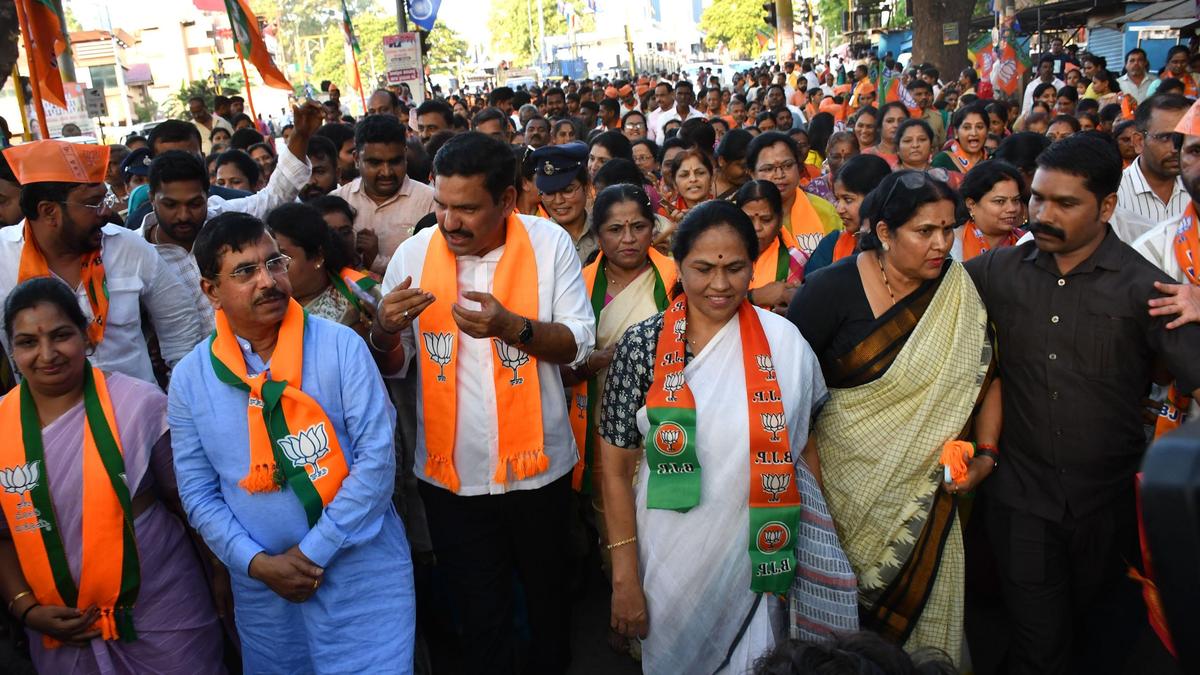
BJP Uses Hubballi Protests for Women's Quota
The BJP is using Hubballi protests to pin blame for delays on women's reservation onto Congress in Karnataka, sharpening its women's quota political offensive.
India
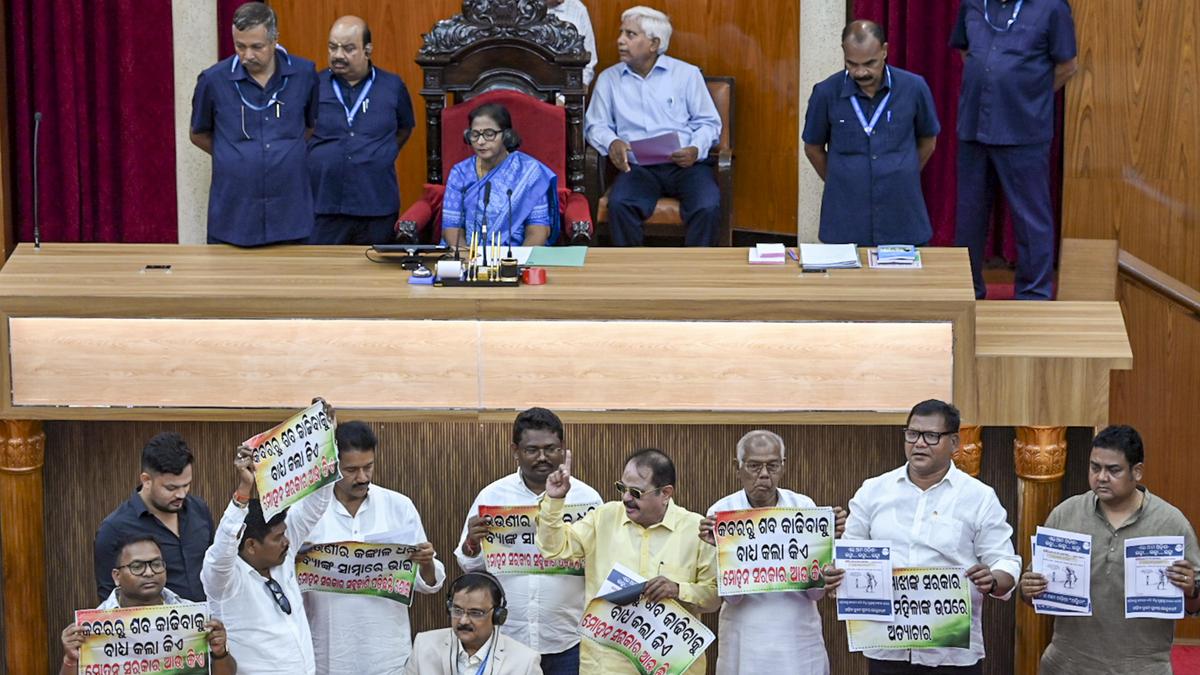
Odisha's Women's Reservation Debate
The fight over women's reservation in Odisha is shaping up as a calculated BJP and BJD strategy aimed squarely at gaining ground before the 2029 elections.
India
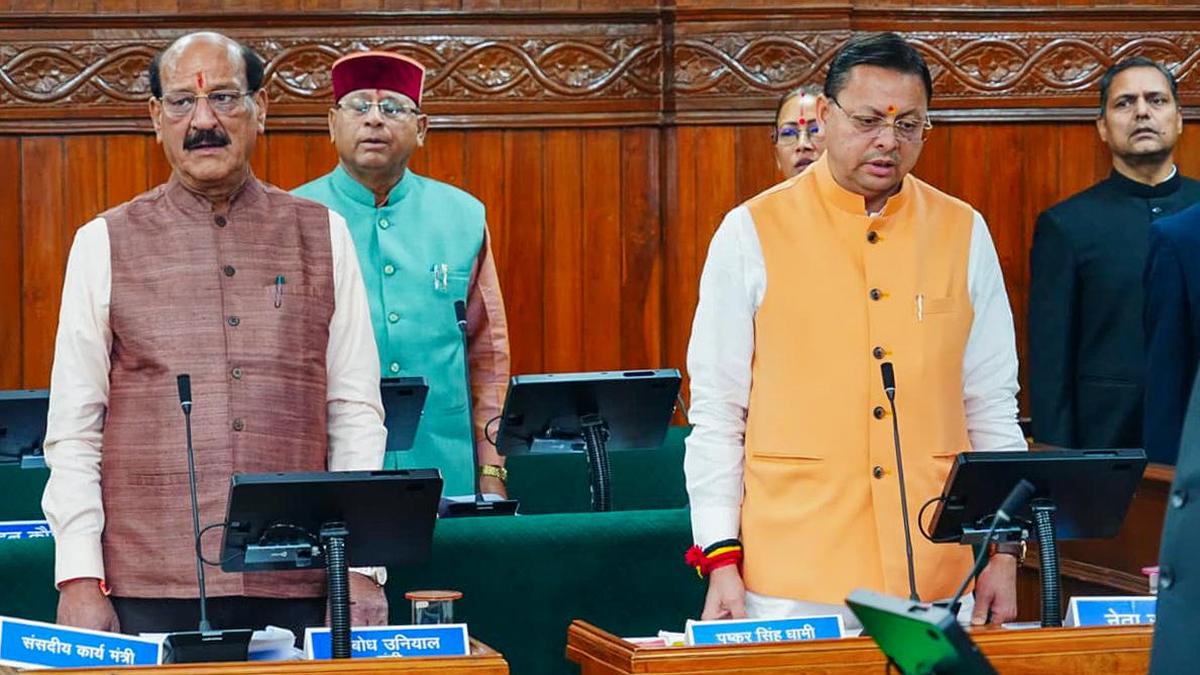
Uttarakhand's Push for Women's Reservation
Uttarakhand CM Dhami's push for women's reservation is a strategic political move that follows national defeat and aims to reclaim momentum for the BJP.