PM Modi Targets TMC Over Women's Reservation Bill in Bengal Rally
Modi accuses TMC of betraying Bengal's women by opposing the 33% women's reservation bill, intensifying electoral turf war ahead of West Bengal polls.
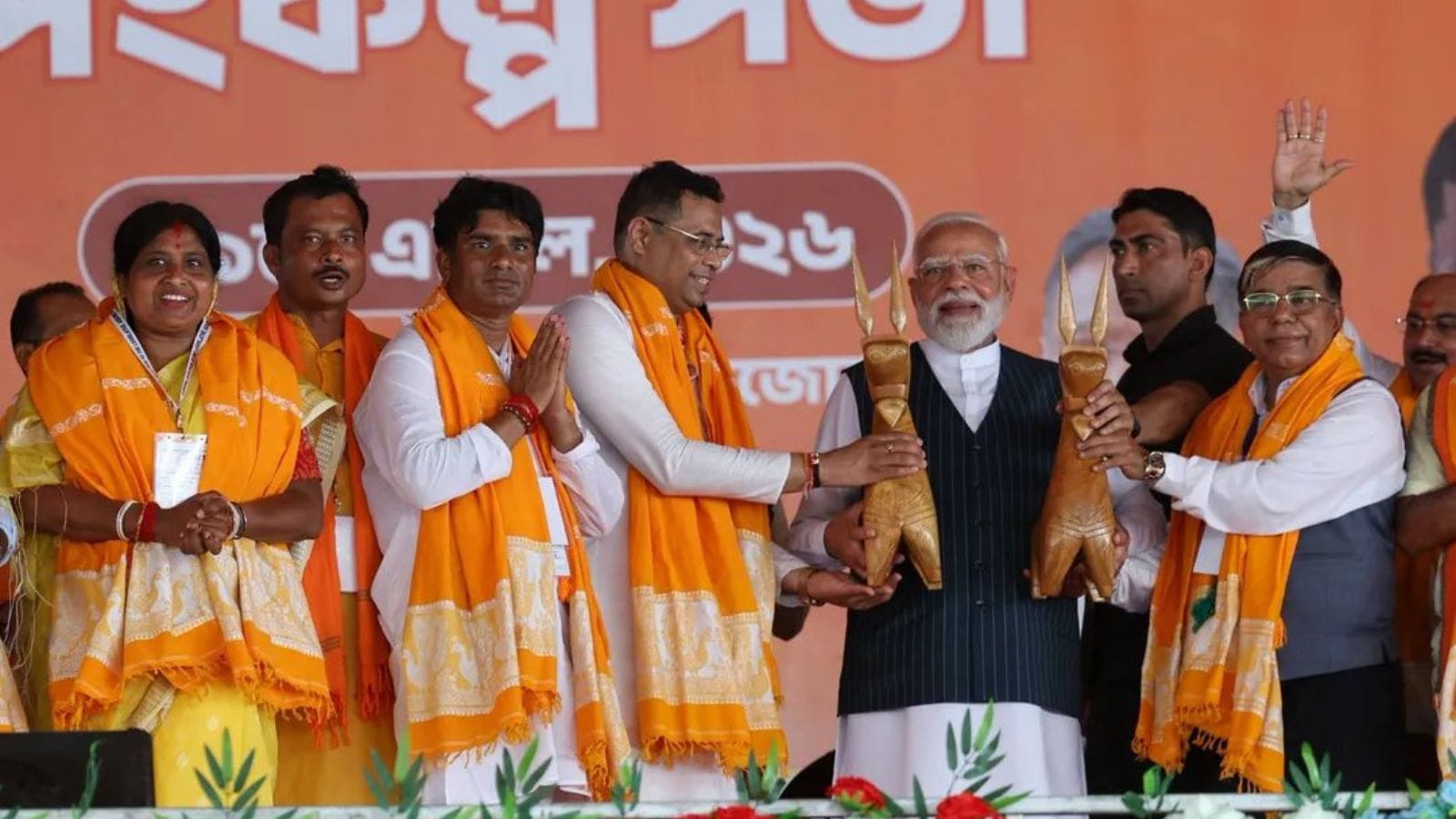
Prime Minister Narendra Modi launched a blistering attack on the Trinamool Congress (TMC) in Bishnupur, West Bengal, sharply criticizing the regional party for opposing the 33% women's reservation bill in Parliament. Modi accused the TMC of conspiring with the Congress to block a measure meant to empower women politically in Bengal, calling it a betrayal of the state's female electorate. He also accused the TMC of engaging in appeasement politics and alleged "loot" of water resources, sharpening his narrative against Chief Minister Mamata Banerjee’s party ahead of the crucial state elections  Indian Express.
Why This Matters: Women’s Reservation as a Political Battleground
The 33% women's reservation bill aims to reserve a third of seats in state legislative assemblies and Parliament for women, a long-pending reform championed by several BJP leaders. Modi’s emphasis on this bill strategically frames the BJP as a party championing women’s empowerment, contrasting it against the TMC, which Modi paints as obstructing progress for political gain.
West Bengal’s elections are historically volatile, and the women’s vote is a significant demographic. By accusing the TMC of betrayal, Modi seeks to peel off women voters disillusioned with the state's political status quo. The allegation that TMC and Congress colluded to block the bill plants the BJP as the more progressive choice, a narrative designed to undercut the TMC’s claim to social welfare leadership.
Modi’s charge of appeasement politics reflects a broader BJP strategy to depict regional parties as sectarian and incapable of delivering good governance. By linking the water "loot" allegation to governance failure, Modi is expanding the grievance beyond political representation to essential resources and public trust, variables that weigh heavily in Bengal’s politically aware electorate.
The Political Calculus in Bengal’s Polarized Terrain
The BJP's attack aligns with its nationwide aircraft of using social reform issues to build its expanding grassroots support. Bengal, which saw a BJP surge in 2019, represents both an opportunity and a challenge for Modi’s party. The TMC under Mamata Banerjee remains deeply entrenched, with a strong cadre base and regional identity.
However, Modi’s campaign is tapping into latent frustrations on governance and social equity. The women’s reservation debate is not just policy but a symbolic battleground showcasing competing visions: the BJP’s claim to inclusive development and the TMC’s portrayal as a protector of Bengali identity and interests.
Historically, the BJP has pushed women’s reservation to mobilize a larger gender-inclusive base, replicating recent trends from states like Madhya Pradesh and Gujarat where similar efforts helped consolidate support. Modi’s vocal criticism also pressures other parties like Congress to clarify or alter their stance on the bill, potentially rewiring alliances and electoral equations.
What to Watch Next
As the West Bengal elections approach, monitor how the TMC responds to Modi’s allegations. Will Mamata Banerjee recalibrate her stance on women’s reservation or double down on opposing what she might paint as a BJP “divide and rule” scheme? The Congress’s position is crucial; any shift in their support or opposition to the bill could fragment the anti-BJP vote further.
Additionally, track voter turnout and sentiment among women in Bengal. Modi’s narrative hinges on convincing them that the TMC has failed their interests. If successful, the BJP could significantly erode the TMC’s dominant base.
Finally, water resource management and local grievances highlighted by Modi might color governance debates, making election outcomes a referendum not just on identity but also on delivery of basic services.
This development is a clear example of the BJP’s strategic pivot to issue-based attacks layered over identity politics in a high-stakes regional contest. Expect an intensification of such tactics as the campaign unfolds.
For deeper context on the West Bengal political landscape and electoral dynamics, see  India Country Profile and Global Politics.