Modi Accuses TMC of Blocking Women's Bill
BJP's strategy in Bengal capitalizes on women's issues.
Model Diplomat8 min readWest Bengal

Modi's TMC Attack on Women's Bill Paid Off in Bengal
Modi accused TMC of blocking the Women's Reservation Bill after the 131st Amendment failed 298–230 in April. Two weeks later, BJP won Bengal for the first time.
Prime Minister Narendra Modi lost a constitutional amendment on April 17, 2026 — and then used the loss to win West Bengal on May 4. His charge that the Trinamool Congress "conspired" with the Congress to kill the Constitution (131st Amendment) Bill was not a lament; it was campaign infrastructure, deployed within 48 hours of the vote and aimed at the one bloc that had kept Mamata Banerjee in power for 15 years: women. The BJP engineered a bill it could not pass, then monetised the defeat in a state where it had never governed.
The bill that was designed to fail
The special session Modi convened between April 16 and 18, 2026 was not primarily about women. According to Al Jazeera's April 16 dispatch, the government yoked the 33% women's quota — already enacted as the Nari Shakti Vandan Adhiniyam in 2023 — to two other bills that would have expanded the Lok Sabha from 543 to 850 seats and redrawn constituencies using 2011 census data. The BBC's coverage from the same day noted the
amendment required a two-thirds majority, which Modi's National Democratic Alliance, with 293 seats, could not deliver alone.
The vote failed on April 17: 298 in favour, 230 against, roughly 62 votes short. Lok Sabha Speaker Om Birla, in a Press Information Bureau session summary, confirmed the amendment "was not passed by the House" after 21 hours and 27 minutes of debate. The NUS Institute of South Asian Studies flagged the historic character of the defeat: it was the
first constitutional amendment blocked under Modi.
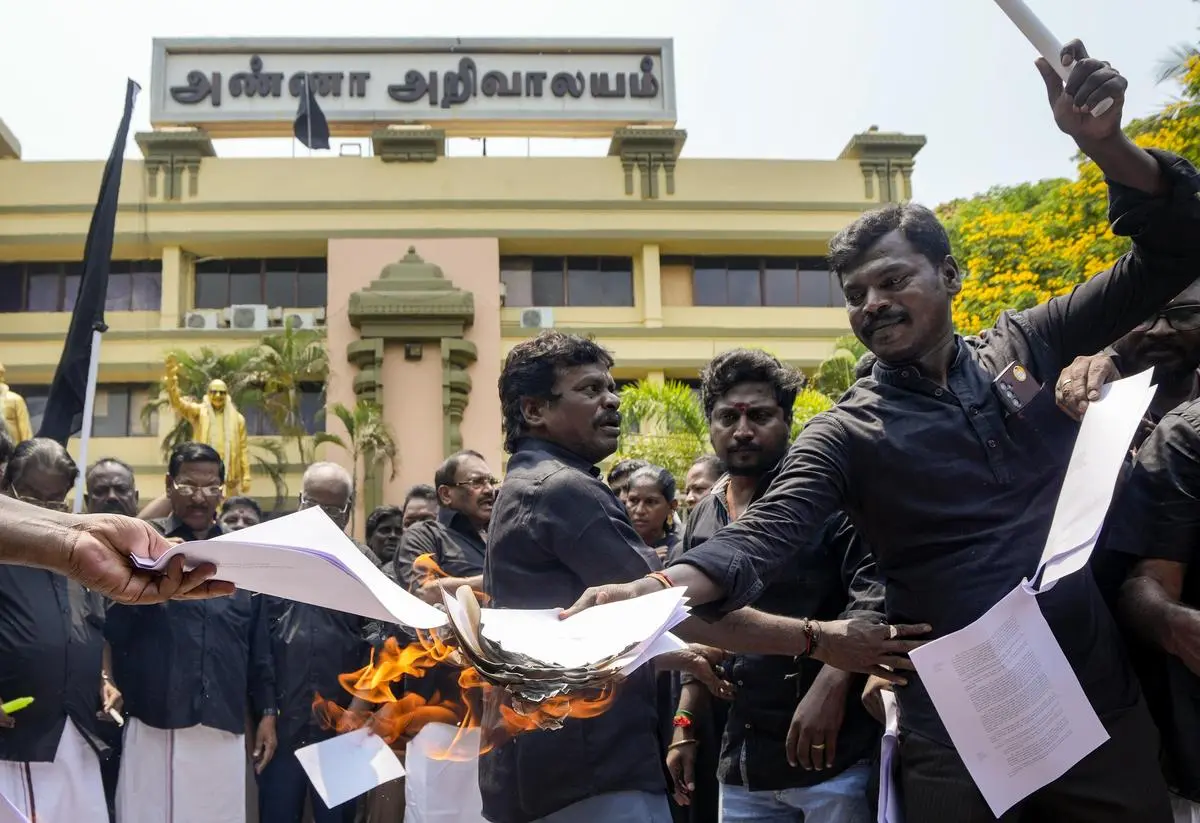
The opposition's case was narrow and specific. Congress's Rahul Gandhi said his party backed women's reservation but rejected the delimitation package as "an attempt to seize power through delimitation and gerrymandering," per Al Jazeera. CPI(M) MP John Brittas told the BBC his party supported "reserving 33% seats for women based on the current strength of parliament" but opposed expanding the house. Tamil Nadu Chief Minister M.K. Stalin burned a copy of the bill in Chennai. The government could have delinked the women's quota from delimitation and, as ISAS-NUS observed in its post-mortem, "tested the opposition's resolve." It chose not to.
That choice is the story. The Carnegie Endowment's May 2026 analysis noted that the 2023 women's reservation law was already legally frozen — its implementation is statutorily tied to a fresh census and delimitation, neither of which can conclude before 2027. Passing a stand-alone women's amendment would have been achievable in a monsoon session. Bundling it with a southern-state-alienating delimitation exercise on the eve of Tamil Nadu and Bengal elections was the tell.
The pivot to Bengal
On April 18, in a televised address, Modi called the defeat "foeticide" and said the opposition "will be surely punished." On April 19, in Bankura, he made the pivot explicit. According to The New Indian Express, he told a rally in Bishnupur that TMC had "betrayed" the women of Bengal and that they would deliver the verdict at the ballot box. NDTV reported him linking the defeat to a broader "Maha Jungle Raj"
attack on the Banerjee government.
The Economic Times, tracking Modi's rally schedule in the state's tribal belt, captured the transactional pitch: more Lakhpati Didis, doubled cash transfers, and revenge for the women's bill. Outlook noted that Modi tied the message specifically to
the 131st Amendment defeat, giving the charge a documentary anchor.
The attack was aimed at the demographic Banerjee had made her firewall. As the BBC's post-election autopsy of Bengal recounted, Lokniti-CSDS's 2021 survey put TMC's support among women at 50%, four points ahead of men — the payoff of Lakshmir Bhandar cash transfers and years of women-forward welfare. Break that firewall, and Bengal cracks.

The credibility gap the BJP did not want discussed
The tactical brilliance sat on top of a substantive weakness. On the actual metric — how many women each party fields — TMC leads the BJP by a wide margin.
Al Jazeera's analysis of the 18th Lok Sabha found women made up 38% of TMC's MPs, against 12.5% for the BJP and 13.1% for the Congress. In the 2026 Bengal contest itself, ISAS-NUS reported the BJP fielded women in
only 11% of seats compared to TMC's 19%. A
peer-reviewed 2025 study by Rajeev Ranjan found women were 9.5% of all Lok Sabha candidates in 2024 and 13.62% of elected MPs — down from 14.7% in 2019 — with TMC leading the field.
The Congressional Research Service, in its briefing on the 2024 election, placed women at 14% of the 18th Lok Sabha overall. The Observer Research Foundation's pre-election analysis noted West Bengal already had the
highest women's representation of the poll-bound states at 13.7% — under a TMC assembly. Modi's charge that TMC had betrayed women was, on the numbers, indefensible. It worked anyway.
Why the numbers didn't matter
Two things carried the attack past its factual weakness.
The first is that the amendment vote gave Modi a paper trail. Opposition parties could argue they were protecting federalism and southern seats, but the BBC noted a persistent legal ambiguity: the bill did not spell out how women's constituencies would be chosen or how proportionality would be preserved, and Arghya Sengupta of the Vidhi Centre for Legal Policy told the BBC the choice of 850 seats had no "clear basis." That complexity is unloseable on a rally stage. "They voted against women" is not.
The second is that Bengal was already tilting. Political scientist Rahul Verma of the Centre for Policy Research told the BBC the BJP had polled around 39% in three straight Bengal cycles and needed only "another 5-6% to cross the line." It got there, winning 44% of the vote share and roughly 200 of 294 seats on May 4, per Al Jazeera's election-day report. Turnout hit 92.93% — the state's highest ever — helped by a Special Intensive Revision that removed roughly nine million voters from the rolls before polling, and which Banerjee's camp called a "mass disenfranchisement exercise." In the first phase,
women's turnout of 92.69% exceeded men's, per Election Commission figures reported by BBC Bengali.
The women's-bill attack did not create the wave. It supplied the narrative permission structure — a reason for a woman who had voted TMC for a decade to walk away without feeling she had abandoned Banerjee's welfare project. Neelanjan Sircar of the Centre for Policy Research, quoted by Al Jazeera, described an "urbanity effect": urban women in particular had drifted from TMC as governance frustrations mounted. Modi handed them a headline.
What the primary record shows the government knew
The government's own communications betray the pre-planning. In an April 15 address at the "Nari Shakti Vandan" event on the eve of the session, Modi framed the coming bill as the culmination of a "40-year" debate and said opposition parties had "strongly insisted that it must be implemented by 2029." The message pre-positioned blame: any opposition to the package would read as opposition to women, not opposition to delimitation.
Home Minister Amit Shah's intervention on the House floor sharpened it. Shah insisted the delimitation reforms would raise southern-state seat counts from 129 to 195 and would not take effect before 2029 — an argument aimed at Stalin and the DMK, not Banerjee. In the same speech he confirmed the census's "house-listing phase" was underway, meaning that even had the amendment passed, implementation would have waited on data still years from publication.
The Takshashila Institution's post-defeat analysis argued the bill's expansion of the Lok Sabha to 850 seats "does not solve and may actually worsen" institutional problems in Parliament — reinforcing the view that the legislative package was politically, not administratively, motivated.
What to watch next
- The Tamil Nadu counter-narrative. The DMK held Tamil Nadu on May 4 despite the same national attack lines, but actor Vijay's TVK emerged as the largest bloc. Whether the BJP repackages the women's-bill argument for the 2027 southern round — Kerala, Puducherry, and the run-up to Karnataka — will show whether the Bengal formula scales.
- The 2027 census results. Delimitation and the women's reservation are legally tethered to it. Once state-level population figures land, the government can either revive a stand-alone women's quota bill (calling the opposition's April bluff) or reintroduce the full 850-seat package with new leverage.
- The 131st Amendment, take two. The BJP is unlikely to let the defeat stand on the record. A rebranded bill in the winter 2026 session, split from delimitation, would strip the opposition of its April rationale — and test whether "TMC blocked women's reservation" survives as an attack once TMC is willing to vote yes.
- The SIR litigation. The nine million voters struck from Bengal's rolls are the subject of pending tribunal cases and are likely to reach the Supreme Court, which could reopen questions about the legitimacy of the May 4 verdict.
Diplomat View
Modi's "TMC blocked the women's bill" line was not a factual claim; it was a manufactured cudgel, and the evidence that it was manufactured is that his government structured the legislation to be unpassable. The BJP could have brought a clean 33% women's amendment and dared the opposition to vote no. It brought a delimitation package instead, lost, and then spent the following fortnight campaigning on the loss. The payoff in Bengal — a state the BJP had never won, delivered on the back of eroding TMC support among urban women — vindicates the tactic. Expect a rerun: a stand-alone women's bill in the winter session, framed as Modi "trying again" after the opposition's April sabotage. The forecast changes only if the opposition pre-empts it by tabling its own clean women's-quota amendment first. That single move would collapse the Bankura narrative — and, on current signals, is precisely why it will not happen.
The Bottom Line
The bottom line: Modi's charge that the TMC blocked the Women's Reservation Bill is politically potent and factually thin — TMC fields more women than any national party — but the charge was engineered to survive scrutiny by outrunning it. The 131st Amendment was designed to fail so its defeat could be weaponised in Bengal, and on May 4 the BJP collected. The next women's bill Modi introduces will not need to pass to do its work.
Discover more

India
Modi's Nari Shakti Gambit
Modi's Varanasi speech redefines women's empowerment as a Nari Shakti gambit, blending appeals for women's votes with the contentious delimitation debate.
India
Mahila Congress Postcard Push for Women's Quo
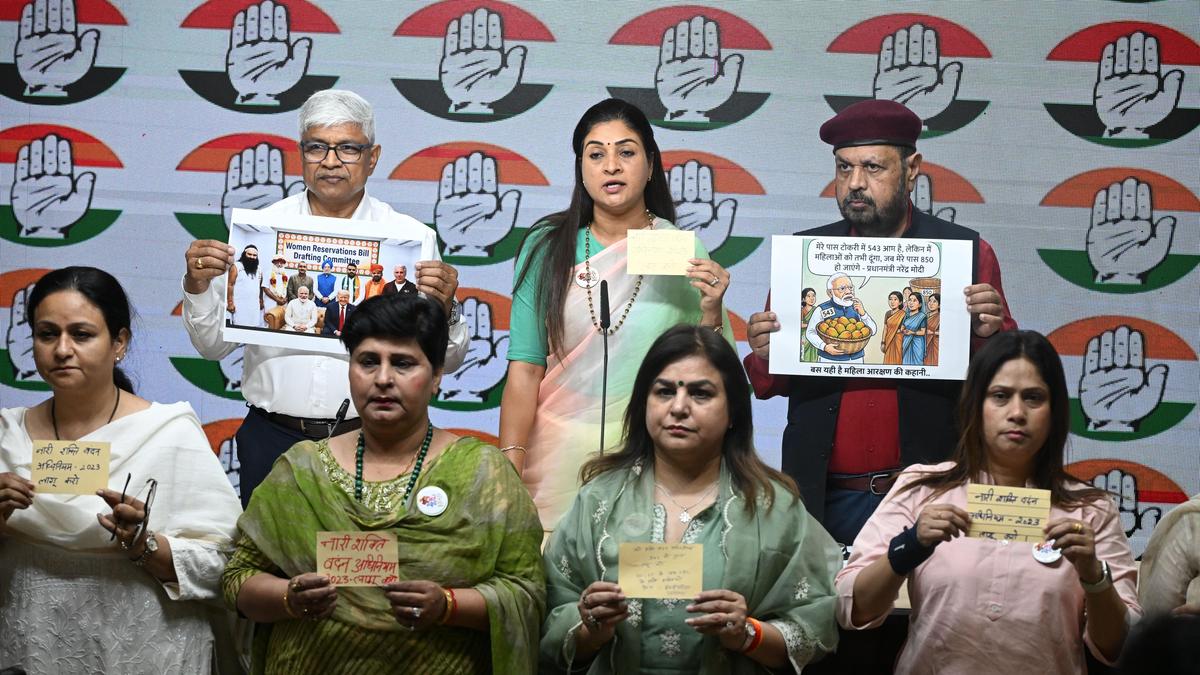
The Mahila Congress launches a postcard campaign to demand immediate implementation of the 33% women's reservation in India's Lok Sabha, targeting PM Modi.
India
Yogi Adityanath's BJP March on Women's Bill
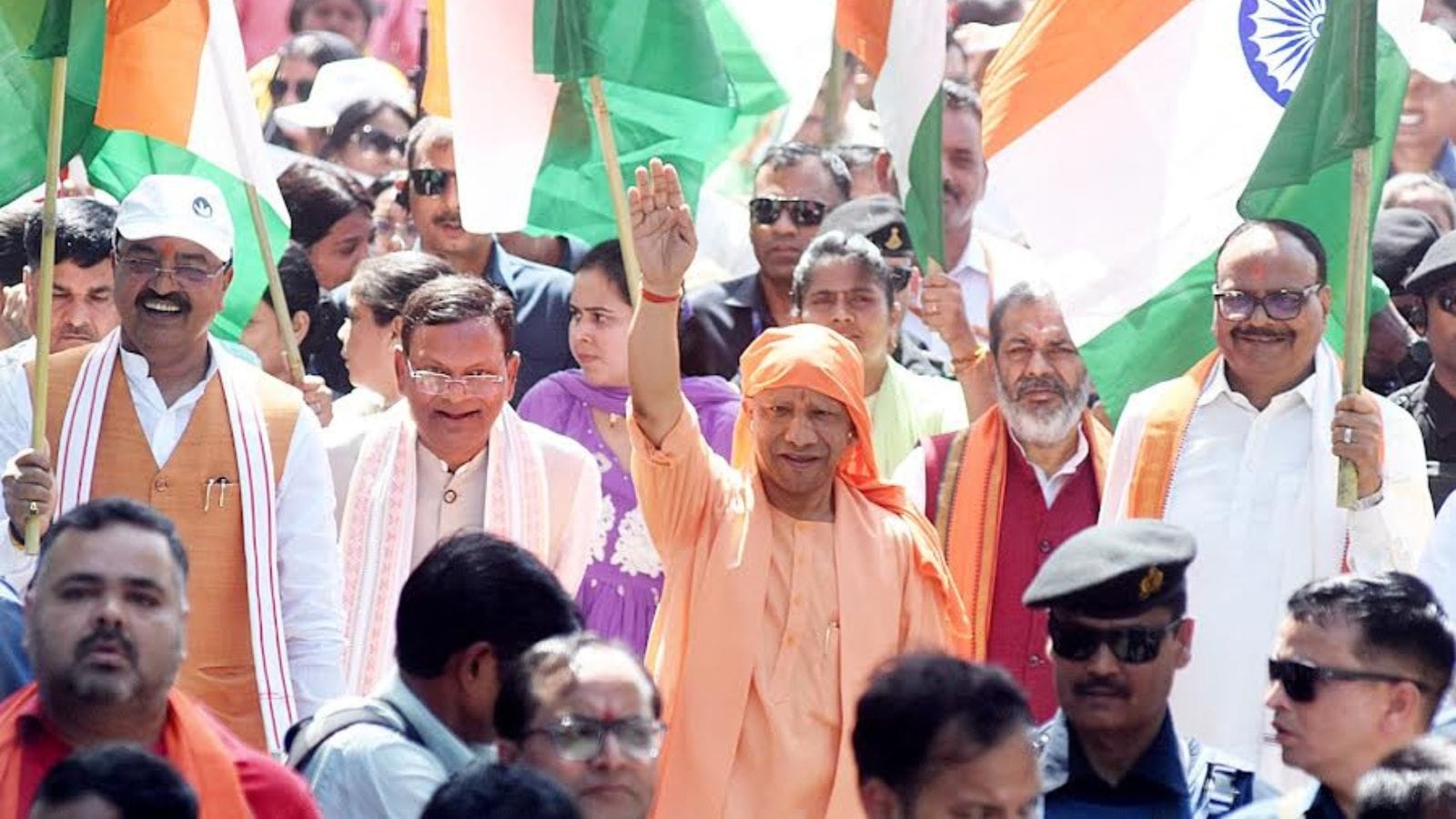
Yogi Adityanath's padyatra after the women's bill defeat aims to reshape UP's 2027 elections, targeting women's votes against the SP.
India
Women’s Reservation Bill 2026
The Constitution (131st Amendment) Bill, 2026 was defeated in Lok Sabha, revealing deeper political conflicts over women's reservation and delimitation.