Modi Blasts TMC for Blocking Women's Bill
Modi's rally rhetoric turns legislative loss into electoral victory.
Model Diplomat7 min readWest Bengal
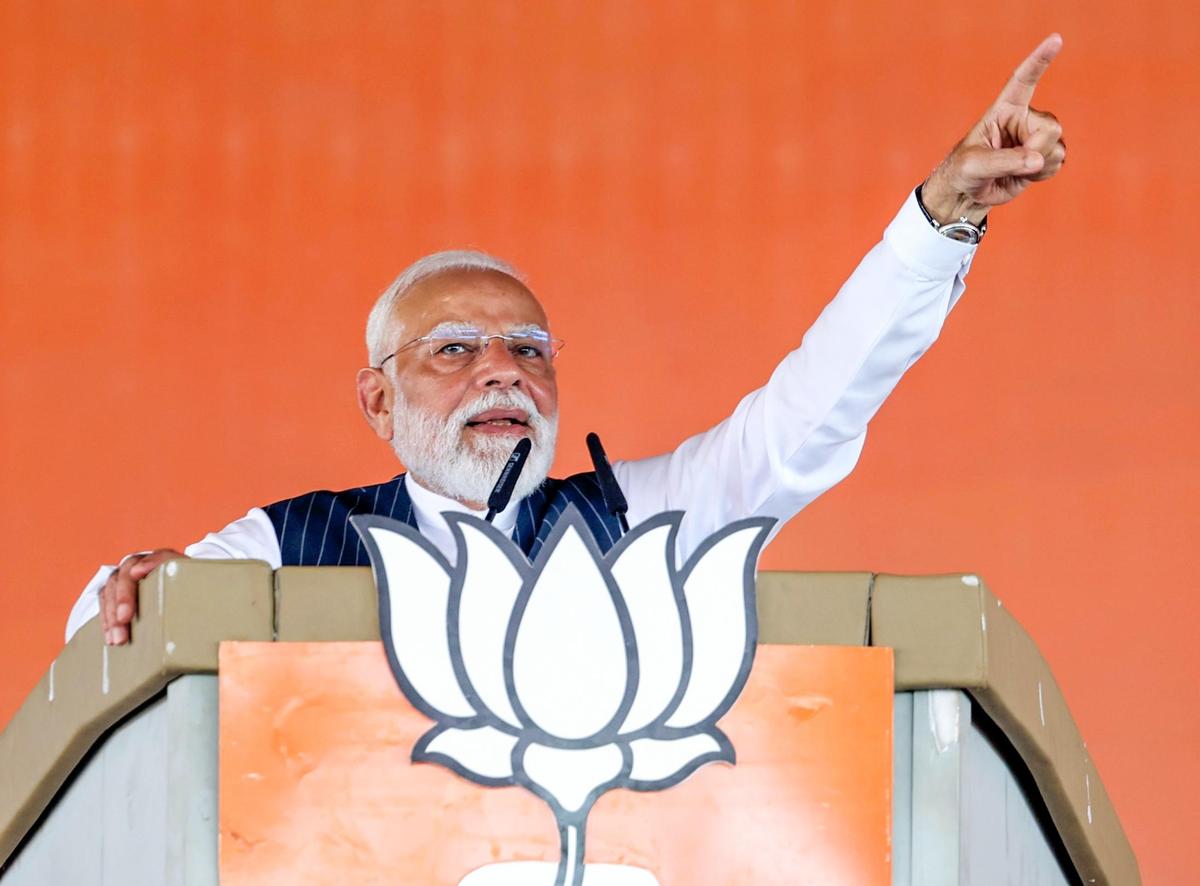
Modi Blasts TMC for Blocking Women's Bill — and Wins Bengal
Modi's Bankura attack on the TMC for defeating the 131st Amendment turned a lost parliamentary vote into a decisive West Bengal campaign weapon.
At a Bishnupur rally in Bankura on April 19, 2026, Prime Minister Narendra Modi told a crowd of women in West Bengal's tribal belt that the Trinamool Congress had "betrayed" them by helping to kill the Constitution (131st Amendment) Bill two days earlier — and would be "punished" at the ballot box. Two weeks later, they were: the BJP won 207 of 294 seats, Mamata Banerjee lost her own constituency, and a bill Modi's government had itself designed to fail became the most effective piece of losing legislation in his 12-year tenure. The women's reservation defeat did not stall the BJP — it detonated the TMC's female voter base.
The New Indian Express reported Modi accusing the TMC and Congress of "conspiring" to prevent the 33% women's quota.
NDTV recorded the "Maha Jungle Raj" jibe.
The Times of India captured the prior day's address to the nation, in which the prime minister likened the opposition's vote to "foeticide." The rhetoric was extreme. The tactical purpose was clean: convert a legislative loss on delimitation into an electoral referendum on gender.
What actually died on April 17
The bill Modi mourned was not a simple women's quota. The 2023 Nari Shakti Vandan Adhiniyam — the 106th Amendment — had already reserved one-third of Lok Sabha and state assembly seats for women, unanimously, with 454 of 456 MPs present voting in favour, per the BBC's 2023 explainer. What it lacked was implementation: the 2023 law is triggered only after a fresh census and delimitation.
The Constitution (One Hundred and Thirty-First Amendment) Bill, 2026 was the vehicle to unlock that trigger. According to the Carnegie Endowment, it would have raised the Lok Sabha cap from 550 to 850 seats — 815 to states, 35 to Union Territories — and removed the constitutional requirement that seats be reapportioned after every census, letting Parliament pick which census to use. A companion Delimitation Bill would have used the 2011 census to redraw constituency boundaries. The women's quota was the wrapper.
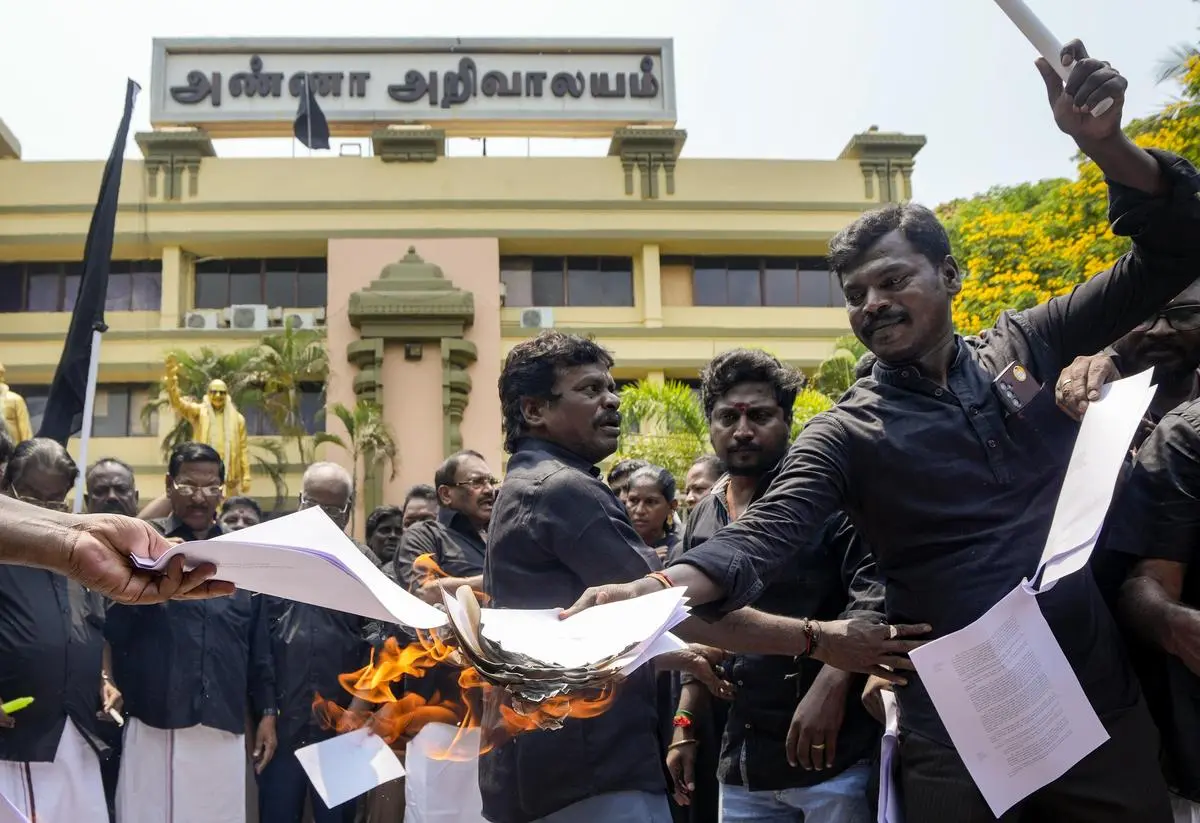
Everyone in the chamber understood what the wrapper contained. India last redrew parliamentary seats after the 1971 census; a 2011-based redistribution would shift power northward, penalising southern states that curbed fertility, as the BBC laid out. Tamil Nadu Chief Minister M K Stalin burned a copy on the floor. Congress leader Rahul Gandhi called it "an attempt to seize power through delimitation and gerrymandering,"
Al Jazeera reported.
On April 17, 2026, the amendment failed 298–230 — 62 short of the 360 required under Article 368(2) of the Constitution. The Press Information Bureau confirmed the bill "could not have the required majority" and that both dependent bills fell with it. The
Lok Sabha Speaker's official summary recorded 21 hours and 27 minutes of debate across two days. It was the first constitutional amendment to fail on Modi's watch, the NUS
Institute of South Asian Studies noted.
The trap the opposition walked into
The government's floor management was, by conventional standards, poor. The NDA holds 293 seats in the Lok Sabha — 67 short of a supermajority — and, as Al Jazeera documented, made no serious effort to negotiate with regional parties before convening the special session on the eve of two state elections. Home Minister Amit Shah offered a proportional 50% seat expansion only in his closing speech — after the bloc positions had hardened.
Read as legislation, this was malpractice. Read as politics, it was the design. A bill the government knew could not pass created a floor of losers Modi could name from every rally stage. The prime minister spent April 18 apologising to "mothers and sisters" on national television; the BBC Hindi service carried his line that opposition parties had "sinned" and would "certainly be punished." Two days later he was in Bankura converting that punishment into a vote instruction.
The opposition's dilemma was structural. Congress, DMK, TMC and Samajwadi Party could not vote for a package that let a BJP-controlled Parliament choose the delimitation census — southern and eastern states risked permanent under-representation. But voting no let Modi accuse them, accurately in the narrow sense, of blocking the women's quota. The ISAS analysis posed the question the opposition never answered on the floor: if Modi genuinely wanted the quota, why not delink it from delimitation and dare them to oppose it?
Why the attack landed in Bengal
West Bengal is where Modi went first with the "betrayal" line because it is where the TMC's female-voter firewall was thickest. The Lokniti-CSDS post-poll in 2021 showed the TMC's support among women at roughly 50% — four points above its male vote share — built on schemes like Lakshmir Bhandar. The BJP's Bengal manifesto in 2026 doubled the offer to ₹3,000 a month, per the NUS
pre-poll assessment. The reservation-bill charge was the rhetorical companion to that cash bid — a story about who had abandoned women that the BJP needed circulating in the campaign's final 72 hours.
Whether it moved votes is impossible to isolate from anti-incumbency, communal polarisation and a controversial voter-list revision that removed roughly 2.7 million names — 4.3% of the ballots cast, the Al Jazeera post-mortem noted, citing analyst Yogendra Yadav. What is clear is the scale: BJP vote share climbed above 44% from 39% in 2021; TMC fell from 213 seats to 80; Banerjee lost Bhabanipur to Suvendu Adhikari, who was sworn in as chief minister, as the
BBC reported. On the same day,
NPR noted, the BJP retained Assam and Puducherry.
The uncomfortable subplot is candidate arithmetic. Per ISAS, the BJP fielded 11% women candidates in West Bengal against the TMC's 19%. In the 2024 general election, 16% of BJP candidates were women against 25% for TMC and 33% for the BJD. The party that lost the bill nominated more women than the party that ran against it — a fact that produced no visible drag on the BJP's Bengal sweep.
Who actually loses
Women. The 2023 amendment ties the one-third quota to a fresh census and subsequent delimitation, and until those complete, the 33% floor cannot take effect. The Carnegie Endowment is blunt: with the 131st Amendment defeated, "no fresh delimitation exercise can be undertaken until the results of the next census — currently underway — are officially published," and the reservation "cannot take effect until after the 2027 census is completed and a new delimitation is carried out."
The numbers underline the delay's cost. Women hold about 14% of Lok Sabha seats — 74 of 543, per a 2025 study in the IJRISS journal — and just 9% of state assembly seats on average. The
Observer Research Foundation puts India near the bottom of global rankings for female legislative representation despite three decades of promised reform.
The winners are Modi, personally and politically, and the BJP's Bengal machinery, which now controls a state it had never governed and holds 44 Lok Sabha seats it can plausibly redraw once the census lands. The losers are M K Stalin, whose DMK collapsed to 59 seats behind actor-turned-politician Joseph Vijay's Tamilaga Vettri Kazhagam, per ISAS; Banerjee, out of office for the first time since 2011; and the women's-quota constituency itself, whose 33% floor is now hostage to a census timetable Modi controls.
Diplomat View
The 131st Amendment was not primarily a women's reservation bill and Modi did not mourn its defeat — he engineered the frame that made its defeat useful. The politically consequential move was tying an emotionally unassailable reform to a fiscally-federally toxic one, then denying the opposition a clean vote. That the trap worked in Bengal, where TMC's female-voter moat was deepest, is the strongest evidence that the tactic is now core to the BJP's 2027–29 delimitation playbook. Expect it to be reused, in slightly modified form, once the census delivers new population data.
The forecast: Modi will reintroduce a version of the 131st Amendment in the Winter or Budget session of 2027, after preliminary census results but before final delimitation — this time with a pro-rata seat guarantee in the text itself, calibrated to peel one or two southern regional parties off the opposition bloc. What would falsify this call is a clean, delinked reintroduction of the women's quota in the Monsoon 2026 session, on the current 543-seat strength. That would signal the government has decided the reservation itself is worth more than the delimitation lever. Nothing about the Bengal result suggests it has reached that conclusion.
What to watch
- July–August 2026 Monsoon Session: whether the government reintroduces women's reservation delinked from delimitation, or lets it sit until after the census.
- March 2027 census fieldwork completion: the earliest date on which the government could credibly restart the 131st Amendment fight.
- TVK–Congress government formation in Tamil Nadu: if Chief Minister Vijay's coalition holds, it becomes the most vocal southern veto point against any 2011-census-based delimitation.
The Bottom Line
Modi lost a constitutional amendment on the floor of the Lok Sabha on April 17, 2026, and won West Bengal thirteen days later. The women's reservation bill was the wrapper for a delimitation fight the opposition could not accept and could not politically survive rejecting — and the BJP's Bengal sweep is the first hard evidence that this trap will be the template for the 2029 general election, not an accident of one bad legislative week.
Discover more

India
Modi's Nari Shakti Gambit
Modi's Varanasi speech redefines women's empowerment as a Nari Shakti gambit, blending appeals for women's votes with the contentious delimitation debate.
India
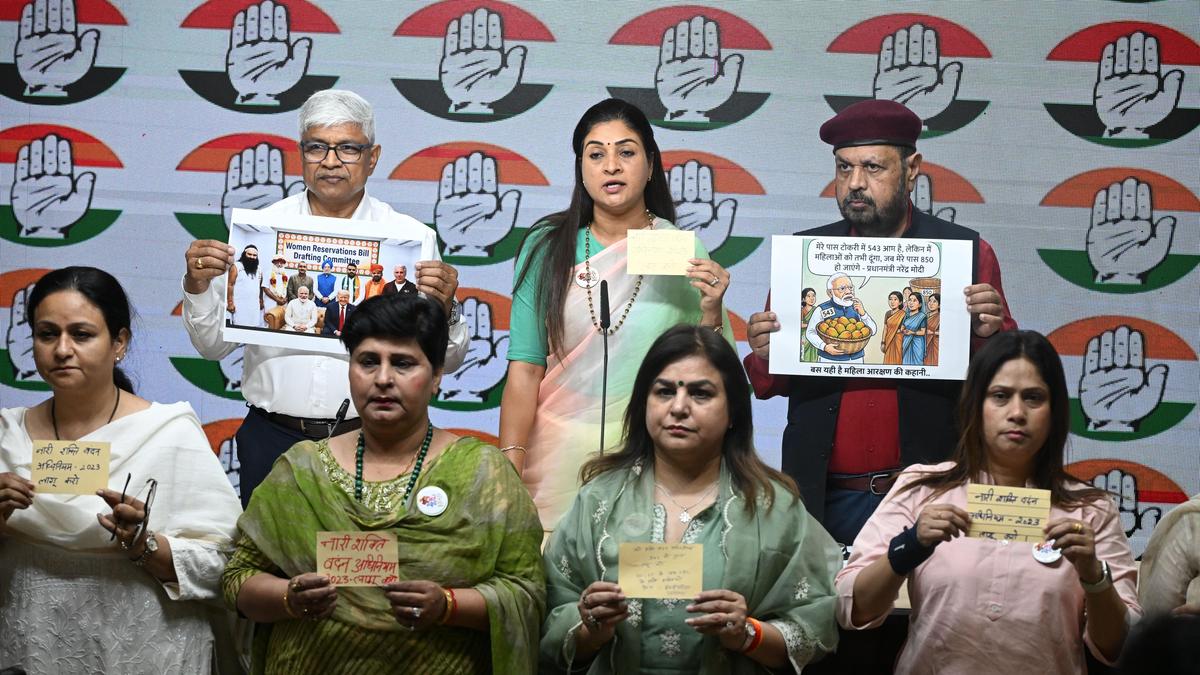
Mahila Congress Postcard Push for Women's Quo
The Mahila Congress launches a postcard campaign to demand immediate implementation of the 33% women's reservation in India's Lok Sabha, targeting PM Modi.
India
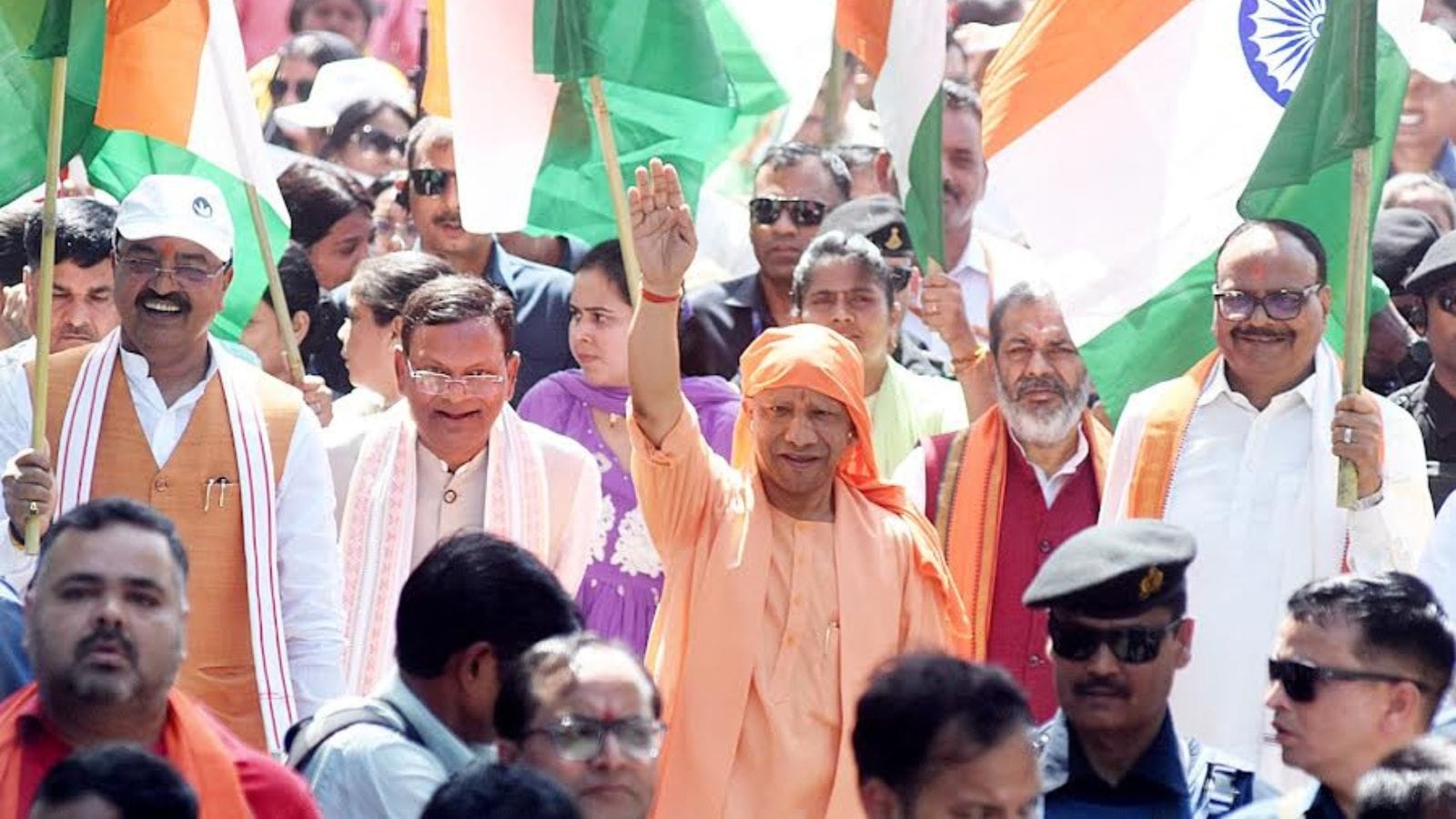
Yogi Adityanath's BJP March on Women's Bill
Yogi Adityanath's padyatra after the women's bill defeat aims to reshape UP's 2027 elections, targeting women's votes against the SP.
India
Women’s Reservation Bill 2026
The Constitution (131st Amendment) Bill, 2026 was defeated in Lok Sabha, revealing deeper political conflicts over women's reservation and delimitation.