Martin Family’s Split Wins Reveal Tamil Nadu’s Party Pragmatism
Three Martins won on AIADMK, TVK and LJP tickets, showing how family networks can outlast party ideology in Tamil Nadu and Puducherry.
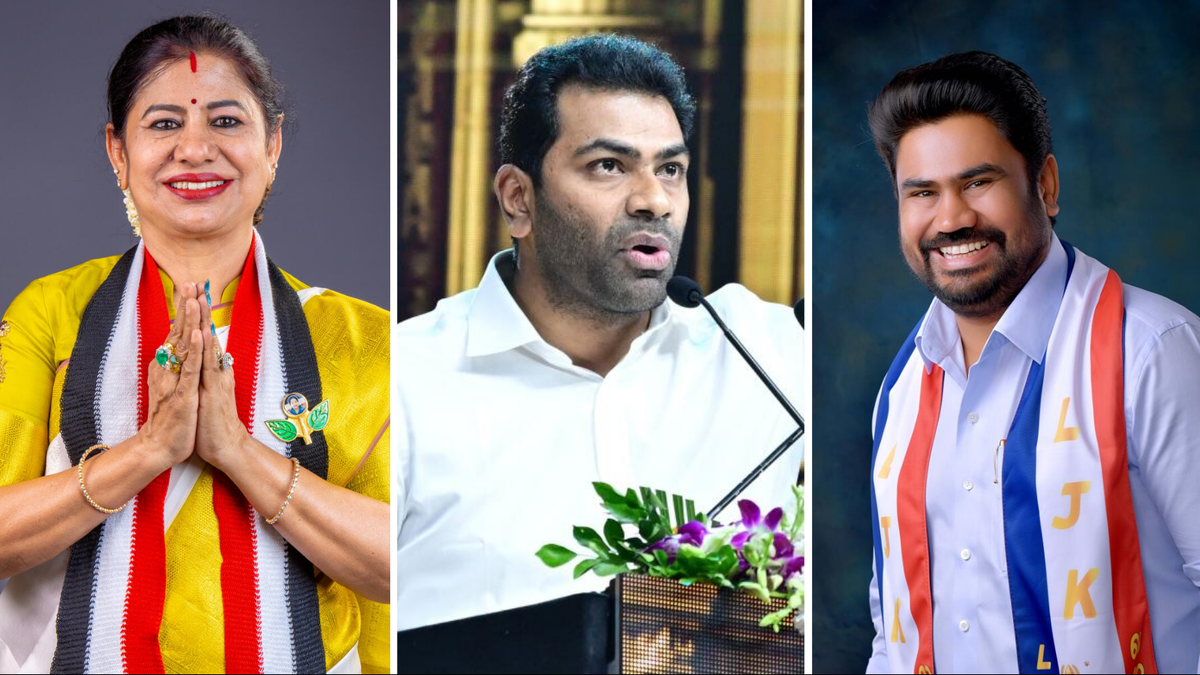
The political leverage here is not with the parties; it is with Santiago Martin’s family brand. In the 2026 Tamil Nadu and Puducherry elections, Leena Rose Martin won Lalgudi for the AIADMK, her son-in-law Aadhav Arjuna won Villivakkam for the Tamilaga Vettri Kazhagam, and her son Jose Charles Martin won Kamarajar Nagar in Puducherry, where he was backed by the BJP-led NDA through the Lok Janshakti Party, according to  The Hindu,
  India Today, and
  News9live.
Why this matters
This is a rare case of one family hedging across multiple party labels and winning everywhere it mattered. The Hindu says the Martins are one of the few political families in Tamil Nadu split across parties, even as the Karunanidhi family remains largely inside the DMK. That tells you something important about how power now works in the state: party identity still matters, but local name recognition, money, and constituency-level networks can matter more.
The Martin wins also show that newer and smaller formations are willing to take family-linked candidates if they bring a usable vote base. News9live says Leena Rose had been with IJK before moving to the AIADMK, while Jose Charles Martin floated his own party, Latchiya Jananayaka Katchi, before entering the NDA fold through the LJP. In other words, these are not ideological conversions; they are tactical placements.
For the broader  India picture, this is a reminder that dynastic politics is not only about one party or one coalition. It is a cross-party asset. The family is valuable because it can be monetized by different organizations at different times, not because it is loyal to a single political project.
Who benefits, who loses
The immediate winners are the Martins and the parties that secured their seats. The AIADMK gets a foothold through Leena Rose Martin, TVK gets a high-visibility win through Aadhav Arjuna, and the NDA expands in Puducherry through Jose Charles Martin, as summarized by The Hindu and  Devdiscourse.
The losers are the parties’ claims to ideological coherence. When close relatives can sit in rival camps and still deliver victories, the label on the ballot looks less like a conviction than a contract. That may be efficient in the short run, but it also deepens the gap between party platforms and the actual machinery that wins elections.
What to watch next
The next test is whether these wins stay isolated or become coordinated political capital when the new Assemblies settle in. Watch whether the AIADMK, TVK, and Puducherry’s NDA give the Martins formal roles, and whether the family begins to act as a bloc on local issues. If that happens, this ceases to be a curiosity and becomes a template.