Mark Tully Analyzes Modi's Governance
Tully's latest views on Modi's evolving political strategies
Model Diplomat3 min readIndia

Mark Tully’s Take on Modi’s Government: What His Latest Opinions Reveal
Mark Tully’s recent analysis of India’s political scene sheds light on the Modi government’s evolving approach to governance and policy.
Mark Tully, a veteran observer of Indian politics writing for the Hindustan Times, has been offering nuanced commentary on the state of India’s governance under Prime Minister Narendra Modi. His latest opinion pieces do more than echo the usual narratives; they distill emerging trends in how Modi’s administration is navigating Parliament, policy challenges, and broader political currents.
Why Tully’s Insights Matter Now
Tully’s perspective is valuable because he combines decades of experience covering Indian politics with a clear-eyed understanding of current dynamics. His recent commentary touches on several key themes:
-
Governance Style: Tully highlights how Modi’s government continues to consolidate power not just through electoral victories but via institutional means in Parliament and bureaucracy. This reflects Modi’s shift from charismatic leadership to a more structural grip on governance.
-
Policy Focus: He notes a dual push—on one hand, aggressive economic reforms like expanding digitization and infrastructure; on the other, a more cautious approach when dealing with social policies, where Modi faces resistance from both political opponents and within the BJP’s own ranks.
-
Parliamentary Challenges: Tully underscores Modi’s paradoxical situation: commanding a majority but still encountering significant debate and pushback, especially on issues like agricultural reforms and civil liberties. This shows India’s democracy remains robustly contested, not a rubber stamp.
His writings mirror broader political analyses that India’s democracy under Modi is in a phase of complex transition—neither fully authoritarian nor traditionally liberal democratic—testing the resilience of institutions and civil society alike.
The Underlying Political Calculus
Why does this matter? Because these dynamics signal how Modi’s government will shape India’s trajectory over the next several years, impacting everything from foreign policy to social cohesion. For instance:
-
Modi’s ability to maintain control over Parliament while managing intra-party factions will determine if he pushes through reforms or opts for incrementalism.
-
The government’s handling of dissent and protests, highlighted by Tully, could either deepen societal divisions or compel Modi to recalibrate his approach.
-
Economic reforms are pivotal not only for growth but also for Modi’s political capital. Failure or delay could weaken his appeal, especially in a diverse electorate.
What to Watch Next
Tully’s analysis points to several red flags and opportunities for India watchers:
-
Next Parliamentary Sessions: Will Modi’s government face more resistance, or can it streamline its legislative agenda? Key bills on the economic front and civil rights will be bellwethers.
-
Political Opposition Moves: How will opposition parties capitalize on public discontent around contentious policies? Their strategy might be crucial in shaping India’s political balance in future elections.
-
Policy Outcomes: Early signs from ongoing reforms, particularly in agriculture and digital infrastructure, will reveal whether Modi’s governance model is sustainable or hitting critical limits.
In sum, Mark Tully’s recent writings serve as a timely, expert lens on the unfolding chapter of Indian politics under Narendra Modi. They remind us that beneath the headlines of electoral wins and policy announcements lies a deeper story about power, governance, and democracy in transition.
For more on India's political landscape and governance, see India Politics and broader
Global Politics.
Discover more
India
Farmers’ Protests Resurge in India
Farmers' protests are reigniting across India, exposing deep political and economic tensions and key agricultural grievances ahead of the 2027 elections.

Conflict & Security
Drone Warfare Killing Aid Workers at Unprec
Over 1,000 humanitarian workers killed in three years as cheap armed drones collapse legal protections. Gaza, Sudan, Ukraine, and DRC see deliberate targeting of aid convoys and hospitals with zero prosecutions.

Global
World Normalises Taliban as Afghan Women Eras
UN data shows Afghan women erased from public life as Russia recognises the Taliban, EU hosts officials in Brussels, and ICC warrants for gender persecution go unenforced.
Conflict & Security
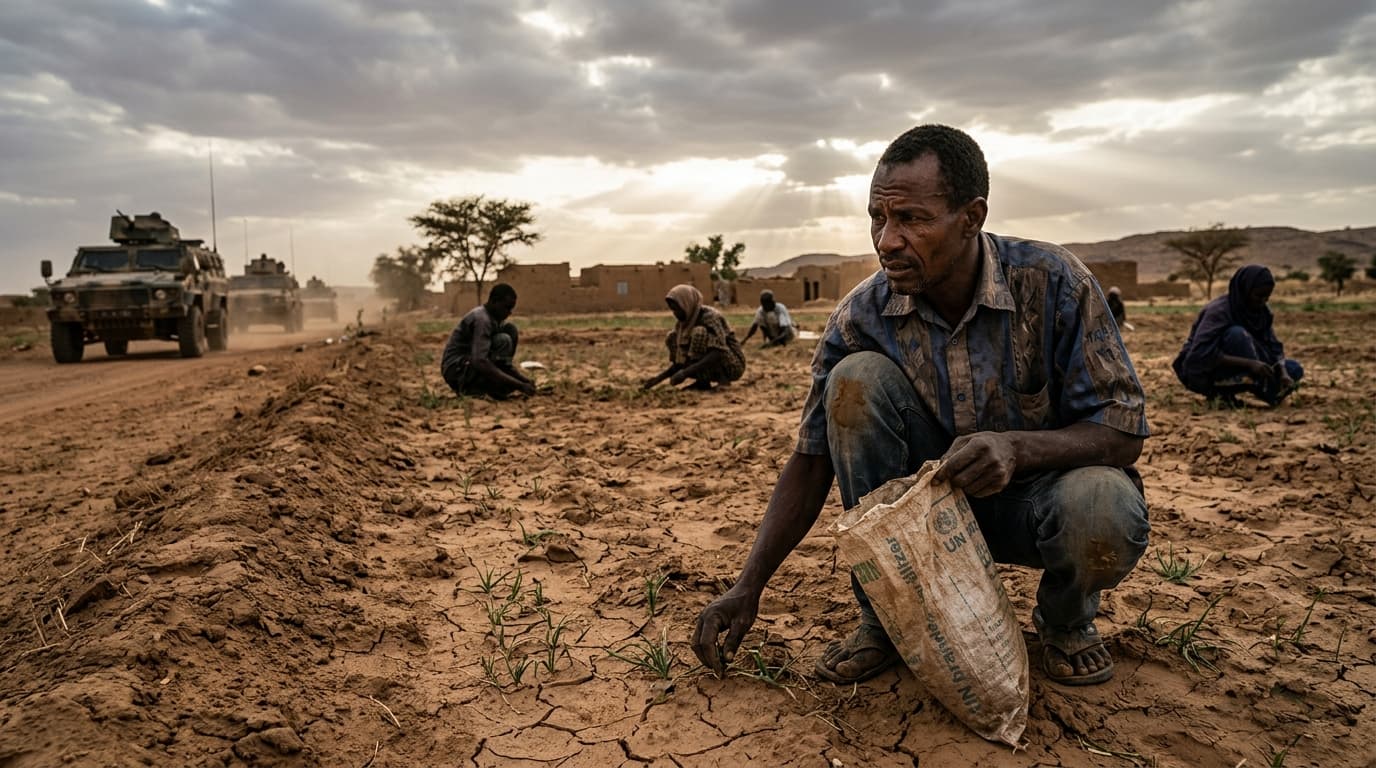
West Africa Food Crisis: Three Shocks in 2026
Conflict, climate extremes, and the Strait of Hormuz closure drive a severe food crisis in West and Central Africa, with fertilizer prices surging 80% and millions displaced.