Mamata Banerjee Critiques Modi's Women’s Quo
Mamata Banerjee's response to Modi's jibe on women's reservation.
Model Diplomat7 min readIndia
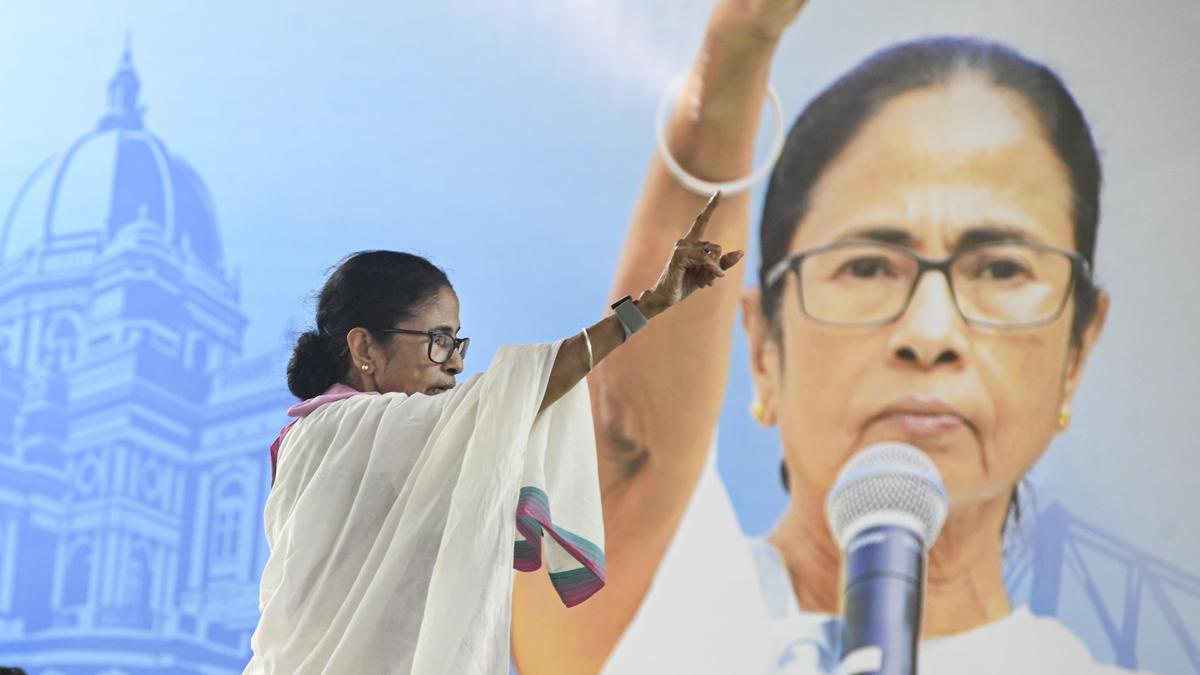
Mamata's Women's Quota Rebuttal: Right on Math, Wrong on Timing
Mamata Banerjee's 37.9% women-MPs comeback to Modi's 'foeticide' jibe was factually airtight — but two weeks later, she lost West Bengal.
Mamata Banerjee's April 19, 2026 rebuttal of Narendra Modi's national address on the women's reservation bill was the most numerically precise counter-argument the Indian opposition mounted all year — and it did nothing to save her. The Trinamool Congress leader was correct that 37.9% of her party's Lok Sabha MPs are women, that the Modi government waited nearly three years after enacting the Nari Shakti Vandan Adhiniyam to move on it, and that the April 2026 package tied reservation to a delimitation exercise that would shift roughly 26 Lok Sabha seats from India's south to the Hindi belt. Fifteen days later, on May 4, the BJP took West Bengal for the first time, ending her 15-year rule and stripping the argument of the platform that made it national. The critique outlived the critic.
The exchange matters because it is the clearest evidence yet of a pattern now defining Indian politics: opposition parties can win the substantive argument on federalism and still lose the political frame that Modi sets around it.
What Mamata actually said
On April 18, 2026, from a Doordarshan studio rather than the floor of Parliament, Modi accused opposition parties of having "committed bhrun-hatya (foeticide)" by blocking the Constitution (131st Amendment) Bill the day before. The bill, which sought to expand the Lok Sabha to 850 seats and reserve one-third for women, had failed 298–230 — the first constitutional amendment defeated in Modi's tenure, according to an NUS Institute of South Asian Studies analysis.
Banerjee's response, posted the next afternoon and reported by The Indian Express, was structured around three claims. First, that the TMC had the highest share of women legislators of any major party — 37.9% in the Lok Sabha and 46% among its Rajya Sabha nominees. Second, that the opposition was not against women's reservation, but against "the Delimitation exercise that the Modi Government was plotting to push through by using women as a shield." Third, that if the government was serious, it would not have waited "nearly three years after the passage of the Women's Reservation Bill on September 28, 2023," or coupled it with delimitation during an election season.
She closed by challenging Modi to address the nation "from the Floor of Parliament, where you are subject to scrutiny," calling the televised broadcast "cowardly, hypocritical and fork-tongued."
The math checks out
Every load-bearing number in Banerjee's post is verifiable. A peer-reviewed 2025 analysis by Rajeev Ranjan in the Journal of Communication and Management put TMC's women-MP share at 38%, against 14% for the Congress and 12% for the BJP — a spread confirmed by
Al Jazeera's Election Commission of India analysis, which found women held 12.5% of BJP seats after the 2024 Lok Sabha election. Overall, the
U.S. Congressional Research Service reported that just 14% of the 18th Lok Sabha's members are women — a slight decline from 2019.
The Constitution (106th Amendment) Act was indeed enacted on September 28, 2023, and — as the Carnegie Endowment for International Peace confirmed in a May 2026 assessment — "explicitly ties the implementation of a one-third reservation for women to the completion of a fresh census and the subsequent delimitation exercise." The 2027 census, whose first phase began on April 1, 2026, will not produce usable data until well after Banerjee spoke.
And her federalism warning is arithmetic, not rhetoric. Under Carnegie's Webster-method modelling, applying 2011 census figures shifts roughly 26 seats between states; using 2026 population projections, 36 seats change hands. Bihar, Uttar Pradesh and Rajasthan collectively gain 26 seats. Kerala, Tamil Nadu and Andhra Pradesh collectively lose 21. Milan Vaishnav and Jamie Hintson's earlier Carnegie modelling reached the same conclusion using 2001 and 2011 census extrapolations.
Why Modi's frame won anyway
Banerjee was factually right and politically overwritten. The reason lies in how the April session was engineered.
Home Minister Amit Shah, in an April 18 PIB briefing, pre-loaded the government's post-defeat narrative: "the opposition is opposing this because it is being brought by Prime Minister Shri Narendra Modi… women of the country will never forget." That framing was aimed at a specific constituency — women voters — and specific electoral windows: assembly elections in Tamil Nadu and West Bengal were days away.
The Institute of South Asian Studies noted before the vote that the reservation issue was "unlikely to have much traction in a state headed by a three-term woman chief minister." That prediction was half-right and half-wrong. The women's-quota framing did not persuade Bengali voters that Banerjee had failed women. But it did fuse cleanly with an anti-incumbency campaign built on cash-transfer bidding wars, allegations of a mass voter-roll deletion under the Special Intensive Revision (SIR) exercise, and the BJP's promise, per the
Al Jazeera Bengal analysis, of ₹3,000 monthly cash transfers to women — double the TMC's Lakshmir Bhandar scheme.
The result: the BJP won 207 of 294 seats. The TMC collapsed to 80. Banerjee lost her own Bhabanipur seat to Suvendu Adhikari, the BBC reported, and Adhikari was sworn in on May 9 as the state's first BJP chief minister. Her post-poll line — "I can be anywhere, I can fight anywhere. So I'll be on the streets" — was quoted by the
BBC's post-defeat profile.

The real fight Mamata identified
Strip out the personality and the timing, and Banerjee flagged the structural question that the Carnegie assessment treats as the central pending issue in Indian federalism: whether the Lok Sabha can be reapportioned without permanently subordinating the south.
The Modi government's fix — expanding the house from 543 to 850 seats so no state loses in absolute terms — does not, as Vidhi Centre for Legal Policy's Arghya Sengupta told the BBC, carry a proportionality guarantee in the legislative text. The draft's own basis, 2011 census figures, is 15 years out of date; population projections make the picture starker still. Tamil Nadu Chief Minister M.K. Stalin, before losing his own election to actor Vijay's TVK party, called the plan a "massive historic injustice" and burned a copy of the bill in the House.
The Delhi-based Takshashila Institution argued in a post-defeat brief that the 131st Amendment "would not solve and may actually worsen the institutional problem of Parliament's effectiveness." Its companion paper on
southern state strategy went further, proposing that Uttar Pradesh be split into two or three states to prevent it from acquiring 143 seats and near-veto power in an 848-member house.
That is the debate Banerjee inserted herself into — one where the TMC's 37.9% women-MP number was Exhibit A for the proposition that the quota was a pretext rather than a purpose. The Australian Institute of International Affairs has read TMC's opposition less charitably, calling regional parties' reluctance to back delimitation-linked reservation "complicating" — but the underlying arithmetic on candidate selection is not in dispute.
What actually happened to the bill
On the primary document itself: the Press Information Bureau's April 18 release quotes Shah insisting the Delimitation Commission report "will come into effect only after it is approved by Parliament and receives the assent of the President. Therefore, there is no question of this process being implemented before 2029." That is now the government's fallback frame — no immediate consequence, moral high ground preserved for 2029.
The Carnegie analysis is blunter: with the bill dead, "the size of the Lok Sabha remains capped at 550 seats, and the long-standing freeze on reapportionment across states continues." Women's reservation cannot come into force until the 2027 census is published and delimitation is completed — meaning the "2029 implementation" the Modi government said it was fighting for is now a political weapon rather than a legal deadline.
Diplomat View
Banerjee won the argument on paper and lost every subsequent test of its political weight. The reason is not that voters rejected her data — few voters engaged with 37.9% versus 12.5% — but that the BJP successfully translated a defeated bill into a moral indictment fast enough to reach the Bengal polls before her rebuttal could reach the same voters. The forecast: the women's-reservation-plus-delimitation package will return in 2027 or 2028, when the fresh census enables the government to attempt the same combination with better data, weaker opposition, and no Mamata Banerjee sitting in Kolkata to run point. That forecast changes only if two things happen: the Congress and DMK convert their April 2026 procedural unity into a coordinated pre-census bargaining position on the Lok Sabha expansion formula, and the Supreme Court accepts a challenge to the SIR voter-roll deletions that plausibly narrowed the Bengal electorate. Neither is a base-case outcome. Banerjee's federalism critique will keep travelling — Stalin's DMK, though defeated in Tamil Nadu, will inherit it — but the person who articulated it most precisely no longer holds a state to defend it from.
What to watch next
- Census phase-two enumeration: individual counting begins after housing enumeration completes, with caste data included per Shah's April 18 statement. First usable population totals expected 2027–early 2028.
- Supreme Court SIR hearings: the West Bengal voter-roll deletion challenge remains live; a ruling that voids parts of the exercise would reopen the "mass disenfranchisement" argument Banerjee raised on May 5.
- Monsoon session, July 2026: watch for whether the government reintroduces a narrower women's-reservation bill decoupled from delimitation — the Congress position — or holds the package together for 2027.
Discover more
India
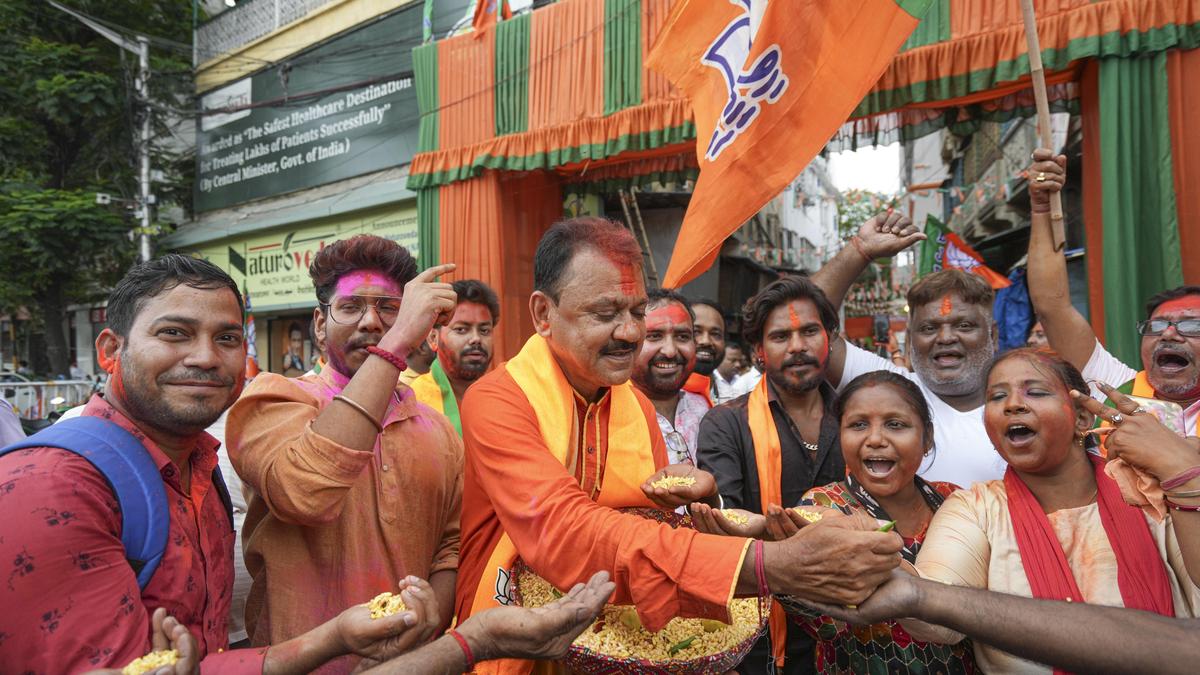
BJP Elevates Jhalmuri as Power Symbol in West
The BJP turns jhalmuri into political theatre in West Bengal, using the street snack as cultural symbolism to challenge Mamata Banerjee and stake a power claim.
India
BJP's Writers' Building Strategy in Bengal
The BJP's move into Writers' Building symbolizes a decisive power shift in West Bengal, signaling control as it displaces Mamata Banerjee's long-held base.
India
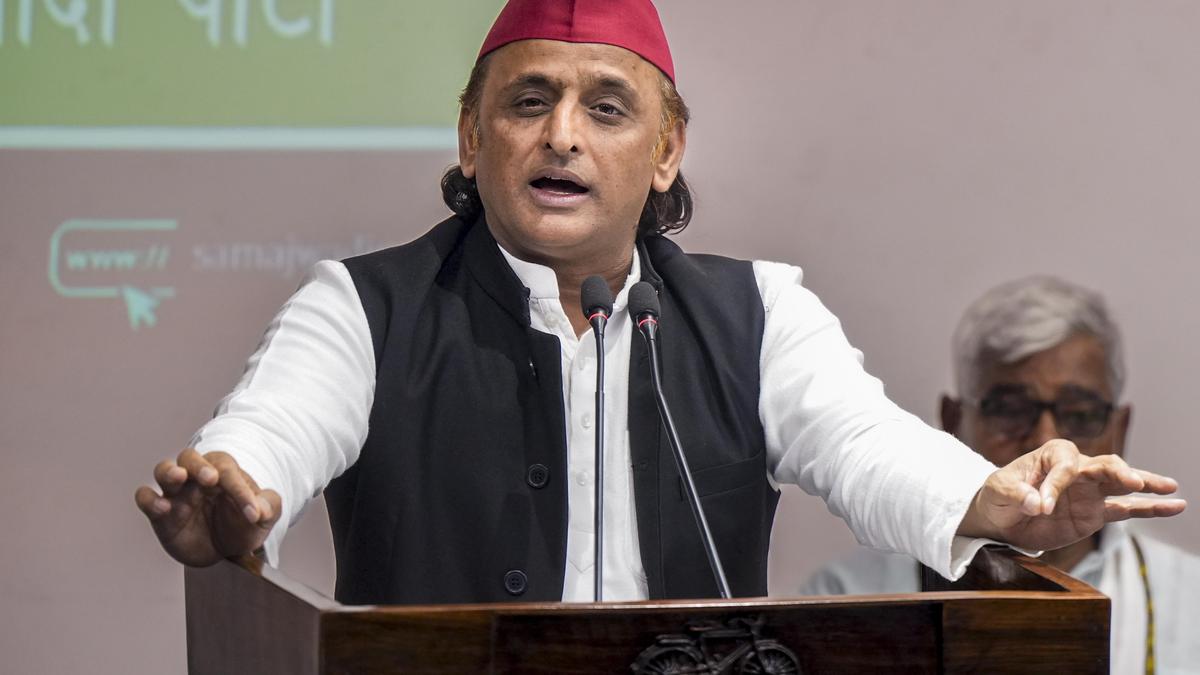
Akhilesh Yadav's Visit to Mamata Banerjee
Akhilesh Yadav's meeting with Mamata Banerjee signals a pivotal moment for the INDIA bloc, as opposition leaders test unity against the BJP ahead of contests.
Global Politics
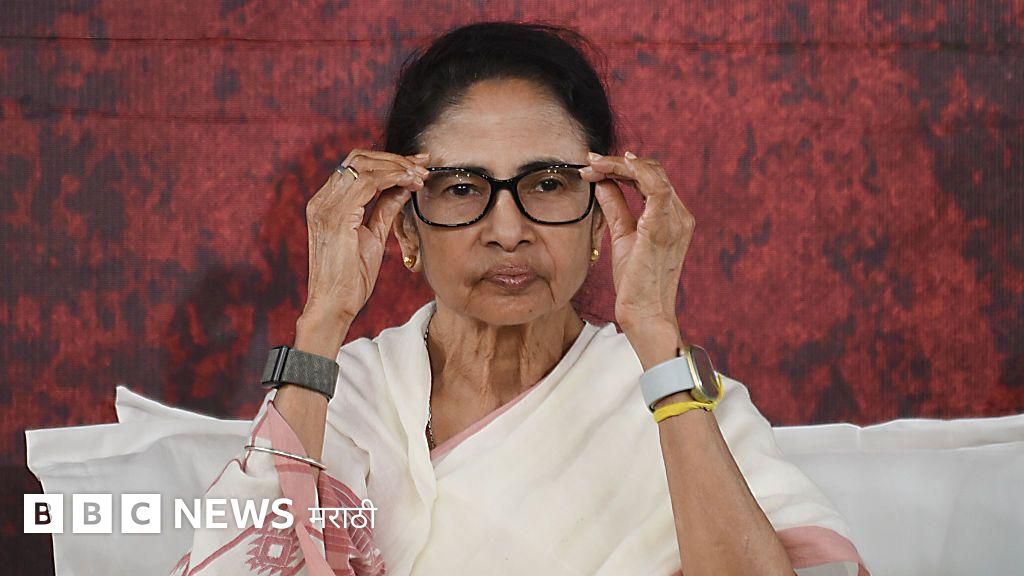
BJP's Victory in West Bengal
The BJP's sweeping win in West Bengal marks a major setback for Mamata Banerjee and the INDIA bloc, signaling a significant realignment in state politics.