Mamata Banerjee vs Modi on Women's Quota Bill
A political battle over women's reservation and delimitation.
Model Diplomat9 min readWest Bengal
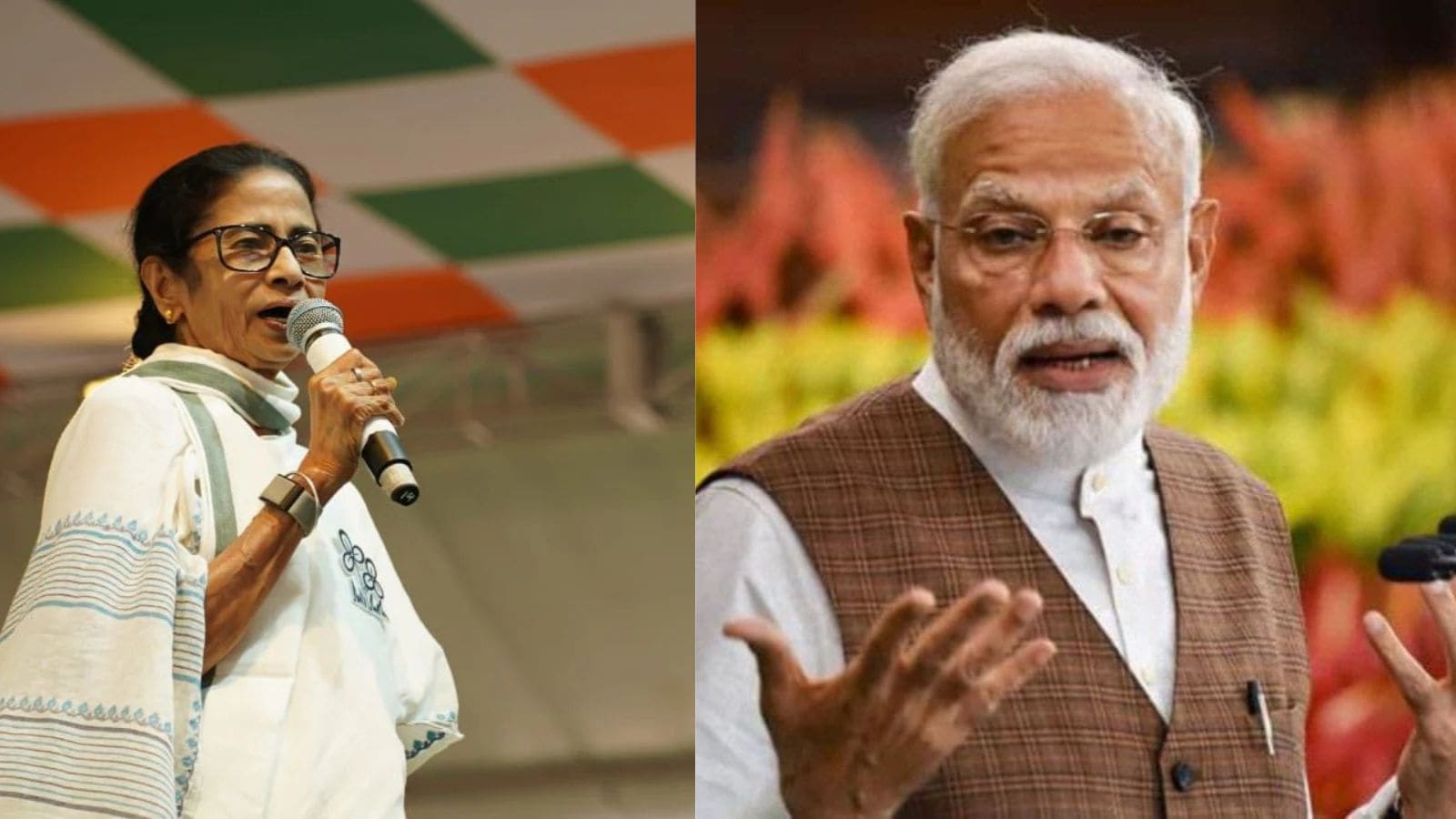
Mamata Banerjee vs Modi: The Women's Quota Bill Is Really About Delimitation
Modi's 'foeticide' jibe at Mamata Banerjee reopens the 131st Amendment fight. The real prize is redrawing Lok Sabha seats, not women's reservation.
On July 6, 2026, Narendra Modi went on Doordarshan and told a national audience that the opposition had "committed bhrun-hatya" — foeticide — by blocking his women's quota bill. Mamata Banerjee, six weeks out of office after losing West Bengal to the Bharatiya Janata Party (BJP), fired back the next day from a rally in Tarakeshwar, calling the prime minister's remarks "cowardly, hypocritical and fork-tongued" and accusing his government of "plotting to push through Delimitation by using women as a shield," per The Indian Express. The exchange looks like a gender-politics quarrel. It is not. It is the reopened campaign to pass the Constitution (131st Amendment) Bill, 2026 — the bill defeated on April 17, 2026, which would expand the Lok Sabha from 543 to 850 seats on the basis of the 2011 census and shift dozens of parliamentary seats northward into BJP heartland. The women's reservation is the wrapper. Delimitation is the payload — and the BJP, having won Bengal, is now reaching for the two-thirds majority it lacked in April.
The vote that reset the board
The three bills — the Constitution (131st Amendment) Bill, 2026, the Delimitation Bill, 2026, and the Union Territories Laws (Amendment) Bill, 2026 — were introduced together on April 16, 2026, at the start of a three-day special session convened mid-way through the West Bengal and Tamil Nadu state campaigns. According to a summary by PRS Legislative Research, the 131st Amendment does three linked things: it raises the Lok Sabha cap from 550 to 850 members; it removes the requirement in the 106th Amendment (2023) that women's reservation await the "first census after the commencement" of that Act; and it authorises Parliament, by simple majority, to decide which census future delimitations will use. A separate
Delimitation Bill, 2026 specifies that "the latest published census as on the date of the constitution of the Delimitation Commission" applies — meaning the 2011 census, not the ongoing enumeration whose reference date is March 1, 2027.
On April 17, the amendment was negatived — the parliamentary term for defeated on the floor. The PRS bill page records "Introduced Lok Sabha Apr 16, 2026; Negatived Lok Sabha Apr 17, 2026." The tally, per
BBC Hindi, was 298 in favour and 230 against; a constitutional amendment needs a two-thirds majority of members present and voting — roughly 352 on the day, against a required 360 across the full house. Modi's National Democratic Alliance holds 293 Lok Sabha seats,
Al Jazeera reported, meaning the arithmetic never added up. Senior journalist Sharad Gupta told the BBC the government "knew it did not have the numbers" but tabled the bill anyway, because a defeat could still be turned into a Bengal-election talking point. That is the piece the "foeticide" fight cannot be understood without.
Modi's Doordarshan speech and Mamata's counter
Modi's July 6 televised address recycled the language he first used at a Bankura rally on April 19, when he told a Bengal crowd that the Trinamool Congress (TMC) and Congress had "conspired" to block the bill and would "be punished in Bengal polls," according to The New Indian Express. At the same rally,
NDTV reported, Modi alleged that "Trinamool does not want women empowerment, reservation," framing the party's opposition as a betrayal of women rather than a fight over federal architecture. The BJP won Bengal on May 4, 2026 — ending Banerjee's 15-year rule,
as the BBC documented. What is striking is that Modi has now reached back for the same weapon after victory, not before, and Banerjee — stripped of office, facing a rebellion in which roughly three-quarters of her state legislators and a reported 20 of her 28 MPs have signalled a break with her party,
BBC reporting shows — is being handed a national platform whether she wants one or not.
Banerjee's reply, filed to X and elaborated at Tarakeshwar, targeted the substance rather than the slur. "TMC has always championed higher political representation for women. We have the highest proportion of female elected representatives in both Parliament and the State Legislature. In the Lok Sabha, 37.9% of our elected members are women. In the Rajya Sabha, we have nominated 46% women members," she wrote, per The Times of India. Her core charge — repeated to
The Hindu,
Moneycontrol and
Outlook India — was that the opposition never opposed reservation. It opposed "the altering of Babasaheb Ambedkar's Constitution … and the usurpation of power through gerrymandering — by redrawing political contours to hand greater representation to BJP-ruled states at the expense of others."
The 37.9% figure is broadly consistent with independent counts. A peer-reviewed 2025 study by Rajeev Ranjan, listed in IDEAS/RePEc, puts TMC's share at 38% women in the 18th Lok Sabha, versus 12% for the BJP and 14% for the Congress. The overall women's share in the current Lok Sabha is 13.6% — a slight decline from 2019 and a fraction of the 27.4% global average recorded in April 2026 by the
Congressional Research Service using Inter-Parliamentary Union data. India, an
ISAS-NUS brief noted after the 2023 reservation law passed, then ranked 141st out of 185 countries in the IPU's global rankings for women's parliamentary representation — behind Nepal, Bangladesh and Pakistan. On the metric Modi accuses her of undermining, in other words, Banerjee's numbers are among the best in the country, and the BJP's are among the worst.
Why delimitation is the real fight
The women's reservation itself was already law before April 2026. The 106th Constitutional Amendment, passed almost unanimously in September 2023 — 454 to 2 in the Lok Sabha, unanimously in the Rajya Sabha — reserves one-third of seats in the lower house and state assemblies for women. Its rollout was tied to the "first census after the commencement" of the Act. The reference date for the current enumeration is March 1, 2027,
per PRS, which means the delimitation exercise built on it almost certainly cannot be completed before the 2029 general election — the last Delimitation Commission, constituted in 2002, took until 2008 to finalise its orders. In practical terms, the quota does not apply to 2029 under existing law.
The 131st Amendment would change that — by anchoring reservation to a delimitation using the 2011 census, which is already available. On the surface that looks like acceleration. Underneath it is a redistribution. The bill would raise the Lok Sabha's cap to 850 seats — 815 from states and 35 from union territories — while leaving Rajya Sabha's cap of 250 untouched. PRS's analytical note flags the second-order effect: the Lok Sabha-to-Rajya Sabha ratio moves from 2.2:1 to 3.3:1, shrinking the upper house's weight in presidential and vice-presidential elections and tilting joint sittings toward the government of the day. A ruling party with 56% of an 815-seat Lok Sabha could override a two-thirds opposition majority in the Rajya Sabha. That is a rewriting of India's bicameral balance dressed as a gender reform.
The geographic tilt is starker. NPR's April 2025 reporting from Delhi captured what economist Shruti Rajagopalan of George Mason University called the core problem: "if India were to simply redistrict today, what would happen is the southern states would lose voice in parliament." Yamini Aiyar, formerly of the Centre for Policy Research, told NPR there is "absolutely no doubt" the BJP would gain from expanded representation in the north and east, "raising the political stakes of delimitation in this particular moment." Union Home Minister Amit Shah told the house a "50% uniform expansion" model would leave the south's share unchanged at roughly 24%, moving southern seats from 129 to 195,
BBC Hindi reported. But the
draft bill itself does not lock the pro-rata formula in. Arghya Sengupta of the Vidhi Centre for Legal Policy told the BBC that the 850 cap has an "unclear" basis and "does not appear to be proportionate to population growth recorded in the 1971 and 2011 census,"
BBC News found. Under a strict 2011-population allocation, Uttar Pradesh, Bihar, Madhya Pradesh and Rajasthan — where the BJP already dominates — would gain the most; Tamil Nadu, Kerala, Karnataka, Telangana and West Bengal would lose relative weight.
That is precisely why Tamil Nadu Chief Minister M.K. Stalin burned copies of the bills and raised a black flag, Al Jazeera documented, and why the united opposition — INDIA bloc, CPI(M) and the TMC — was able to hold 230 votes together. Congress's Rahul Gandhi called the proposal "merely an attempt to seize power through delimitation and gerrymandering," in the same Al Jazeera account.
The historical parallel
Reserving one-third of Lok Sabha seats for women has been in play in India since HD Deve Gowda's government proposed it in 1996; the bill was reintroduced in 1998, 1999 and 2008 before finally passing in September 2023, per BBC News. In every earlier round, the delaying tactic was a demand for a sub-quota for Other Backward Class women, mostly from northern socialist parties. This time the government has flipped the choreography: it is the BJP, not its opponents, that has bundled the reservation with a structural change most parties will not swallow — a change that also happens to freeze the seat map at 2011 numbers, before the current census can shift the terms. The parallel is not to the 1996–2010 stalemates. It is to the 1976 constitutional freeze, when Indira Gandhi's 42nd Amendment locked seat allocation to the 1971 census "to enable state governments to pursue agenda for population stabilisation,"
PRS records. That freeze was designed to protect southern states that had brought their fertility down. Modi's bill would end it — permanently — using the census before the one now under way.
Who wins, who loses
The immediate winner is Modi's political messaging. He has a defeat on the record he can attribute to the opposition; he has a state-election weapon he demonstrably used in Bengal; and, having taken Bengal, he narrows the arithmetic he needs for the two-thirds majority. Journalist Adesh Rawal told BBC Hindi that the April defeat, far from ending the strategy, was itself the strategy: "in every upcoming assembly and Lok Sabha election, the PM will keep saying: we tried, the opposition wouldn't allow it." The immediate loser is Banerjee, whose most durable achievement — a nearly-two-in-five women's share among TMC's MPs, unmatched by any major party, per the RePEc study — is now the thing she has to defend against a "foeticide" charge from Delhi while her own state MPs defect.
The deeper loser, if the 131st Amendment is revived and passed, is the federal balance itself. The Rajya Sabha's relative weight falls; southern and eastern states move from 45%-plus of Lok Sabha influence toward the low-30s in absolute-population scenarios; and the women's reservation, once implemented, will apply not to 543 seats chosen on 2027 census data but to 815 seats drawn from 2011 lines. Women get their quota. The map that hosts it is a different country.
What to watch next
- The monsoon session, expected July–August 2026. A
BBC Hindi analysis notes the government is expected to "look for possibilities" — meaning courting fresh defectors, including any TMC MPs who cross over — to close the ~54-vote gap to a two-thirds majority. Watch the speaker's ruling on the 20 TMC MPs seeking to align with the NDA.
- The census timeline. The reference date is March 1, 2027; enumeration data will not be usable before late 2028. If the 131st Amendment passes before then, 2011 becomes the operative baseline for the next 15 years of women's reservation.
- Southern legal challenge. Tamil Nadu, Kerala and Karnataka governments have signalled a joint constitutional challenge to any delimitation using 2011 data. The Supreme Court's willingness to hear it — or defer — is the pivot.
The Bottom Line
The Modi–Banerjee fight over the women's quota bill is not, at its core, about women. It is about whether India's next Lok Sabha will be redrawn using 2011 numbers that favour the BJP's northern base, wrapped in a gender-reform label that makes opposition politically expensive. Banerjee lost Bengal; her replies now matter as much as her rallies did, because they force the analytical fight — delimitation, not reservation — back into public view before the monsoon session reopens the vote._
Discover more
India
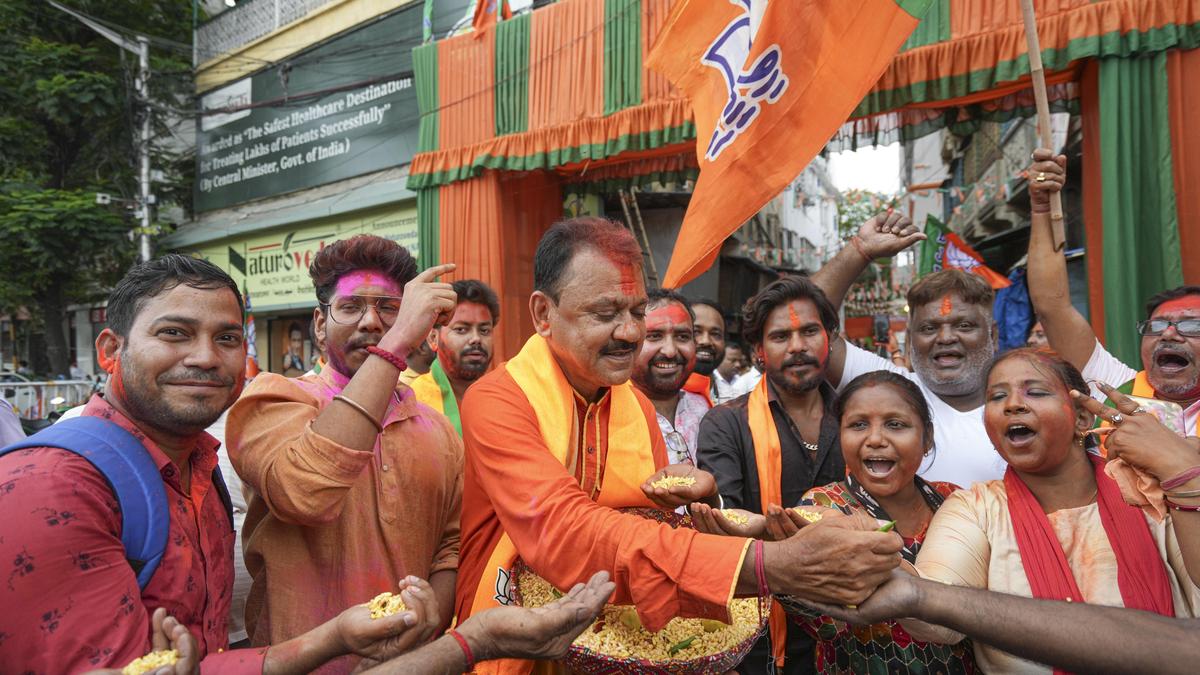
BJP Elevates Jhalmuri as Power Symbol in West
The BJP turns jhalmuri into political theatre in West Bengal, using the street snack as cultural symbolism to challenge Mamata Banerjee and stake a power claim.
India
BJP's Writers' Building Strategy in Bengal
The BJP's move into Writers' Building symbolizes a decisive power shift in West Bengal, signaling control as it displaces Mamata Banerjee's long-held base.
India
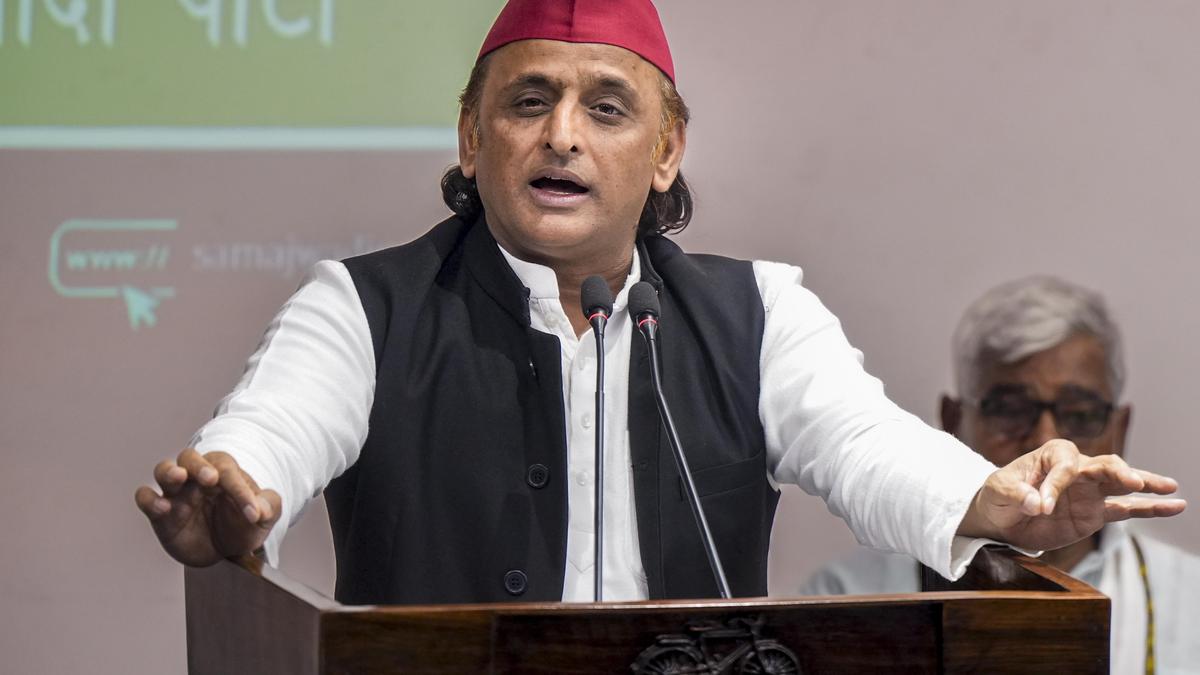
Akhilesh Yadav's Visit to Mamata Banerjee
Akhilesh Yadav's meeting with Mamata Banerjee signals a pivotal moment for the INDIA bloc, as opposition leaders test unity against the BJP ahead of contests.
Global Politics
BJP's Victory in West Bengal
The BJP's sweeping win in West Bengal marks a major setback for Mamata Banerjee and the INDIA bloc, signaling a significant realignment in state politics.