Mamata Banerjee Blasts Modi on Women's Quota
Banerjee's sharp response to Modi's remarks on women's reservation.
Model Diplomat8 min readWest Bengal
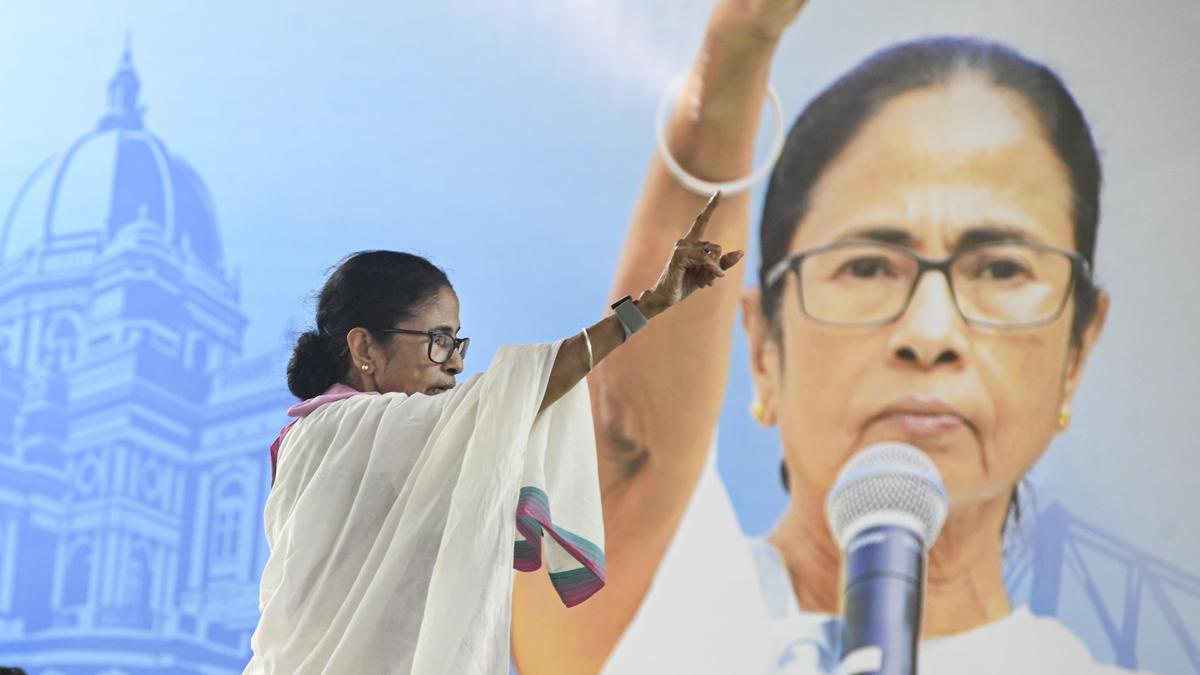
Mamata Banerjee blasts Modi on women's quota — but she's shouting from the wilderness
Mamata Banerjee called Modi's 'foeticide' jibe over the defeated women's reservation bill 'cowardly and hypocritical' — but the deeper story is who now controls the argument.
Mamata Banerjee's most cutting attack on Narendra Modi in a decade — accusing the prime minister of hiding behind Doordarshan to accuse the opposition of "foeticide" over women's reservation — is landing in a political landscape that has moved on without her. She is right on the substance and marginal on the power map, and that gap, more than the insult exchange, is what makes this feature of India's mid-2026 politics worth reading: the woman who blocked Modi's constitutional gambit lost her own state ten weeks later, and the bill she killed now sits waiting for a census that only widens the ruling party's leverage.
The exchange that lit the fuse
The trigger was the collapse of the Constitution (131st Amendment) Bill, 2026, defeated on the Lok Sabha floor on 17 April by 298 votes to 230 — 62 short of the 360-vote, two-thirds threshold required by Article 368(2). The Press Information Bureau's own end-of-session note records the failure in dry parliamentary prose, confirming that the two "dependent" pieces — the Delimitation Bill and the Union Territories Laws (Amendment) Bill — were dropped alongside it, as documented on the PIB session summary. The Institute of South Asian Studies at NUS notes this was the first constitutional amendment to fail under Modi's tenure, as analysed in the
ISAS post-mortem.
A day after the defeat, Modi delivered a televised address invoking the Hindi phrase "bhrun-hatya" — foeticide — to describe what he said opposition parties had done to the women's quota, framing the Congress, DMK, Samajwadi Party and TMC as the culprits, per the BBC Hindi write-up. Banerjee's counter-punch came on 19 April on X and at a rally in Tarakeshwar. "It is deeply unfortunate that the Prime Minister chose to mislead the nation rather than address it honestly," she wrote, calling Modi's speech "cowardly, hypocritical and fork-tongued" in a statement carried by the
Indian Express. She dared him to "have the courage" to address the nation from the floor of Parliament "where you are subject to scrutiny".
Her sharpest line, though, was arithmetic rather than rhetoric. TMC, she said, had elected 37.9% women to the Lok Sabha and nominated 46% women to the Rajya Sabha — the highest share of any national party. That claim tracks the record: peer-reviewed data on India's 18th Lok Sabha places TMC's women share at 38%, against 12% for the BJP and 14% for the Congress, as compiled in a 2025 study of representation in RSIS Journal.
The real fight is delimitation, not reservation
Strip away the foeticide theatrics and the substance of Banerjee's objection is not to women's reservation — which every major party formally supports — but to the vehicle Modi chose. The 131st Amendment sought to expand the Lok Sabha from 543 to 850 seats and to use the 2011 census as the basis for redrawing constituencies, with new seats added to accommodate the one-third female quota. That linkage is the real prize, as the Carnegie Endowment argues in a detailed post-mortem: the women's quota "functioned as a vehicle to push through a broader reengineering of India's electoral design", per Carnegie's Delimitation After Defeat.
The demographic mechanics are why southern and eastern chief ministers refused to sign the cheque. Tamil Nadu, Kerala, Karnataka and Telangana had asked for the freeze on seat redistribution to be extended by 25 years, because their populations grew slowly while Uttar Pradesh, Bihar and Madhya Pradesh grew fast. The BBC's delimitation explainer quotes the Vidhi Centre for Legal Policy warning that the 850-seat cap "does not appear to be proportionate to population growth recorded in the 1971 and 2011 census" — a coded way of saying the north gains, the south loses. Banerjee's own line — that Modi wanted to "hand greater representation to BJP-ruled states at the expense of others" — is federalism-speak for the same anxiety.
That is why the Al Jazeera dispatch from parliament recorded Rahul Gandhi framing the package as "an attempt to seize power through delimitation and gerrymandering", and Tamil Nadu chief minister M.K. Stalin publicly burning a copy of the bill. The opposition did not vote down women's representation. It voted down the electoral map Modi tried to bundle with it.
The historical parallel Modi is banking on
The government's read-out from the Home Ministry places the fight in a longer arc. Amit Shah has repeatedly reminded audiences that "in 1976, during the Emergency, the then Prime Minister halted delimitation", and framed today's opposition as the same faction "working to stall delimitation" again — that framing is on the record in the Ministry of Home Affairs' press release. Shah also warned that opposition parties would "face the anger of women" in 2029.
Whether that threat has bite depends on numbers, and the numbers are moving. Women's share of the Lok Sabha slipped from 14.7% in 2019 to 13.6% in the 18th Lok Sabha, even as the global average climbed to 27.4% by April 2026 — a US Congressional Research Service compilation of IPU data, Statistics on Women in National Governments Around the World, lists India well below Nepal (34%), Bangladesh (21%) and Pakistan (20%). India already reserves a third of seats in village councils, but has failed to translate that into national representation for a quarter-century of debate, as chronicled by the
Observer Research Foundation.
The Modi government's original 2023 self-congratulation, preserved on the PIB record of the Nari Shakti Vandan Adhiniyam, called that year's near-unanimous passage "a defining moment in our nation's democratic journey". Three years later, that moment is still theoretical: the same act ties implementation to a completed census and fresh delimitation, neither of which now exists.
Who benefits from the deadlock
The bill's defeat looked like a rare opposition win in April. By July it looks like a delayed victory for Modi. Three concrete beneficiaries emerge.
First, the BJP retains an electorally usable grievance. Modi's team has already begun using the "opposition killed women's reservation" line in campaign rallies in Tamil Nadu and West Bengal, according to the ISAS analysis. That framing appears to have worked. On 4 May, the BJP won 207 of 294 seats in West Bengal, ending TMC's 15-year rule; Banerjee herself lost Bhabanipur to Suvendu Adhikari, as reported by the
BBC's post-election feature and confirmed in the
Al Jazeera election dispatch. The party that had the highest share of women MPs in the country was routed on a battlefield the prime minister partly defined through this bill.
Second, the sequencing pressure now runs against the opposition. Because the 2023 constitutional amendment ties women's reservation to a completed census and fresh delimitation, every month of delay is chargeable to whoever blocked the bill — regardless of the delimitation objections underneath. The Carnegie study frames it clearly: sequencing "raises the stakes of delimitation, rendering it a prerequisite for a major bolstering of women's representation" — see Carnegie's analysis.
Third, the delimitation debate itself has not gone away. The Takshashila Institution notes that "the issue of delimitation and women's reservation will be discussed in greater detail in the coming days" and that the 850-seat proposal remains on the table for revision, per Takshashila's post-dust-settled brief. Once the ongoing 2026–27 census is published, the government will have both the demographic data and, with Bengal in the fold, a strengthened floor position to try again.
The losers
Banerjee is the most visible casualty. Her political brand — the anti-BJP street fighter with a demonstrable record on women's political inclusion — was designed for exactly this fight. And she did land the punch. But her leverage collapsed within three weeks. By 4 May she had lost her seat; by June, roughly 20 of her 28 MPs had written to the speaker seeking to break away and align with the ruling alliance, as documented in the BBC's TMC rebellion story. Her public meetings, once vast, drew "only a few hundred people". She retains 40% of the state's popular vote and 26 million voters, but a national opposition figurehead who has lost her home state and her own constituency cannot credibly lead a coalition — and the
BBC's profile on her survival fight records her admission that she is now a "free bird, a commoner". She can be right about Modi's motives and still cease to matter to the outcome.
The broader INDIA bloc is the second-order loser. With Banerjee marginalised, Stalin's DMK bruised by Tamil Nadu's own upset, and Congress still convalescing, the coalition that stopped the 131st Amendment in April no longer has an obvious spearhead. Post-election violence in Bengal in early May, in which four people died, gave Modi a further governance narrative, per Al Jazeera's report on the violence. The very MPs who cast April's blocking votes may not be in the same lobby when the bill returns.
Diplomat View
The received wisdom is that Modi suffered a rare constitutional defeat on 17 April and Mamata Banerjee humiliated him on 19 April. That reading has aged badly. The foeticide row is now a hinge moment for the ruling party, not for the opposition. Our forecast: a revised women's reservation-plus-delimitation package will be tabled during or immediately after the winter session of the 18th Lok Sabha, once initial 2026–27 census data is available, most likely in the first half of 2027. It will be pitched, with new pro-rata guarantees, at a smaller cohort of southern and eastern holdouts — several of whom no longer have the political capital to hold the line they held in April. Two conditions would revise this forecast: a decisive south Indian federal-front revolt that ties up delimitation in the Supreme Court, or a Banerjee comeback that reunites the INDIA bloc under a single spokesperson. Neither looks probable on today's evidence.
What to watch next
- Monsoon session 2026 (late July–August): whether the government tables even a scaled-down women's reservation bill without delimitation attached — a test of whether Modi wants the reform or the map.
- First 2026–27 census results (expected 2027): the moment the sequencing lock in the 2023 Adhiniyam becomes operational; every party's real position becomes public then.
- TMC parliamentary group vote (weeks ahead): if 20 of 28 TMC MPs formally defect, Banerjee's ability to shape any future women's-quota debate collapses entirely, and Modi's arithmetic in the Lok Sabha edges closer to 360.
Discover more
India
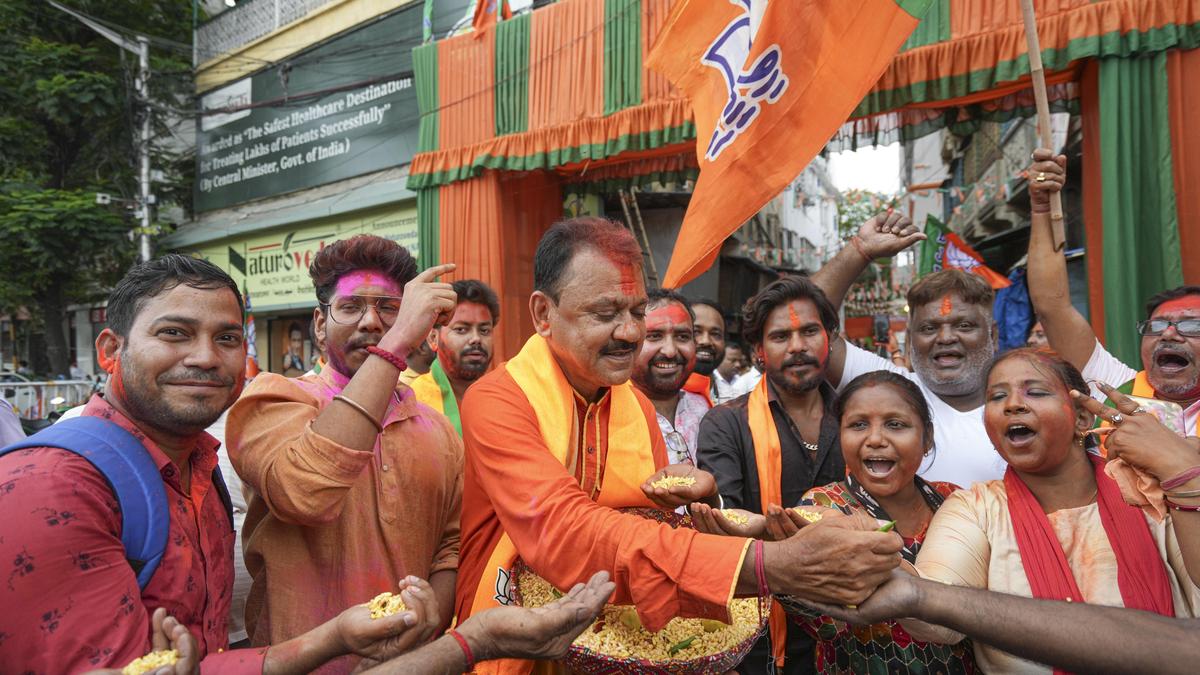
BJP Elevates Jhalmuri as Power Symbol in West
The BJP turns jhalmuri into political theatre in West Bengal, using the street snack as cultural symbolism to challenge Mamata Banerjee and stake a power claim.
India
BJP's Writers' Building Strategy in Bengal
The BJP's move into Writers' Building symbolizes a decisive power shift in West Bengal, signaling control as it displaces Mamata Banerjee's long-held base.
India
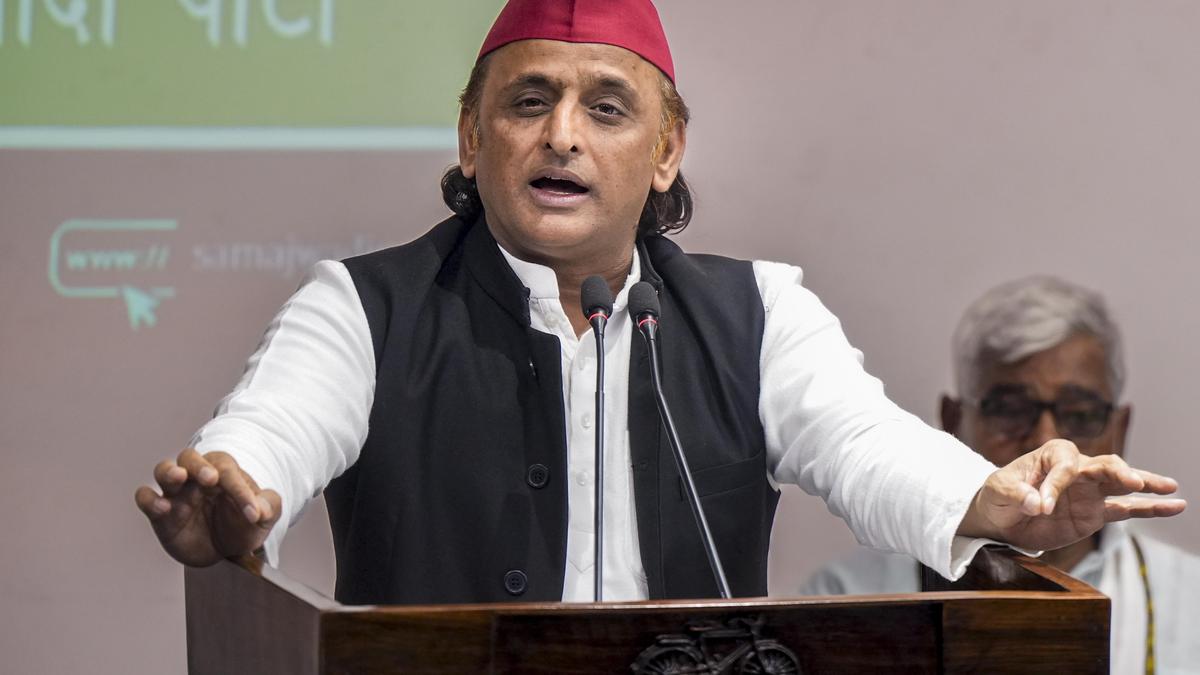
Akhilesh Yadav's Visit to Mamata Banerjee
Akhilesh Yadav's meeting with Mamata Banerjee signals a pivotal moment for the INDIA bloc, as opposition leaders test unity against the BJP ahead of contests.
Global Politics
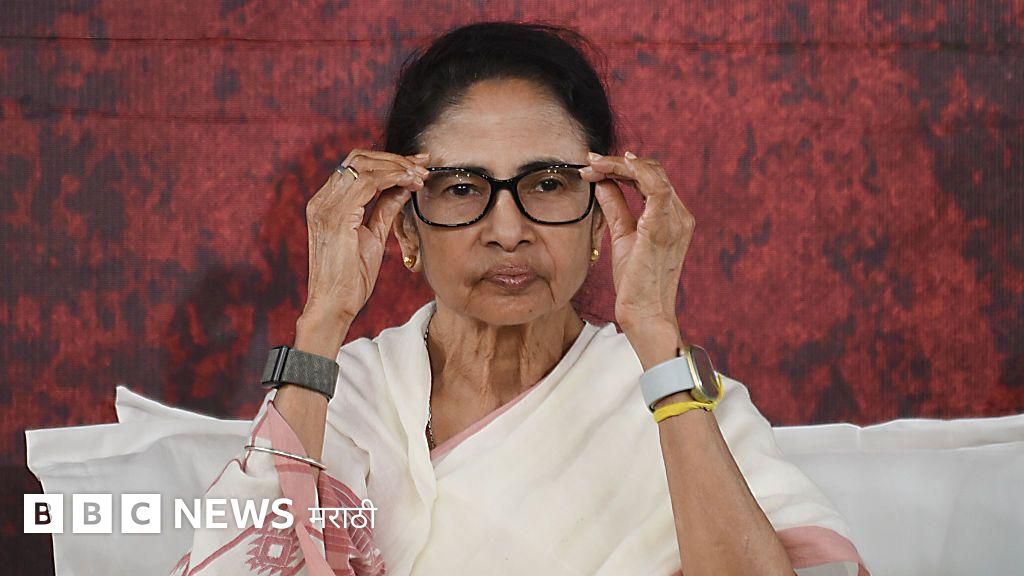
BJP's Victory in West Bengal
The BJP's sweeping win in West Bengal marks a major setback for Mamata Banerjee and the INDIA bloc, signaling a significant realignment in state politics.