Janet Mills Vetoes Maine Data Center Moratoru
Governor Mills blocks a pause on new data centers in Maine.
Model Diplomat3 min readNorth America
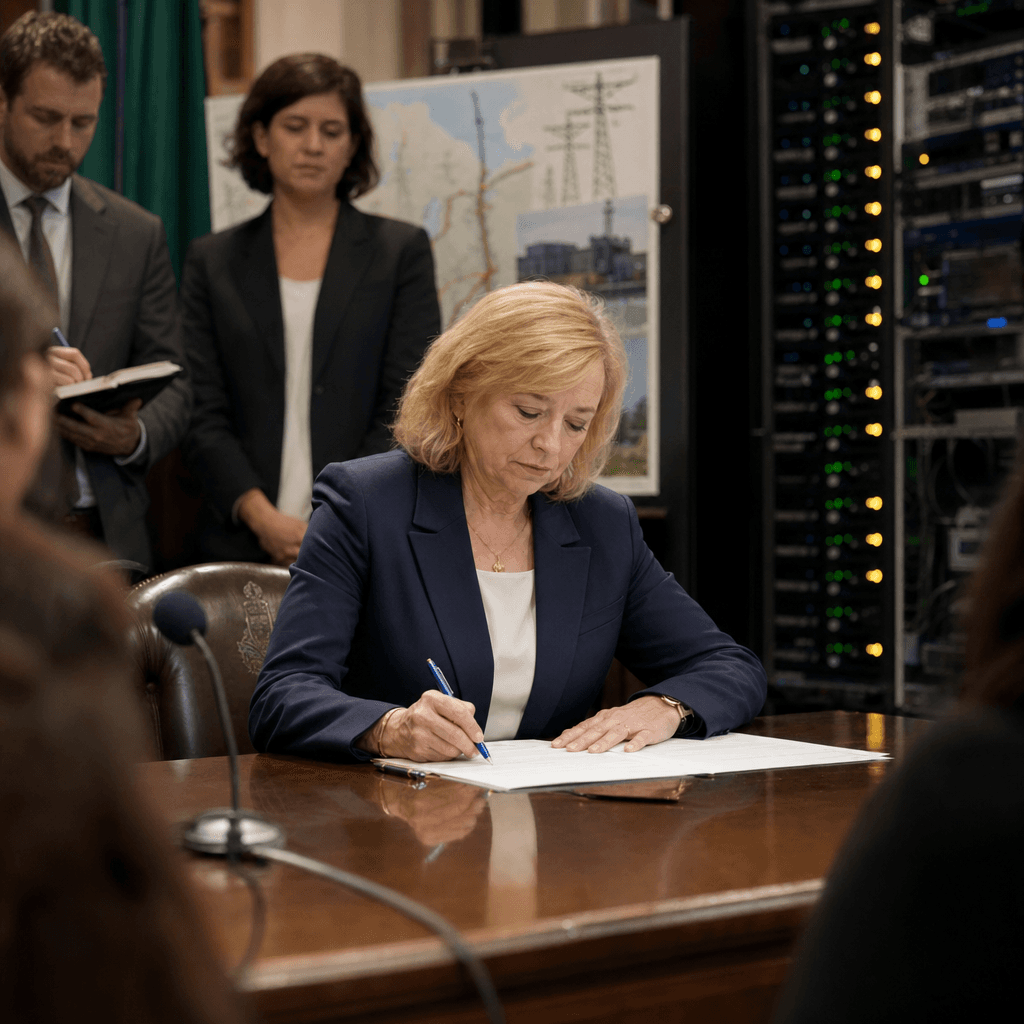
Janet Mills’ Veto Keeps Maine in the Data Center Race
Mills blocked a first-in-the-nation pause on new data centers, shifting leverage back to developers as states battle over AI-era power demand.
Gov. Janet Mills has killed the bill that would have made Maine the first state to impose a moratorium on new data centers, cutting off a legislative attempt to pause development while the state wrote new rules. The proposal was driven by concerns over electricity demand, water use, wastewater, noise, local tax deals and whether rural permitting systems are built for hyperscale projects. Nation’s first state moratorium on data centers vetoed by Maine’s governor
Maine lawmakers want to pause data-centre projects
Who gains from the veto
Mills now holds the leverage. By vetoing the moratorium, she kept Maine open to investment and denied lawmakers the one tool that would have forced developers to wait.
The winners are straightforward: data-center developers, utilities and municipalities that want projects moving before a tighter statewide framework arrives. The losers are the lawmakers and local officials who wanted time. The bill, backed by Rep. Melanie Sachs, would have paused new projects above 20 megawatts until Nov. 1, 2027, created a Data Centre Co-ordination Council, and required a report by February 2027 before large-scale buildouts resumed. Maine lawmakers want to pause data-centre projects
The bigger political point is that Mills has broken with a rising anti-data-center current. CNN reported earlier this month that Maine’s bill had bipartisan support and sat within a wider wave of proposed moratoriums and local restrictions in states including New York, South Carolina, Oklahoma and Vermont. Data centers are spreading around the country. Now, data-center bans are, too
Why Maine matters nationally
This is less a land-use dispute than a fight over who captures the upside of the AI build-out and who carries the infrastructure risk.
That risk is growing fast. The U.S. Department of Energy estimates data-center electricity use has tripled over the past decade and could double or triple again by 2028, reaching about 12% of U.S. electricity demand. Meta's nuclear deal signals AI's growing energy needs
That is why this Maine veto matters beyond Augusta. In the wider US Politics and
United States debate, states face a hard trade-off: block projects and lose tax base and construction spending, or approve them quickly and risk locking ratepayers into grid upgrades before demand forecasts are proven. AP has reported that regulators and lawmakers are already questioning utility load forecasts tied to data centers because some projects remain speculative or may be double-counted across service territories.
Scrutiny rises of utilities' power projections for data centers
What to watch next
The next decision point is whether Maine lawmakers try to override the veto or come back with a narrower bill aimed at siting, water use, transmission costs or ratepayer protections rather than a blanket pause. Just as important: whether developers move quickly to file projects while statewide rules remain unsettled.
Mills won the timing fight. The real test now is whether Maine can write a framework before project momentum outruns state control.
Discover more
US Politics
Congress Targets AI Chatbot Access for Terror
The House passed the Generative AI Terrorism Risk Assessment Act, focusing on AI's role in terrorism and potential surveillance implications.

India
700 Activists Accuse PM Modi of MCC Breach
Over 700 activists allege PM Modi breached election code with a televised address attacking opposition parties just before state elections.

Conflict & Security
Drone Warfare Killing Aid Workers at Unprec
Over 1,000 humanitarian workers killed in three years as cheap armed drones collapse legal protections. Gaza, Sudan, Ukraine, and DRC see deliberate targeting of aid convoys and hospitals with zero prosecutions.

Global
World Normalises Taliban as Afghan Women Eras
UN data shows Afghan women erased from public life as Russia recognises the Taliban, EU hosts officials in Brussels, and ICC warrants for gender persecution go unenforced.