Lori Trahan’s AI Bargain Exposes the Democratic Split
Rep. Lori Trahan is testing whether Democrats can cut a bipartisan AI deal with Republicans — even if it means risking a fight with her own caucus and blue-state allies.
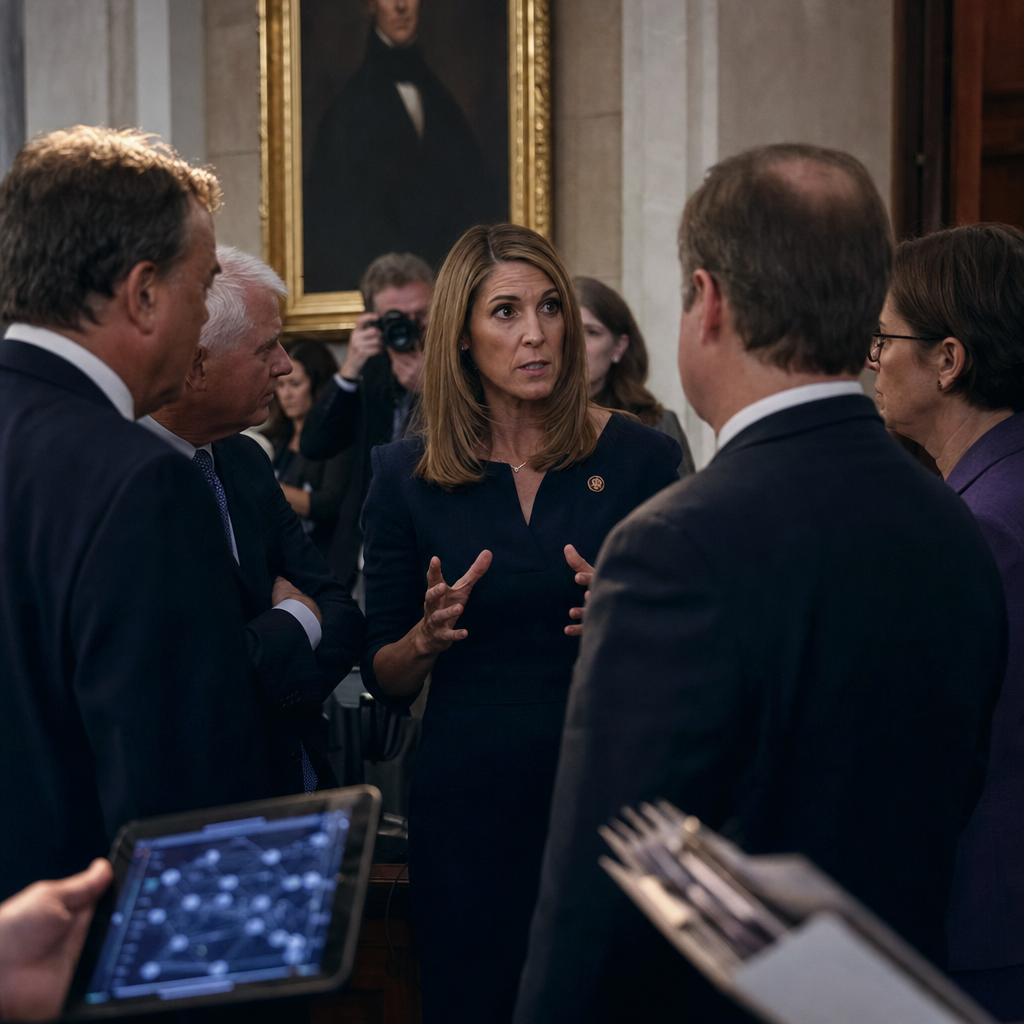
Rep. Lori Trahan is betting that AI is too fast-moving for Democrats to wait for unified control of Congress. In talks this month with Rep. Jay Obernolte, the Massachusetts Democrat has tried to sketch a bipartisan framework on artificial intelligence without the explicit blessing of House Democratic leaders, who are instead building their own party-line agenda for the midterms, according to  POLITICO. The move puts Trahan in a narrow lane: she can either prove Democrats can shape the rules now, or become the face of a deal that hands Republicans and industry too much of what they want.
The leverage is with the side that wants preemption
Republicans have the cleaner power position. Obernolte, a California Republican on the House Energy and Commerce Committee, has long argued for replacing a patchwork of state AI rules with a federal framework, and GOP leadership is pushing even harder for broad preemption, POLITICO reported. That matters because a federal-only regime would curb state laws in places like California and New York that require disclosures from top AI developers about model risks.
Democrats, by contrast, are split between two goals that are hard to reconcile: passing safeguards voters can recognize, and preserving state authority over privacy and safety. Trahan’s pitch is that waiting for a Democratic House is a luxury the party cannot afford. Her argument is political as much as policy-driven: if a major AI-related disruption hits jobs or security, she does not want Democrats explaining why they sat out the negotiation, POLITICO said.
Why this is a broader fight over who sets the rules
This is not just about one bill. It is a fight over whether AI policy gets written by committee dealmakers or by the states and the courts. The House already has a bipartisan AI task force, but it is moving on a slower, more cautious track; the broader Democratic effort led by Ted Lieu is focused on a framework the party can campaign on, not one negotiated with Republicans,  The Washington Post reported.
That creates a real divide inside the party. Blue-state Democrats and state legislators worry that a federal compromise could wipe out hard-won transparency rules before Congress has put meaningful guardrails in place. Trahan, for her part, is not just a policy actor; she is a party player with leadership ambitions. If she lands a deal, she looks like a serious broker. If she caves on state protections, she gives progressives and blue-state lawmakers a reason to come after her.
The hidden beneficiary here is the tech sector. A preemptive federal framework would likely be more predictable for large AI companies than the current state-by-state patchwork. The losers would be state lawmakers trying to impose safety rules, and Democrats who want the issue to remain a live campaign weapon heading into the midterms. For more on the broader Washington battle lines, see  United States and US Politics.
What to watch next
The next inflection point is whether Trahan and Obernolte can agree on two things: mandatory transparency requirements and how much, if any, state AI law gets preempted. If they can’t, House Democrats will keep their own framework on a separate track. If they can, the fight shifts to whether Democratic leaders bless the deal or decide Trahan has crossed a line. Either way, the real deadline is the end-of-year window House Democrats want to use to define their AI agenda before the 2026 campaign hardens.