LIV Golf Faces Uncertain Future After Saudi P
PIF's exit reshapes LIV Golf's financial landscape and strategy.
Model Diplomat3 min readMiddle East
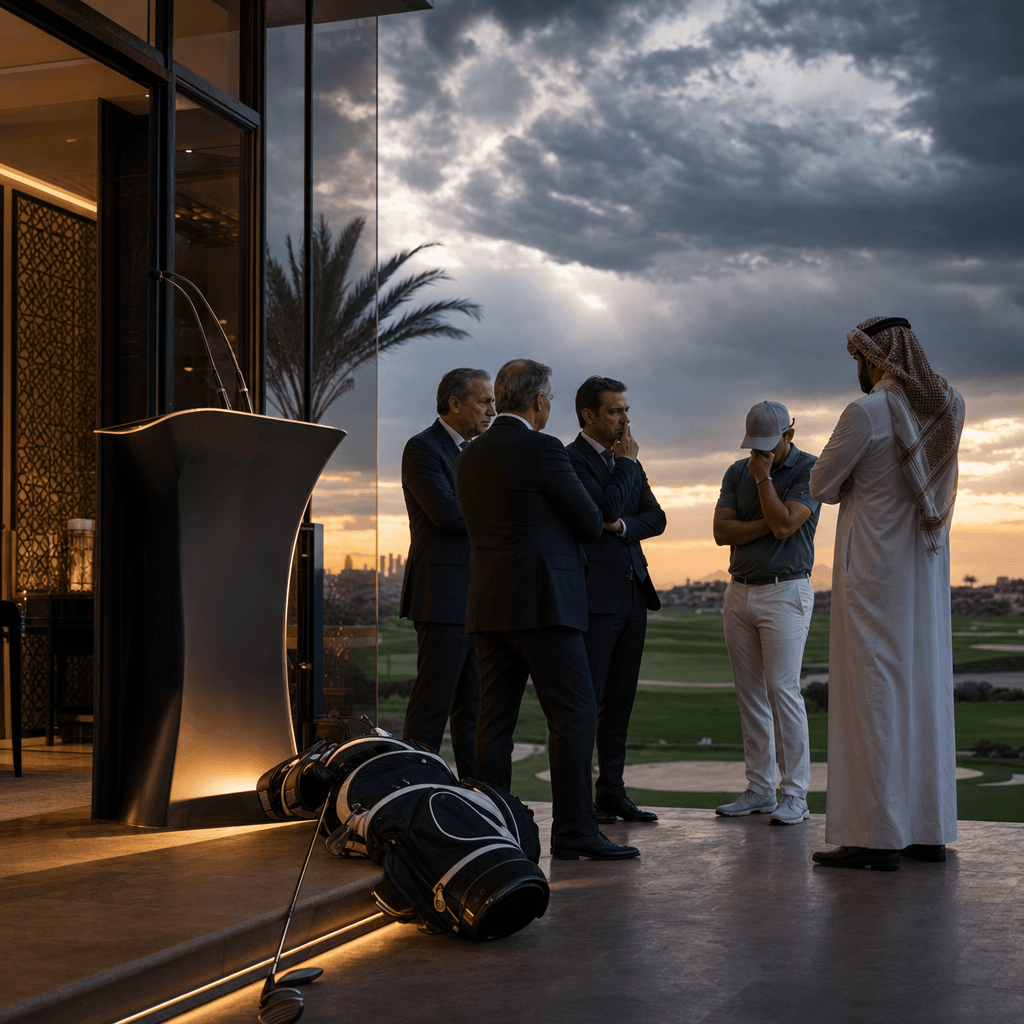
PIF’s LIV Golf Exit Turns a Disruptor Into a Sale
Saudi Arabia still controls LIV Golf’s timeline, but ending PIF funding after 2026 forces the league to prove it can survive without state subsidy.
Saudi Arabia’s Public Investment Fund holds the leverage here. PIF has confirmed it will stop funding LIV Golf after the 2026 season, and LIV responded by installing a new board led by Gene Davis and Jon Zinman and pitching a post-Saudi model built around outside investors and team franchises. Yasir Al-Rumayyan, the PIF governor who embodied Saudi backing for the project, is stepping away from the chair role. [Saudi Arabia to end LIV Golf funding, while league appoints new chairman | Al Jazeera] [
Saudi fund governor is leaving board of LIV Golf, report says | AP News]
Why Riyadh Is Pulling Back
This is not a sudden collapse. It is a controlled drawdown. Reuters reported just two weeks earlier that LIV’s 2026 season remained on track, despite funding-crisis rumors, which suggests PIF wanted continuity through the current campaign before forcing a restructuring. [LIV Golf 2026 season on track despite reports of funding crisis, say sources | Reuters]
The bigger story is Saudi capital discipline. AP reported that PIF is reconsidering several sports properties as part of a 2026–30 strategy that prioritizes higher returns, internal investment, and more private-sector participation. In that frame, LIV stops being a prestige weapon and becomes an asset that must justify itself commercially. [LIV Golf among several sports properties under Saudi reconsideration | AP News]
That matters well beyond golf. Riyadh’s sports spending has been one of the most visible instruments in its broader international positioning, a theme central to International and
Global Politics. LIV was the purest version of that strategy: use state capital to break an incumbent market and force everyone else to negotiate.
Who Gains, Who Loses
The PGA Tour gains bargaining power. The June 2023 framework agreement with PIF and the DP World Tour never produced a full settlement, and AP noted in 2026 that there had been little progress. A LIV without open-ended Saudi support is a weaker negotiating counterpart than the version that could write virtually unlimited checks. [Memorial is a reminder of the start of LIV Golf and framework agreements and little progress | AP News]
Private investors also gain leverage. They can now demand governance, cost controls, and a credible path to profit. That pressure is coming because the old model was expensive: AP said PIF had put roughly $5 billion to $6 billion into LIV, while the BBC reported LIV’s losses outside the United States had exceeded $1.1 billion since 2021. [Saudi fund governor is leaving board of LIV Golf, report says | AP News] [
LIV Golf: Saudi Arabia to withdraw funding at end of season | BBC Sport]
What to Watch Next
The next decision point is LIV’s 2027 plan. BBC reported officials were already considering fewer than 14 events, while Al Jazeera/AP said the new board will pursue strategic alternatives and outside capital. [LIV Golf: Saudi Arabia to withdraw funding at end of season | BBC Sport] [
Saudi Arabia to end LIV Golf funding, while league appoints new chairman | Al Jazeera]
Watch three things: who writes the next check, how much of the schedule survives, and whether PIF uses this retreat to reopen talks with the PGA Tour from a different position. Saudi Arabia is not leaving golf; it is changing the terms of control.
Discover more
US Politics
SNAP Food Assistance Faces Legal Challenges
In 2026, SNAP faces stricter eligibility rules and mounting legal challenges, threatening food assistance for the millions of Americans who rely on the program.

Conflict & Security
Drone Warfare Killing Aid Workers at Unprec
Over 1,000 humanitarian workers killed in three years as cheap armed drones collapse legal protections. Gaza, Sudan, Ukraine, and DRC see deliberate targeting of aid convoys and hospitals with zero prosecutions.
Global
World Normalises Taliban as Afghan Women Eras
UN data shows Afghan women erased from public life as Russia recognises the Taliban, EU hosts officials in Brussels, and ICC warrants for gender persecution go unenforced.
Conflict & Security
West Africa Food Crisis: Three Shocks in 2026
Conflict, climate extremes, and the Strait of Hormuz closure drive a severe food crisis in West and Central Africa, with fertilizer prices surging 80% and millions displaced.