Lee's NATO Pitch: A European Answer to Kim
South Korea seeks NATO's help against North Korea's nuclear threat.
Model Diplomat8 min readAsia
Lee's NATO Pitch: A European Answer to Kim's Nuclear Fait Accompli
South Korea's Lee Jae Myung asked NATO on July 7, 2026 to help halt North Korea's nuclear buildup — trading K-defence industry access for pressure on Pyongyang and its Russian patron.
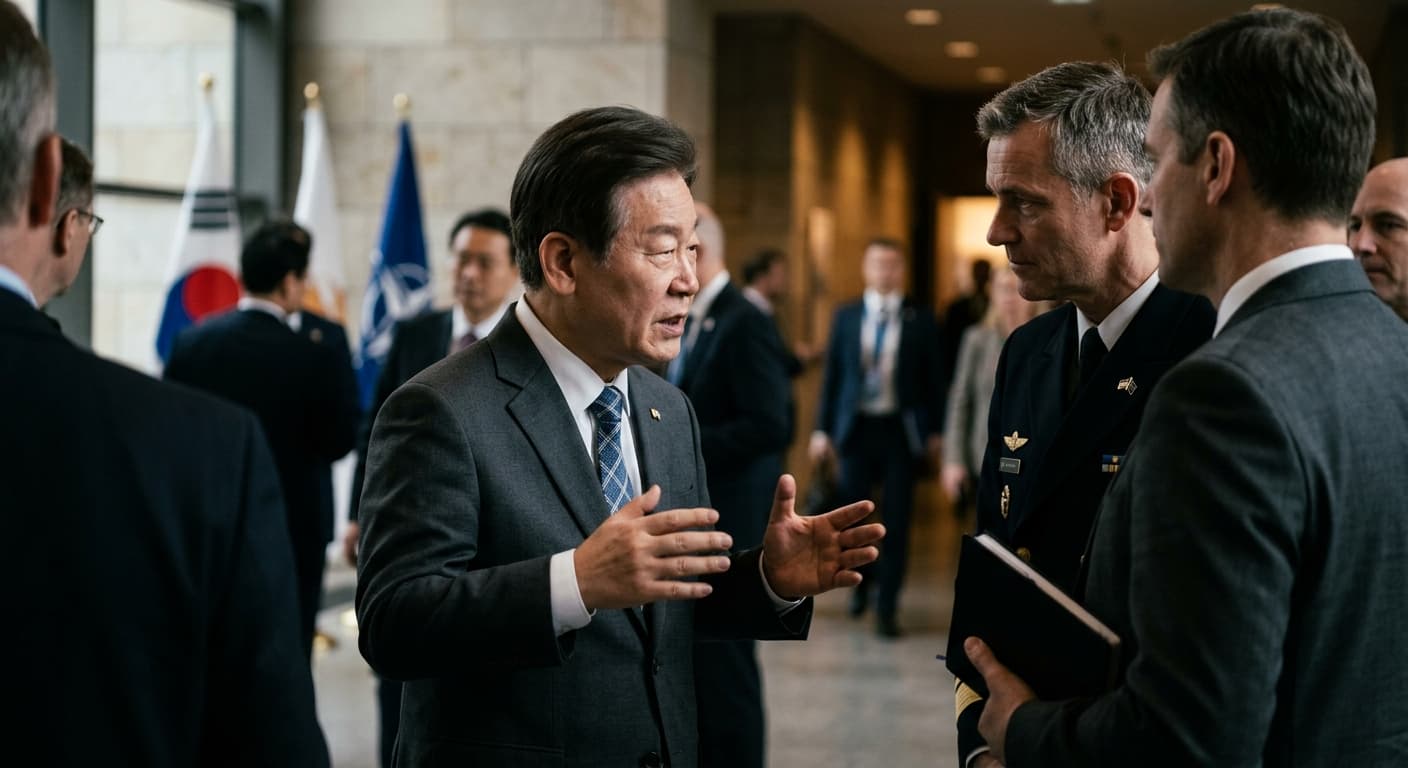
South Korean President Lee Jae Myung used a July 7 sideline meeting with NATO Secretary-General Mark Rutte in Ankara to ask the alliance to help stop North Korea's pursuit of nuclear and missile weapons — the first time a Seoul government has formally sought NATO leverage on Pyongyang's arsenal rather than merely a rhetorical endorsement. The ask is not about extending Article 5 to the Korean Peninsula. It is a calculated trade: Lee is offering NATO privileged access to South Korea's defence-industrial base — the only democratic supplier that can produce 155mm shells and howitzers at Russian scale — in exchange for European political weight against the Kim-Putin arms pipeline that is now feeding both the Ukraine front and Pyongyang's own missile programme. The Indo-Pacific and the Euro-Atlantic security theatres, in other words, have quietly fused around a single supply chain, and Lee is trying to be the broker.
What Lee actually asked for
According to the Blue House readout carried by NK News, Lee told Rutte that "breaking the deadlock on the Korean Peninsula requires maintaining the ultimate goal of denuclearization," while identifying a nearer-term objective — stopping Pyongyang's continued pursuit of nuclear and missile capabilities. Rutte, per the same account, "expressed hope for continued consultations" and said he would explore ways to assist. No concrete deliverables were announced.
The subtext is that Seoul's own tools have failed. Lee has already told Al Jazeera that UN sanctions are "ineffective," and told the
BBC that North Korea is producing an additional 15–20 warheads a year, making a freeze his "feasible, realistic alternative" to full denuclearisation for now. UN Security Council action is deadlocked by Russian and Chinese vetoes — a bottleneck the Yoon administration had already tried to route around by courting NATO, as the
Center for Strategic and International Studies noted in 2023.
Lee has kept the trajectory but changed the pitch. Where Yoon offered ideological solidarity, Lee is offering an industrial deal.
The industrial trade Lee is really pitching
Hours before meeting Rutte, Lee addressed roughly 1,000 defence-industry executives at the NATO Summit Defence Industry Forum and proposed a "Korea-NATO Defense Industry Partnership 2.0" — a shift from arms sales to joint research, production and operation. As The Korea Herald reported, Lee argued that "wars are no longer decided solely on the battlefield" and that "a nation's survival rests on the foundations of its defense industry."
That pitch lands because South Korea is already inside NATO's supply chain in a way no other Indo-Pacific partner is. Poland alone signed a roughly $22 billion framework in 2022 for K2 tanks, K9 howitzers and FA-50 jets; a RAND commentary put Poland's share of South Korean arms exports at 46% in 2024. According to
Stockholm International Peace Research Institute data cited by Al Jazeera, four South Korean producers grew combined arms revenues 31% to $14.1 billion in 2024, with Hanwha Group alone posting a 42% surge. The
Financial Times reported Hanwha Aerospace carrying a $22 billion order book, most of it European rearmament work.
Lee's price for accelerating that flow — including co-production of NATO-standard 155mm rounds, the single most acute shortage on the Ukrainian front — is European political muscle on North Korea. That is a specific ask with a specific delivery mechanism: NATO's 32 members hold seats on the boards of the multilateral sanctions monitoring team, on FATF, and on the export-control regimes that police the microelectronics and machine tools reaching Pyongyang via Russia.
Why the pipeline argument reframes everything
The reason Lee's ask lands more heavily in Ankara than similar requests in Madrid (2022), Vilnius (2023) or Washington (2024) is that Pyongyang is no longer an Asian problem. It is a European one.
North Korea has become Russia's second-largest ammunition supplier. The Royal United Services Institute, drawing on Open Source Centre satellite analysis, estimates that Pyongyang shipped up to 5.8 million 122mm and 152mm rounds to Russia between August 2023 and April 2025 — potentially 40% of everything Russia has fired in that period. By July 2025, South Korea's Defense Intelligence Agency put the cumulative figure above 12 million shells, according to the
Council on Foreign Relations.
The manpower flow is equally consequential. Between 14,000 and 15,000 North Korean soldiers have been deployed to fight alongside Russian forces since October 2024, with the Atlantic Council citing a UK Ministry of Defence estimate of more than 6,000 casualties. In return, as the
International Centre for Defence and Security puts it, Pyongyang is receiving air-defence upgrades, ballistic-missile assistance and — most valuable — combat experience for its officer corps.
This is the argument that lets Lee sell NATO on Korean Peninsula involvement without invoking Article 5. He does not need to convince Rome, Madrid or Berlin that North Korea threatens Europe abstractly. He only needs to point out that every additional KN-23 missile in Pyongyang's inventory is one fewer sitting in a Russian warehouse aimed at Kharkiv — and that European deterrence in Ukraine now depends, in part, on interdicting a Rajin-to-Dunay shipping route the UN Security Council cannot touch.
The Ankara summit's hard limits
The alliance did not go there in its formal text. The Ankara Summit Declaration runs seven paragraphs and names Iran and Russia as threats. North Korea appears nowhere in the communiqué itself, and China does not either — a marked retreat from the 2024 Washington declaration, which had labelled Beijing a "decisive enabler" of Russia's war. In his
pre-summit press conference, Rutte cited threats from "Russia, China, North Korea and Iran" working "increasingly together." But that language did not survive into the leaders' text.
The gap is not accidental. As Al Jazeera reported, President Donald Trump arrived in Ankara "very disappointed with NATO" and used the summit to press European allies on defence spending, not on China policy. Australia, Japan and New Zealand sent only ministers; Lee was the sole IP4 head of state to attend. The IP4 heads-of-state photo-op that Jens Stoltenberg had made a fixture from Madrid to Washington is gone.
That is precisely why Lee's bilateral with Rutte matters more than the communiqué. With the multilateral IP4 architecture thinning under Trump's Europe-first pressure and China's diplomatic pushback — Beijing has for years warned, per the Council on Foreign Relations, that "where NATO goes, war is most likely" — Seoul is moving to a bilateral, transactional model: sell shells and howitzers, buy European names on sanctions letters and Pyongyang-focused monitoring.
The Trump variable
Sitting behind Lee's pitch is a hedge against Washington. On the sidelines of the same summit, according to Yonhap, Lee and Trump followed up on shipbuilding cooperation, with Seoul committing to inject capital into US Navy vessel construction. The October 29, 2025 joint fact sheet from the
ROK Ministry of Foreign Affairs records that Lee agreed to raise South Korean defence spending to 3.5% of GDP "as soon as possible" and locked in a 15% reciprocal tariff arrangement.
Trump's North Korea posture, however, is a moving target. He has, as Al Jazeera noted, described North Korea as "sort of a nuclear power" and signalled openness to a Kim summit with denuclearisation demoted. That is why Lee has moved in parallel: the
ROK Ministry of Foreign Affairs has codified a "phased and pragmatic" denuclearisation approach as one of its five key diplomatic tasks, while its "END initiative" — announced at the September 2025 UN General Assembly — anticipates dialling back sanctions maximalism in exchange for a Pyongyang freeze.
The Brookings Institution's Andrew Yeo has framed Lee's role as "pacemaker" to Trump's "peacemaker." The Ankara ask is the same logic applied to Europe: if Washington is going to negotiate down from denuclearisation, Seoul wants European capitals holding the line on the missile pursuit, on non-proliferation, and on the Rajin-Russia arms corridor.
Who benefits, who loses
The clearest winner from Lee's Ankara play is Hanwha Group and the K-defence complex. A "Partnership 2.0" that moves from finished-system exports to co-production locks in decades of European offtake and insulates Korean industry against a European "buy European" backlash — the same protectionist reflex that produced the EU's EDIP proposal. Poland, which the RAND commentary and BBC Korean both identify as the linchpin (58% of Korean arms exports in 2021–2025), gets a permanent, embedded Asian supplier.
The clearest losers are China and, ironically, Japan. Beijing has spent three years arguing NATO expansion into Asia is the problem — and now finds NATO stepping back from that role in its declaration even as one Indo-Pacific partner burrows deeper into its defence-industrial base via bilateral channels Beijing cannot easily veto. Tokyo, meanwhile, watches Lee position South Korea as NATO's preferred Asian production partner while Japan sent only its foreign minister to Ankara.
North Korea's most likely response is to accelerate. As the Japan Institute of International Affairs has argued, the Russia-DPRK relationship is now a "long-term, multifaceted framework" that will outlast any Ukraine ceasefire — including reopened Moscow-Pyongyang rail links, a border road bridge and joint higher-education agreements. Any European tightening on Pyongyang runs into the fact that its most valuable customer is now Russia, not smugglers.
What to watch next
- APEC 2026 in Busan (October–November): The next opportunity for a Trump-Kim signalling event and for Lee to consolidate his "pacemaker" role. Watch whether Trump uses it to demote denuclearisation in favour of a freeze.
- EU–Korea Strategic Partnership review: Brussels and Seoul are due to update the 2010 framework; Ankara commitments will be tested when they translate into concrete industrial and sanctions text.
- Multilateral Sanctions Monitoring Team second annual report: The May 2025 inaugural report, produced by the 11-nation successor to the defunct UN Panel of Experts, is the mechanism through which Lee's "NATO help" could become operational. A tougher second report — particularly on Rajin-Dunay shipping — would be the first concrete deliverable from Ankara.
Diplomat View
Lee's Ankara ask will look, in hindsight, less like a plea for help than the moment South Korea stopped pretending North Korea's arsenal could be negotiated away and started building the coalition to contain it. The forecast: within twelve months, expect a NATO-Korea framework agreement covering 155mm co-production, a formal Seoul-Brussels sanctions coordination track, and language on North Korea's arms transfers to Russia in the next NATO summit declaration — even if China references stay soft. The bet is that Europe now needs Korean shells more than it needs a quiet relationship with Beijing.
What would kill this thesis: a Trump-Kim summit that trades sanctions relief for a partial freeze without Seoul in the room, or a Ukraine ceasefire that reduces European demand for Korean munitions faster than the industrial partnership can institutionalise. Either would strand Lee's leverage. The next 120 days — through APEC in Busan and the EU's autumn defence-industrial package — decide which way it breaks. Watch the Global Politics file for whether Ankara marks the start of a durable Euro-Korean security architecture or a bilateral workaround that Trump quietly unwinds.
The bottom line: Lee is not asking NATO to defend the Korean Peninsula. He is offering Europe the defence-industrial capacity it desperately needs to sustain Ukraine, and asking, in return, for Europe's political weight against the same Pyongyang-Moscow pipeline that supplies both wars. If Ankara becomes a framework rather than a photo, it will be the clearest sign yet that the Indo-Pacific and Euro-Atlantic security theatres are now one interconnected problem — with Seoul, not Tokyo, as its indispensable industrial hinge.
Discover more
US Politics
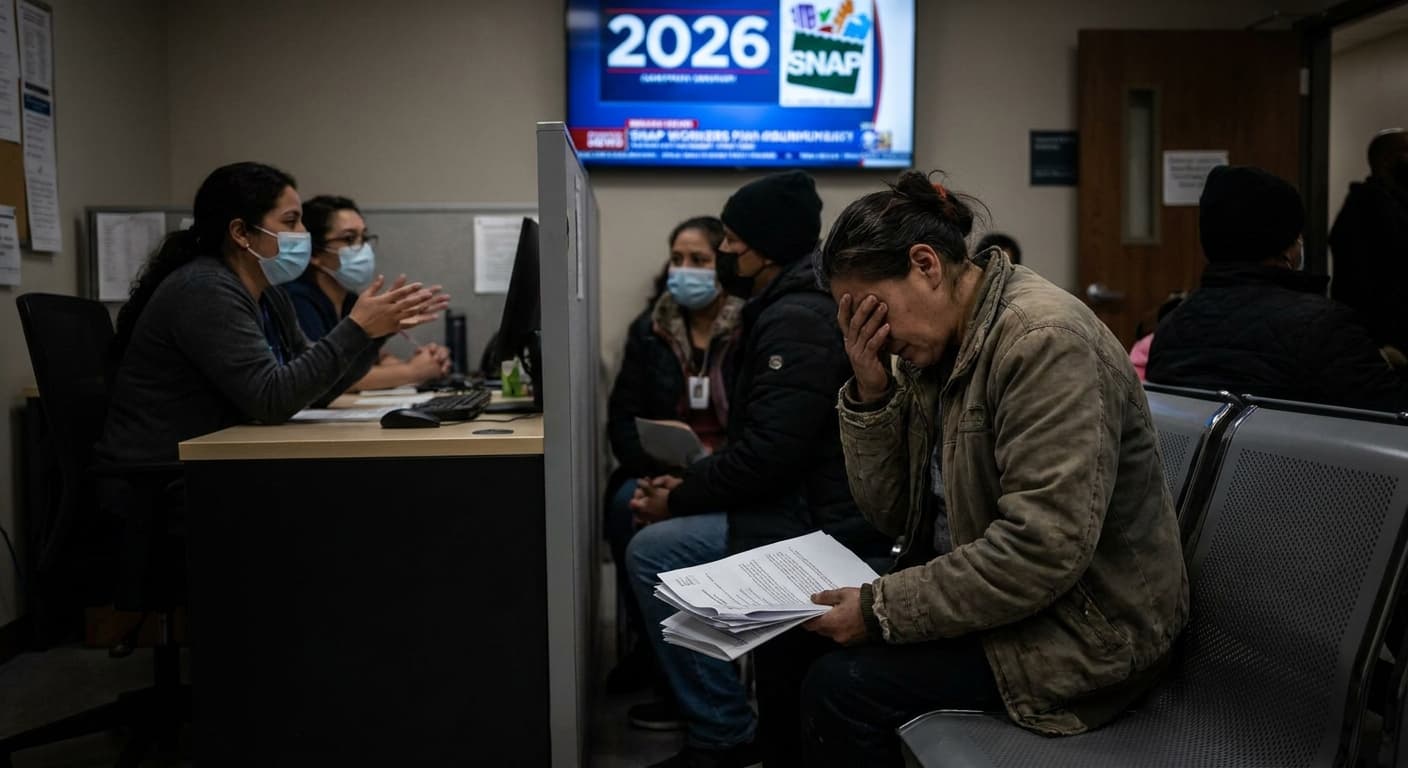
SNAP Food Assistance Faces Legal Challenges
In 2026, SNAP faces stricter eligibility rules and mounting legal challenges, threatening food assistance for the millions of Americans who rely on the program.
India
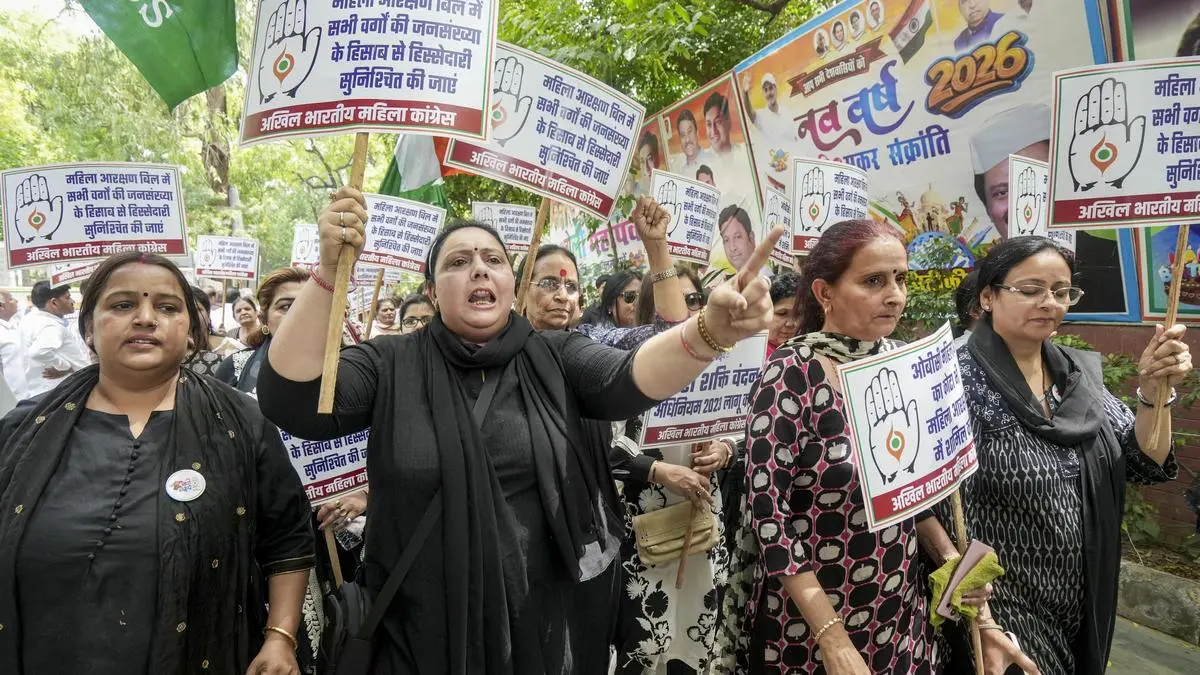
BJP's Misunderstanding of Women's Quota Needs
The BJP's linking of the Women Reservation Bill to delimitation risks delaying women's empowerment in India, misreading the aspirations of female voters.
India
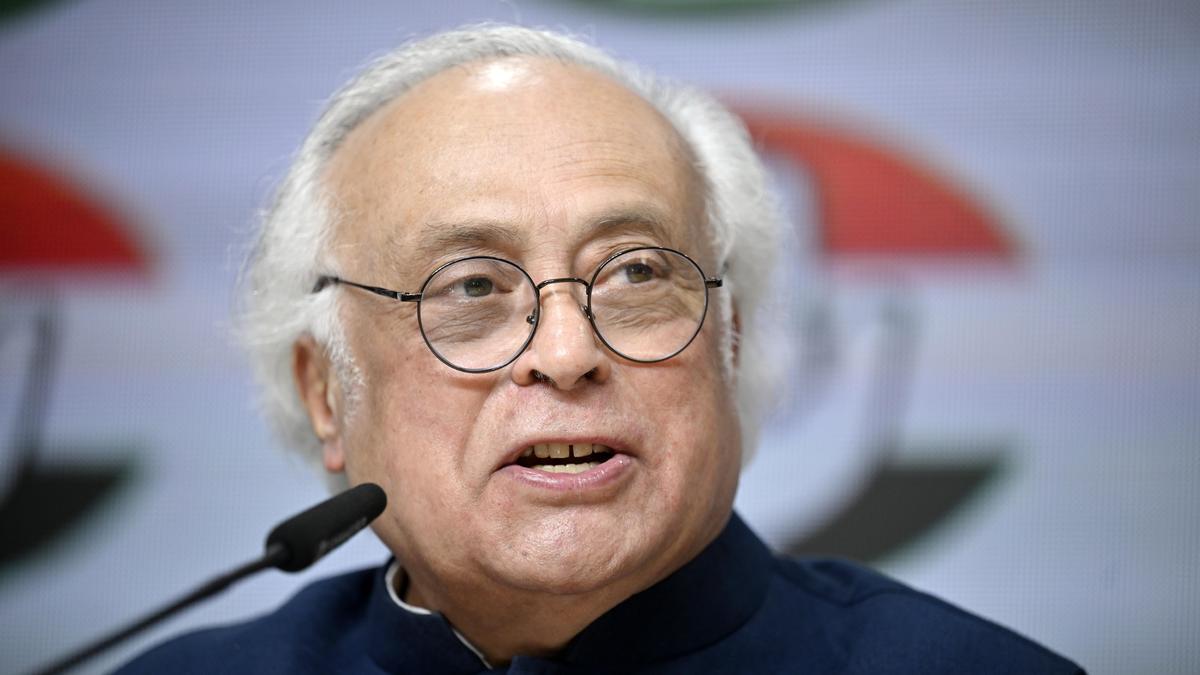
Congress Accuses Modi of Stalling Women's Law
Congress accuses Modi of stalling women's reservation law by linking it to delimitation, revealing a deeper electoral strategy.

Conflict & Security
Drone Warfare Killing Aid Workers at Unprec
Over 1,000 humanitarian workers killed in three years as cheap armed drones collapse legal protections. Gaza, Sudan, Ukraine, and DRC see deliberate targeting of aid convoys and hospitals with zero prosecutions.