Saint Lucia's Diplomatic Tightrope: Taiwan T
Navigating ties with Taiwan and pressures from superpowers
Model Diplomat3 min readamericas
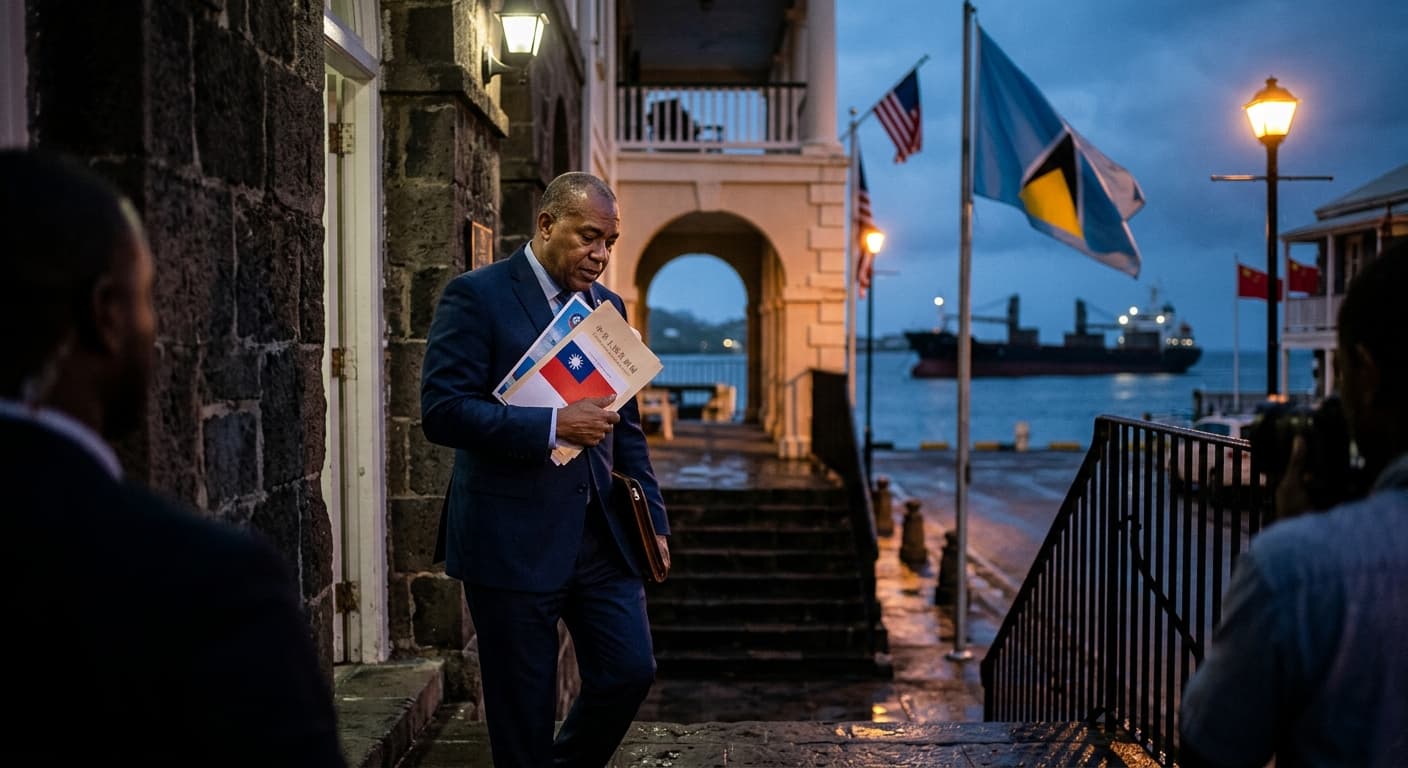
Saint Lucia's Diplomatic Tightrope: Taiwan Ties, UN Independence, and the Cost of Staying Small
A nation of 180,000 navigates between Beijing's checkbook, Washington's disinterest, and a UN voting record that defies easy alignment.
Saint Lucia recognized Taiwan in 1984, switched to Beijing in 1997, flipped back to Taipei in 2007 — and has held the line ever since. That makes it one of only seven countries in the Western Hemisphere still maintaining formal diplomatic relations with Taipei, and one of just twelve globally CSIS. The decision is not ideological. When former Prime Minister Kenny Anthony declined to flip back to China after winning the 2011 election, he put it plainly: the country could not behave "as if our sovereignty is for sale to the highest bidder"
BBC News.
That posture now faces its stiffest test in years.
Beijing's 2025 policy paper on Latin America and the Caribbean elevated the one-China principle from a values statement to an action item — the second entry in its regional Solidarity Program, immediately after high-level visits CSIS. For Saint Lucia, the pressure is compounded by the Trump administration's inclusion of the island on its travel-ban "yellow list," a move the CSIS warns "could further add to pressures in those countries to recognize the PRC"
CSIS. The net effect is squeeze from both directions: Beijing offers infrastructure and credit lines; Washington offers restrictions.
The UN record: not a Western proxy
Saint Lucia's General Assembly votes tell a story of studied independence. In February 2025, it voted with 92 other nations to condemn Russia's invasion of Ukraine and demand immediate withdrawal — even as the Trump administration joined Russia and North Korea in opposing the resolution Al Jazeera. In December 2024, it backed an immediate, unconditional ceasefire in Gaza. In May 2024, it supported Palestinian membership at the UN. According to UN voting data, Saint Lucia's least-aligned partners over the full historical record are the United States (16.7%) and Israel (21.0%)
UN Project.
These are not the votes of a client state. They reflect a foreign policy the Model Diplomat profile characterizes as "vulnerability management" — using CARICOM, the OECS, AOSIS, and the UN to convert limited size into negotiating leverage on climate finance, development, and regional security Model Diplomat. The alignment is with small-island priorities, not great-power agendas.
The economic reality underneath
The IMF's 2025 Article IV consultation, concluded in January 2026, lays out the constraints. Growth is projected at 1.7% for 2025 — down from 4.7% in 2024 — with temporary hotel closures and reduced airlift weighing on tourism. Public debt remains high. "Risks to the outlook remain tilted to the downside," the IMF staff appraisal notes, citing geopolitical tensions, escalating trade measures, and the ever-present threat of natural disasters IMF.
The World Bank stepped in with a $20 million Catastrophe Deferred Drawdown Option in April 2025 — fast-access liquidity when the next hurricane or flood hits — but the structural picture doesn't change with one credit line World Bank.
Prime Minister Philip Pierre's government has responded by diversifying partnerships beyond the traditional Caribbean Rolodex. Nigeria's President Bola Tinubu visited Saint Lucia in 2026, announcing OECS-wide scholarships to Nigerian universities, a proposed visa waiver for diplomatic passport holders, and a joint committee to deepen economic and educational ties — a concrete, if modest, counterweight to dependence on any single patron BBC Pidgin.
What to watch
The next OECS or CARICOM summit. Pierre uses regional platforms to amplify Saint Lucia's voice; any coordinated shift in the Eastern Caribbean's posture toward Beijing or Washington would surface there first. Watch also whether the Trump administration adjusts the yellow-list designation — removal would ease pressure to flip on Taiwan; retention would intensify it. And with growth projected at just 1.5% over the medium term, any climate shock that forces emergency borrowing would tilt the calculus on who offers the better deal.
Discover more

US Politics
US Launches $166B Tariff Refund Portal
The US is launching a $166 billion tariff refund portal to aid importers hit by Trump-era tariffs, with major implications for trade and supply costs.
US Politics
Virginia's Redistricting Referendum
Virginia's redistricting referendum is drawing a flood of dark money, shaping future elections and the fight for congressional control amid party stakes.
Global Politics
US-Iran Tensions Rise
Tensions escalate in the Strait of Hormuz as Iran and the US clash over maritime control, with a ceasefire hinging on a contested MoU paragraph.

Conflict & Security
Drone Warfare Killing Aid Workers at Unprec
Over 1,000 humanitarian workers killed in three years as cheap armed drones collapse legal protections. Gaza, Sudan, Ukraine, and DRC see deliberate targeting of aid convoys and hospitals with zero prosecutions.