Ladakh’s Budget Shift Trims Delhi’s Grip, Not Its Veto
Ladakh’s leaders won control of budgets and bureaucracy, but Delhi kept the constitutional leash and the statehood question.
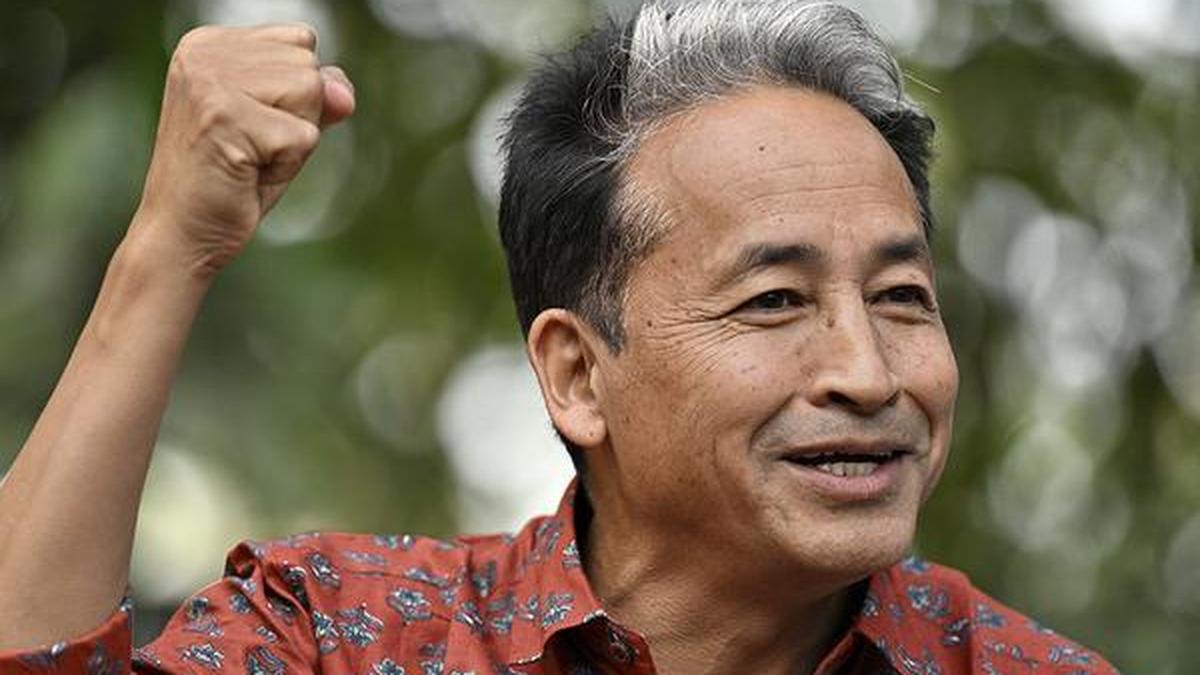
The Centre has agreed in principle to shift day-to-day financial authority in Ladakh from the lieutenant governor to elected representatives, Sonam Wangchuk said on Saturday, after talks with the Ministry of Home Affairs and LAB-KDA leaders produced a framework for a UT legislature, a chief minister-style executive head and Article 371 safeguards ( The Hindu). That is a meaningful transfer of local control, but not a clean victory for the agitation. The Centre is still refusing full statehood, and Wangchuk himself said the compromise rests on the argument that Ladakh cannot yet fund its own salaries and pensions (The Hindu). The power dynamic is clear: Delhi is conceding enough authority to lower the political temperature, while preserving the fiscal and constitutional veto.
Who gains, who loses
The immediate winners are the Leh Apex Body, the Kargil Democratic Alliance and local leaders like Wangchuk, who can now claim they have forced a shift away from direct rule by the LG toward an elected local government with real budget authority (The Hindu). The proposed model would also put the bureaucracy under an elected chief minister or equivalent, a direct rollback of the present arrangement in which the LG has dominated administration and finance ( The News Now). The losers are the LG’s office and the Home Ministry, which would give up operational control without yet agreeing to the one demand that would fully alter the balance of power: statehood.
That matters because Ladakh has been the sharpest test case for Delhi’s post-2019 Union Territory model. After the abrogation of Article 370 and the creation of the UT in 2019, Ladakhi groups have argued that direct central control stripped the region of democratic accountability and left land, jobs and infrastructure decisions too far from local voters (The Hindu). The settlement now under discussion tries to answer that complaint without paying the full cost of statehood. In other words, the Centre appears willing to buy stability with institutional redesign, not with a constitutional upgrade. For policymakers watching  India, that is the important signal: Delhi is still managing Ladakh as a security-sensitive border region first, and a democratic experiment second.
What to watch next
The next move is the draft. The MHA has said it will send a proposal, and LAB-KDA leaders will have to decide whether the wording genuinely transfers legislative, executive and financial power or simply repackages central oversight (The Hindu). Watch three points: whether the new body is called an assembly or something thinner; whether Article 371 safeguards are strong enough to protect land and culture; and whether the Centre keeps statehood tied to a vague future test of “financial viability” ( ANI). If the draft leaves the LG with budget gates or discretionary control over key appointments, this will be a pause in the confrontation, not a settlement.