Ladakh Talks Test Delhi’s Grip on the Frontier
Sonam Wangchuk’s presence at today’s Home Ministry meeting shows Delhi is using dialogue to reset a stalled statehood fight without conceding control.
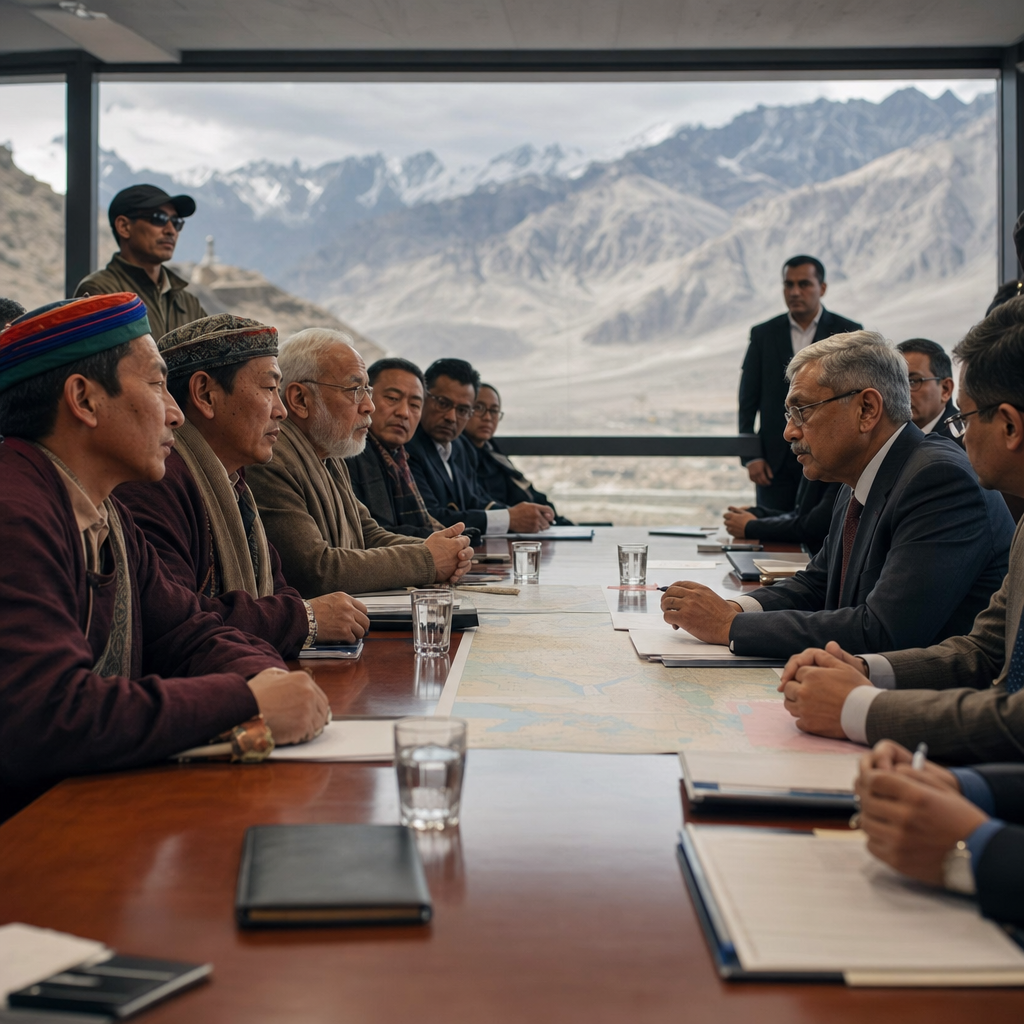
The Centre is reopening a channel it had let harden into deadlock: a civil society delegation from Ladakh, including climate activist Sonam Wangchuk, is meeting Home Ministry officials today in what  The Hindu says is the first such round since the inconclusive February 4 high-powered committee meeting. The delegation is pressing the same core demands it has carried since 2020 — statehood, Sixth Schedule protections, a Public Service Commission, and more local representation — while Delhi is offering a narrower conversation about administrative safeguards and stronger hill councils (The Hindu).
Delhi still controls the tempo
That is the real power balance. Ladakh’s LAB and KDA can keep the political pressure alive, but the Home Ministry controls the forum, the agenda and the pace of concessions. The Hindu reported in April that the Centre had set May 22 for the sub-committee meeting after months of drift, framing it as a move to “carry forward” dialogue after the September 2025 Leh violence that left four people dead and blew up trust in the process. Frontline’s reporting on the same sequence shows why the talks matter: the Centre has already tried to change the local administrative map by creating five new districts, a move critics in Kargil read as an attempt to blunt the joint Leh-Kargil demand for constitutional safeguards while Delhi presents it as decentralisation ( Frontline).
That combination — talks plus selective administrative concessions — is the Centre’s preferred play. It keeps the dispute inside a managed channel and avoids opening the larger constitutional question. For Ladakh’s leaders, that is exactly the problem: hill councils and new districts improve delivery on paper, but they do not answer the demand for real political protection over land, jobs and identity. For the broader India file, see  India.
Wangchuk’s seat at the table is the signal
Wangchuk’s inclusion is not cosmetic. The Hindu reported in late April that he had called for “meaningful and constructive dialogue” and the withdrawal of cases against those arrested after last year’s protests. His earlier detention under the National Security Act, and release on March 14, made him a symbol of the state’s coercive reach as much as of Ladakh’s protest movement (The Hindu). Bringing him into the meeting gives the Centre a way to show openness; it also raises the cost of another inconclusive session.
That is why today’s talks are less about a breakthrough than about whether Delhi is willing to move from cosmetic decentralisation to constitutional commitments. If officials stay with Article 371-style safeguards and hill council empowerment, the delegation is likely to walk out with the same answer it has heard before. If the Centre is serious, today is the moment to say so in writing.
What to watch next
Watch for three things after the meeting today: whether the Home Ministry sets a date for the next round, whether it offers any written assurance beyond general “development” language, and whether it touches the most politically loaded demand — Sixth Schedule status. If there is no movement on those points, the talks will have bought Delhi time, not legitimacy.