Kyiv’s Drone Campaign Chokes Russia’s Fuel
Ukraine targets Russian energy exports with drone strikes.
Model Diplomat3 min readEurope
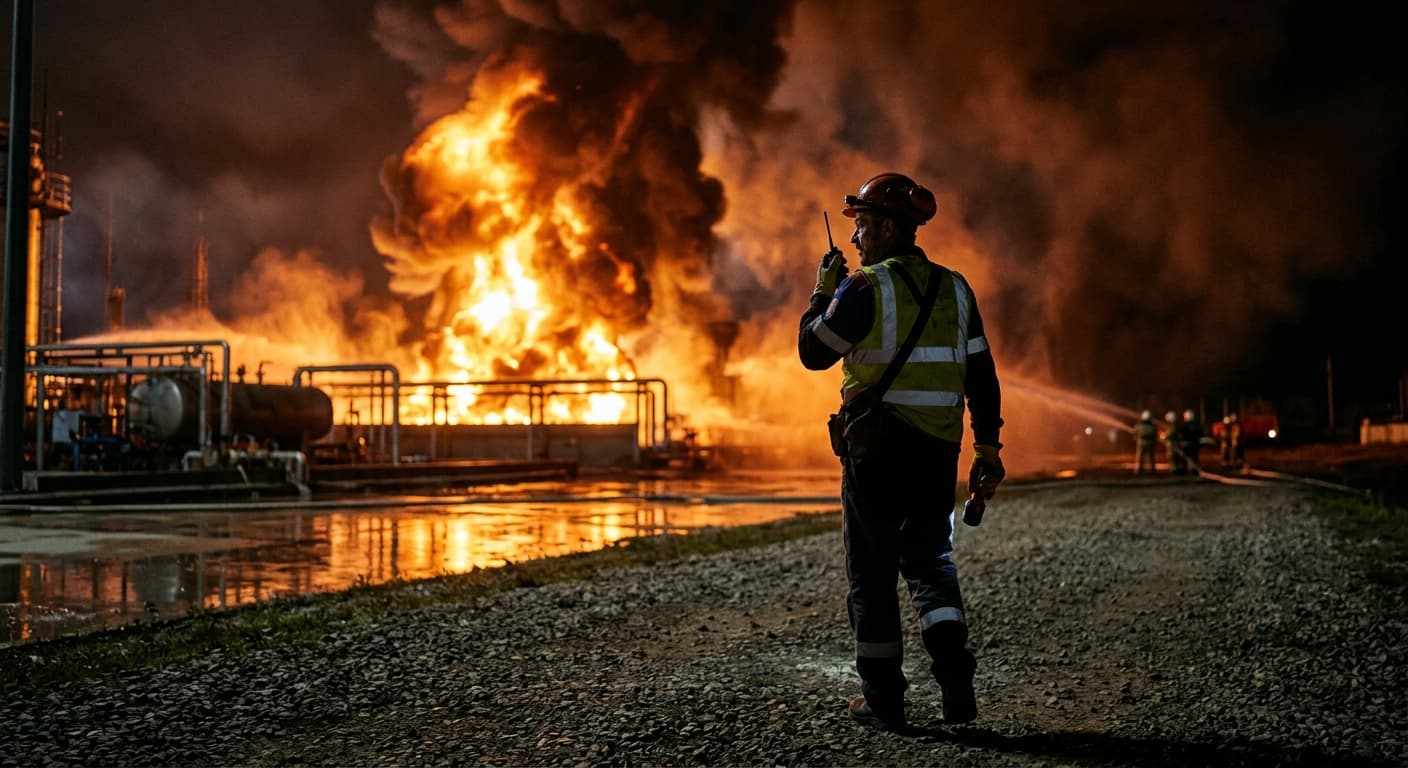
Kyiv’s Drone Campaign Chokes Russia’s Maritime Fuel Arteries
Kyiv’s targeted strikes on Krasnodar’s sea terminal signal a systematic campaign to starve Moscow’s war machine of export revenues.
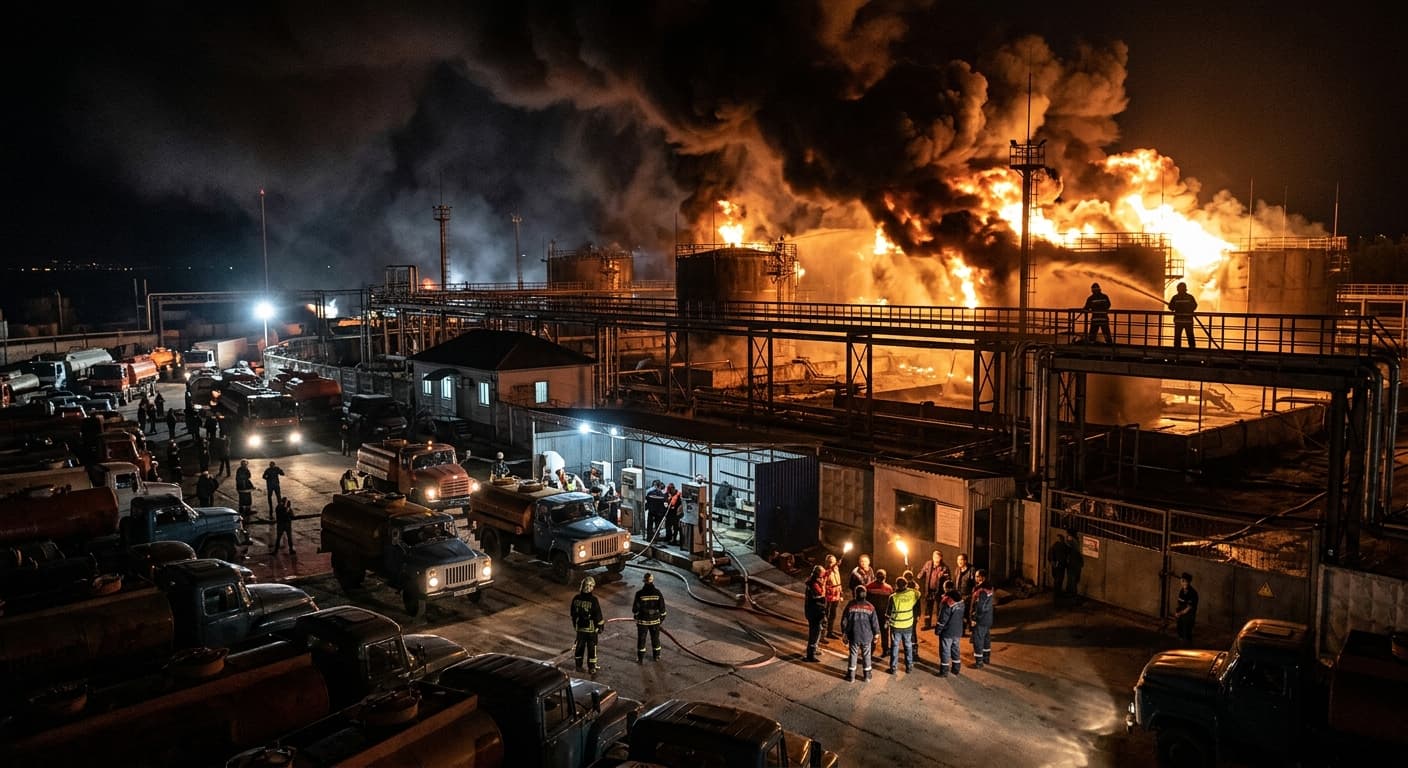
A coordinated strike on June 13, 2026, by Ukrainian long-range drones has heavily damaged the Tamanneftegaz sea terminal in the village of Volna, Russia’s Krasnodar region. According to Al Jazeera, Ukraine’s Security Service (SBU) confirmed that the attack successfully hit five fuel tanks and two oil loading stands at the facility, which serves as the largest liquefied hydrocarbon transshipment complex in southern Russia. Kyiv is aggressively exploiting asymmetric drone technology to impose escalating financial and logistical costs on Moscow's critical energy export industry.
Choking the War Engine
This attack is the latest escalation in a deep-strike offensive that Ukrainian officials collectively refer to as "long-range sanctions." By targeting the economic infrastructure that funds the Russian state, Ukraine forces Moscow to divert critical air defense assets away from active front lines. This strategy has expanded significantly, as seen when Ukrainian drones shut down airspace and forced residents to stay indoors in Russia’s second-largest city during the St. Petersburg International Economic Forum—an operation the Russian government described as "unprecedented" according to the BBC.
Beyond cutting federal oil revenues, this campaign is engineered to trigger localized supply crises within Russia's military-logistics hubs. Recent drone strikes targeting Crimea-bound supply corridors have forced local authorities on the peninsula to ration gasoline, leaving local networks to operate on prepaid vouchers with some transit lines suspended altogether due to fuel shortages, as reported by the BBC. Similarly, a June 10 strike on the occupied port of Mariupol caused a total blackout and restricted maritime shipping, directly undermining Russia's ability to supply forward garrisons according to
Al Jazeera.
The Economics of Scale
The primary driver behind this offensive shift is Ukraine’s domestic innovation and unprecedented industrial scaling. According to an analysis by the Council on Foreign Relations, Ukraine produced approximately 4 million robotic systems in 2025 and is on track to manufacture between 5 and 6 million military drones in 2026. This sheer volume allows Ukrainian forces to regularly overwhelm state-of-the-art Russian air defense systems, making the defense of sprawling refineries and remote sea terminals nearly impossible.
This evolving dynamic is transforming the broader Conflict from a territorial war of maneuvers into a strategic campaign of economic containment. By systematically stripping Moscow of its localized refining capacity—with estimates suggesting nearly 40 percent of Russia's primary refining capacity was disabled in mid-2026—Kyiv is proving it can project cheap, highly disruptive power over 1,000 kilometers deep into hostile territory.
What to Watch Next
The critical decision point that will dictate the future intensity of this campaign is the upcoming disbursement of European Union funding. Specifically, the EU is finalizing a two-year €90 billion loan, of which €6 billion is earmarked specifically for Ukrainian drone manufacturing, designed to unlock underutilized domestic production capacity as early as late June 2026 (Council on Foreign Relations). If these funds are successfully delivered, the volume and frequency of strikes on Russia's Black Sea ports, refineries, and logistical choke points will likely scale up dramatically.
Discover more
Global
Kyiv's Empty Quiver: Ankara Summit on NATO
As Russia strikes Kyiv, NATO's Ankara summit must address Ukraine's urgent air defense needs amid dwindling interceptor supplies.
International Relations
Ukraine Drone Strikes Crimea Power Grid
Ukrainian drone strikes targeting Crimea's power grid signal a strategic shift, aiming to disrupt Russian logistics by hitting critical energy infrastructure.
Conflict & Security
Russia Encircles Konstantinovka—Key to Donbas
Russia's encirclement of Konstantinovka could unlock the wider Donbas for further advances, marking a pivotal moment in its grinding eastern offensive.
Conflict & Security
Ukraine's Energy Offensive Hits Crimea
Ukraine's drone campaign is disrupting Russian fuel supplies and forcing rationing in Crimea, turning energy infrastructure into a key front of the war.