Kyauktaw Airstrike: Junta Tactics in Rakhine
Myanmar military airstrike kills civilians in Rakhine state.
Model Diplomat2 min readAsia
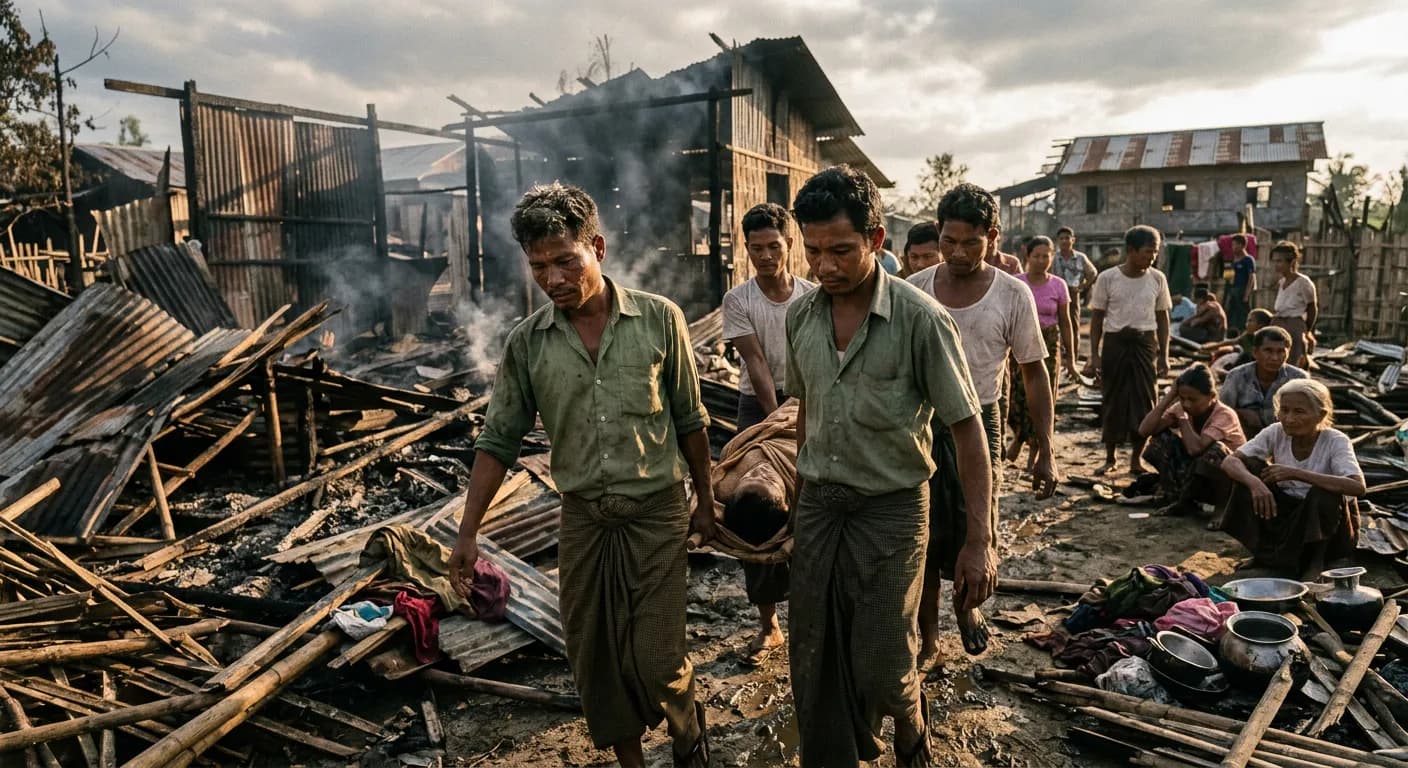
Kyauktaw Airstrike: Junta Air Power Tactics in Collapsing Rakhine Margin
Myanmar military kills at least seven civilians in Rakhine state town. Pattern reflects broader strategy as junta pressures ethnic opposition in shrinking territory.
The Myanmar military launched an airstrike on Kyauktaw town in western Rakhine state on June 17, killing at least seven civilians including a five-year-old child, according to
Al Jazeera and rescue workers on scene. Three jets dropped nine bombs around 3:00 p.m., wounding 15 others, said Naing Win Lwin, a local rescue worker cited by
BSS/AFP. A shopkeeper told
BSS her husband was killed when he entered their house to search for her during the strike—a common pattern as civilians attempt to shelter during attacks.
The strike is the latest in a cascade of air operations targeting Rakhine, a region the military is losing to the Arakan Army, an ethnic minority armed group that controls nearly all of the state's territory. The junta has responded to ground defeats with sustained bombardment. Just days earlier, another airstrike in Gwa Township killed at least two civilians, according to Myanmar Now. In one of the deadliest single strikes, a
December 2025 attack on Mrauk U hospital killed over 30 people—patients, medical workers, and children—which the junta later claimed was targeting armed groups using the facility as a base.
Air Power as Loss Substitution
The junta's reliance on airstrikes reflects strategic desperation, not tactical advantage. Rakhine is now controlled almost entirely by the Arakan Army, which seized the state's headquarters and 14 of its 17 townships, according to Channel News Asia. The military has no effective ground presence to recover lost territory—and the Arakan Army has no air defense. The junta is deploying Chinese and Russian jets to punish civilian populations in enemy-held areas, knowing the opposition cannot retaliate in kind.
This reflects the broader collapse of junta control since the 2021 coup. Min Aung Hlaing, now "president" under a carefully orchestrated 2025 election that democracy monitors derided as a rebranding ploy, currently holds territory only outside Rakhine. The blockade the military has imposed on the state compounds the humanitarian crisis, with civilians caught between military bombing campaigns and an armed group that human rights groups also accuse of atrocities.
What to Watch
Kyauktaw itself sits near several townships the Arakan Army is attempting to secure. If the opposition achieves control of contested areas near the Bangladesh border, the military's blockade strategy tightens further—and pressure on junta air operations may escalate. Min Aung Hlaing's current state visit to China (backed by a joint statement pledging Beijing's support for Myanmar's "national peace and stability") signals the junta's reliance on external backing as its domestic leverage erodes. Monitor whether Chinese or Russian equipment replacements accelerate, signaling Beijing's willingness to fuel continued bombing campaigns against a civilian population in a region its partner controls almost entirely.
Sources:
Discover more
International Relations
Myanmar Scam Operations Persist Despite Raids
Myanmar's online scam operations persist despite crackdowns, with more than 5,300 trafficking victims still trapped in militia-run compounds near Thailand.

India
India’s Myanmar Gamble: Modi’s Junta Alliance
India's support for Myanmar's military junta is tested by mounting local resistance, border insecurity, and instability that threaten Modi's strategic gamble.
Conflict & Security
Myanmar Junta Regains Control Amid Resistance
Myanmar's junta is regaining the military initiative as resistance forces struggle to adapt, shifting the balance of a grinding civil conflict back its way.

Conflict & Security
Drone Warfare Killing Aid Workers at Unprec
Over 1,000 humanitarian workers killed in three years as cheap armed drones collapse legal protections. Gaza, Sudan, Ukraine, and DRC see deliberate targeting of aid convoys and hospitals with zero prosecutions.