Kwara’s Bandit Escalation Tests Authority
Gunmen escalate attacks, challenging local governance in Kwara.
Model Diplomat3 min readAfrica
Kwara’s Bandit Escalation Is Testing State Authority
Gunmen are moving from ransom raids to symbolic strikes on police posts and an emir’s palace, exposing Kwara’s thin rural security.
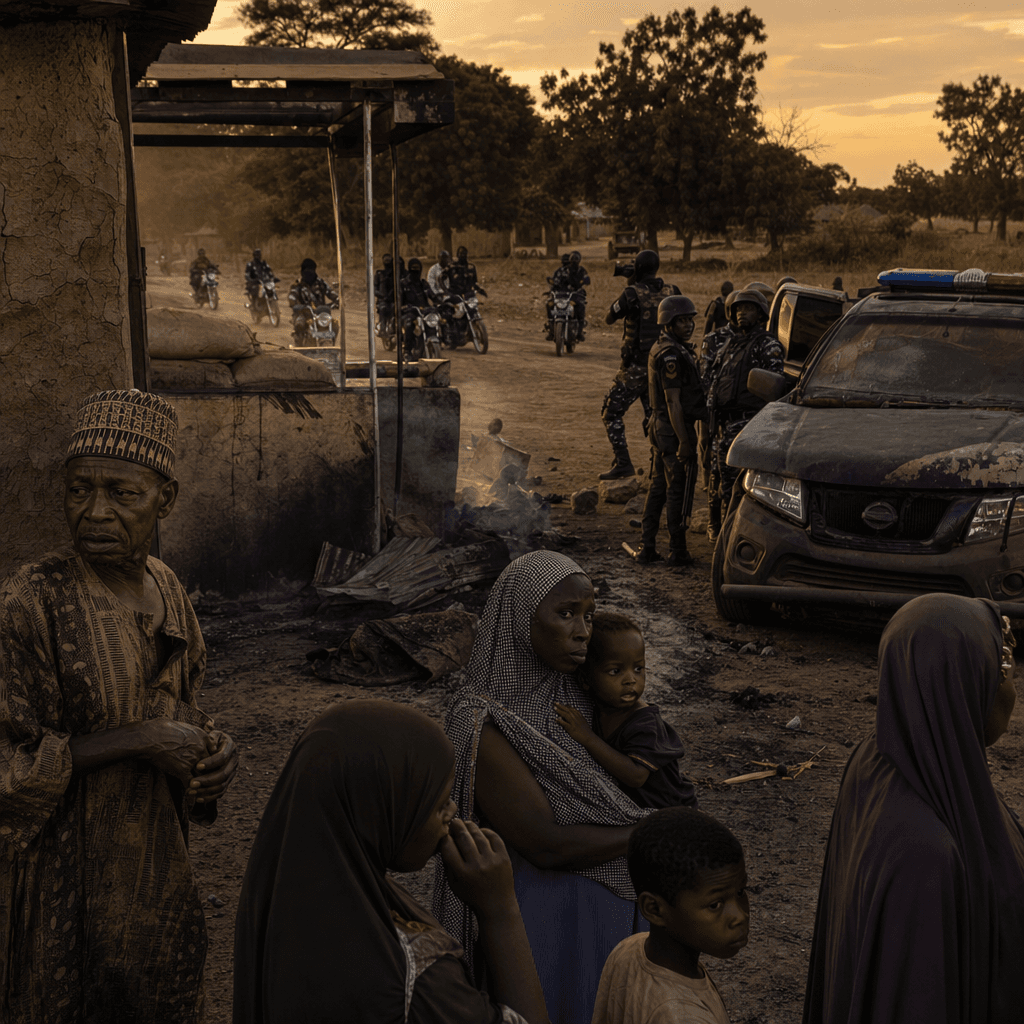
Gunmen kidnapped 10 people in Yashikira, Baruten LGA, and burned part of the Emir of Yashikira’s palace and attacked the local police divisional headquarters, the Kwara police command said on Monday, describing it as a “coordinated and desperate assault” (BBC News Pidgin). That matters because the attackers are no longer just hunting for victims; they are signaling that they can overrun local authority. A separate raid just two days earlier killed at least three worshippers and abducted 15 others at a night vigil in Ekiti LGA, showing that Kwara’s violence is now moving in tight succession across rural communities (
Daily Trust).
The target is the message
Burning part of an emir’s palace is a political act, not only a criminal one. In northern and north-central Nigeria, traditional rulers are often the first line of local legitimacy: they mediate disputes, mobilize residents, and serve as the state’s face in places where formal security is thin. By hitting the palace and the police post in the same operation, the gunmen are testing whether the government, the emirate, or anyone else can still claim control over the community (BBC News Pidgin).
That is why this attack is more dangerous than a routine kidnapping. It widens the contest from money to authority. The BBC report says residents heard sporadic gunfire between about 12:00 and 2:00 GMT before the attackers moved toward the palace and surrounding areas, then operated for hours without resistance (BBC News Pidgin). In plain terms: the gunmen chose the time, the target, and the pace.
Kwara is becoming a pressure point
The latest raids fit a pattern of repeated attacks across the state in recent days. Daily Trust reported that armed bandits killed three worshippers and abducted 15 others during a night vigil on the outskirts of Ikiran village in Ekiti LGA, while police said tactical teams, drones, and other units were deployed after the attack (Daily Trust). Legit.ng also documented earlier violence in Kwara, including an attack in Tsaragi in which one resident was killed and another abducted, and a separate assault in Patigi, as well as a May 2 attack on a police camp in Tenebo that killed three officers (
Legit.ng).
That sequence suggests a creeping operational pattern: isolated rural settlements, prayer grounds, and police positions are being probed one after another. For armed groups, this is efficient. They exploit sparse security coverage, generate fear fast, and leave the state reacting after the fact. For Abuja and the Kwara government, the problem is less about one incident than about the cumulative loss of deterrence. Once communities assume police arrive only after the gunmen leave, the attackers gain strategic freedom.
What to watch next
The next test is whether the Kwara police can identify the Yashikira cell, recover the 10 abducted people, and hold the Baruten-Ekiti axis long enough to stop another raid. Watch for a formal casualty update from the state command, any troop reinforcement, and whether the federal government treats this as an isolated bandit strike or part of the wider insecurity map tracked on Conflict and
Global Politics. If the response stays local and fragmented, the gunmen will have learned the key lesson they wanted: Kwara is still negotiable.
Discover more

India
BJP's Misunderstanding of Women's Quota Needs
The BJP's linking of the Women Reservation Bill to delimitation risks delaying women's empowerment in India, misreading the aspirations of female voters.
US Politics
Congress Targets AI Chatbot Access for Terror
The House passed the Generative AI Terrorism Risk Assessment Act, focusing on AI's role in terrorism and potential surveillance implications.

Conflict & Security
Drone Warfare Killing Aid Workers at Unprec
Over 1,000 humanitarian workers killed in three years as cheap armed drones collapse legal protections. Gaza, Sudan, Ukraine, and DRC see deliberate targeting of aid convoys and hospitals with zero prosecutions.

Global
World Normalises Taliban as Afghan Women Eras
UN data shows Afghan women erased from public life as Russia recognises the Taliban, EU hosts officials in Brussels, and ICC warrants for gender persecution go unenforced.