Kim's Naval Pivot Locks Denuclearization Off
North Korea's destroyer signals a shift in nuclear strategy.
Model Diplomat3 min readAsia
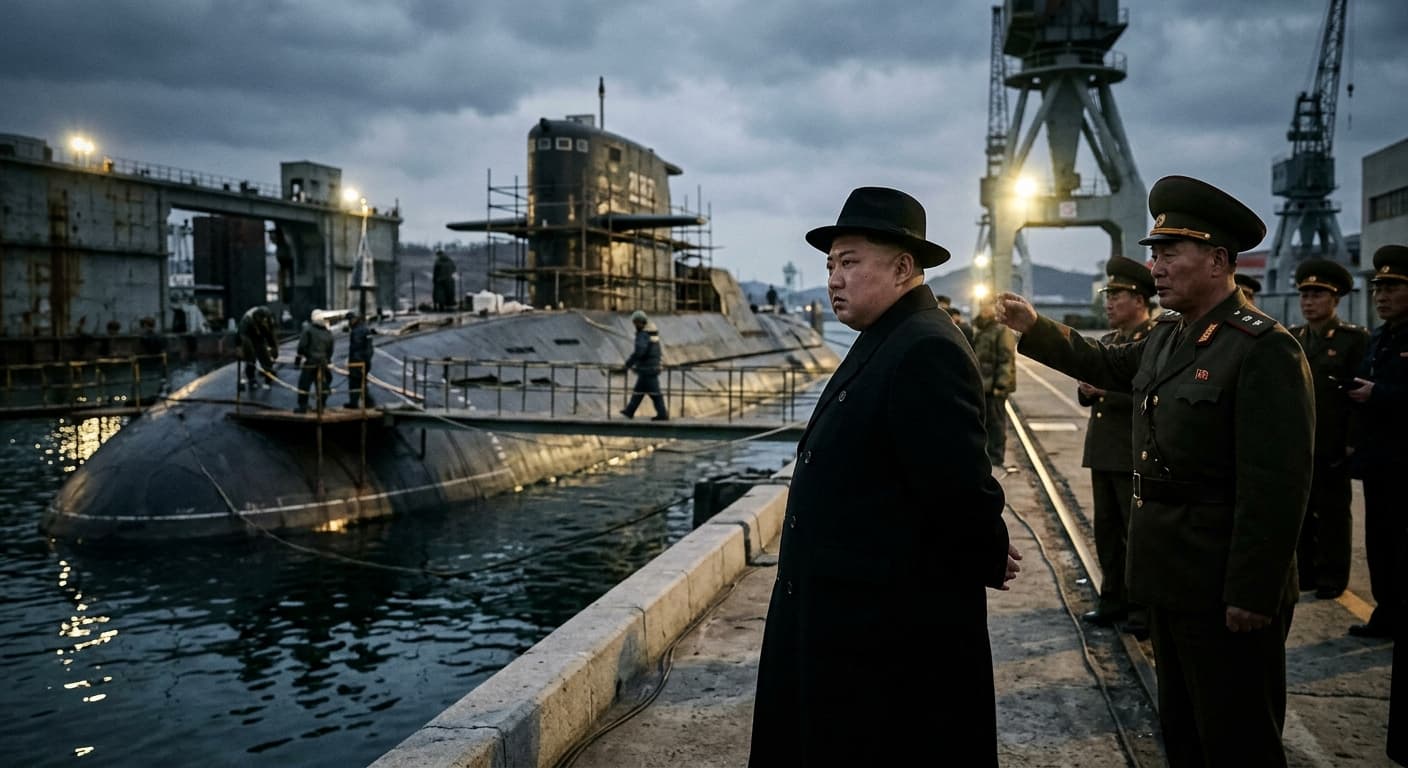
Kim's Naval Pivot Locks Denuclearization Off the Table
North Korea commissions its first 5,000-ton destroyer, signaling a strategic shift toward sea-based nuclear deterrence and closing off negotiation pathways.
France 24 reports that North Korean leader Kim Jong Un formally commissioned the Choe Hyon, a 5,000-ton destroyer, at a ceremony in the western port of Nampo on Tuesday. The timing and the rhetoric reveal something sharper than weapons display: Kim is engineering a fait accompli on nuclear deterrence, closing off the possibility of disarmament talks while signaling to Washington, Seoul, and Moscow that North Korea's nuclear status is now structural, not negotiable.
The Choe Hyon carries nuclear-capable cruise missiles and ballistic weapons. Kim told the commissioning ceremony that his navy's "nuclear armament is progressing as planned" and declared it "clearly become a thing of the past" when North Korea's navy "existed as a force for defending the sea off our land." Channel NewsAsia reports that Kim announced plans for a 10,000-ton strategic guided-missile cruiser and a goal to build two ships annually larger than the Choe Hyon—a production schedule that signals intent to create a credible submarine-support fleet and protected strike capability.
Why This Is Not Routine Posturing
The shift from land-based missiles to mobile naval platforms fundamentally reshapes the deterrence equation on the peninsula. The Korea Herald notes that experts see this move as deliberately "foreclosing future denuclearization talks and reframing any potential negotiations with Washington around arms control rather than disarmament." That distinction is the entire game. Kim explicitly rejected disarmament—the official position after his 2019 Hanoi summit with Trump collapsed—and replaced it with a constitutional guarantee of nuclear status. The Choe Hyon operationalizes that claim.
Mobile platforms matter operationally. A destroyer or submarine carrying cruise missiles is harder to destroy preemptively than a fixed missile base. For South Korea and the United States, this means additional surveillance burdens, anti-submarine deployments, and air defense costs. For Kim, it means distributed risk: no single strike can disarm him. Lim Eul-chul, a Korea expert at Kyungnam University, told AFP that ship-launched tactical nuclear warheads would "significantly increase the burden on South Korean and US militaries and drive up the costs of defence and deterrence."
The timing is also deliberate. Kim's orders to accelerate the 10,000-ton cruiser came during a three-day Workers' Party plenary session (June 20–22) that explicitly designated South Korea as North Korea's "most hostile state"—not the United States. Stars and Stripes reports that the party condemned the U.S.–South Korea Nuclear Consultative Group, claiming it "drew detailed nuclear war scenarios." Kim is signaling that he will not default to Beijing or Moscow on peninsular strategy; he will hold nuclear leverage over Seoul directly.
What to Watch Next
Two dates matter: the commissioning of the second 5,000-ton destroyer, Kang Kon (which suffered launch damage in May but was relaunched in June), and any acceleration milestones on the 10,000-ton cruiser. If the Kang Kon enters service without further mishaps, it signals operational maturity in this class. Any shift in U.S.–China or U.S.–Russia dynamics could prompt Washington to revisit Korea policy—but Kim has preemptively closed that door by making nuclear deterrence constitutional and by pivoting to sea-based systems that are harder to monitor and slower to abandon.
Seoul's response will shape regional escalation more than Pyongyang's declarations. If South Korea accelerates its own nuclear-powered submarine program, both sides will be locked into a naval arms race with nuclear consequences already baked in.
Discover more

Global Politics
US Seizes Iranian Ship, Tensions Surge
The US seizure of the Iranian ship Touska highlights a shift in control over the Strait of Hormuz, favoring Iran's strategic position.
Global Politics
Trump's Conflicting Messages on Iran War
Trump's mixed messages on Iran reflect a strategy of audience management, benefiting Tehran amid a complex geopolitical landscape.

India
India-South Korea $50B Trade Expansion Plan
India and South Korea target $50 billion in bilateral trade by 2030, focusing on industrial cooperation and strategic alignment amid US pressures.

Conflict & Security
Drone Warfare Killing Aid Workers at Unprec
Over 1,000 humanitarian workers killed in three years as cheap armed drones collapse legal protections. Gaza, Sudan, Ukraine, and DRC see deliberate targeting of aid convoys and hospitals with zero prosecutions.