Kharge Turns the Heatwave Into a Cost-of-Living Attack
Kharge is using the heatwave to sharpen a Modi attack, but the real pressure point is fuel-led inflation, not the weather alert itself.
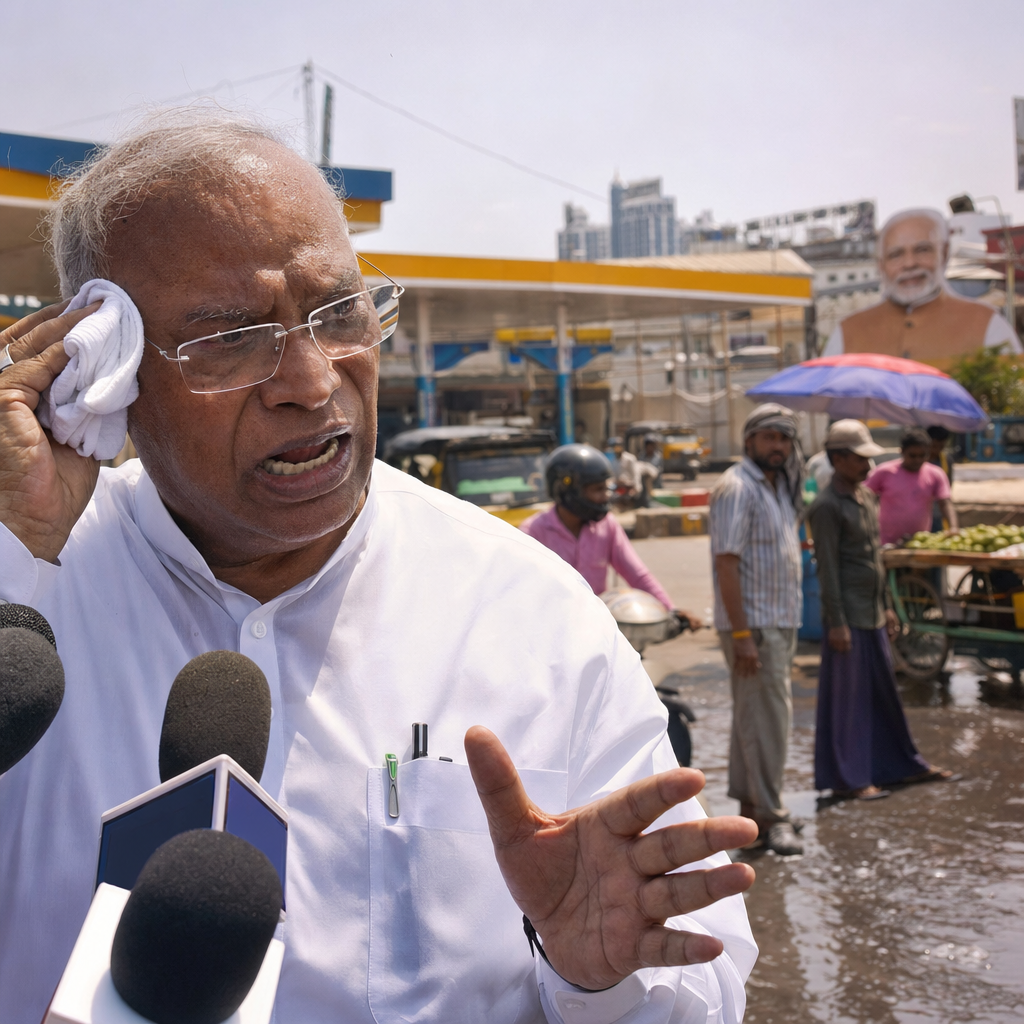
Mallikarjun Kharge has turned a routine heatwave advisory into a political argument about household pain. After Prime Minister Narendra Modi urged Indians to take precautions, stay hydrated and help vulnerable people during soaring temperatures, the Congress president replied that ordinary people are already “sweating” under “BJP-sponsored inflation,” framing the moment as a fight over the cost of living rather than climate advice, according to  The Hindu.
The opposition’s target is not the heat — it is Modi’s credibility
This is a classic opposition move: take a government message that sounds civic and neutral, then recast it as proof of disconnect. Modi’s warning was about public health; Kharge’s response was about economic pain. That works because the Congress can point to a real squeeze. In a separate attack this week, Kharge said the government was offering no relief despite higher petrol and diesel prices, arguing that cheaper crude should have translated into cheaper fuel at the pump, The Hindu.
The arithmetic matters. Fuel is not just another line item; it feeds transport costs, food distribution and everyday inflation. That gives Kharge a cleaner line of attack than broad ideological criticism: if households are paying more for diesel, everything else starts to look more expensive too. His claim is political, but the mechanism is economic.
Why Modi is vulnerable right now
The government’s problem is that the heatwave is not happening in a vacuum. India is in the middle of intense summer conditions, with temperatures hitting 47C in some places and peak power demand reaching a record 270.82 gigawatts, according to  CNA. That means more air-conditioning, more strain on the grid, and more visible stress on households that already feel squeezed.
That is exactly why Kharge’s line lands. If the state asks citizens to conserve water, manage heat exposure and watch their electricity use, the opposition can ask a blunt question: why should voters trust the same government on prices? The Congress is trying to connect the summer heat to a broader narrative of weakening purchasing power, especially as fuel prices were raised again, adding to the sense that the burden is being passed down to consumers.
For the BJP, the risk is less the advisory itself than the accumulation of stress points: heat, electricity demand, fuel costs and inflation. The party benefits if the public sees Modi as attentive and calm. It loses if the same moment is read as a warning that the government can manage symptoms, but not the underlying squeeze.
What to watch next
Watch two things: whether fuel prices stay elevated through June, and whether the heatwave intensifies enough to trigger power cuts or fresh price pressure. If both happen together, Kharge’s “BJP-sponsored inflation” line will have more traction than a single social-media jab. For the Modi government, the next test is not communication — it is whether it can keep the summer from turning into a broader economic grievance.