Khamenei's Funeral Highlights Iran's Crisis
Mojtaba Khamenei's absence signals deeper issues.
Model Diplomat7 min readMiddle East
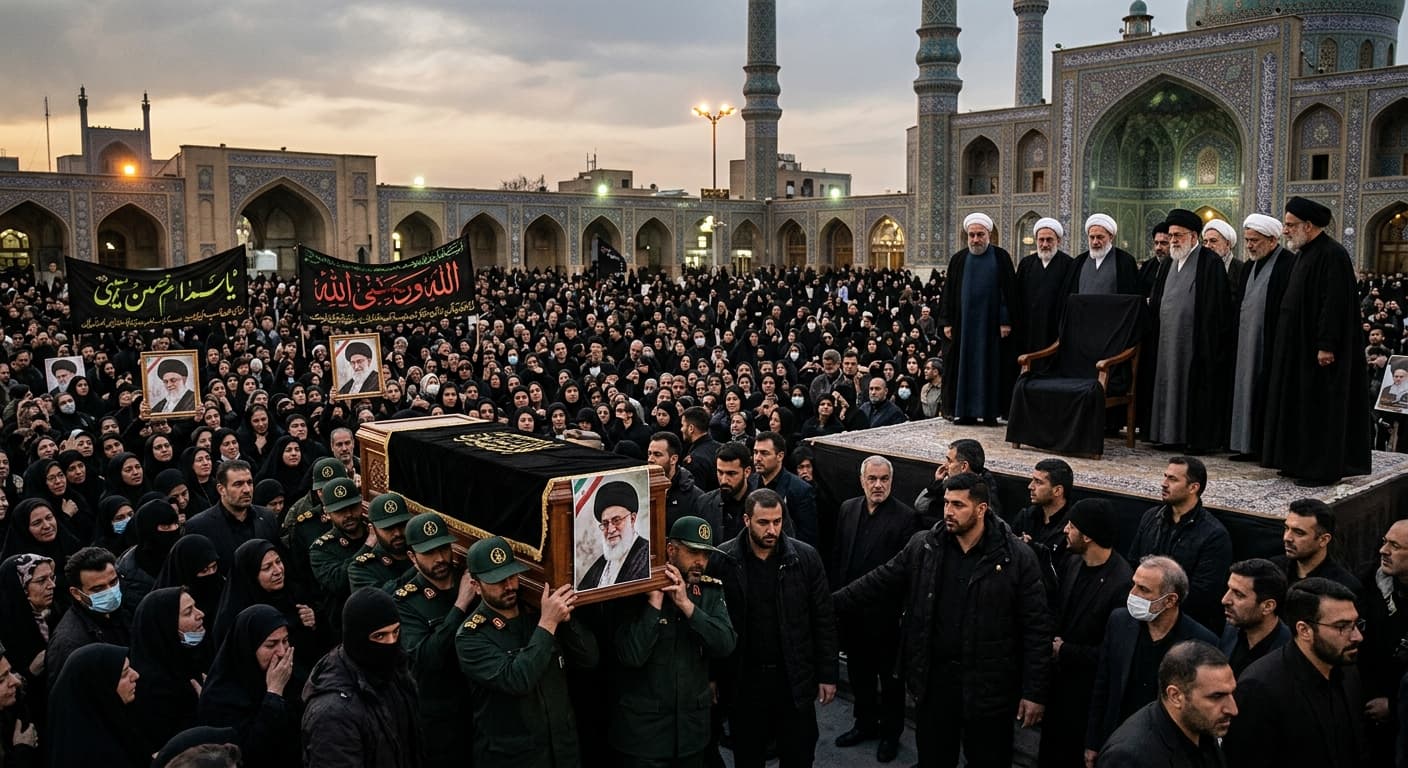
Khamenei's funeral exposes Iran's succession crisis — and Trump's leverage
Millions mourned Ali Khamenei in Tehran on July 6, 2026, but his son and successor stayed hidden. The absence, not the crowds, is the real geopolitical signal.
Iran staged the largest public spectacle of its 47-year history on July 6, 2026 — and the man it was designed to legitimize did not show up. Supreme Leader Mojtaba Khamenei, appointed on March 8 to succeed his father Ali Khamenei after joint US–Israeli strikes killed the ayatollah on February 28, has now missed three straight days of funeral prayers in Tehran. Iranian officials blame Israeli assassination threats. The practical effect is different: a regime performing continuity in the streets while its actual leader hides, negotiates through Qatari intermediaries, and cedes ground on nuclear inspections to keep a $6 billion cash release moving. The funeral is not a show of strength. It is the moment the war's balance of leverage becomes visible.
The choreography and the crack in it
The ceremonies are being run out of the Grand Mosalla, with a six-day multi-city itinerary running from Tehran through Qom, Najaf and Karbala in Iraq, and ending on July 9 with burial at the Imam Reza Shrine in Mashhad, Al Jazeera reported. Three of Ali Khamenei's sons — Mostafa, Meysam and Masoud — prayed beside the coffins on July 5. Iranian President Masoud Pezeshkian and Islamic Revolutionary Guard Corps commander Ahmad Vahidi appeared publicly for the first time in weeks. Delegations from Saudi Arabia, Qatar, Oman, Iraq, Armenia and Turkey attended,
the BBC reported. Pakistani Prime Minister Shehbaz Sharif flew in on July 3.
Mojtaba was not there. He has not been seen publicly since his appointment. BBC News reported speculation that he was wounded in the same February 28 strike that killed his father and wife; Iranian officials say the war is not over and his security cannot be guaranteed. Mohammad Eslami, a research fellow at Tehran University, told Al Jazeera the absence reflects "very hard topics" still under negotiation and a "fragile ceasefire."
The absence matters for a specific reason. Ali Khamenei ruled for 37 years by embodying the institution. His son inherited the office without ever holding an elected post, giving a public speech, or reaching the senior clerical rank of ayatollah — NPR's profile notes his father-in-law was sanctioned alongside him by the first Trump administration in 2019. The Islamic Republic's founding doctrine explicitly rejects hereditary succession. A supreme leader who cannot be seen — who is credibly reported to be physically damaged, and who is a marked target of Israeli and US policy — is a supreme leader whose authority runs entirely through the IRGC and the office of the presidency. That is what Washington is now negotiating against.

What the funeral is actually paying for
Behind the "Death to Trump" chants sits a transactional deal. On June 17, Trump and Pezeshkian signed a Memorandum of Understanding in Islamabad — brokered by Qatar and Pakistan — establishing a 60-day ceasefire and a framework for talks on Iran's nuclear program, the Strait of Hormuz, frozen assets and sanctions relief. Iran's Deputy Foreign Minister Kazem Gharibabadi confirmed after July 1–2 technical talks in Doha that a communication channel was being opened and that a portion of $6 billion in previously frozen Iranian funds would be released to buy goods through the Qatari central bank, according to Al Jazeera's account of the Doha meetings.
Qatari Foreign Ministry spokesman Majed al-Ansari confirmed on July 1 that "the next meeting [will be] scheduled as soon as possible after the conclusion of the funeral processions." Translation: the ceremonies are a diplomatic pause, not an escalation. US Vice President JD Vance told the Michael Knowles Show on July 1 that Washington is "still in a much stronger position" than Tehran even if talks fail, insisting Iran's nuclear program and military "have been destroyed."
The Iranian counterpart to that boast is documented in a primary source. In Board of Governors document GOV/2026/33, the International Atomic Energy Agency reported that on June 1–3, 2026, inspectors were permitted back into the Bushehr Nuclear Power Plant — but nowhere else. The Agency stated, verbatim:
"With the exception of BNPP, the Agency has not been able to fulfil its obligations under the NPT Safeguards Agreement in relation to nuclear facilities... Nor has the Agency been able to verify whether Iran has suspended all enrichment, reprocessing and heavy water related activities as required in the above-mentioned Security Council resolutions."
Iran's parliament — through Speaker Mohammad Bagher Ghalibaf on July 2 — confirmed that Fordow, Natanz and Isfahan remain sealed to inspectors under a law passed after the war began. IAEA Director General Rafael Grossi warned on June 27 that any final settlement will need "a very strong verification system." Pre-war, Iran's stockpile of 60%-enriched uranium was estimated at 440kg. Where it sits today is unknown to the outside world.
That is the core power dynamic. Trump has secured the optics of a ceasefire, a partial climbdown on nuclear negotiations, and a reopened Strait of Hormuz. Iran has secured a survivable pause and quiet legitimation of an opaque nuclear program. Both are trading on the fiction that the other has more leverage than it does.
The Gulf recalculation — and the oil market's verdict
The clearest verdict on where the war is headed sits in commodity prices. Brent crude peaked above $126 a barrel in April 2026 during the Hormuz shutdown, Al Jazeera reported. By July 6 it had fallen to roughly $72 — below the $72.48 settlement on February 27, the day before the war began. OPEC+ announced on July 5 that Saudi Arabia, Russia, Iraq, Kuwait, Kazakhstan, Algeria and Oman would raise output by 188,000 barrels per day from August. The market is pricing the Iran risk out.
But the strait itself tells a more nuanced story. MarineTraffic recorded 38 transits on July 2 and 48 on July 1, against roughly 130 daily crossings before the war. The Brookings Institution's analysis by Kari Heerman and David Wessel, From chokepoint to crisis, notes that the IRGC continued charging ships a reported $1-per-barrel "toll" — up to $2 million per very large crude carrier — during the closure, and that Iran's demonstration of blockage capability has permanently altered the strategic geography of energy shipping.
Gulf capitals have drawn the operational conclusion. The Stimson Center's After Khamenei analysis argues that Iranian missile strikes on Saudi, Emirati, Bahraini, Qatari and Kuwaiti territory in early March destroyed the 2023 Beijing-brokered Saudi–Iran rapprochement. Anwar Gargash, diplomatic adviser to the UAE presidency, called Iran's approach "irrational," according to the
Atlantic Council. The medium-term consequence, Gulf analysts told the Atlantic Council, is a shift toward "deterrence via capabilities rather than alliances" — meaning more air defense purchases, more pipeline diversification through the Saudi East–West and UAE Abu Dhabi Crude lines, and less faith in Omani or Qatari mediation.
That last point is quietly the most important. Both Iran and the Gulf mediators now believe mediation "has caused more insecurity for them," the Atlantic Council's Doha analyst wrote — citing Israeli strikes on Doha in September 2025 and on Oman during the war. If Gulf states lose interest in playing broker, the US–Iran channel narrows to Islamabad and, more dangerously, to direct signaling through military action in Hormuz.
The Israel problem the funeral does not solve
Israeli Defence Minister Israel Katz warned before Mojtaba's appointment that any successor to Ali Khamenei would be "an unequivocal target for elimination." Israeli operations in Lebanon have continued through the ceasefire; Al Jazeera's July 6 live blog reports Lebanese President Joseph Aoun accusing Israel of preventing the Lebanese army from deploying south of the Litani, with Hezbollah still refusing to disarm.
The Begin-Sadat Center for Strategic Studies' assessment of the MoU by Col. (res.) Shay Shabtai and Prof. Eitan Shamir argues the deal is a strategic regression for the US–Israel axis: the Strait of Hormuz, they write, "has transformed from a bargaining chip to a nuclear shield," letting Iran trade freedom of navigation concessions for continued nuclear opacity. Their reading — that Trump will likely be "Israel's last unequivocally supportive president" — is now the operating assumption in Jerusalem.
That produces the underappreciated risk. If Netanyahu concludes that the Doha track will end with an Iran that keeps enrichment capability, latent nuclear infrastructure, and a hidden supreme leader, Israel's incentive is to strike Mojtaba himself before the deal is signed. Rosatom's decision to send staff back to Bushehr in mid-July, reported by Interfax, tells you Moscow already assumes the ceasefire holds. Israel's silence on Mojtaba's whereabouts tells you it does not.
Diplomat View
The funeral will end on July 9 in Mashhad. The Iran that emerges from that week is more brittle than the crowds suggest and more durable than Washington claims. Mojtaba Khamenei's continued invisibility is now the regime's defining condition — it prevents assassination but also prevents authority. The likeliest outcome over the next 60 days is a partial nuclear framework: Iran accepts capped low-enriched activity at declared sites in exchange for staged unfreezing of assets, while Fordow's status remains deliberately ambiguous. That deal keeps oil below $80 and lets Trump claim victory. It does not resolve the Israeli calculation. The forecast changes if Mojtaba appears publicly (a sign of confidence and completed talks), if Israel strikes an Iranian nuclear site during the funeral pause, or if IAEA inspectors are turned away from Bushehr at the next quarterly visit. Any of those inverts the leverage on the table.
What to watch next
- July 9, 2026 — Burial in Mashhad. Immediately after, Qatar has said the next round of US–Iran technical talks resumes.
- Mid-July 2026 — Rosatom staff return to Bushehr. If Israel signals objection, the ceasefire is tested first here, not in Hormuz.
- August 16, 2026 — 60-day MoU ceasefire window expires. Either extended, formalized into a treaty framework, or collapses.
- September 2026 IAEA Board of Governors — First scheduled forum where Grossi will report on whether Iran granted access beyond Bushehr. A "no" is the trigger event for renewed strikes.
Read today's full | | Topic: Conflict
Discover more
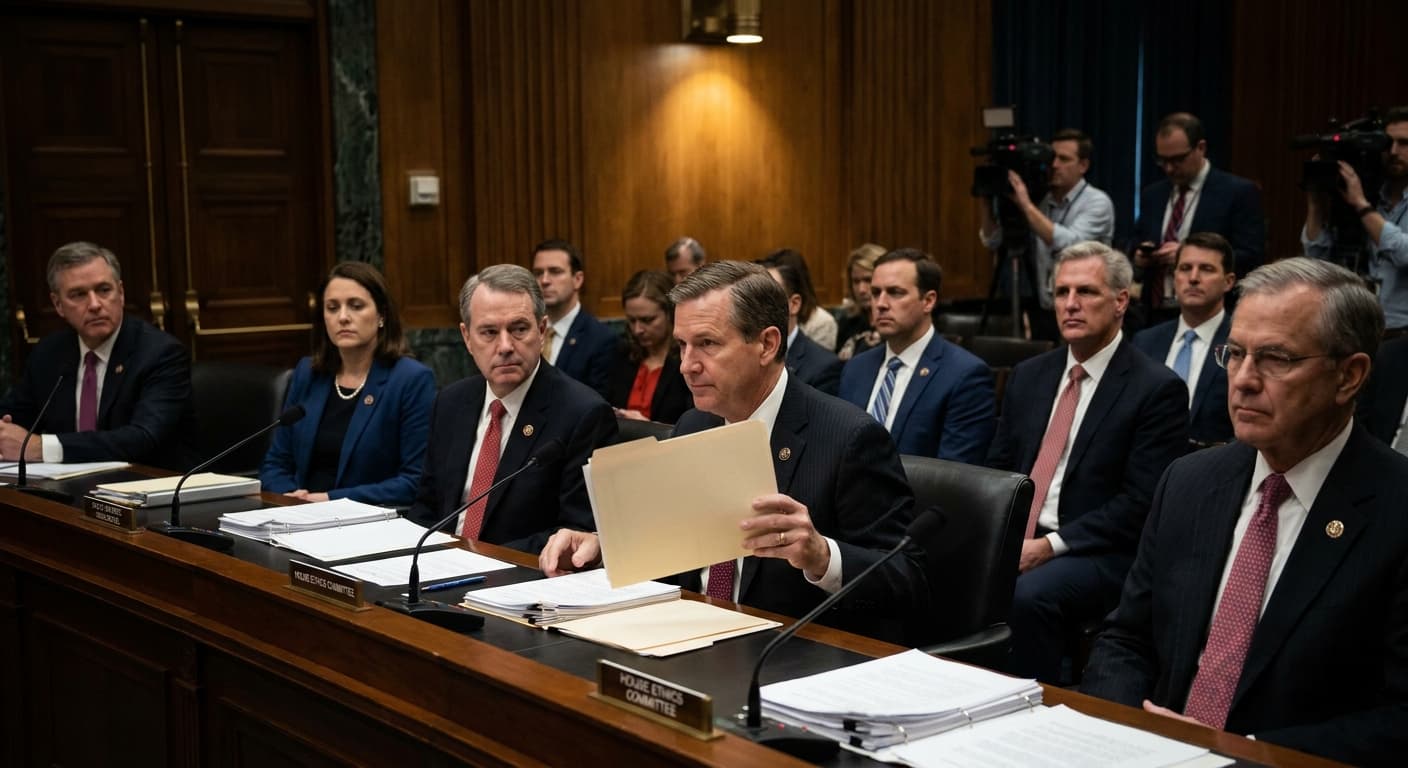
US Politics
House Ethics Committee Pushes Sexual Miscond.
The House Ethics Committee has shifted responsibility for sexual harassment settlement records to the Office of Congressional Workplace Rights, complicating disclosure efforts.
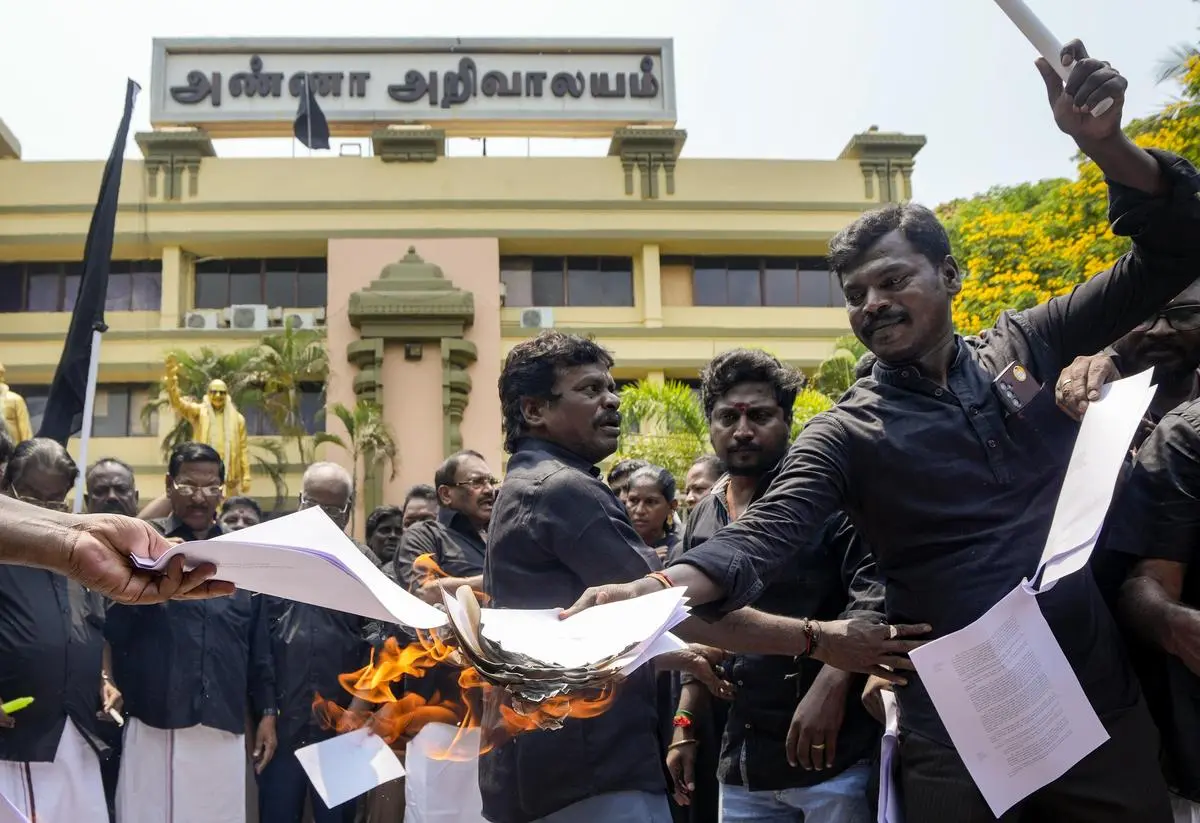
India
Women’s Reservation Bill 2026
The Constitution (131st Amendment) Bill, 2026 was defeated in Lok Sabha, revealing deeper political conflicts over women's reservation and delimitation.
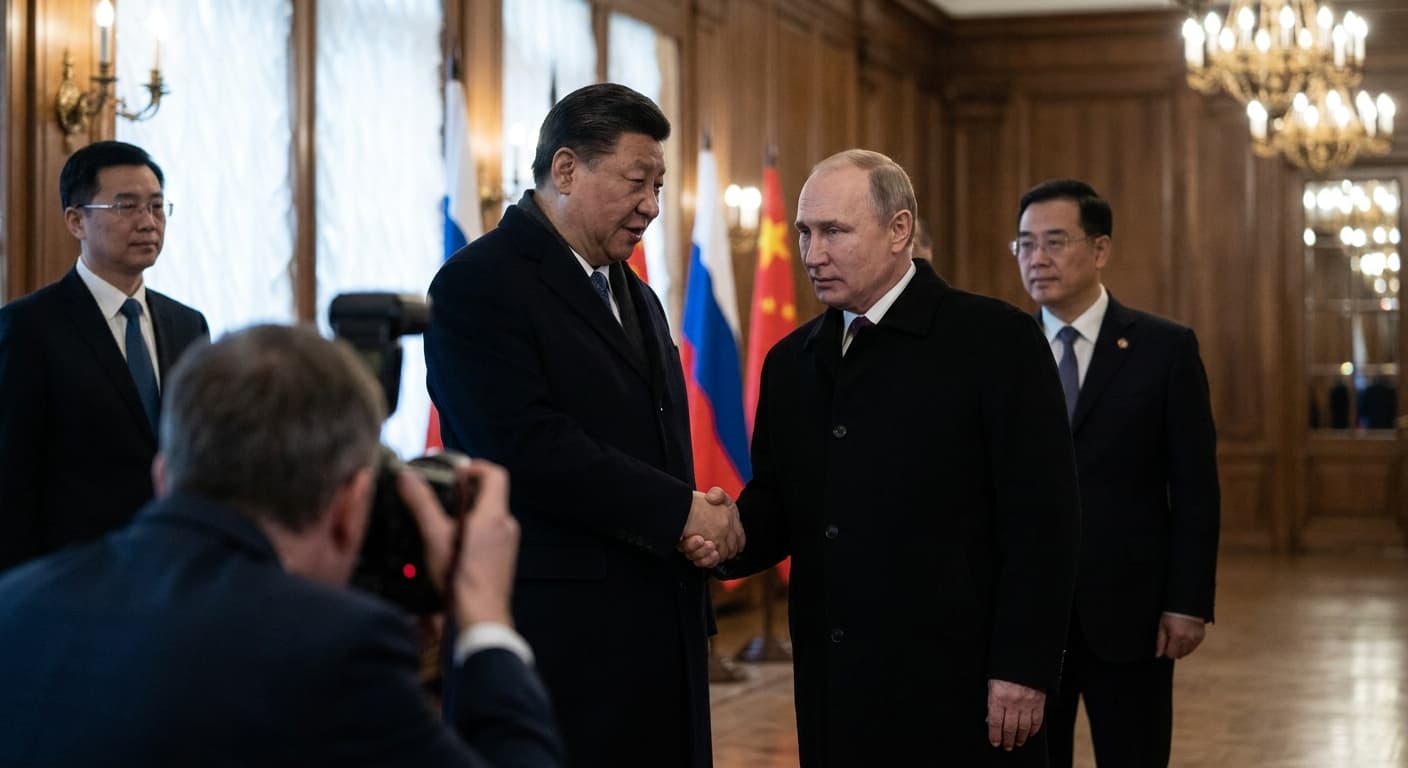
Global Politics
Xi Jinping Calls China-Russia Ties 'Precious'
Xi Jinping's description of China-Russia ties as 'precious' reflects a strategic imbalance, with Beijing dictating terms in the partnership.

Conflict & Security
Drone Warfare Killing Aid Workers at Unprec
Over 1,000 humanitarian workers killed in three years as cheap armed drones collapse legal protections. Gaza, Sudan, Ukraine, and DRC see deliberate targeting of aid convoys and hospitals with zero prosecutions.