Key Developments in Indian Politics
Key developments in Indian politics this week.
Model Diplomat8 min readIndia

Key Developments in Indian Politics: The Week the Opposition Ran Out of Numbers
A July 2026 briefing on the Bengal bypolls, the TMC split, the Ram Temple scandal and the Rajya Sabha arithmetic that now decides everything in Delhi.
The single number that explains Indian politics this week is 152. That is the Rajya Sabha tally the ruling National Democratic Alliance will reach on July 24, 2026, once the Bharatiya Janata Party sweeps three West Bengal Upper House bypolls that a defection-hollowed Trinamool Congress cannot contest, according to the Times of India. That still leaves Prime Minister Narendra Modi 12 votes short of the two-thirds threshold he needs to revive the delimitation package his government lost in April — and every other India story of the week, from the Ram Temple donation scandal to a Congress civil war in Punjab, is now being read through that arithmetic.
The Bengal bypolls and the fastest partisan realignment in a decade
The Election Commission on July 6 fixed July 24 as the polling date for three Rajya Sabha seats from West Bengal, vacated by Sukhendu Sekhar Ray, Sushmita Dev and Prakash Chik Baraik — the last three prominent TMC members to quit the party after its April rout. With 207 of 294 seats in the state assembly, the BJP will elect all three, Outlook India reports, taking the NDA to 152 in the 245-member Upper House.
That is the highest NDA tally in the Rajya Sabha since the coalition was reconstituted in 1998. It matters because the Modi government's political ceiling for the next three years is now visible. The Observer Research Foundation notes that the BJP still lacks a simple majority in the House on its own and has, since 2014, leaned on money-bill classification and rolling regional alliances to legislate. A tally of 152 crosses the simple-majority mark of 123 with room to spare — but stays well below the 164 needed to amend the Constitution.
The TMC split is the most consequential defection since Shiv Sena 2022
The Bengal bypolls are downstream of a larger event: the collapse of the Trinamool Congress as a national opposition force. Within weeks of the April defeat, the BBC reports, roughly three-quarters of TMC state legislators revolted against Mamata Banerjee and her nephew Abhishek Banerjee, installed their own leader of the opposition, and — critically — 20 of the party's 28 MPs wrote to the Lok Sabha speaker seeking to break away and align with the ruling alliance.
Banerjee's faction is fighting the split at the Election Commission. Speaking after filing the party's response on July 6, TMC Lok Sabha member Kalyan Banerjee told the Indian Express that the original organisational committees are valid until 2027 and that a rival group led by Ritabrata Banerjee has no legal standing to claim the party symbol. The commission will hear the matter later this month.
The template is Maharashtra 2022. Islamabad's Institute of Strategic Studies — writing at a critical distance — tallies the year's defections: seven of nine Aam Aadmi Party Rajya Sabha members merged into the BJP on April 24, 2026; 64 of 80 freshly-elected TMC state legislators broke away in June; 20 TMC MPs merged with the National Citizen Party of India; and Shiv Sena (UBT) parliamentary strength collapsed from nine to three. The BBC's Rahul Verma is direct about the mechanism: "Today entire factions can rebel because the BJP provides an alternative centre of power, resources and political protection."
The relevant precedent is not political but institutional. India's Tenth Schedule was designed to punish defection with disqualification, unless two-thirds of a legislative party defects as a bloc — the loophole the Shiv Sena split exploited in 2022 and the TMC rebels are exploiting now.
Delimitation: the loss the government has not yet accepted
The Rajya Sabha number matters because of what the government tried, and failed, to do in April. The Press Information Bureau's official session summary — the primary record — states plainly what happened:
"As the Constitution (One Hundred and Thirty-First Amendment) Bill, 2026 could not have the required majority as per Article 368(2) of the Constitution of India on its motion for consideration, no further action was taken. Further, the two dependent Bills namely the Union Territories Laws (Amendment) Bill, 2026, and the Delimitation Bill, 2026 were not proceeded further."
That is a rare on-the-record acknowledgement, from the Press Information Bureau, that the Modi government lost a constitutional amendment on the floor of Parliament — the first such defeat of his 12-year tenure. The bills would have expanded the Lok Sabha from 543 to 850 seats and operationalised the long-pending one-third women's reservation, tied to a fresh delimitation based on the 2011 census. Southern states, led by Tamil Nadu, Kerala and Karnataka, feared a permanent transfer of parliamentary weight to the Hindi belt; the
Carnegie Endowment noted that the bill contained no legal guarantee that no state's seat share would decline, despite ministerial assurances.
The Wire now reports the BJP is preparing a second attempt, informed by the Economic Advisory Council to the Prime Minister's alternative proposals — a uniform 50 percent increase in every state's seat share, or targeted splitting of over-populated constituencies. Neither route dissolves the two-thirds problem in the Rajya Sabha. Even at 152, Modi would need to peel off roughly a dozen votes from the DMK, YSRCP or the reduced Congress bench. This is what the July 24 sweep is actually about: not three seats, but the price a wavering regional party can demand from a government still one crisis away from another amendment vote.
The Ram Temple scandal: a controlled demolition inside the Sangh Parivar
The overhaul of the Shri Ram Janmabhoomi Teerth Kshetra Trust is the story most likely to be misread abroad. On July 6, the trust accepted the resignations of general secretary Champat Rai and trustee Anil Mishra following allegations of theft and embezzlement of temple donations, and constituted a committee to select a new chief executive officer, Hindustan Times reports. The trust's next meeting is scheduled for July 22.
The BBC reports the Uttar Pradesh government has set up a three-member Special Investigation Team led by IAS officer Vijay Vishwas Pant. Eight people have been booked over the alleged siphoning of cash and valuables from the temple hundis. The scale of what is under audit is significant: the Ram Temple is the most-donated religious site in India, drawing an estimated ₹5,000 crore in cash and gold since its January 2024 consecration, per multiple domestic outlets.
Read the personnel change carefully. Rai is not a bureaucrat — he is a Rashtriya Swayamsevak Sangh general secretary and the operational face of the temple movement since the 1990s. His departure, under a cloud, is the first sign since 2014 that the Sangh Parivar is willing to sacrifice a senior functionary to protect the political franchise built around the temple. The move pre-empts opposition efforts, led by Samajwadi Party's Akhilesh Yadav and Congress's Rajiv Shukla, to make the scandal a general campaign issue ahead of the 2027 Uttar Pradesh election.
The electoral rolls fight has moved south
The other subplot of the week is the extension of the Special Intensive Revision — the same voter-roll process that dominated the Bengal campaign — into Karnataka, one of only three large states still governed by the Congress. On July 6, an NDA delegation submitted a formal complaint to Karnataka's chief electoral officer alleging "zero regard for the approved process" during ongoing SIR enumeration, the Times of India reports. Deputy Chief Minister D.K. Shivakumar rejected the allegations and accused the BJP of preparing an alibi for defeat.
The context is the Bengal precedent. The Institute of South Asian Studies at the National University of Singapore calculates that of the nine million names deleted from Bengal's rolls during the SIR, deletions exceeded the BJP's margin of victory on 105 of the 207 seats it won. The Election Commission maintains that the exercise removes only duplicate, deceased and ineligible voters. But the Karnataka complaint — filed by the winning coalition, not the losing one — signals that the SIR is now a permanent instrument of pre-election politics, deployed wherever a state's rolls can be prised open before a vote. Karnataka goes to the polls in 2028; the elections in Uttar Pradesh, Punjab and Gujarat come first.
Congress: the party that cannot use the opening
The most striking absence in this week's news is a coherent Congress response. In Punjab — the one large state where the BJP has no organic base — the party's provincial unit is publicly at war. Representatives of the faction backing former chief minister Charanjit Singh Channi flew to Delhi on July 6 for a showdown with state president Amrinder Singh Raja Warring, the Times of India reports, deepening a factional split that has paralysed the party ahead of the 2027 assembly election. AICC in-charge Bhupesh Baghel has been unable to broker a truce.
That paralysis is why the delimitation defeat in April did not translate into political momentum for the opposition INDIA bloc. Rahul Gandhi's Voter Adhikar Yatra in Bihar last year raised the temperature on electoral-roll manipulation — the BBC documented the 6.5 million deletions from Bihar's rolls that made the yatra possible — but the party has not built a national coalition capable of extending the argument. In Bengal, the TMC absorbed the SIR damage alone; in Karnataka, the Congress state government is doing so alone; in Punjab, the party is fighting itself.
Diplomat View
The center of gravity in Indian politics has shifted, this week, from Parliament to the Election Commission. That is not a small change. The government's April defeat on delimitation showed that the Modi coalition has real legislative limits; the July 24 Bengal bypolls, the TMC split hearing, the Karnataka SIR complaint and the Punjab Congress meltdown collectively show how those limits are being worked around — through defection, disqualification and roll revision rather than through votes on the floor.
The forecast: expect a second delimitation bill, likely trimmed to a uniform seat-share increase, to be tabled in the winter session once the Bihar assembly result is in. It will still fail without a southern breakthrough — but the government's calculation is that another 18 months of factional attrition against the DMK, YSRCP and Congress benches will produce the dozen Rajya Sabha votes it currently lacks. What would change the forecast: a Supreme Court ruling that constrains the SIR methodology, a formal DMK-led southern bloc contesting delimitation as a federalism issue, or a genuine reunification of the India opposition — none of which is currently visible.
Watch three catalysts:
- July 22, 2026 — the reconstituted Ram Temple Trust meets to appoint a new CEO. The name chosen will indicate whether the RSS is reasserting operational control or ceding it to state bureaucracy.
- July 24, 2026 — Rajya Sabha bypolls in West Bengal. A 3-0 BJP sweep takes NDA to 152 and reopens the delimitation calculation.
- Late-July Election Commission hearing — the TMC split ruling will set precedent for how splinter groups can claim a party's symbol without triggering anti-defection disqualification. If the Ritabrata Banerjee faction wins recognition, expect the model to be replicated against the DMK and the Samajwadi Party well before their next state polls.
The Bottom Line
India's opposition is not being outvoted; it is being disassembled between elections, party by party, through defections and electoral-roll revisions that the ruling coalition no longer bothers to disguise. The July 24 Bengal bypolls will push the NDA to 152 in the Rajya Sabha — still 12 short of the two-thirds majority needed to redraw the country's political map, but close enough that the next constitutional amendment will be a negotiation, not a defeat.
Discover more
India
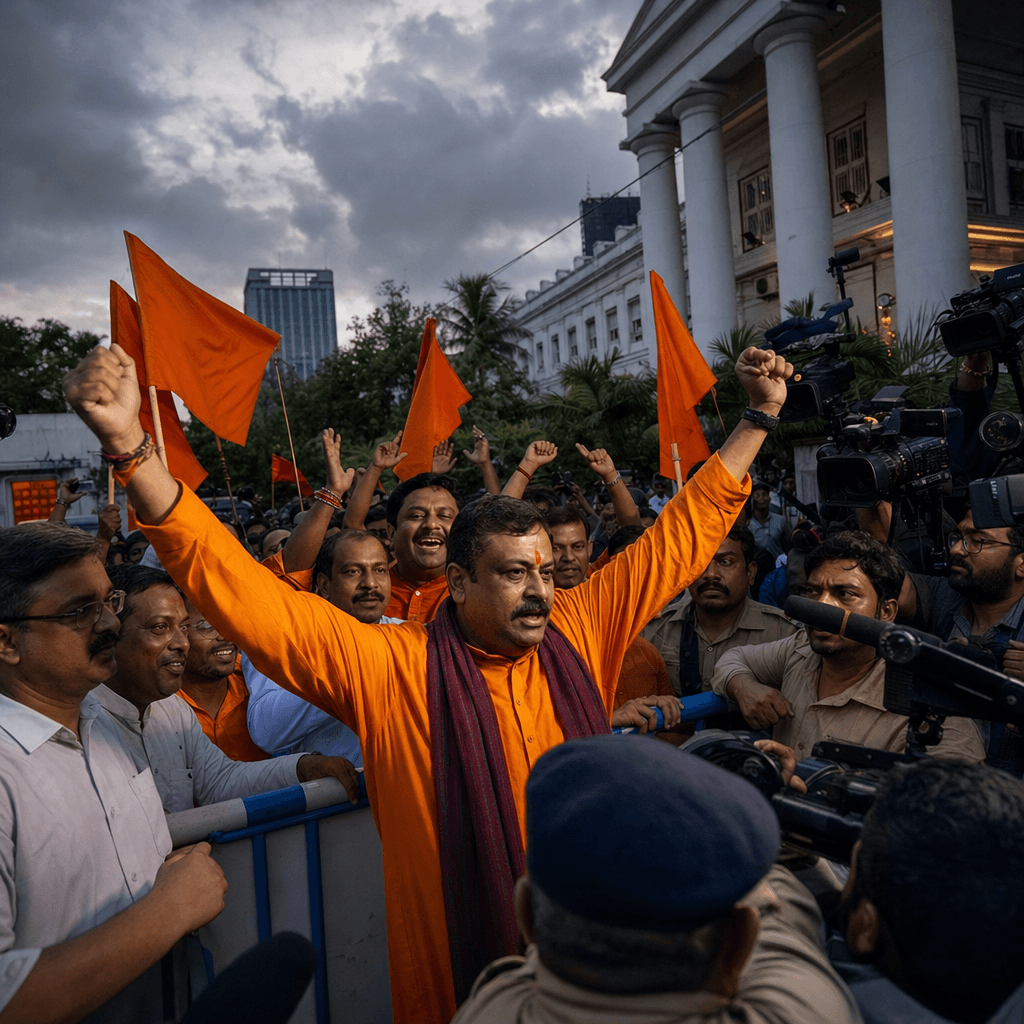
BJP’s West Bengal Sweep Forces Rethink
The BJP's sweeping victory in West Bengal reshapes Indian politics, forcing a battered Opposition to rethink strategy as the party extends its dominance.
India
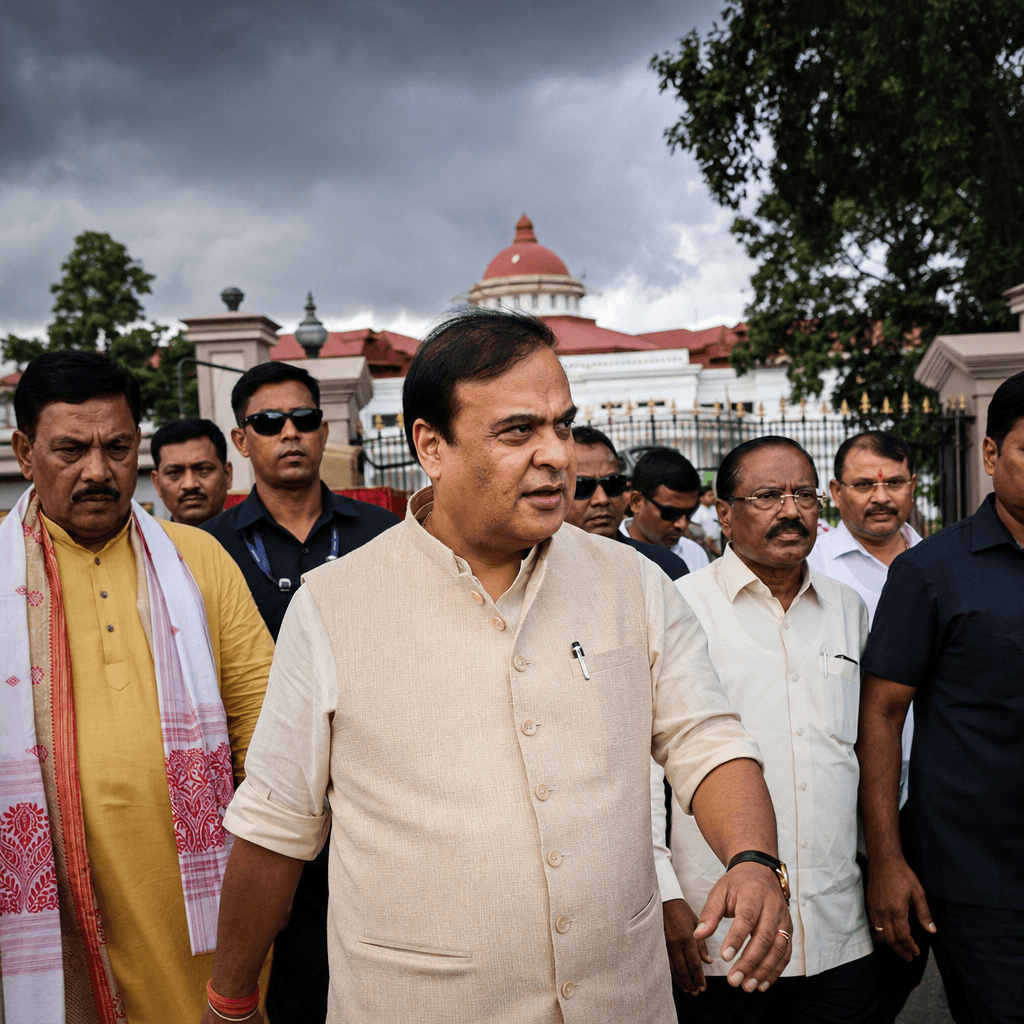
Himanta Biswa Sarma Takes Charge in Assam
The BJP's central leadership has locked in Himanta Biswa Sarma for Assam, signaling continuity over Sarbananda Sonowal as the party manages its power transfer.
Global Politics
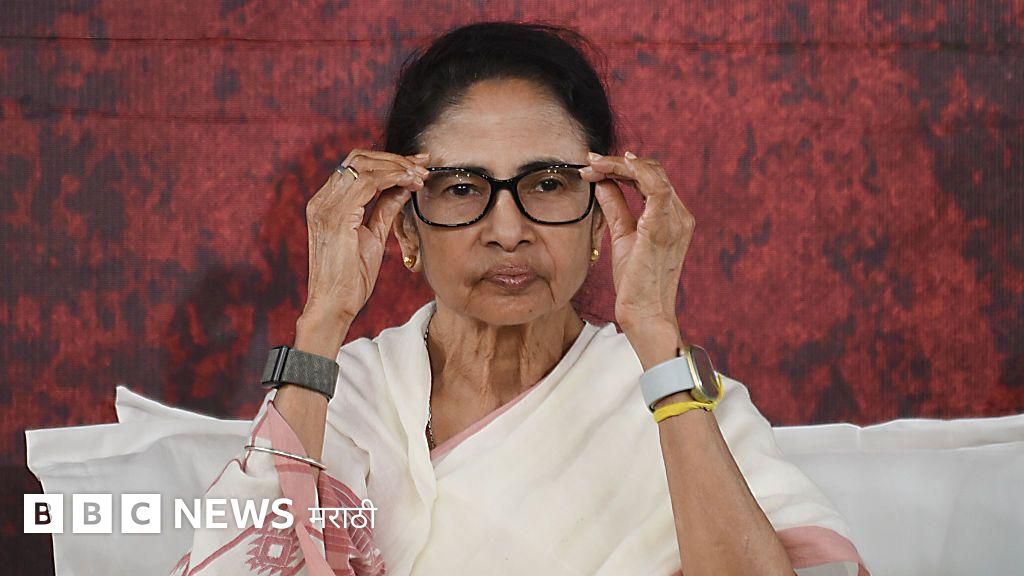
BJP's Victory in West Bengal
The BJP's sweeping win in West Bengal marks a major setback for Mamata Banerjee and the INDIA bloc, signaling a significant realignment in state politics.
Global Politics
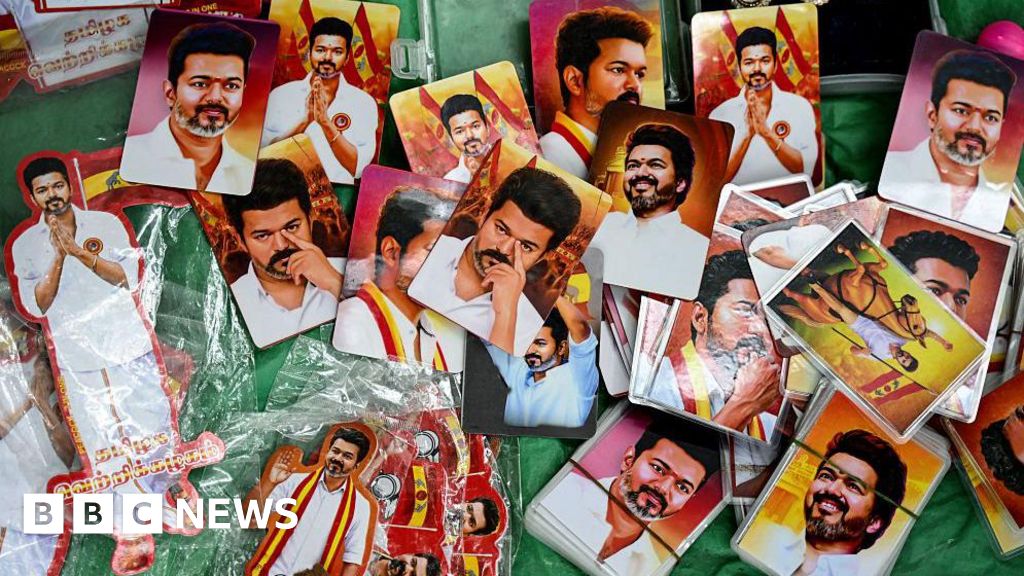
Vijay's Tamil Nadu Win Transforms Politics
C. Joseph Vijay's TVK wins Tamil Nadu elections, ending DMK's dominance and reshaping national opposition dynamics against Modi's BJP.