Kanimozhi: Women’s Reservation Bill Threatens
Kanimozhi warns of electoral shifts from women's quota
Model Diplomat7 min readTamil Nadu
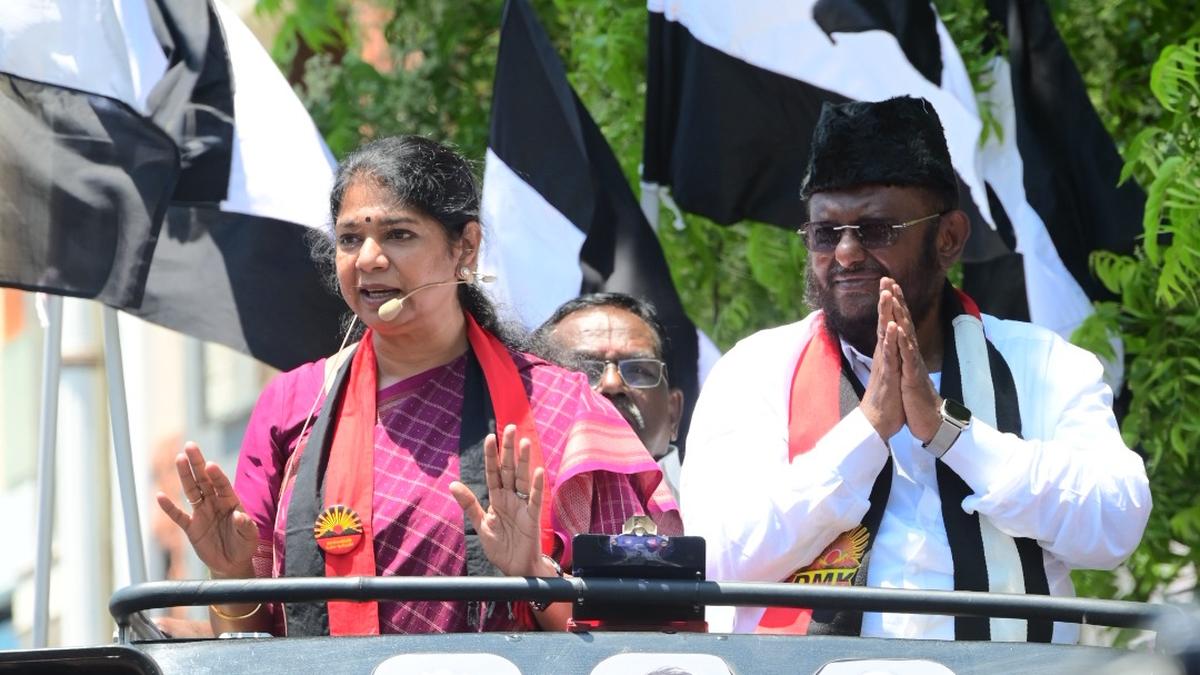
Kanimozhi: Women's Reservation Bill Threatens the South
DMK's Kanimozhi says the Modi government's Women's Reservation Bill is a Trojan horse for delimitation — and after the April 2026 defeat, she may be proven right.
The 33% women's quota was not the point. That is Kanimozhi Karunanidhi's argument, and after the Modi government's Constitution (131st Amendment) Bill fell 298–230 in the Lok Sabha on April 17, 2026 — 54 votes short of the two-thirds bar — her framing has moved from opposition talking point to the operative reading of what just happened. The DMK deputy general secretary called the package "a wolf in sheep's clothing": a gender-equality reform legally welded to a population-based redraw of India's electoral map that would durably shift power from a slower-growing, wealthier south to a faster-growing, BJP-strong north. The bill lost. The threat did not.
What the bill actually did
The government tabled three bills in a hastily-convened special session on April 16, 2026: the Constitution (131st Amendment) Bill, the Delimitation Bill, and the Union Territories Laws (Amendment) Bill. According to Al Jazeera, the package proposed to expand the Lok Sabha from 543 seats to 850, base the redraw on the 2011 census, and — critically — operationalise the 2023 Nari Shakti Vandan Adhiniyam, which reserves one-third of seats for women but has never taken effect.
The 2023 amendment, technically the 106th Amendment, contained a poison pill Kanimozhi and other opposition MPs did not miss: it made the women's quota conditional on a fresh census and a fresh delimitation. As the Carnegie Endowment noted in its post-mortem, "the 2023 amendment effectively binds two distinct reforms together" — meaning that any government wishing to implement women's reservation must first redraw the map. That sequencing is the leverage.
Speaking in the Lok Sabha, Kanimozhi called the 131st Amendment "the greatest assault on the federal structure," according to Mathrubhumi. Her core claim, reported by
The Hindu: the BJP was using women "as a human shield" to push through an electoral reengineering it could not sell on its own merits.
The southern arithmetic
Strip away the rhetoric and the numbers do the work. India's five southern states — Tamil Nadu, Kerala, Karnataka, Andhra Pradesh and Telangana — hold 129 of 543 Lok Sabha seats today, roughly 23.8% of the house, on population figures frozen since the 1971 census. The BBC reports the south accounts for about 20% of India's 1.4 billion people; a pure population-based redraw would push its share below its current weight.
Home Minister Amit Shah's Press Information Bureau statement of April 18, 2026 insisted the opposite: under a "50% pro-rata increase" model, southern seats would rise from 129 to 195, holding share at roughly 24%. But as Vidhi Centre for Legal Policy's Arghya Sengupta told the BBC, the legal text of the 131st Amendment "does not appear to be proportionate" and contains no guarantee of the pro-rata formula Shah promised at the dispatch box. Peer-reviewed modelling in the
International Journal of Research and Scientific Innovation projects northern states gaining 43 seats and southern states losing 24 under a straight population redraw — the exact scenario the bill's silence permitted.
That is the gap Kanimozhi drove a truck through. In her April 16 interview with The New Indian Express, she was explicit: the DMK "will challenge delimitation based solely on population" in court, and doing the exercise in the middle of state elections in Tamil Nadu and West Bengal was itself the tell.
Why the bill still succeeded even in losing
Here is the non-obvious point. The bill's defeat is being read as a Modi setback — India's NDA controls 293 Lok Sabha seats and needed 360; it fell to 298 after some allies wavered. That reading misses the deeper play.
The BJP forced the opposition to vote against a bill labelled "women's reservation" — six months into a state election cycle. Prime Minister Modi told the Lok Sabha, per BBC Hindi, that those who blocked the bill "will pay the price for a long time." Shah's line, delivered the same day: opponents will "face the anger of women" in every future election.
The trap is elegant. Congress and the DMK did not oppose women's reservation on the merits — CPI(M)'s John Brittas told the BBC his party would back a 33% quota inside the existing 543-seat house, immediately. But because the government fused the quota to a constitutional redraw the south considers existential, opposition MPs had to vote no on a bill titled "women's empowerment." Rahul Gandhi's response the next day, quoted by BBC Hindi: "Behind that bill was a very dangerous agenda. They were trying to change India's electoral map."
Political scientist Adesh Rawal, speaking to the BBC, was blunter: the bill's real target was the 2026 West Bengal and Tamil Nadu state elections, where the BJP wanted a wedge issue on women voters. Senior journalist Sharad Gupta added that Modi "will repeat at every future election that we tried, the opposition did not let it happen." That is not a defeat. That is a campaign asset.
The one Kanimozhi got right — and the one she may lose
Kanimozhi's specific charge — that the Modi government was using the census-and-delimitation sequence as a political weapon in an active election season — has partial vindication in the outcome. Tamil Nadu voted on April 23, 2026. On May 4, according to the BBC, actor-turned-politician Vijay's Tamilaga Vettri Kazhagam swept 108 seats in the 234-member assembly, defeating the incumbent DMK. Vijay was sworn in as chief minister after cobbling together 120 legislators with Congress, CPI, CPI(M), VCK and IUML support. The DMK, which had built its national profile in 2025–26 around the delimitation fight, lost the state where the argument was supposed to be strongest.
That is the paradox the DMK now confronts. The party won the parliamentary battle on April 17 and lost the political war on May 4. Vijay ran against the DMK on corruption and fatigue, not on federal structure. Meanwhile, Al Jazeera reports that Modi's BJP won West Bengal for the first time. In both southern and eastern flanks, the "assault on federalism" argument did not translate into ballot-box protection.
The bottleneck is now the census
The government's own PIB statement of April 12, 2026 had promised a 2029 implementation deadline for women's reservation. That deadline is now legally impossible on the current schedule. India's 16th census began on April 1, 2026 and, per the
BBC, is scheduled to conclude on March 31, 2027, with caste enumeration in the second phase and results processed thereafter. Only then can the Delimitation Commission legally begin. Only then can the 106th Amendment's women's quota trigger.
That gives the Modi government a narrow window — roughly late 2027 through mid-2028 — to reintroduce a constitutional amendment, secure a two-thirds majority in both houses, and stand up a delimitation commission in time for the 2029 general election. It failed to secure that majority in April 2026 with the NDA at 293. It will need to reach 360 either by winning over more regional parties or by making structural concessions on the seat formula — the exact concession Kanimozhi has demanded since 2024.
Forward look
- Late 2026 / early 2027: The government is expected to reintroduce a revised delimitation package. Watch for whether the fresh text includes an explicit pro-rata guarantee — the single change that would break the DMK's central legal argument.
- March 31, 2027: Census enumeration ends. Publication of results, likely mid-to-late 2027, is the earliest legal trigger point for a delimitation exercise under the 2023 amendment.
- 2027–2028 Rajya Sabha arithmetic: The NDA needs to add roughly 15 senators through state election cycles to comfortably clear the two-thirds threshold. The West Bengal and Assam BJP gains in May 2026 are the beginning of that calculation.
- Supreme Court: Kanimozhi has publicly committed the DMK to challenging any purely population-based delimitation. Any revived bill will face immediate constitutional review, likely on federalism and basic-structure grounds.
Diplomat View
The Modi government did not lose on April 17, 2026 — it stress-tested a wedge. By welding women's reservation to delimitation, it forced Kanimozhi, Rahul Gandhi and Shashi Tharoor to vote against a bill titled "women's empowerment" in the middle of a state election cycle, and it now owns that clip for every future campaign in the Hindi belt. The south won a reprieve, not a victory: the census clock keeps running, the constitutional trigger for the quota remains bolted to a redraw, and the DMK — the loudest voice against the package — just lost its own state to a first-time party led by a film star. The falsifiable call: if the government reintroduces the 131st Amendment before end-2027 with an explicit pro-rata clause guaranteeing southern seat share, opposition unity will crack and the bill will pass, with Kanimozhi's federal-structure argument surviving mainly as a Supreme Court petition. Revision condition: if BJP-aligned parties lose the 2027 Karnataka assembly poll and Rajya Sabha gains stall, the two-thirds arithmetic breaks, delimitation slips past 2029, and women's reservation — the ostensible reform — dies of its own procedural conditions. Either way, the political map of India in 2030 will look meaningfully different from the one Kanimozhi is defending today.
The Bottom Line
The bottom line: the April 2026 defeat of the 131st Amendment was a tactical loss and a strategic dry-run for the Modi government, which extracted an anti-women-reservation vote from the very opposition parties it will campaign against in 2029. Kanimozhi's warning that women's reservation was a vehicle, not a destination, has been vindicated by the Carnegie Endowment's own reading — but her party's simultaneous collapse in Tamil Nadu shows how thin the political ground under the "federalism defence" has become. What comes next is not whether India redraws its map, but who gets to write the formula when it does.
Discover more

India
Modi's Nari Shakti Gambit
Modi's Varanasi speech redefines women's empowerment as a Nari Shakti gambit, blending appeals for women's votes with the contentious delimitation debate.
India
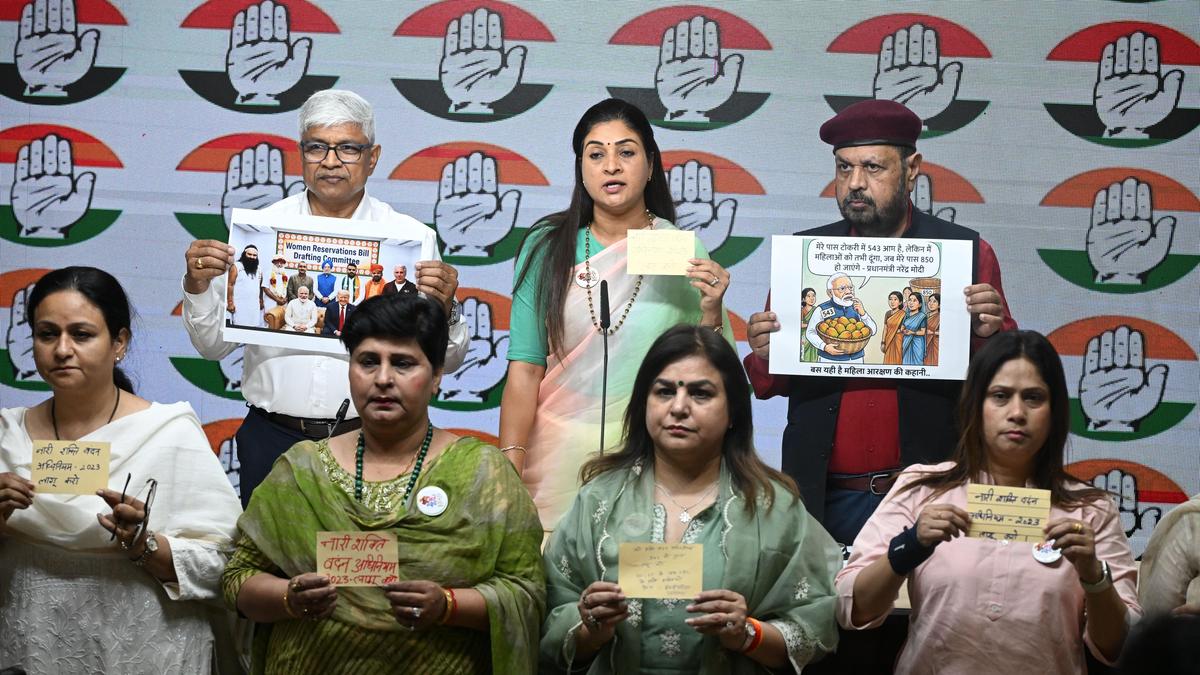
Mahila Congress Postcard Push for Women's Quo
The Mahila Congress launches a postcard campaign to demand immediate implementation of the 33% women's reservation in India's Lok Sabha, targeting PM Modi.
India
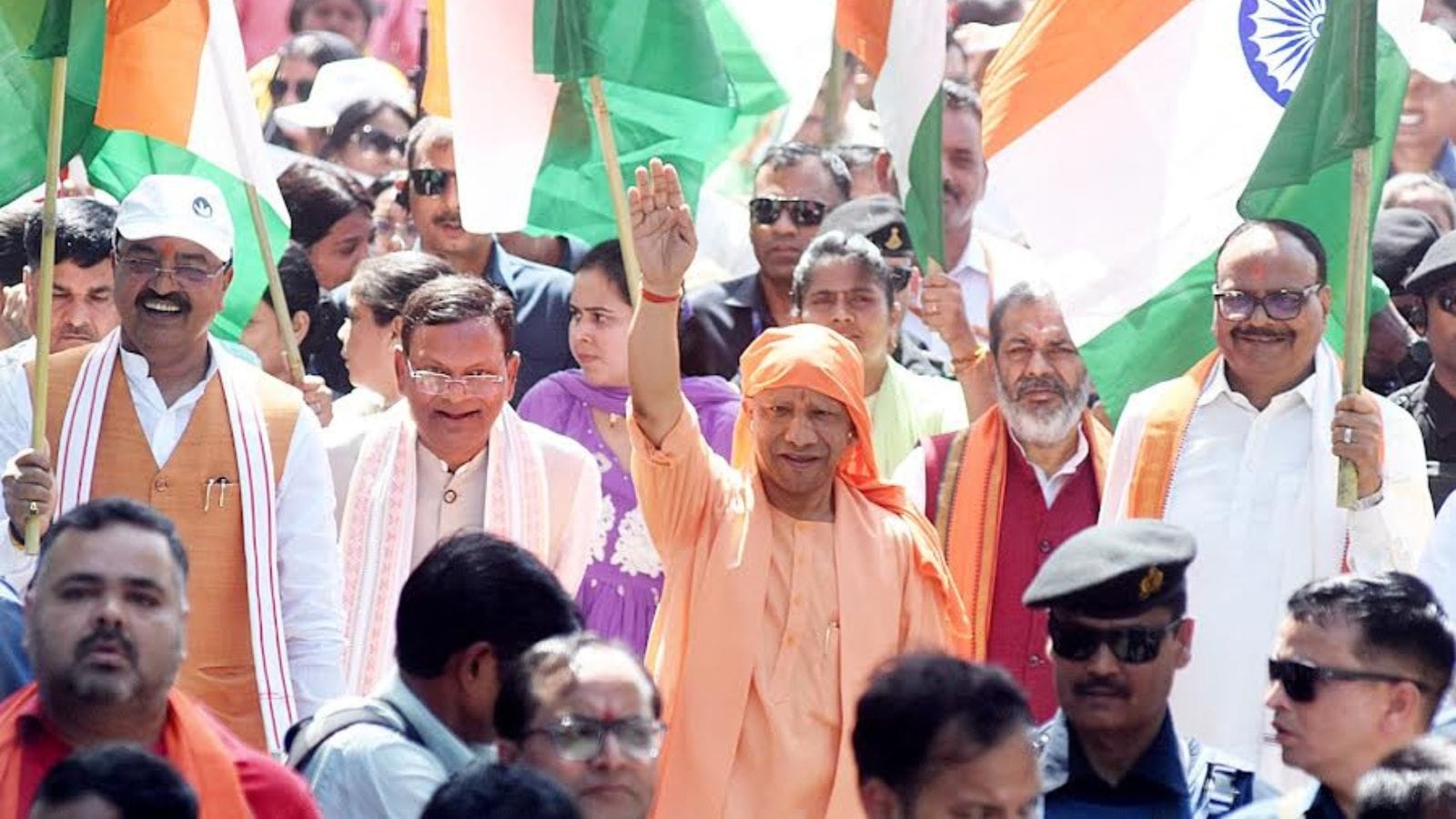
Yogi Adityanath's BJP March on Women's Bill
Yogi Adityanath's padyatra after the women's bill defeat aims to reshape UP's 2027 elections, targeting women's votes against the SP.
India
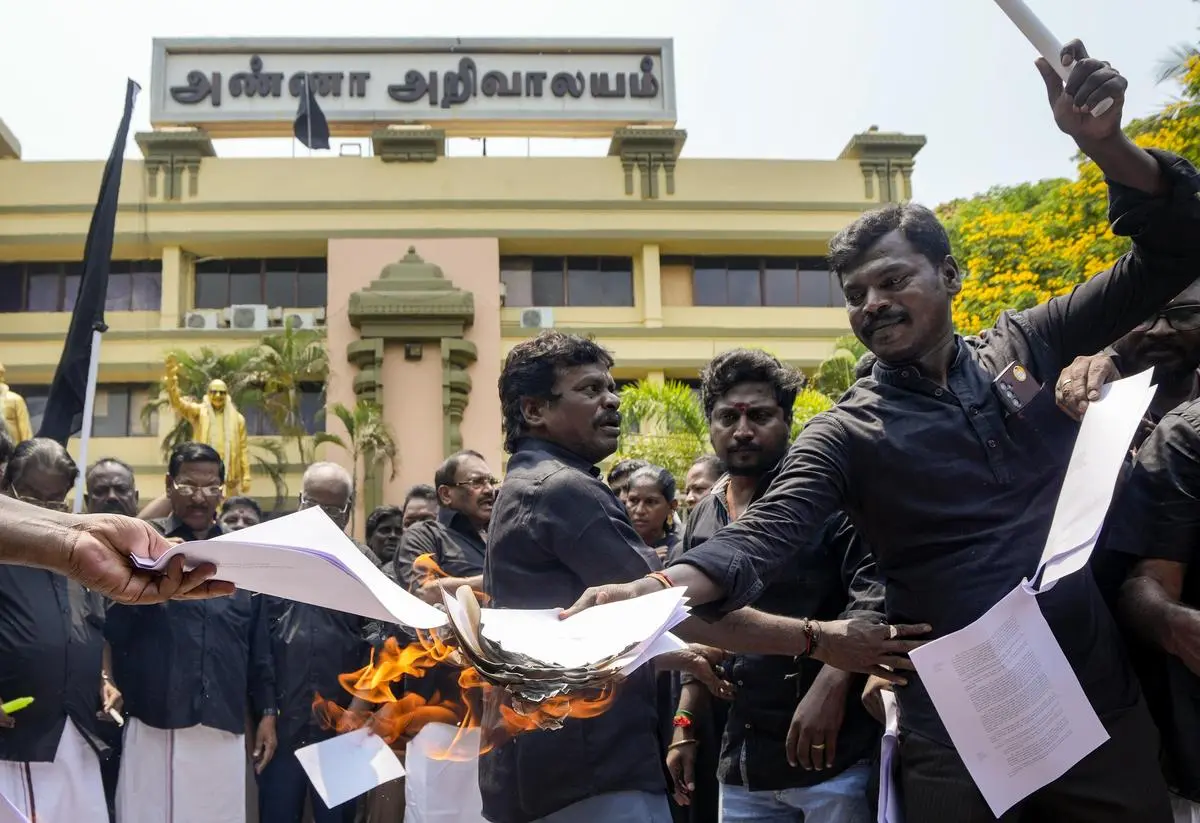
Women’s Reservation Bill 2026
The Constitution (131st Amendment) Bill, 2026 was defeated in Lok Sabha, revealing deeper political conflicts over women's reservation and delimitation.