Kamal Haasan Demands Women's Reservation Bill
A look at the political implications of Haasan's call for women's reservation.
Model Diplomat7 min readIndia

Kamal Haasan's Women's Quota Play Is a Southern Federalism Fight
Kamal Haasan is demanding a special Parliament session to pass a 33% women's reservation bill within India's existing 543 Lok Sabha seats — decoupling the quota from the delimitation exercise that the South says will shrink its power.
Kamal Haasan wants Prime Minister Narendra Modi to convene a special session of Parliament to pass a Private Member's Bill introduced by DMK MP P. Wilson that would enforce a 33% women's quota inside the current 543-seat Lok Sabha — freezing delimitation until 2051. The demand, made on his X account on April 19, 2026 and repeated through July, is not really about women. It is the Southern bloc's first legislative offensive after the Modi government's Constitution (131st Amendment) Bill lost 298–230 on April 17, 2026, and it turns the language of gender empowerment against the delimitation exercise that Tamil Nadu, Kerala and Karnataka fear will demote them inside Parliament for a generation.
What Haasan actually asked for — and why the timing is the story
Speaking as president of Makkal Needhi Maiyam and a first-term Rajya Sabha MP nominated in 2025 as part of the DMK alliance, Haasan endorsed Wilson's bill and told the government to "convene another special session of the Parliament after the Assembly elections and pass this Bill, or introduce an equivalent government legislation without delay," according to a note reported by Hindustan Times. Wilson's draft, he said, would apply the quota to Lok Sabha, all state assemblies, Delhi, Puducherry and Jammu and Kashmir — inside the seats that already exist.
The proximate trigger was the collapse of the government's April package. During a three-day special session convened on April 16, 2026, Modi introduced the 131st Amendment, a Delimitation Bill and a Union Territories Laws Amendment that would together have expanded the Lok Sabha to 850 seats on the basis of the 2011 census, with all new seats reserved for women to satisfy the one-third quota, Al Jazeera reported. The constitutional amendment needed a two-thirds majority — 360 votes. It got 298. As
BBC News noted, the NDA lacked the numbers even before the session began, and the vote confirmed it.
Haasan's intervention arrives while the government is still hunting for a way back into the debate. It is designed to define the terrain: the quota is not the question, the link to delimitation is.
The primary text everyone is fighting over
The linkage Haasan wants gone was written into the Constitution in 2023. Article 334A, inserted by the Constitution (One Hundred and Sixth Amendment) Act, states that the reservation for women "shall come into effect after an exercise of delimitation is undertaken for this purpose after the relevant figures for the first census taken after commencement" of the Act have been published, per the official bill text archived by PRS Legislative Research. That single clause is why a bill passed almost unanimously — 454-2 in the Lok Sabha and 214-0 in the Rajya Sabha, per
BBC — has not seated a single additional woman in nearly three years.
Home Minister Amit Shah insists nothing else will do. In remarks released by the Press Information Bureau after the April defeat, Shah argued that under the 50% expansion model, the current 543 seats "will rise to 816," the South's 129 seats "will increase to 195" and its share of the House "will remain almost the same at around 24 per cent." All elections through 2029, he said, "will be conducted on the existing seats and under the present practice."
Wilson's Private Member's Bill takes the opposite view: rip out the delimitation trigger, seat women immediately inside the 543, and freeze the map through 2051.
What Haasan is really defending
Strip the gender language, and this is a federalism fight. India froze parliamentary reapportionment on the 1971 census in 1976, and again through the Constitution's 84th Amendment, specifically because fertility declined faster in the South than in the Hindi belt. Unfreezing on the 2011 census — the Modi government's proposal — mechanically transfers political weight from Tamil Nadu, Kerala, Karnataka and Telangana to Uttar Pradesh, Bihar, Madhya Pradesh and Rajasthan. The Carnegie Endowment's
Milan Vaishnav and colleagues argued in May 2026 that the women's quota was being used as "a vehicle to push through a broader reengineering of India's electoral design."
Haasan's post named the point plainly: coupling the quota with delimitation "risks undermining India's federal balance amid existing regional population disparities between the North Indian states and rest of India," and states that "prioritised women-centric development and population stabilisation, should be seen as models, not penalised."
The demographic irony is unmistakable. The states demanding an immediate quota — Tamil Nadu (5.13% women MLAs) and Kerala (7.86%) — have far fewer women in their assemblies than Uttar Pradesh (11.66%) or West Bengal (13.7%), per the Observer Research Foundation. Southern parties are not the standard-bearers of gender representation. They are the standard-bearers of a status quo that protects their seat count — and they have chosen the quota as the vehicle to defend it.
The Modi government's dilemma
The April defeat put the BJP in an unusually tight political box. It cannot abandon the reservation — Modi personally staked credit for the 2023 Nari Shakti Vandan Adhiniyam, saying in his PIB address that "in 2023, when the Nari Shakti Vandan Adhiniyam was introduced, all parties unanimously passed it... it must be implemented by 2029." But it also cannot secure a two-thirds majority for delimitation-plus-quota without opposition help, and after the April rout it will not get that help cheaply. As BBC's Hindi service documented, the government had been warned it lacked the votes before it called the vote — an unforced error that the
Takshashila Institution described as legislation that "coming in the backdrop of several state elections, were seen as an affront to federalism and were defeated."
That is what makes Haasan's demand tactically sharp. If the government refuses a special session, it hands the DMK and its allies a campaign line for the West Bengal and Tamil Nadu election cycles: the BJP would rather kill women's reservation than accept the Southern seat freeze. If it accepts a version of Wilson's bill, it loses delimitation — the mechanism through which the Hindi belt's demographic growth translates into parliamentary power, and the mechanism through which the BJP's own long-term seat base expands.
The sub-quota question that keeps returning
Every serious analysis of the 2023 act flagged a second unresolved problem that Haasan's letter did not mention: sub-quotas. The Al Jazeera review of the bill's 25-year history documented that Samajwadi Party and RJD opposition since 1996 has hinged on OBC and Muslim sub-quotas within the women's reservation. Samajwadi's Akhilesh Yadav raised the same demand during the April 2026 debate,
The Indian Express reported. AIMIM's Asaduddin Owaisi — one of only two MPs who voted against the 2023 bill — has argued the quota "would only benefit upper caste women," according to
BBC.
Wilson's private member's bill, and Haasan's endorsement of it, sidesteps the sub-quota question entirely. That is politically convenient for a DMK-MNM alliance whose OBC-heavy base is not asking for it — but it leaves a coalition-building gap the government could exploit, because winning over Samajwadi and RJD requires either a caste census result or a sub-quota amendment neither the DMK nor the BJP has offered.
Diplomat View
Haasan's demand will not pass in the current Parliament. It is a positioning move, not a legislative one — designed to lock in "delink and freeze" as the opposition's baseline before the West Bengal and Tamil Nadu 2026 assembly cycles, and to make the BJP wear the political cost of the April 17 defeat through 2029. Our call: the government will not concede a special session on Wilson's terms; instead, expect a redrafted government bill in the 2027 winter session that implements the quota inside existing seats but attaches a sunset clause tying it to the 2027 census delimitation — a face-saving compromise that grants the letter of the Southern demand while preserving the structural exercise. The forecast changes if two things happen. First, if the Samajwadi Party and RJD publicly endorse a sub-quota-plus-delink formula, the two-thirds arithmetic tilts against the BJP and forces earlier concessions. Second, if the DMK loses Tamil Nadu in 2026, Haasan's leverage — and this whole framing — evaporates overnight. Watch the Wilson bill's referral, not its passage.
What to watch:
- Tamil Nadu Assembly election (early 2026, results imminent): determines whether the DMK-MNM axis Haasan speaks for retains the credibility to demand terms in Delhi.
- Monsoon Session of Parliament (expected July–August 2026): whether the government schedules the 131st Amendment for reintroduction or lets it lapse.
- Census enumeration phase (population count expected 2027): the moment Article 334A's clock starts, and the government's default path to implementation without any new legislation.
- P. Wilson's Private Member's Bill referral: whether the Rajya Sabha chair sends it to the Standing Committee on Personnel, Public Grievances, Law and Justice — a procedural signal of how seriously the Centre will engage.
The Bottom Line
Kamal Haasan is not asking for a women's reservation bill — India already has one, passed in 2023 and awaiting a census that has not been completed. He is asking Parliament to sever that quota from the delimitation exercise that will shift roughly 66 seats from the South to the Hindi belt, using the language of gender empowerment to defend a Southern seat share the 1971 census freeze has protected for half a century. Whether the Modi government finds a formula that seats a third of Parliament as women without redrawing India's political map is now the defining federalism question of this term._
Discover more

India
Modi's Nari Shakti Gambit
Modi's Varanasi speech redefines women's empowerment as a Nari Shakti gambit, blending appeals for women's votes with the contentious delimitation debate.
India
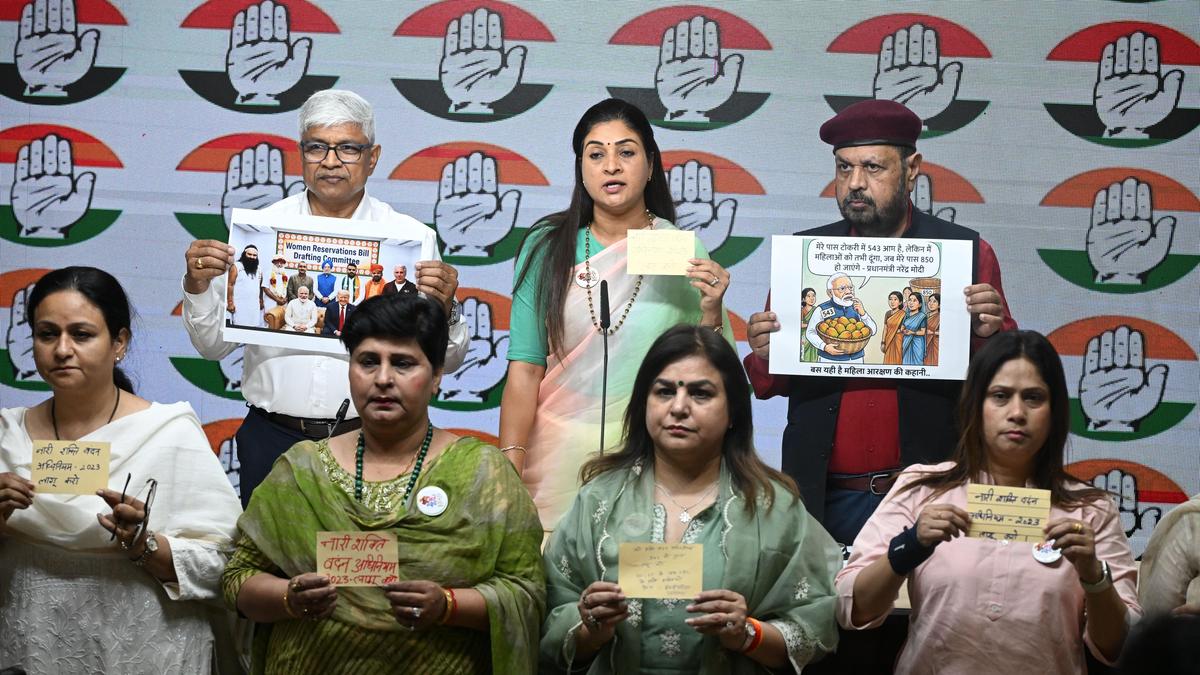
Mahila Congress Postcard Push for Women's Quo
The Mahila Congress launches a postcard campaign to demand immediate implementation of the 33% women's reservation in India's Lok Sabha, targeting PM Modi.
India
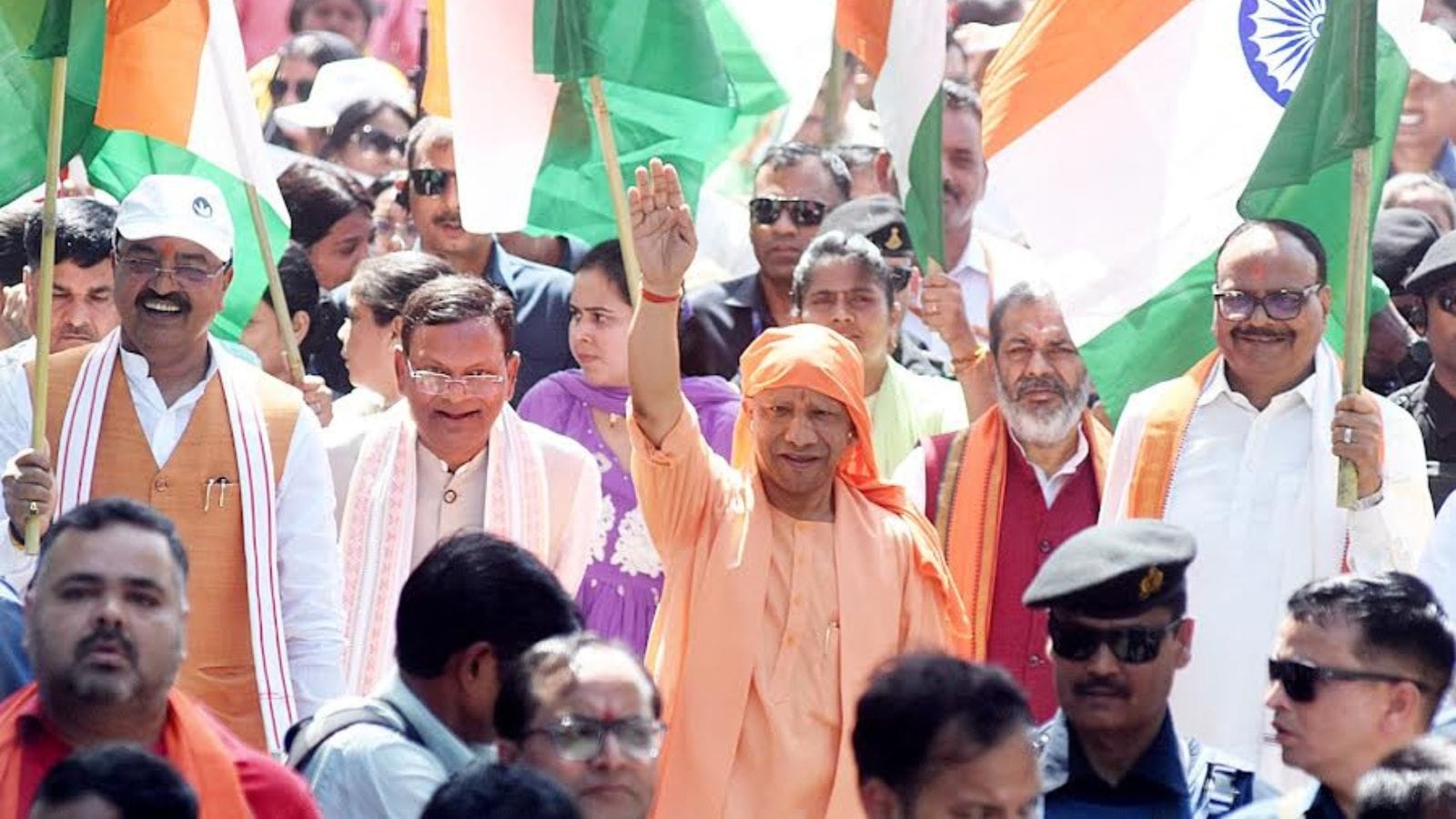
Yogi Adityanath's BJP March on Women's Bill
Yogi Adityanath's padyatra after the women's bill defeat aims to reshape UP's 2027 elections, targeting women's votes against the SP.
India
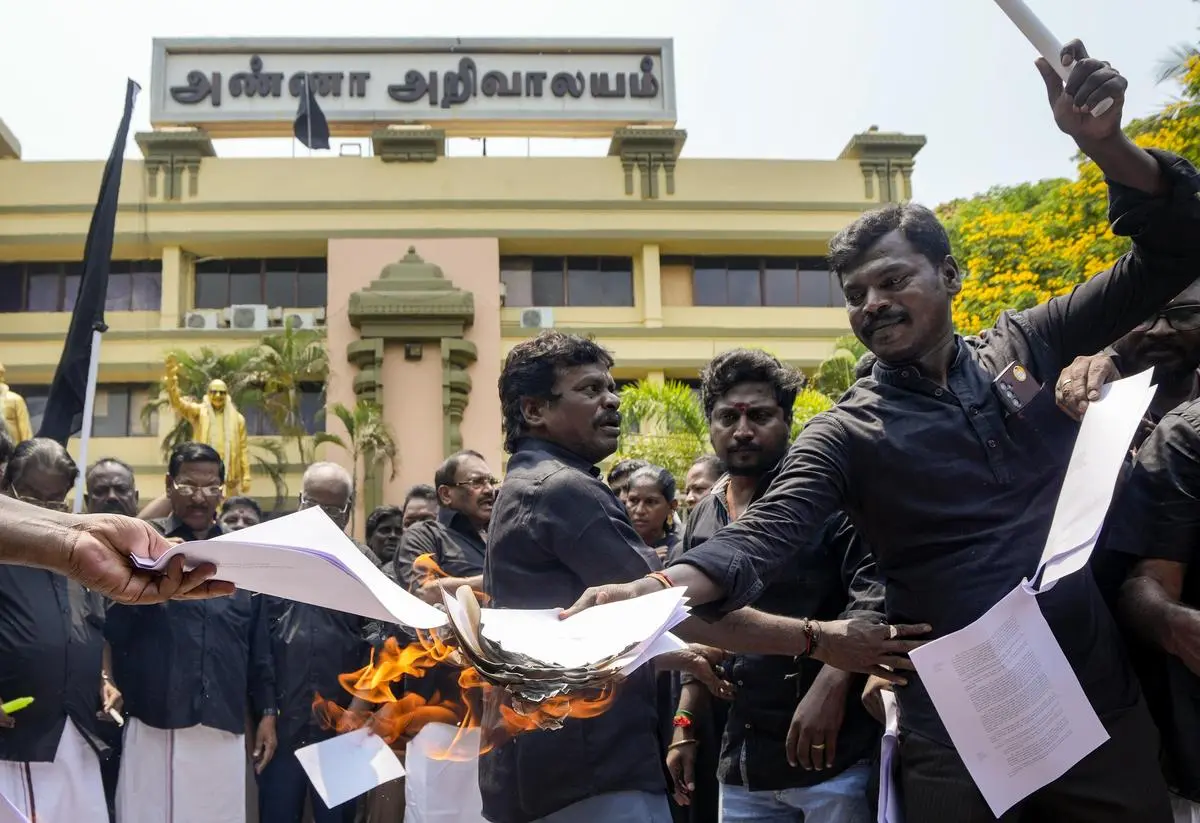
Women’s Reservation Bill 2026
The Constitution (131st Amendment) Bill, 2026 was defeated in Lok Sabha, revealing deeper political conflicts over women's reservation and delimitation.