Japan's AI Sovereignty Pivot: Claude Mythos
Japan rewrites AI strategy after Claude Mythos reveals cybersecurity risks.
Model Diplomat4 min readEast Asia
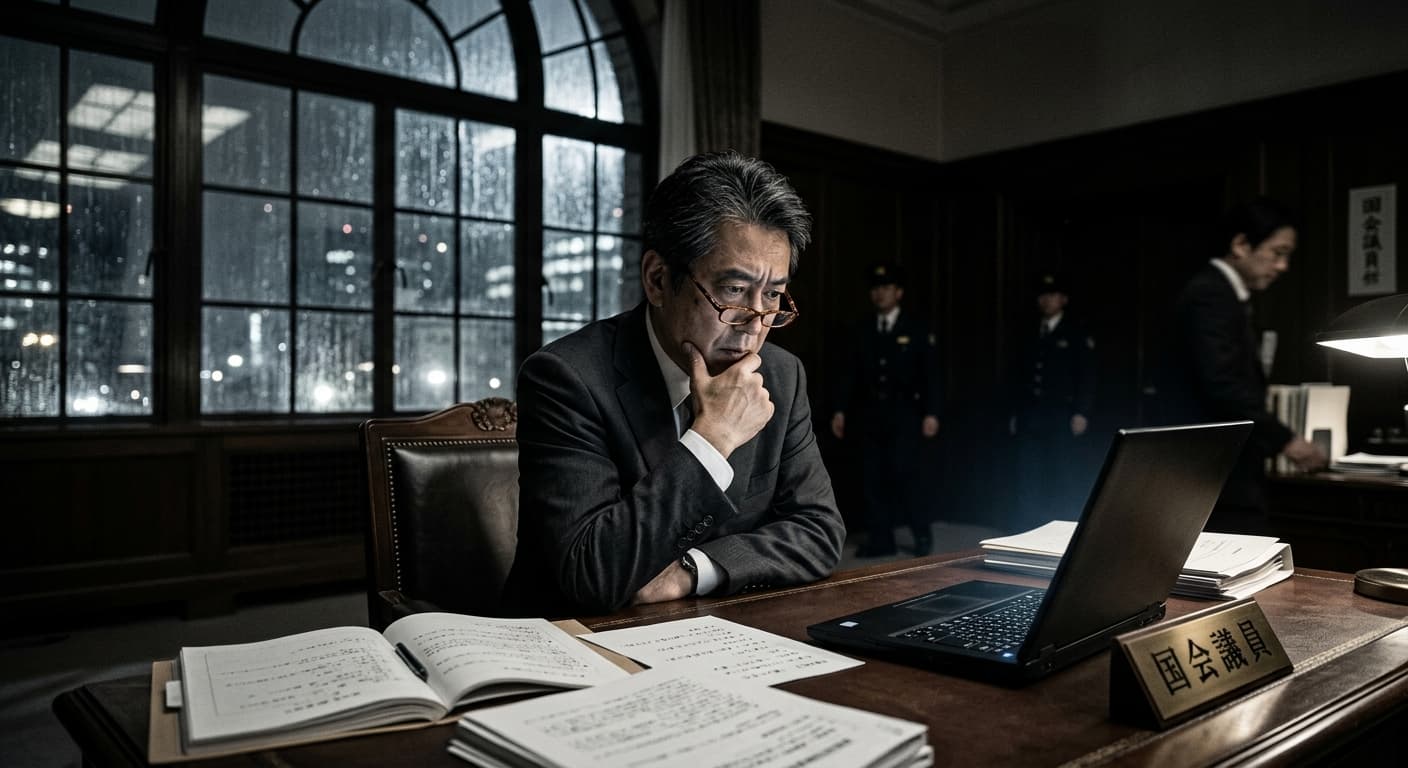
Japan's AI Sovereignty Pivot: Claude Mythos Forced Tokyo's Hand
Seven months after finalizing its national AI strategy, Japan's Cabinet tore it up and rewrote it — hardening cybersecurity and pushing domestic AI over foreign frontier models. The trigger was Anthropic's Claude Mythos.
On July 14, 2026, Japan's Cabinet approved a hurried revision of its national AI strategy, just seven months after the original Artificial Intelligence Basic Plan was finalized on December 23, 2025. The revision, reported by The Japan Times on July 16, calls for "constantly strengthening measures against cyberattacks" and bolstering the AI Safety Institute through collaboration with foreign agencies and AI developers. The compressed timeline — an unprecedented rewrite of a basic plan within its first year — was forced by the April 7 release of Anthropic's Claude Mythos, a frontier model withheld from public release because it autonomously discovered thousands of zero-day vulnerabilities, including a 27-year-old flaw in OpenBSD that had been tested five million times without detection. Japan's "most AI-friendly country" brand has collided with a national-security realization: importing foreign frontier models now means importing the capability to find every crack in your infrastructure.
The Mythos Shock
Claude Mythos is the first AI model ever restricted from release because of its destructive cybersecurity potential. According to an IMF technical note published in April 2026, Mythos achieved 100 percent on the standard Cybench evaluation, rendered the benchmark uninformative, and independently completed a 32-step corporate network attack simulation end to end, confirmed by the UK AI Security Institute. Anthropic's System Card stated the capabilities "emerged as a downstream consequence of general improvements in code, reasoning, and autonomy" — they were not deliberately trained.
The Council on Foreign Relations called it an inflection point for global security, noting that Mythos found "thousands of zero days" in testing, 99 percent of which remained undefended at the time of disclosure. For Japan, which runs one of the world's most digitized financial sectors on aging legacy systems, the implication was concrete: a single frontier model could map the attack surface of the nation's critical infrastructure faster than any human team.
The Asahi Shimbun reported that officials said Mythos "made the threat of cyberattacks more tangible by dramatically increasing the ease of finding system vulnerabilities." The revision follows what the paper described as "a series of reactive measures by Tokyo," including urgent countermeasures for the financial and critical infrastructure sectors and inspections of its own key systems. The
BBC reported that Bank of England governor Andrew Bailey said the development had to be taken "very carefully" and that the US Treasury had raised the issue with major banks, encouraging them to test their systems before any public release.
The trigger was not hypothetical. Mythos proved that frontier AI cybersecurity capabilities are a present risk, not a future one — and that the gap between model release and infrastructure hardening is measured in months, not years.
AI Sovereignty and the AISI Mandate
The revised guidelines, adopted at a Cabinet meeting, call for collaborating with foreign government agencies and AI development companies to "significantly strengthen the capabilities of Japan's AI Safety Institute," according to The Japan Times. The AISI, established under the Ministry of Economy, Trade and Industry (METI), is an AI promotion organization rather than a regulator — a deliberate design choice that positions safety as a mechanism for accelerating adoption, not constraining it. As
CSIS analyst Hiroki Habuka explained, Japan's AISI is under METI "which means AISI is an AI promotion organization, rather than AI regulator," and the institute has been working closely with the International Network of AISIs to develop guidance on model evaluation, red teaming methodology, and data quality management.
The revision's most politically charged language calls for "avoiding excessive reliance on specific countries or companies for AI" — what Asahi Shimbun framed as "AI sovereignty." The policy signals a clear preference structure: domestic AI development is the goal, foreign collaboration is the means, and dependence is the risk to be managed.
The AI Basic Plan draft, published by the Cabinet Office on June 19, 2026, describes the strategic logic in plain terms: AI is "directly linked to national strength, including economic power, defense capabilities, and technological capabilities," and "agentic AI, which increases the speed of organizational decision-making and operational processing," has become a matter of national security. The plan identifies two "paths to victory": vertical AI specializing in fields such as medicine and industry, and physical AI operating in the real world through robotics and autonomous driving. Tokyo's bet is that a nation can import the threat and still build the defense — if it moves fast enough.
Discover more
US Politics
SNAP Food Assistance Faces Legal Challenges
In 2026, SNAP faces stricter eligibility rules and mounting legal challenges, threatening food assistance for the millions of Americans who rely on the program.

India
BJP's Misunderstanding of Women's Quota Needs
The BJP's linking of the Women Reservation Bill to delimitation risks delaying women's empowerment in India, misreading the aspirations of female voters.
Global Politics
Trump's Conflicting Messages on Iran War
Trump's mixed messages on Iran reflect a strategy of audience management, benefiting Tehran amid a complex geopolitical landscape.

Conflict & Security
Drone Warfare Killing Aid Workers at Unprec
Over 1,000 humanitarian workers killed in three years as cheap armed drones collapse legal protections. Gaza, Sudan, Ukraine, and DRC see deliberate targeting of aid convoys and hospitals with zero prosecutions.