Jamsil Recount: 2.47 Million Ballots Test
South Korea's election body faces scrutiny over ballot crisis.
Model Diplomat9 min readAsia
Jamsil Recount: 2.47 Million Ballots Test Korea's Election Body
South Korea's June 3, 2026 ballot-shortage crisis heads for a bipartisan hand count in Seoul's Handball Gymnasium — a stress test for the NEC and the Lee government.
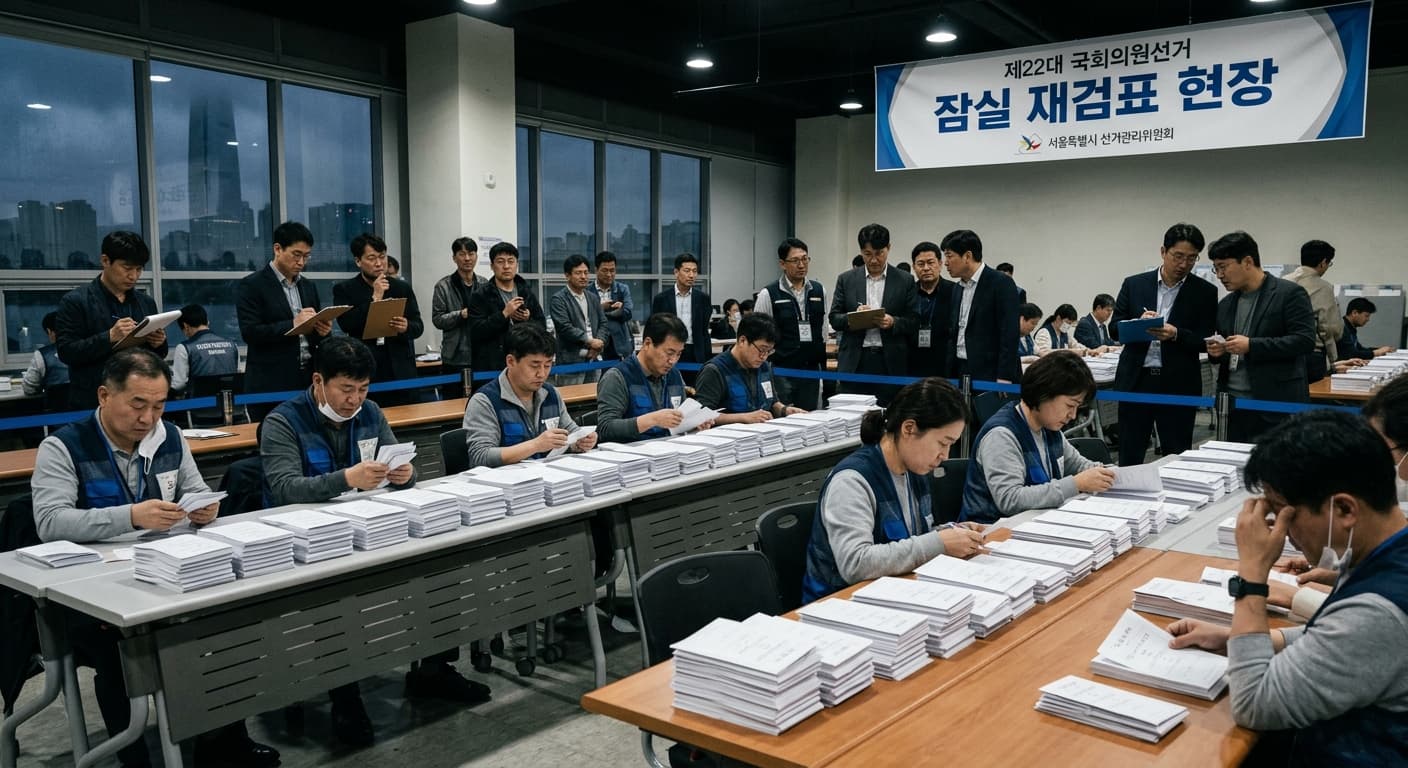
On July 7, 2026, South Korea's National Election Commission (NEC) told a parliamentary special committee that verifying the roughly 2.47 million ballots sealed inside the Olympic Park Handball Gymnasium in Songpa-gu would take about nine hours of work and 50 million won. The Democratic Party of Korea's acting leader, Han Byeong-do, said the same day that his party would "actively review" pursuing a joint recount with the opposition People Power Party (PPP), according to Seoul Economic Daily. The thesis of this story: the Jamsil recount is no longer about who won Seoul — it is about whether the constitutionally independent NEC survives 2026 with its powers intact, and Lee Jae-myung's government is set to inherit a smaller, more supervised electoral referee no matter how the ballots read.
The June 3 local elections handed President Lee's Democratic Party 12 of 16 metropolitan mayoral and gubernatorial seats, according to a Brookings analysis by Norman Eisen and Jonathan Katz. But the PPP took the Seoul mayor's office — the country's most symbolic race — with Oh Se-hoon defeating the Democrats' Jung Cheong-rae by roughly 53,000 votes, per
BBC Korea's tally. That thin margin, layered onto an unprecedented paper-ballot shortage at 91 polling stations, is why 380-odd sealed ballot boxes now sit under police guard in a handball arena that the Korean Sport and Olympic Committee wants back.
What actually happened on June 3
The NEC's own fact-finding panel confirmed that on election day, 91 polling stations nationwide ran short of ballots and had to receive emergency deliveries; voting was temporarily suspended at 26 of them, according to BBC News Korea. The worst-hit cluster was Songpa-gu in southern Seoul. Around 4:10 p.m. at the Jamsil 4-dong station, ballots ran out; other stations in Garak 2-dong and Jamsil 7-dong reported the same problem shortly after.
The Seoul Election Commission extended voting hours in the affected precincts until 10 p.m. Two ballot boxes from the Jamsil 7-dong No. 2 station were moved to the Olympic Park counting site roughly 35 hours after their seals were lifted, delayed because protesters and riot police blocked their transfer, BBC Korea reported. NEC Chair Noh Tae-ak issued a public apology and resigned the next day, saying, "There is no room for excuse for what happened, which infringes on the sacred right of political participation."
The precipitating error was mundane. The Songpa district office had printed enough ballots for only 50–70% of registered voters, banking on historical turnout norms. National turnout instead hit 61.0%, the highest in a local election since 1994, according to the NEC final report cited by BBC Korea.
Why the ballots are still in a stadium
Under Article 151 of South Korea's Public Official Election Act, ballots must be pre-printed by district commissions and delivered to precinct commissions by the day before the vote — a rule BBC Korea flagged as the specific procedural breach at issue. Article 198 permits a re-vote only in cases of natural disaster or ballot-box loss or destruction. The NEC ruled on June 4 that the shortage did not meet that bar and refused to halt counting, a position it has maintained through five weeks of demonstrations.
That legal reading has not resolved the political question. Because counting proceeded while some voters were still queued and after exit polls had aired, PPP lawmakers and hard-right activists argue the "fairness of the election has been damaged." Petitions to the Constitutional Court and civil damages suits — not annulment — are the likely legal off-ramps, according to a former prosecutor cited anonymously by BBC. The May 2022 Luzerne County, Pennsylvania precedent, in which ballot shortages triggered a court-ordered voting extension and a $30,000 settlement rather than nullification, is being discussed in Seoul legal circles as the closest analogue.
The specific 2.47 million ballots at Olympic Park break down, per the NEC's July 7 briefing, into roughly 370,000 Seoul mayoral ballots, 250,000 Songpa District Council "Ma" district ballots, and 40,000 Jamsil 7-dong ward ballots, Seoul Economic Daily reported. Alongside them sit voting records, early-voting records, storage boxes and rented counting computers, according to
Asia News Network.
The real fight: who audits the NEC
The recount is a proxy for a larger constitutional problem the Yoon and Lee eras both punted on. Article 114 of the Constitution designates the NEC an independent body reporting to no branch of government. In 2023, a Constitutional Court ruling agreed with the NEC's contention that the presidentially controlled Board of Audit and Inspection (BAI) could not audit it, even after a scandal in which the National Human Rights Commission suspected 58 of 384 mid-career hires between 2017 and 2023 of nepotism, according to BBC Korea's institutional profile of the NEC. The Central NEC is subject to National Assembly inspection under the Interior Committee, but its 17 metropolitan and 255 municipal commissions are not.
Two things changed in the last three weeks. First, the Assembly voted 250–1 on June 18 to launch a 45-day special investigation running to August 1, empowered to subpoena documents and hold hearings — the first ever aimed at the NEC as an institution, BBC Korea reported. Second, and more consequential, the
BAI announced on July 6 it had opened its own probe into the NEC's budget planning and execution around the ballot shortage in Seoul, Gyeonggi and Busan — testing the boundaries of the 2023 ruling by anchoring the audit in fiscal management rather than election supervision.
The Board of Audit and Inspection is itself a "constitutionally independent body reporting to the President and the National Assembly," per the IMF's Report on the Observance of Standards and Codes for Korea, which means the current confrontation is between two Article 97-and-114 institutions — not between the executive and the NEC as such. That distinction is the legal seam the Lee government is exploiting.
The bipartisan recount is the story's twist
Here is the non-obvious feature of the current moment: the Democratic Party — the ruling party, whose candidate lost Seoul — is now the party embracing the recount. Han Byeong-do said Monday the DPK would pursue "a recount and manual count of the 2.47 million ballots remaining at the Handball Stadium… under the parliamentary special investigation committee," according to Seoul Economic Daily. PPP special-committee chair Yoon Sang-hyun had proposed the recount days earlier and told
Herald Business he expected "a conclusion soon."
The Democrats' calculus is straightforward. A hand count that confirms Oh Se-hoon's ~53,000-vote margin buries the PPP's most inflammatory line — that the election was "seriously fraudulent," as PPP leader Jang Dong-hyeok has repeatedly said — and defangs the fringe-right rallies that have kept the Handball Gymnasium blockaded for five weeks. Hard-right figures including Freedom & Innovation Party head Hwang Kyo-ahn have appeared at the site, according to Asia News Network, and police are investigating 139 people over 58 alleged offences ranging from assault to obstruction of official duty.
For the PPP, the political payoff runs the other direction. Even a clean recount will let the party argue — as PPP floor secretary Seo Beom-su did July 7 — that the "Lee Jae-myung administration" bears accountability through the Interior Ministry and the Presidential Chief of Staff. The party has already extracted the NEC chair's resignation. Its aim now is structural: statutory reform of NEC hiring, oversight and budget rules before the 2028 general election.
The Brookings assessment — and its blind spot
The most-cited international framing of the June 3 vote comes from Norman Eisen and Jonathan Katz at Brookings, who called the election "another test for democratic resilience post-martial law" after Yoon Suk Yeol's December 2024 emergency decree, his April 2025 removal by the Constitutional Court, and Lee's June 3, 2025 election, per their analysis. Their read is that Korean democracy is holding — competitive local elections, orderly turnover, functioning courts.
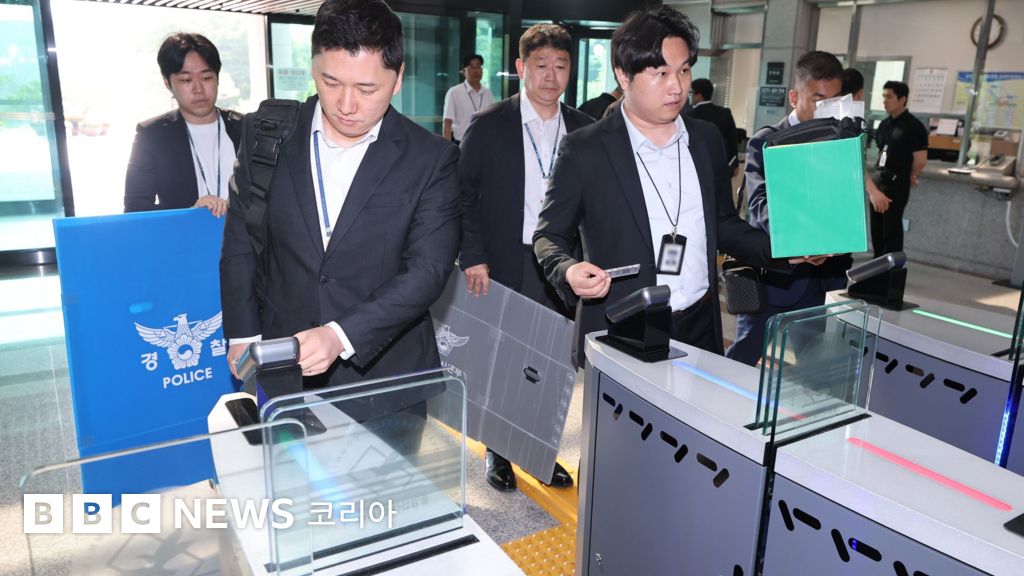
That is correct as far as it goes, but it understates what is happening to the referee. In the six months since Yoon's impeachment, South Korea's institutional load-bearing walls — the Constitutional Court, prosecution service, the presidency itself — have all been rebuilt in public. The NEC is now next. The joint prosecution-police investigation team has already summoned nine Songpa district officials as witnesses and searched the NEC's Seoul, Songpa, Gangnam, Seocho, Gwangjin and Dongjak offices, BBC Korea reported. Between the criminal probe, the BAI audit, the parliamentary investigation and the physical recount, four separate institutions are inspecting an organ that until this year was effectively self-supervising.
That is the deeper story here. The recount is a form of court-of-public-opinion evidence — a shareable, screenshottable, either-it-matched-or-it-didn't fact that either quiets the fraud narrative or supercharges it.
What the primary sources say
The NEC's own July 7 statement, relayed through the special committee and quoted by Seoul Economic Daily, is unusually candid:
"As ballots have been stored in a temporary space for an extended period, public anxiety and suspicions have been raised. Swift action is needed to dispel the suspicions and allow the Handball Stadium at Olympic Park to recover its original function." —
National Election Commission, July 7, 2026
Prime Minister Kim Min-seok, on June 5, called the shortage "a serious challenge to K-democracy" and pledged that "if necessary, we will achieve firm accountability and institutional reform through a parliamentary probe or special counsel," BBC Korea reported. That commitment — from the ruling side, before its own Seoul candidate lost — is what let the Democrats sign on to a recount they might otherwise have blocked.
The Democrats' floor secretary on the committee, Yoon Kun-young, framed the constitutional guardrail on July 7: "As the Presidential Office and the NEC are constitutionally independent institutions, the parliamentary investigation must not drift into political strife," per Seoul Economic Daily. Translation: hand-count the ballots, discipline the individuals, but do not let the PPP use the crisis to fold the NEC into presidential-branch oversight.
South Korea has done participatory audit before. The World Bank has profiled the BAI's citizen-audit request system, which receives around 200 formal audit requests a year from citizens. Extending that model — bipartisan observers, live-streamed counting — to the NEC is the most likely institutional outcome, and one the recount itself is now piloting.
Who wins, who loses
Oh Se-hoon wins twice if the recount confirms his margin: he keeps City Hall and becomes the credible conservative standard-bearer against Lee's Democrats for 2027. He wins even if the count is close, because certification survives.
Lee Jae-myung loses political capital regardless. The Brookings piece already notes ballot-shortage "outrage" among younger voters in conservative-leaning Seoul districts as evidence of a "potential conservative revival." A clean recount stops the bleeding; a messy one accelerates it.
The NEC loses in every scenario. It has surrendered its chair, its exclusive audit shield and its monopoly on ballot handling. The question is only whether the post-crisis regime is closer to South Korea's pre-2023 status quo or to a US-state-level model of legislative oversight.
The PPP's hard right — Hwang Kyo-ahn, the tent encampments, the online fraud ecosystem — loses if the recount confirms the tally. That is why the People Power Party leadership has moved cautiously, backing the recount publicly while its base demands annulment.
What to watch
- July 14, 2026 — first special-committee hearing on ballot-shortage accountability. Watch whether Interior Minister Yoon Ho-jung and Presidential Chief of Staff Kang Hoon-sik appear, as the PPP has demanded.
- July 22, 2026 — second hearing, immediately preceding the committee report. This is the deadline by which the recount protocol must be finalized to be executed before the probe expires.
- August 1, 2026 — statutory end of the 45-day parliamentary investigation. An extension requires a plenary vote and would push confrontation into the autumn budget session.
- BAI audit findings — expected in the autumn. If the BAI can enforce budget-side findings on the NEC without a fresh Constitutional Court challenge, the 2023 ruling has been narrowed in practice.
- Constitutional Court petitions — voters who could not cast ballots on June 3 are weighing challenges under Article 24 of the Constitution (right to participate in government). None has yet been formally accepted.
The Bottom Line
The Jamsil recount will most likely confirm Oh Se-hoon's Seoul victory, but that is not what makes it matter. It is the first time in South Korea's democratic era that the National Election Commission has been simultaneously investigated by the National Assembly, audited by the Board of Audit and Inspection, criminally probed by a joint prosecution–police team, and physically re-counted by the two parties acting together. Whatever the boxes contain, the referee that opens them will not be the same institution that sealed them on June 3, 2026 — and that, not the Seoul mayoralty, is the durable outcome of the ballot-shortage crisis.
Discover more
India
700 Activists Accuse PM Modi of MCC Breach
Over 700 activists allege PM Modi breached election code with a televised address attacking opposition parties just before state elections.

US Politics
SNAP Food Assistance Faces Legal Challenges
In 2026, SNAP faces stricter eligibility rules and mounting legal challenges, threatening food assistance for the millions of Americans who rely on the program.
India
Modi's Women’s Convention in Varanasi
Modi's Varanasi rally frames women's reservation as a national mission, targeting the 2027 Uttar Pradesh elections with a strategic narrative.

Economics
Fed's Amex AML order puts correspondent banking on notice
Federal Reserve's Amex AML order requires board-level controls and a 90-day plan; OCC fined the bank $350 million over enterprise-wide deficiencies.