Israel Flotilla Detentions Cause Diplomatic T
Activists allege abuse in Israeli custody, raising tensions.
Model Diplomat3 min readMiddle East
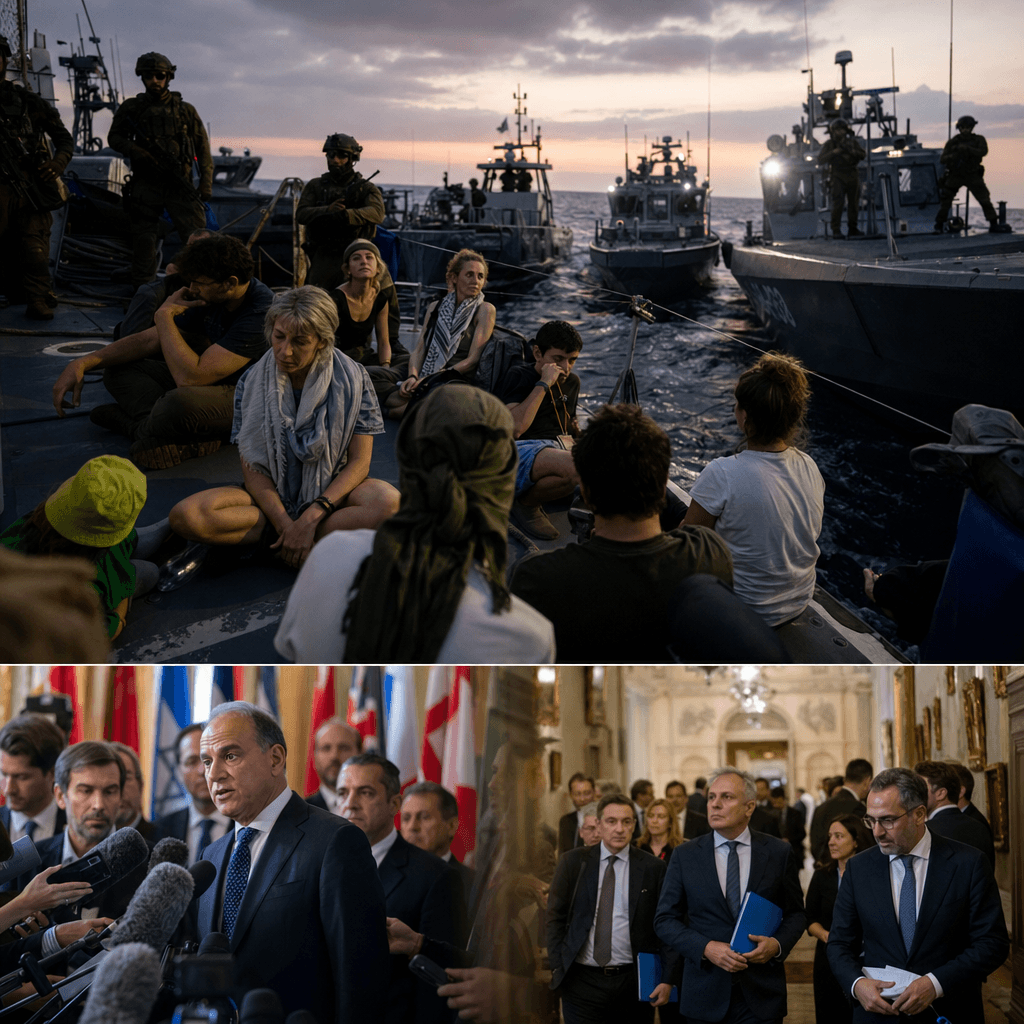
Israel’s flotilla detentions are backfiring fast
Activists say they were abused in Israeli custody, and the fallout now threatens to widen the diplomatic cost of enforcing Gaza’s blockade.
Israel still holds the hard power here: it controlled the interception, the detention sites, and the deportations. But the political leverage is shifting away from Jerusalem after activists from the Global Sumud Flotilla accused Israeli forces of beatings, sexual abuse and humiliating treatment following the seizure of more than 50 boats bound for Gaza, according to BBC News Indonesia and
BBC News.
The sequence matters. Israeli naval commandos began boarding the flotilla in international waters west of Cyprus on 18–19 May, then moved the detainees to Ashdod and into Israeli prisons, before deporting 422 people from 41 countries on 21 May, BBC News reported. By 22 May, Canada said it had received information describing “appalling abuse” of its citizens, while Spain confirmed that four of its 44 nationals needed medical treatment,
BBC News said.
What Israel wanted — and what it got instead
Israel’s immediate objective was straightforward: stop a highly visible attempt to challenge the maritime blockade of Gaza and prevent the flotilla from becoming a supply line or a symbolic breach. That part worked. Israel also tried to frame the mission as a “PR stunt” serving Hamas, BBC News said, which is the standard move when it wants to turn a law-and-order operation into a legitimacy test for its critics.
But the harder Israel pushes, the more it creates evidence for its opponents. The strongest example is the video posted by far-right National Security Minister Itamar Ben Gvir showing activists kneeling with their hands tied behind their backs. That footage triggered diplomatic blowback across Europe and beyond, and even drew criticism from Israeli Prime Minister Benjamin Netanyahu, BBC News reported. On
Global Politics, that is the core dynamic: coercion can suppress a convoy, but it can also manufacture a scandal.
Who benefits, who loses
The short-term beneficiary is Israel’s security establishment, which has kept the blockade intact and avoided a live breach into Gaza. The deeper beneficiary is Ben Gvir’s political brand at home, where theatrical toughness plays well with his base. But the institutional loser is the Israeli government as a whole, because the images and testimony now force allies to defend conduct, not just policy. That distinction matters.
The damage is already visible. The legal rights group Adalah said it had heard a large number of complaints of extreme violence and that at least three detainees were hospitalized, BBC News reported. Media Indonesia quoted activists alleging tasers, broken ribs, and sexual abuse, while noting that roughly 430 activists were detained before deportation,
Media Indonesia. Kompas TV reported that several Indonesian participants said they were beaten and electrocuted, which matters because the flotilla now has a direct constituency inside Indonesia, not just in Europe,
Kompas TV.
The losers are broader: the detainees themselves, whose injuries and allegations are now the story; Israel’s foreign ministry, which must answer for detention conditions; and the governments of Canada, Spain, Germany, Italy and others, which are under pressure to demand consular access and accountability. The flotilla organizers also win something: publicity that turns a failed delivery mission into an international legal and political dispute.
What to watch next
Watch for three things. First, whether any state opens a formal investigation into the treatment of its nationals; Italy already has lawyers and prosecutors probing possible kidnapping, torture and sexual assault allegations, Al Jazeera reported. Second, whether more governments summon Israeli diplomats, as several already have. Third, whether the flotilla’s organizers launch another attempt, because the blockade challenge is now part protest, part legal contest, and part test of how far Israel can go before allies decide the reputational cost is too high.
Discover more

Global Politics
US Seizes Iranian Ship, Tensions Surge
The US seizure of the Iranian ship Touska highlights a shift in control over the Strait of Hormuz, favoring Iran's strategic position.
India
UN Expert Albanese: India Violates Law
UN Rapporteur Francesca Albanese accuses India of breaching international law, spotlighting human rights concerns in Kashmir and prompting diplomatic pushback.

Conflict & Security
Drone Warfare Killing Aid Workers at Unprec
Over 1,000 humanitarian workers killed in three years as cheap armed drones collapse legal protections. Gaza, Sudan, Ukraine, and DRC see deliberate targeting of aid convoys and hospitals with zero prosecutions.

Global
World Normalises Taliban as Afghan Women Eras
UN data shows Afghan women erased from public life as Russia recognises the Taliban, EU hosts officials in Brussels, and ICC warrants for gender persecution go unenforced.

