Iran Stock Market Reopens Amid War Damage
Tehran's exchange reopens amid economic turmoil from war.
Model Diplomat3 min readMiddle East
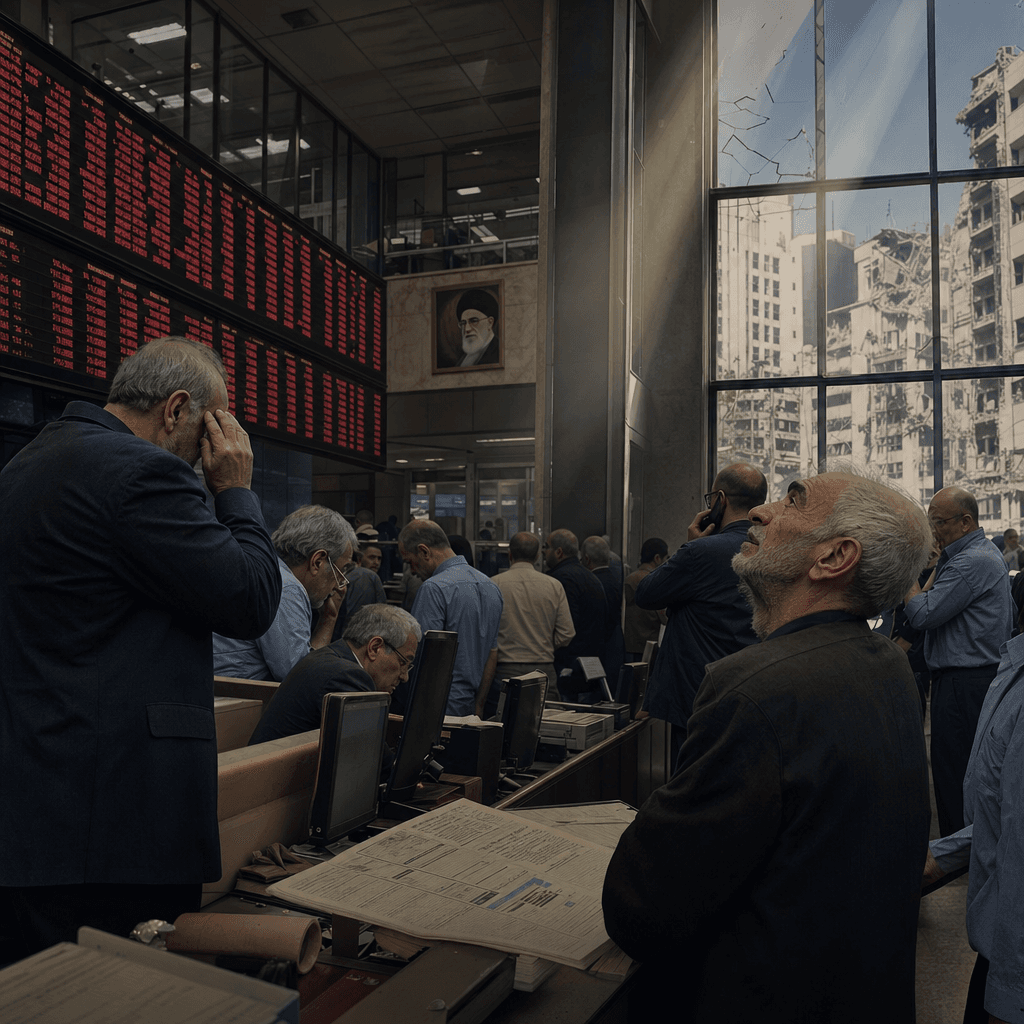
Iran’s Stock Market Reopens, Exposing War’s Economic Damage
Tehran has reopened its exchange in a tightly managed way, trying to stop panic selling while revealing how deeply the war has damaged prices, liquidity and confidence.
Iran’s authorities have reopened the Tehran Stock Exchange after a near-three-month shutdown, but only under a controlled reset designed to keep selling pressure from becoming a political problem, not to restore normal price discovery (Al Jazeera). On Tuesday and Wednesday, trading resumed with 42 ticker symbols — about 36 percent of the market — kept offline, trading hours extended by an hour, and the usual daily move cap left at 3 percent (
Al Jazeera).
Tehran is using the market as a pressure valve
That tells you what the state thinks the exchange is for in wartime: not capital allocation, but containment. By excluding firms most exposed to US and Israeli strikes — including petrochemical, steel, utility and investment companies — regulators are trying to prevent a selloff in the most damaged names from contaminating the rest of the market (Al Jazeera). The same logic explains why equity funds with more than 35 percent of portfolios in those affected companies remain suspended for now (
Al Jazeera).
The opening sessions were calm enough to let officials claim success: buy queues outpaced sell queues, and the TEDPIX index rose modestly to more than 3,758,000 after Wednesday’s session (Al Jazeera). But that headline number is misleading. The index had hit nearly 4.5 million at the start of 2026, then slid as protests, war and capital flight battered confidence (
Al Jazeera). Iran is effectively reopening a market that has already been repriced by inflation, sanctions and a collapsing currency.
The winners are the firms with dollar earnings
This is why exporters benefit first. As the rial weakens, companies with hard-currency revenues look stronger in local terms even if real activity is impaired (Al Jazeera). That dynamic can lift paper valuations without fixing production or trade. It also helps explain why the market can look resilient even as the wider economy deteriorates: Iran’s inflation was above 70 percent in late April, and the US naval blockade of southern ports has tightened the squeeze on imports, logistics and reconstruction (
Al Jazeera).
The losers are more obvious: small brokerage firms, leveraged traders and options holders whose contracts expired during the closure, leaving them with no clean exit, as economist Mehdi Haghbaali told Al Jazeera (Al Jazeera). Authorities have temporarily barred brokers from forcing margin calls or liquidations, which is another sign they are trying to suppress forced selling rather than resolve balance-sheet stress (
Al Jazeera). The
Conflict page is the right lens here: the market is being managed as an extension of the war economy, not insulated from it.
What to watch next
The next test is whether Tehran expands the reopening to the sidelined blue chips and investment funds, or keeps them frozen if the security picture worsens. That decision will tell investors whether the government sees the ceasefire and the Pakistan-mediated US-Iran talks as stable enough to loosen controls, or whether it expects renewed strikes and another forced closure (Al Jazeera;
The Associated Press). For now, Tehran has bought itself time. It has not bought confidence.
Discover more

Global Politics
US Seizes Iranian Ship, Tensions Surge
The US seizure of the Iranian ship Touska highlights a shift in control over the Strait of Hormuz, favoring Iran's strategic position.

Conflict & Security
Drone Warfare Killing Aid Workers at Unprec
Over 1,000 humanitarian workers killed in three years as cheap armed drones collapse legal protections. Gaza, Sudan, Ukraine, and DRC see deliberate targeting of aid convoys and hospitals with zero prosecutions.
Global
World Normalises Taliban as Afghan Women Eras
UN data shows Afghan women erased from public life as Russia recognises the Taliban, EU hosts officials in Brussels, and ICC warrants for gender persecution go unenforced.
Conflict & Security
West Africa Food Crisis: Three Shocks in 2026
Conflict, climate extremes, and the Strait of Hormuz closure drive a severe food crisis in West and Central Africa, with fertilizer prices surging 80% and millions displaced.