Iran's New Strategy
Tehran aims to leverage internet access for revenue and power.
Model Diplomat3 min readMiddle East
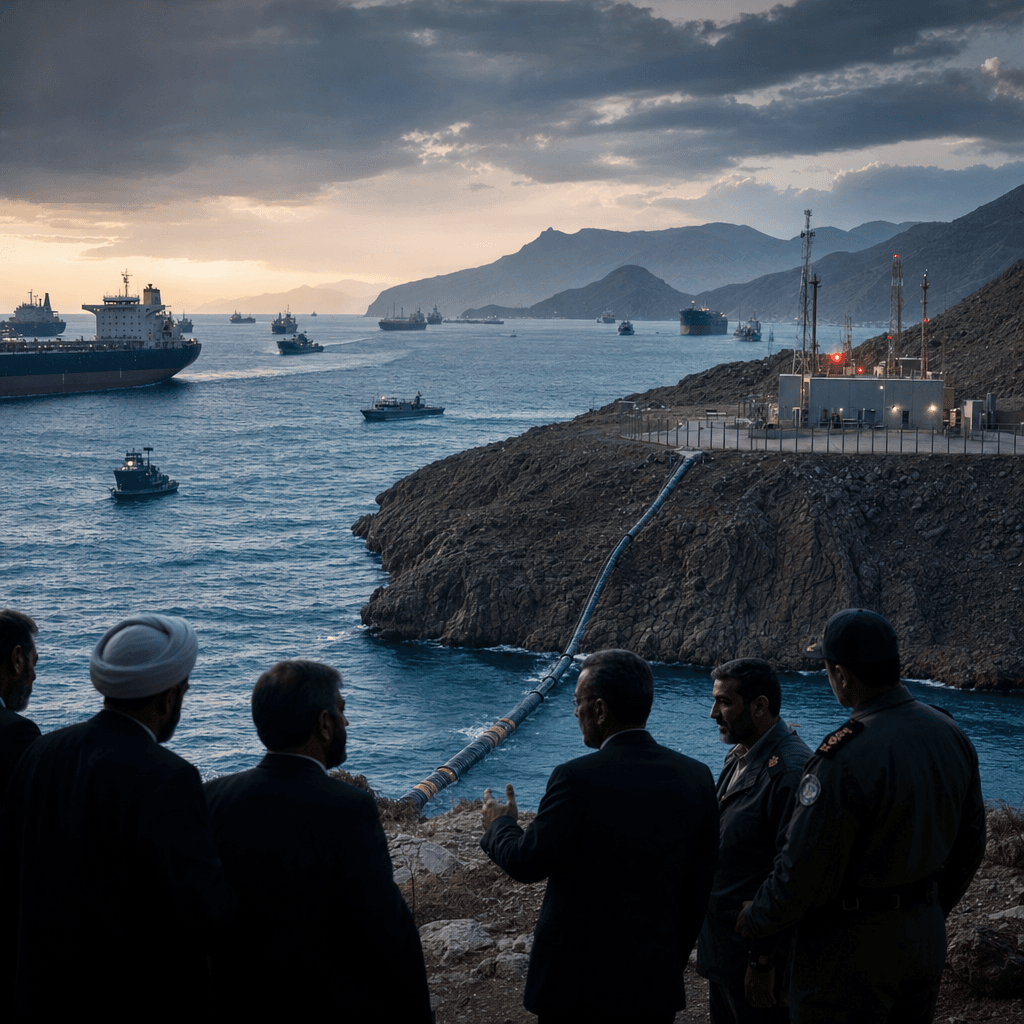
Iran’s new Hormuz lever is data, not oil
Tehran is trying to turn the Strait of Hormuz into a tollgate for the internet, using cable access to extract revenue and bargaining power as talks with Washington stall.
Iran is floating a plan to charge Google, Meta, Microsoft and Amazon for the undersea cables crossing the Strait of Hormuz, and to control repair and maintenance of those lines through Iranian firms, according to France 24. The message is straightforward: if Iran can make shipping through Hormuz more expensive, it can try the same with data. That is a lever of coercion, but also a revenue play, in a war economy that still needs cash and a diplomatic edge.
A chokepoint Iran can weaponize twice
The power dynamic here is not subtle. Iran already proved it can squeeze the world through Hormuz on the energy side; now it is trying to extend that logic to the digital layer beneath the water. Reuters reported in April that U.S. intelligence assessments saw Tehran unlikely to give up its grip on the strait soon because it gives Iran the only real leverage it has over Washington. That same logic applies to undersea cables: the threat of disruption matters even if Tehran never fully cuts them.
This is why the proposal matters beyond the optics. It is not just about access fees. It is about control over maintenance, licensing, and the ability to delay repairs or threaten interference if companies refuse to comply. The leverage falls first on Gulf users — especially Saudi Arabia, the UAE and Qatar — rather than on the United States or Europe, which have more alternative routes, as France 24 notes.
Law is weak; coercion is the point
Iran’s legal case is shaky. France 24 reports that Tehran is arguing the strait sits entirely within Iranian and Omani territorial waters, but maritime experts say the basis for unilateral licensing fees is “very weak” under international law. That is beside the point. In this kind of contest, law is a shield for the weak and a nuisance for the strong; what counts is whether Iran can make access costly enough that firms and governments choose accommodation over confrontation.
That is also why the target set is revealing. The plan aims at the companies that power cloud services, payments, logistics and AI infrastructure. If Tehran can force those firms into a fee, it normalizes the idea that critical digital routes are taxable under local control. If it cannot, it still signals that Iran is willing to broaden the battlefield.
Who gains, who loses
The immediate winners would be Iranian security institutions and connected firms that could capture licensing, maintenance and transit revenue. The likely loser is the Gulf’s digital economy: the states and companies most dependent on uninterrupted bandwidth, not the distant end users in the West. Al Jazeera has already shown how war-time internet controls inside Iran have deepened a broader architecture of state control. This offshore move fits the same model: centralize the choke point, monetize it, and use it as leverage.
The bigger implication is strategic. Iran is signaling that Hormuz is no longer just an energy artery. It is a dual-use pressure point for oil, shipping and data. That expands Tehran’s coercive toolkit at a moment when it wants sanctions relief, reconstruction money and a better hand in any ceasefire or negotiation.
What to watch next
Watch for three things: whether Iranian officials formalize the fee mechanism; whether cable operators or Gulf states quietly negotiate around it; and whether the U.S. moves to deter interference with maintenance vessels or routing. The key date is the next serious U.S.-Iran diplomatic step: if talks stay frozen, Tehran has every incentive to keep widening the squeeze.
Discover more

Global Politics
US Seizes Iranian Ship, Tensions Surge
The US seizure of the Iranian ship Touska highlights a shift in control over the Strait of Hormuz, favoring Iran's strategic position.

Conflict & Security
Drone Warfare Killing Aid Workers at Unprec
Over 1,000 humanitarian workers killed in three years as cheap armed drones collapse legal protections. Gaza, Sudan, Ukraine, and DRC see deliberate targeting of aid convoys and hospitals with zero prosecutions.

Global
World Normalises Taliban as Afghan Women Eras
UN data shows Afghan women erased from public life as Russia recognises the Taliban, EU hosts officials in Brussels, and ICC warrants for gender persecution go unenforced.
Conflict & Security
West Africa Food Crisis: Three Shocks in 2026
Conflict, climate extremes, and the Strait of Hormuz closure drive a severe food crisis in West and Central Africa, with fertilizer prices surging 80% and millions displaced.