Iran's Missile Video Escalates Hormuz Tension
State media claims missile fire at US ships threatens ceasefire.
Model Diplomat3 min readMiddle East
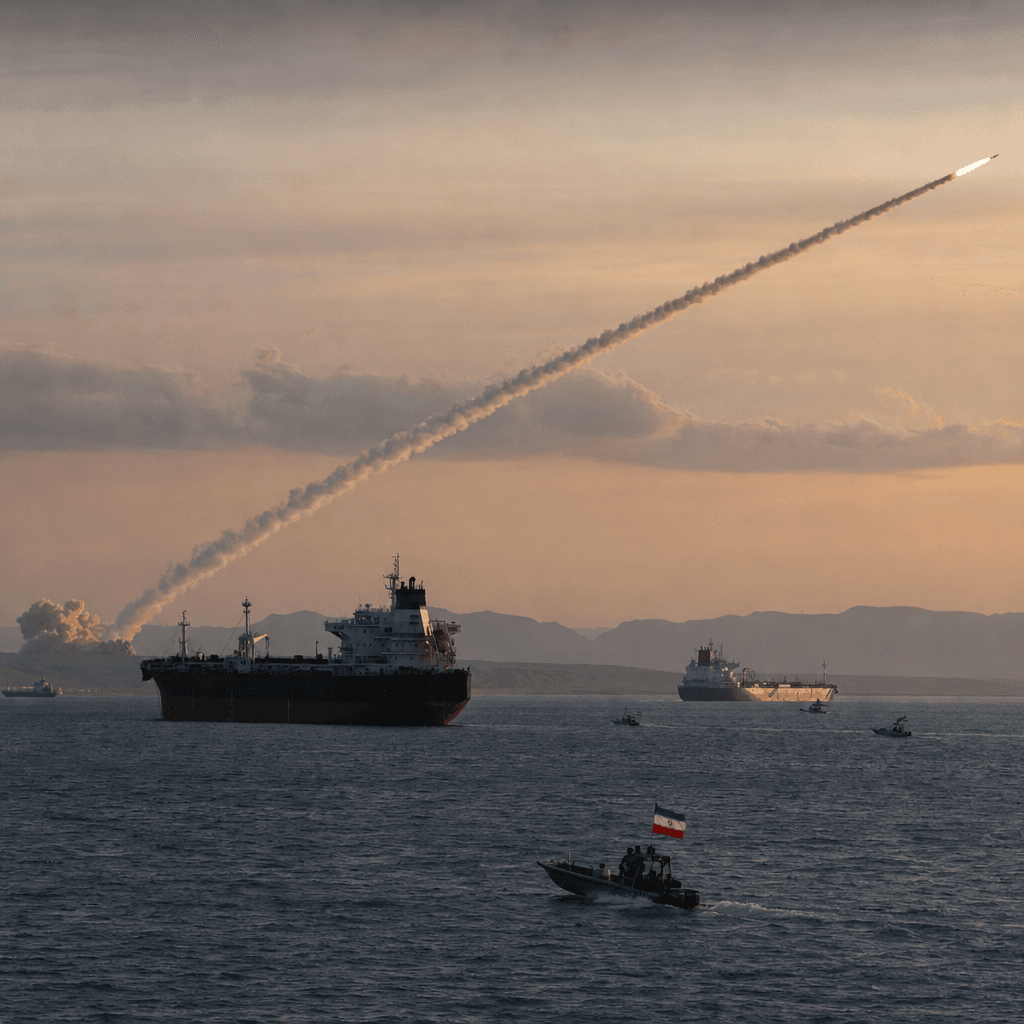
Iran’s Missile Video Raises Stakes in the Strait of Hormuz
State media’s claim of missile fire at US ships is a signal, not proof of damage — and it threatens the fragile US-Iran ceasefire.
Iran is using state media to broadcast escalation before the facts are settled. CNN reported that Iranian state-affiliated Fars released footage claiming to show missile launches toward US vessels, while Tehran said Washington had violated a ceasefire and President Donald Trump said the truce remained in effect as Iran reviewed a US proposal to end the war (CNN). That matters because the video is not just battlefield propaganda; it is leverage. Tehran is signaling that it can raise the cost of maritime pressure in the Strait of Hormuz while keeping diplomatic channels open.
Why this matters now
The immediate fight is over narrative control. Al Jazeera reported that Iran’s military said it retaliated after US forces targeted an Iranian tanker, claiming the response used ballistic and anti-ship cruise missiles plus drones, while US Central Command said it intercepted “unprovoked Iranian attacks” and that “no US assets were struck” (Al Jazeera). Those are incompatible accounts, and that gap is the point. Iran wants to show it can hit back without conceding that it has crossed a red line; Washington wants to show it can absorb and block the attack without letting the crisis spiral.
The Strait of Hormuz is the pressure point. Even limited exchanges there force shipping insurers, energy traders and regional militaries to price in a wider confrontation. That gives Tehran a coercive tool even if the strike video never proves a successful hit. It also gives the US a reason to keep naval forces forward-deployed, because every ship in the corridor becomes both a target and a political message.
Who gains, who loses
The near-term winner is the Iranian security establishment, especially the IRGC Navy, which benefits from a display of resolve at a moment when Tehran is under military and diplomatic pressure. The loser is the ceasefire itself. As The Straits Times reported, Iranian state TV said US “enemy units” in the Strait came under missile fire and were “forced to flee,” but the outlet also noted that the Pentagon had not immediately responded and that the timing of the incident was unclear (The Straits Times). That uncertainty cuts both ways: if Washington downplays the incident, Tehran can still claim deterrence; if Washington responds militarily, the exchange widens.
For the US, the leverage is obvious: it can interdict shipping, protect its forces, and choose whether to answer kinetically. For Iran, the leverage is asymmetrical but real: it can make Hormuz more dangerous fast enough to complicate US policy, allied shipping, and any ceasefire talks.
What to watch next
The next decision point is whether Washington confirms damage or moves to reassert maritime control. Watch for three things: a Pentagon assessment of the alleged strike, any fresh CENTCOM naval movement in the Gulf, and whether Trump or Iranian officials treat this as a one-off incident or evidence that the ceasefire is already fraying. If the US says no ship was hit and keeps the talks alive, Iran has tested the line without fully crossing it. If not, the video becomes the prelude to a wider maritime cycle, not just a propaganda clip.
Discover more

Global Politics
US Seizes Iranian Ship, Tensions Surge
The US seizure of the Iranian ship Touska highlights a shift in control over the Strait of Hormuz, favoring Iran's strategic position.

Economics
Fed's Amex AML order puts correspondent banking on notice
Federal Reserve's Amex AML order requires board-level controls and a 90-day plan; OCC fined the bank $350 million over enterprise-wide deficiencies.

Conflict & Security
Guatemala: El Niño 2026–27 becomes regional security test
UNICEF: 25.8M children face El Niño risks in Latin America; Guatemala maps 188 municipalities for drought and food insecurity amid regional security test.

Economics
Fed's stress-test overhaul is a capital-smoothing exercise
Federal Reserve finalized stress-test overhaul: two-year averaging for bank capital buffers and public input, expected to halve volatility.