Iran's Healthcare Under Attack: 2025-2026
Documented violence against medical facilities in Iran
Model Diplomat8 min readMiddle East
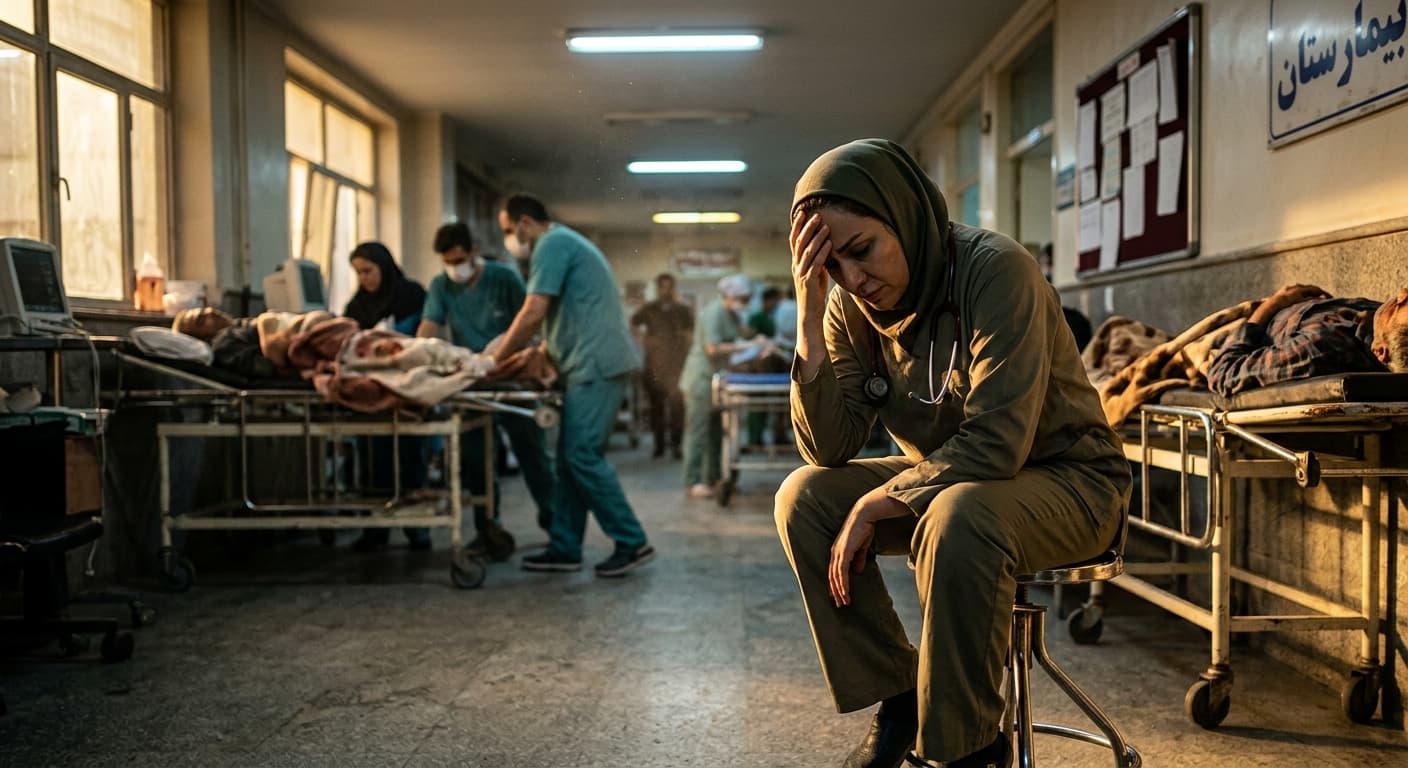
Iran: Violence Against Health Care in Conflict — 2025 into 2026
Attacks on Iranian hospitals, vaccine labs and ambulances have shifted from collateral damage to a documented pattern — reshaping public-health policy far beyond Tehran.
Between the 12-day war of June 2025 and the wider US–Israeli campaign that resumed on February 28, 2026, Iran's healthcare system has absorbed the most concentrated violence against medical infrastructure of any state at war this decade — 307 health, medical and emergency-care facilities damaged in five weeks, according to the Iranian Red Crescent, and more than 20 attacks on health verified by the World Health Organization since March 1, 2026 alone. The strategic effect is not a battlefield one. It is a public-health one: a system already hollowed out by sanctions and a January 2026 protest crackdown is now losing the vaccine plants, pharmaceutical raw-material producers and specialty hospitals it would need to recover — and Tehran's response is a wartime reorganisation of its health ministry around trauma, chemical-biological-radiological-nuclear (CBRN) contingency and self-sufficiency, not reconstruction.
That is the story that matters. The question is no longer whether Iran's healthcare system was targeted — WHO, ICRC, MSF and even the UK Home Office now say plainly that it was. The question is what a decade-long degradation of medical capacity does to a country of 93 million with the world's fastest-ageing population outside East Asia, and what it says about the collapse of the norm codified in UN Security Council Resolution 2286.
What the primary record shows
The pattern begins in June 2025. On June 15, Iranian foreign ministry spokesman Esmaeil Baqaei said the Farabi Hospital in Kermanshah had been struck by Israel; Iranian state media reported patients injured, per Al Jazeera. Four days later, an Iranian missile hit the Soroka Medical Center in Beersheba, wounding 71 and forcing the transfer of about 200 patients; Iran said the target was an adjacent IDF Command, Control, Communications, Computers and Intelligence (C4I) headquarters, per the
BBC. By the ceasefire on June 24, Iran's health minister Mohammadreza Zafarghandi told state agency IRNA that Israel had directly hit seven hospitals and 11 ambulances, and 18 medical workers had been killed, according to
BBC Persian.
The 2026 phase is an order of magnitude larger. The UK Home Office's Country bulletin: Iran, security situation, March 2026 records at least 6,720 attacks across 2,566 incidents in all 31 provinces between February 28 and March 18, 2026, drawing on HRANA data. Iran's deputy health minister Ali Jafarian told Al Jazeera on March 9 that 1,255 people had been killed, including 11 healthcare workers, and that 29 clinical facilities had been damaged, 10 forced to close, alongside 15 ambulances and 52 health centres, per
Al Jazeera.
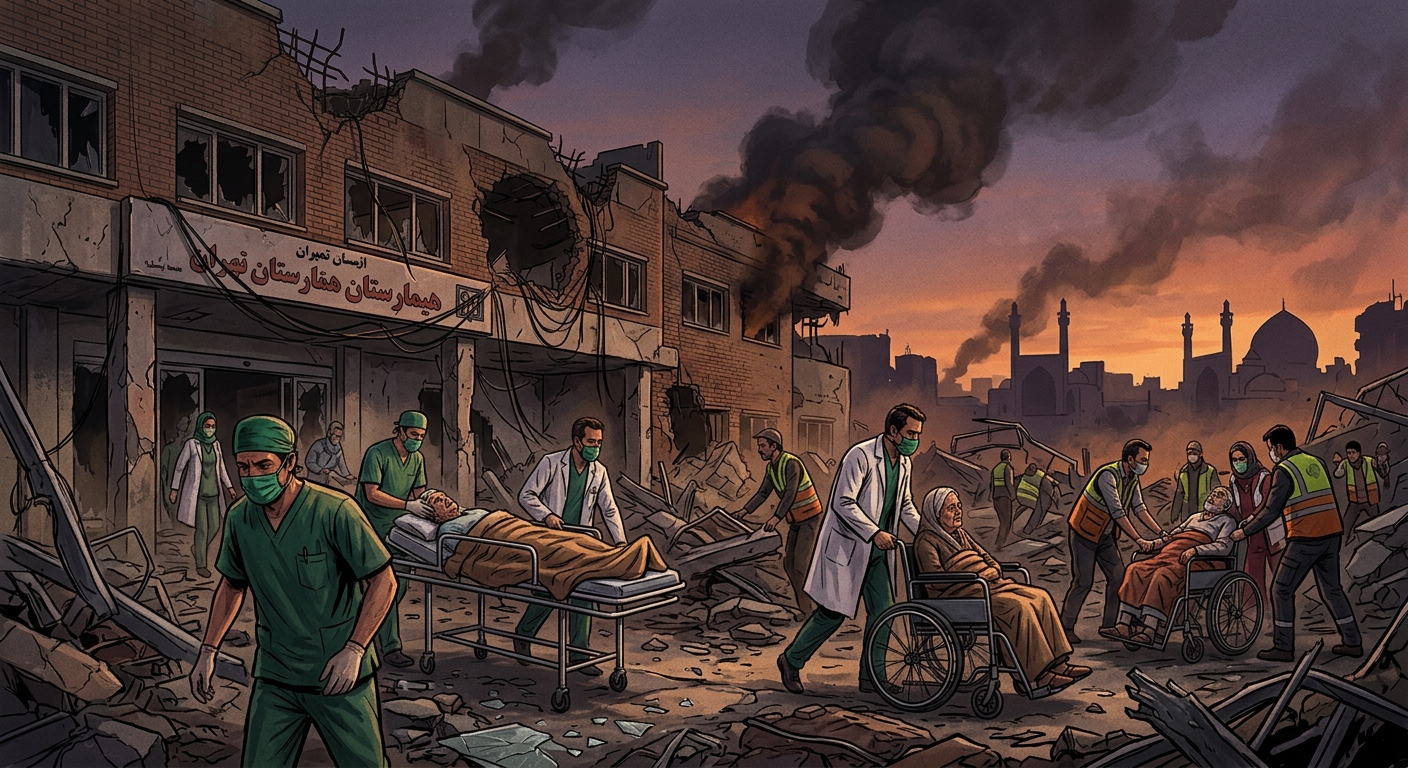
Then came the March 29 – April 2 wave that broadened the target set beyond military and political sites. The Delaram Sina Psychiatric Hospital was significantly damaged on March 29; the Tofigh Daru Research & Engineering Company, one of Iran's largest producers of anaesthetics and cancer drugs, was struck on March 31 — the IDF confirmed the strike and alleged fentanyl-linked chemical-weapons research, a claim BBC Verify said it could not corroborate. On April 2, the Pasteur Institute of Iran — a Tehran research centre founded in 1920 in partnership with the Institut Pasteur in Paris, and a WHO collaborating centre for two of its departments — was hit. WHO Director-General Tedros Adhanom Ghebreyesus said the institute was "rendered unable to continue delivering health services," writing on X the same week:
"Since 1 March, WHO has verified over 20 attacks on health care in Iran, resulting in at least nine deaths, including that of an infectious diseases health worker and a member of the Iranian Red Crescent Society."
That statement, and the sequence of strikes it condemned, are reported in detail by Al Jazeera.
The three-pressure system: why the strikes bite harder
Iran did not enter this war with a resilient health system. The Center for American Progress, in its April 2026 assessment The Human and Environmental Costs of the War in Iran, identifies three converging pressures.
First, sanctions. Although medicines are formally exempt, secondary-sanctions risk had already driven a 50% jump in drug prices affecting roughly 6 million Iranians with chronic conditions, per the same report; a November 2025 Al Jazeera opinion piece by Farzanegan, Gibson and Moradi-Lakeh documents anti-epileptic drug price spikes of up to 300%. The reimposition of UN "snapback" sanctions in September 2025, reported by
Al Jazeera, tightened the vice on medicine imports and correspondent banking.
Second, the January 2026 crackdown. Anti-government protests spread to more than 200 cities after the rial's collapse; official casualty totals from the unrest ran into the thousands, with HRANA confirming 6,301 killed and investigating reports of 17,091 more, per the BBC. The BBC also documented security forces stationing themselves inside hospitals to identify wounded protesters — coercion that, as one Tehran healthcare worker put it, pushed doctors to omit gunshot wounds from medical records. That is violence within the healthcare system, not against its buildings, and it eroded trust weeks before the first missile fell.
Third, the airstrikes themselves. On the second day of the 2026 war, the IVF department of Tehran's Gandhi Hospital was destroyed in a strike the IDF attributed to a nearby military communications tower; footage verified by BBC News showed a baby being carried out in an incubator. Iran's Medical Council head Mohammad Raeiszadeh confirmed the IVF unit was gutted. That single strike encapsulates the second-order effect: even where a facility survives, the loss of specialist departments — fertility, oncology, psychiatry, pharmaceutical R&D — cannot be replaced with trauma kits.
Why this is a public-health strategy question, not a war-crimes question
The legal case is not the interesting one. Attacks on medical facilities violate the Geneva Conventions and Resolution 2286, adopted unanimously in 2016. On the tenth anniversary of that resolution, the presidents of ICRC, WHO and MSF issued a rare joint call marking not an achievement but "a failure," writing that the harm the resolution sought to prevent "has continued and, in many contexts, intensified." The UK, a 2286 co-sponsor, told a UN Arria meeting in May 2026 that the number of medical personnel and patients killed in conflict doubled last year to record levels, according to a
statement on GOV.UK. No independent investigation into an attack on a medical facility has ever produced a prosecution — a gap
Chatham House documents in a June 2026 paper.
The more consequential question is what Iran does now. Editorial guidance in the peer-reviewed journal Disaster Medicine and Public Health Preparedness, cited via the University of Rio de Janeiro's DOAJ mirror, argues that Iran's health system was "unequipped to absorb" a full state-on-state war — a warning issued in mid-2025 after the 12-day conflict and vindicated by the 2026 wave. A separate Cambridge University Press paper on healthcare resilience in
wartime published in April 2026 argues that hospitals must be planned for CBRN events, redundant power, and hardened water — a set of requirements that Iran's health ministry has begun to internalise. Tehran Times reported on November 11, 2025 that 50 health officials completed a five-day workshop on urban-warfare preparedness, and that UNICEF is helping build out emergency response capacity — a discreet acknowledgement, before the 2026 war restarted, that another one was expected.
Who benefits, who loses
The Islamic Revolutionary Guard Corps benefits domestically. Reza Bagheri, writing in Middle East Critique in a July 2025 article titled Zionist Defeat in Iran, argues that the 12-day war consolidated national identity around the Islamic Republic rather than fracturing it. That reading — self-serving as its title is — matches the assessment of the
International Institute for Strategic Studies, which called the strategic outcome "inconclusive" but noted the war's political consolidation effect inside Iran.
The losers are more concrete. Six million Iranian chronic-disease patients face medicine costs already 50% higher than pre-sanctions, per the Center for American Progress; the destruction of Tofigh Daru and damage to the Pasteur Institute threaten the domestic drug and vaccine supply that Iranian officials had long claimed covered 90% of demand. Regionally, the Al Jazeera analysis of pharmaceutical supply chains found the war rerouted air-cargo corridors through Dubai and Doha, with paracetamol prices in India rising up to 96% and UK over-the-counter medicines up 20–30% — exposure that hits Global South importers hardest. And the norm itself is a loser: after Gaza, Lebanon and Sudan, Iran becomes the fourth major theatre in 24 months in which hospitals have been damaged with impunity.
Key takeaways
- 307 Iranian health facilities damaged between February 28 and April 3, 2026, per Iranian Red Crescent.
- 20+ attacks on healthcare in Iran verified by WHO since March 1, 2026; 9 deaths including one Red Crescent member.
- 7 hospitals and 11 ambulances directly hit during the 12-day war of June 2025, per Iran's health minister.
- 50% rise in Iranian drug prices pre-war; UN "snapback" sanctions reimposed September 2025 worsened medicine imports.
- Resolution 2286 is 10 years old this May and has produced no prosecution for any attack on a medical facility, per Chatham House.
What to watch
- WHO Executive Board, February 2027 session. Iran and allies are expected to press for a dedicated resolution on attacks on health in the country, testing whether the SSA verification data on Iran will be formally tabled alongside Sudan and Gaza figures.
- UN Human Rights Council fact-finding mission renewal. The council's independent international fact-finding mission on Iran, established after the 2022–23 protests, has a mandate up for renewal in 2026; expansion to cover conflict-related attacks on healthcare is under discussion in Geneva.
- Iran's post-war health reconstruction budget. Iranian parliament debate on the 1405 (March 2026 – March 2027) budget will show whether trauma, CBRN preparedness and pharmaceutical reshoring displace primary care funding.
- ICC preliminary examinations. Any signal that ICC prosecutors extend the Ukraine-healthcare precedent — cited by Physicians for Human Rights — to the Iran theatre would be the first concrete accountability step in a decade.
The Bottom Line
The bottom line: attacks on Iran's hospitals, vaccine institutes and pharmaceutical plants have converted a public-health emergency into a policy pivot — Tehran is rebuilding its health system around trauma and self-sufficiency, not primary care, and the ten-year-old international norm against striking medical facilities is now openly acknowledged by its own guardians to have failed. If the WHO's verified count of 20-plus attacks in five weeks produces no accountability, Iran will become the case study that ends the post-2016 protection regime — and the countries that pay the price will not be in Tehran.
Discover more
Global Politics
Xi Jinping Calls China-Russia Ties 'Precious'
Xi Jinping's description of China-Russia ties as 'precious' reflects a strategic imbalance, with Beijing dictating terms in the partnership.
US Politics
Virginia's Redistricting Referendum
Virginia's redistricting referendum is drawing a flood of dark money, shaping future elections and the fight for congressional control amid party stakes.
India
Women’s Reservation in India
India's 33% women's reservation law is enacted but won't take effect until after 2029 due to political setbacks and census delays.

Conflict & Security
Drone Warfare Killing Aid Workers at Unprec
Over 1,000 humanitarian workers killed in three years as cheap armed drones collapse legal protections. Gaza, Sudan, Ukraine, and DRC see deliberate targeting of aid convoys and hospitals with zero prosecutions.