Iran's Hardline Judiciary Under Ejei
Mojtaba Khamenei reappoints Ejei as chief justice, signaling continuity.
Model Diplomat7 min readMiddle East
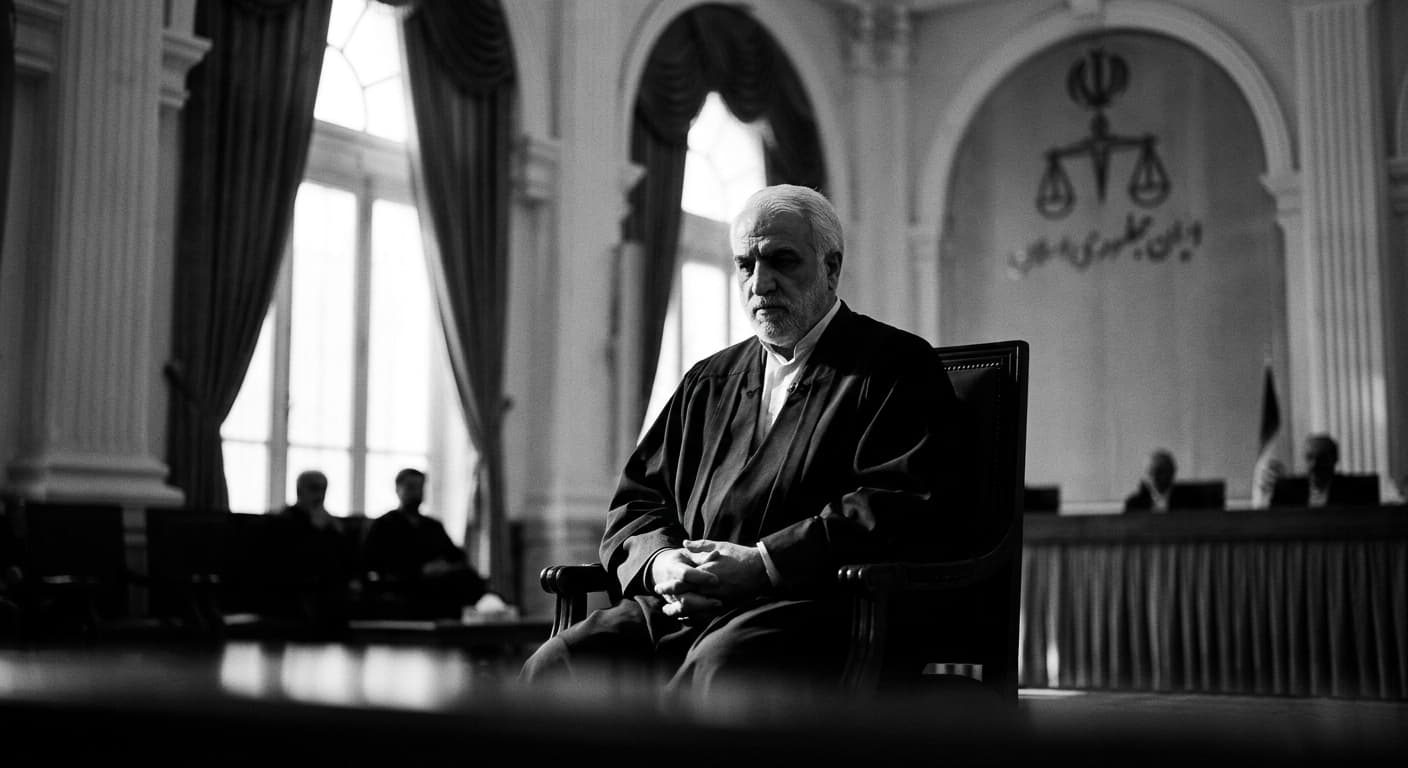
Iran's new leader keeps hardline judge Ejei — a war-time signal
Mojtaba Khamenei's first major decree reappoints Gholam-Hossein Mohseni-Ejei as chief justice for five years, locking in Iran's security-focused judiciary through 2031.
The most consequential decision of Iran's new Supreme Leader was not made from a podium — it arrived in writing, in the middle of his father's funeral. On July 5, 2026, as the coffin of Ayatollah Ali Khamenei moved from Tehran toward Qom, a communiqué signed by his son Mojtaba reappointed Gholam-Hossein Mohseni-Ejei, 69, to a second five-year term as chief justice of the Islamic Republic, according to Al Jazeera. The move, issued under Article 157 of Iran's constitution, tells you three things at once: the new leader plans no reset with Washington, no thaw with Israel, and no relaxation of the domestic crackdown that has produced the highest execution rate in the region. It also tells you who is actually running the country while Mojtaba stays hidden.
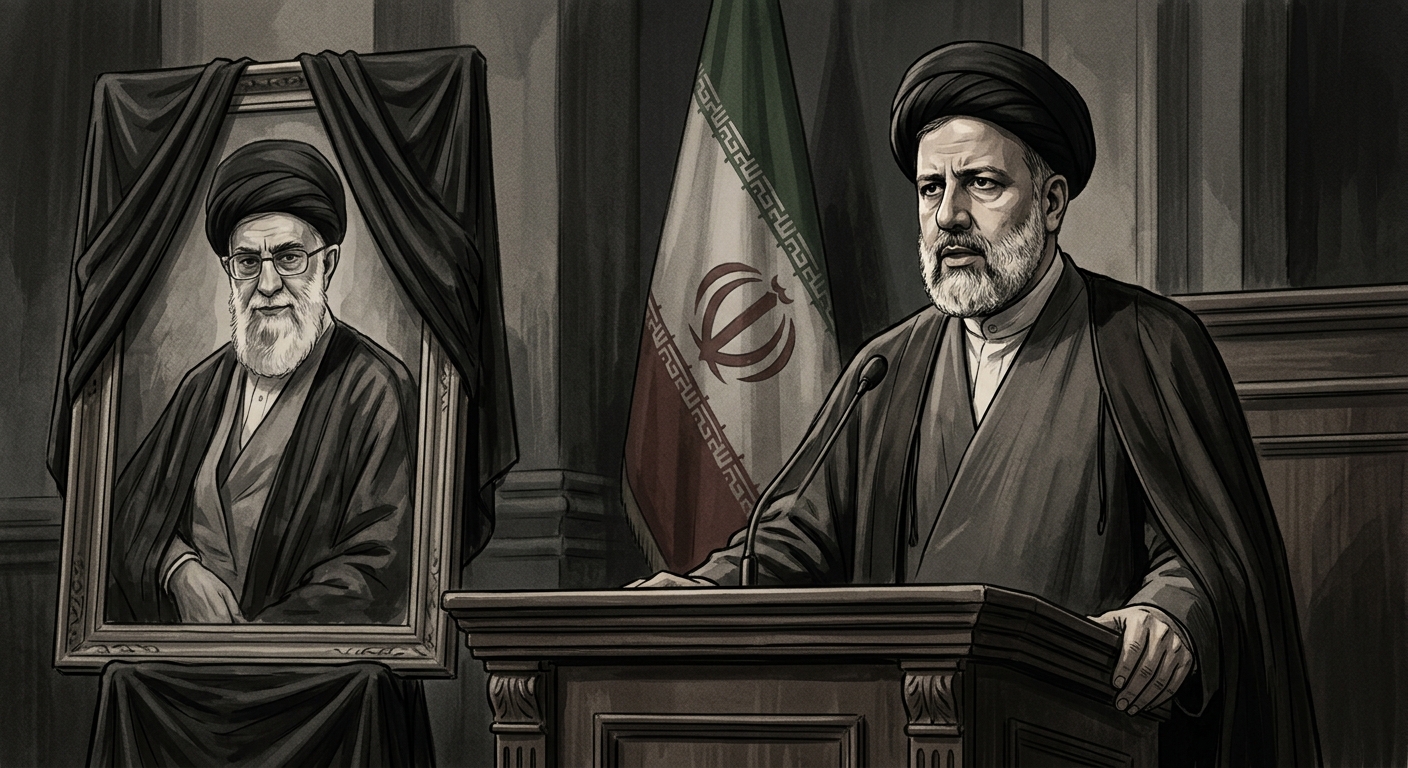
A written decree, an invisible leader
Mojtaba Khamenei has not been seen in public since he was named Supreme Leader in early March 2026 by the Assembly of Experts, according to BBC News live coverage of the funeral. He was wounded in the Israeli strike of February 28 that killed his father, his mother, his wife Zahra Haddad-Adel, and other family members — an account confirmed by
Reuters sources close to his circle. Israeli Defence Minister Israel Katz has publicly designated him "an unequivocal target." He communicates only through signed statements.
The Ejei reappointment is therefore doubly loaded. It is the first substantive act of Iran's third supreme leader — the debut policy signal from a man the BBC noted has "not appeared on video or in public since before his appointment." And it was staged inside the choreography of the funeral itself, a procession watched live by millions and moving from Tehran to Qom, then to Najaf, and finally to burial in Mashhad, according to
BBC News. Continuity, not transition, is the message the office is manufacturing.
That message required overriding an earlier signal. In April, Iran International reported that Mojtaba had decided not to renew Ejei's mandate. The reversal — under wartime, sanctions, and street unrest — is itself evidence of who has leverage inside the system now.
Who benefits: the IRGC and the security establishment
Mohseni-Ejei is not a reformer, a technocrat, or even primarily a jurist. He is the Islamic Republic's most experienced security-court operator. Iran International laid out his arc precisely: an investigator in the 1980s case that broke Grand Ayatollah Hossein Ali Montazeri's political standing; intelligence minister under Mahmoud Ahmadinejad through the disputed 2009 election; prosecutor general; first deputy judiciary chief; and, since July 2021, the head of the judiciary. He is one of only a handful of officials fluent in all three arms of coercion — Intelligence Ministry, Revolutionary Courts, and general judiciary.
The US Treasury sanctioned him in September 2010 under Executive Order 13553, naming him for "serious human rights abuses" tied to the post-2009 crackdown; the European Union followed with parallel human-rights designations. Under Article 157 of Iran's constitution, the judiciary chief must be a "just mujtahid well versed in judiciary affairs," appointed by the Supreme Leader for a five-year term — a position that in turn controls the Supreme Court chief and the prosecutor general, per an analysis by the
IRAM Center in Ankara.
The winners of his reappointment are easy to name. The Islamic Revolutionary Guard Corps — which the Council on Foreign Relations describes as the institutional spine of Mojtaba's power — gets a judiciary chief who has never obstructed a security prosecution. Parliament Speaker Mohammad Baqer Qalibaf and Supreme National Security Council secretary Ali Larijani, the two IRGC-linked politicians the
BBC profile identifies as running Iran's day-to-day war effort, retain a compliant third branch. The losers are equally clear: President Masoud Pezeshkian, the nominal reformist, and the small circle of clerics around Hassan Khomeini, who had lobbied for a moderating gesture at the top of the judiciary.
The execution graph is the policy
To understand what "continuity" means here, look at the numbers under Mohseni-Ejei's first term. Iran executed at least 1,639 people in 2025 — the highest total since 1989 and a 68% jump from the 975 recorded in 2024, according to a joint report by Iran Human Rights and Together Against the Death Penalty (ECPM) covered by BBC News. Amnesty International's parallel count reached 2,159 for the same year, its highest recorded figure since 1981, per
BBC reporting.
The UN Special Rapporteur on human rights in Iran, Mai Sato, wrote in her advance report to the Human Rights Council that authorities executed "at least 100" people in January 2026 alone, and that Revolutionary Courts handed down 852 death sentences during 2025. A joint statement by five UN special rapporteurs, reported by
BBC News, described a pace approaching "nine hangings per day" and called it "industrial scale." Amnesty documented at least 42 politically motivated executions since the war began on February 28, per
Iran International.
Mohseni-Ejei himself has publicly defended this trajectory. In April, he told judicial authorities that international criticism of protest-related death sentences would not sway his courts, per the BBC. In May,
Al Jazeera quoted him warning that hoarders, price-gougers, and those selling expired goods would face "decisive" legal action — up to 20 years in prison, lashings, and fines — as the US naval blockade tightened.
What the reappointment forecloses
Read against Article 157's five-year clock, Ejei's reappointment carries Iran's judicial doctrine to July 2031 — past the next US presidential cycle and past any plausible near-term settlement of the current war. That is the point.
Three specific windows are now narrower:
First, the nuclear file. Trump has repeatedly said he wants a role in choosing Iran's next leadership. Foreign Affairs analysts argue in The New Khamenei that Mojtaba's very selection was a defiant rejection of that demand — "the regime opted to elevate a figure representing resistance to foreign pressure." Keeping Ejei — a US-sanctioned enforcer — as the state's legal face signals that any de-escalation bargain will not include a domestic reform gesture.
Second, protest management. On January 10, 2026, the Prosecutor General ordered provincial authorities to pursue nationwide-protest cases "decisively and without leniency," and prosecutors in Ilam province classified protest acts as moharebeh — enmity against God, a capital offence — according to Special Rapporteur Sato's Human Rights Council report. At least 30 death sentences have already been imposed on protest defendants. Ejei's reappointment is a guarantee to provincial judges that this policy has cover from the top.
Third, the succession question itself. Ejei's own name has surfaced in past speculation about a supreme-leader placeholder or three-person leadership council — a scenario RAND analysts described as the "digging in" option. By locking him into the judiciary, Mojtaba both uses him and cages him: Ejei is now indispensable at his current post, and therefore less available as an alternative apex figure if Israeli strikes decapitate the office again.
The regional read-across
The reappointment matters beyond Iran's borders for a reason not yet in the wire copy: it defines the interlocutor Gulf states and Qatari mediators will face in any ceasefire architecture. Qatar has been mediating between Iran and Trump's envoys, per the BBC. Any prisoner-exchange, hostage, or dual-national file — the kinds of confidence-building measures that historically precede a nuclear track — passes through the office Ejei now controls until 2031.
For Israel, the message is simpler still. Katz's threat against Mojtaba during the funeral, quoted by Al Jazeera, presumed a leader who would be visibly decision-making. Instead, Israel now faces an unseen supreme leader delegating to a judicial-security machine it cannot degrade with an air strike. The war has succeeded in killing the top of the pyramid; the reappointment shows the pyramid has thickened underneath.
For a broader map of the current escalation across the region, see Diplomat's conflict coverage.
What to watch next
- Chief of the Supreme Court and Prosecutor General: Under Article 162, Ejei will nominate both in the coming weeks, in consultation with Supreme Court judges. Names to watch — whether IRGC-linked jurists or the pre-existing bench — will confirm or complicate the hardline signal.
- The espionage bill at the Guardian Council: A draft redefining "collaboration with hostile states" — punishable by death — to include online communication and "ideological alignment" is under review, per the
UN human rights office. Passage would give Ejei's courts a formal wartime tool.
- UN Human Rights Council 61st session (September 2026): Special Rapporteur Sato's full report on 2025 executions is due, per
OHCHR. Expect a formal call for state-level diplomatic pressure that Gulf capitals will have to respond to publicly.
- Mojtaba's first public appearance: Iranian officials cite assassination risk. The longer he remains invisible, the more the reappointment functions as Iran's actual public leadership signal.
Diplomat View
Mojtaba Khamenei's first act as Supreme Leader is a written contract with the security establishment: the IRGC keeps its judicial cover, and the domestic execution apparatus that produced 1,639 hangings in 2025 continues without disruption through 2031. This is not merely continuity — it is a wartime consolidation. A leader too vulnerable to appear in public has bought institutional loyalty by re-anointing the enforcer who was already delivering the crackdown.
The forecast: any Qatari-brokered nuclear or ceasefire track will move slowly and produce, at most, transactional prisoner swaps — not domestic liberalisation. Expect the execution rate to remain at or above the 2025 record for the rest of 2026, and expect the espionage bill to pass the Guardian Council before year-end. The call is falsifiable in three ways. It would be revised if (1) Mojtaba appears in public and announces a partial death-penalty moratorium; (2) Ejei is replaced within twelve months by a lower-profile jurist without an intelligence background; or (3) Larijani secures a formal negotiating mandate that ties Ejei's hands on political prosecutions. Absent those signals, Ejei is Iran's public face until 2031, and the war's domestic ledger will keep growing.
Discover more
US Politics
House Ethics Committee Pushes Sexual Miscond.
The House Ethics Committee has shifted responsibility for sexual harassment settlement records to the Office of Congressional Workplace Rights, complicating disclosure efforts.
US Politics
Next Generation Republicans
A leaked survey shows 39% of Republicans under 30 do not identify as MAGA, revealing a split in the GOP's future leadership.
India
Rajnath Singh's Durga Squad for 2026 Polls
Rajnath Singh's Durga Squad promised women's safety in Bengal but has since disappeared from the agenda, revealing BJP's true priorities.

Economics
Fed's Amex AML order puts correspondent banking on notice
Federal Reserve's Amex AML order requires board-level controls and a 90-day plan; OCC fined the bank $350 million over enterprise-wide deficiencies.