Iran Airspace Closure Disrupts Rubio's Visit
Tehran's airspace lockdown raises stakes for US-Iran talks.
Model Diplomat3 min readMiddle East
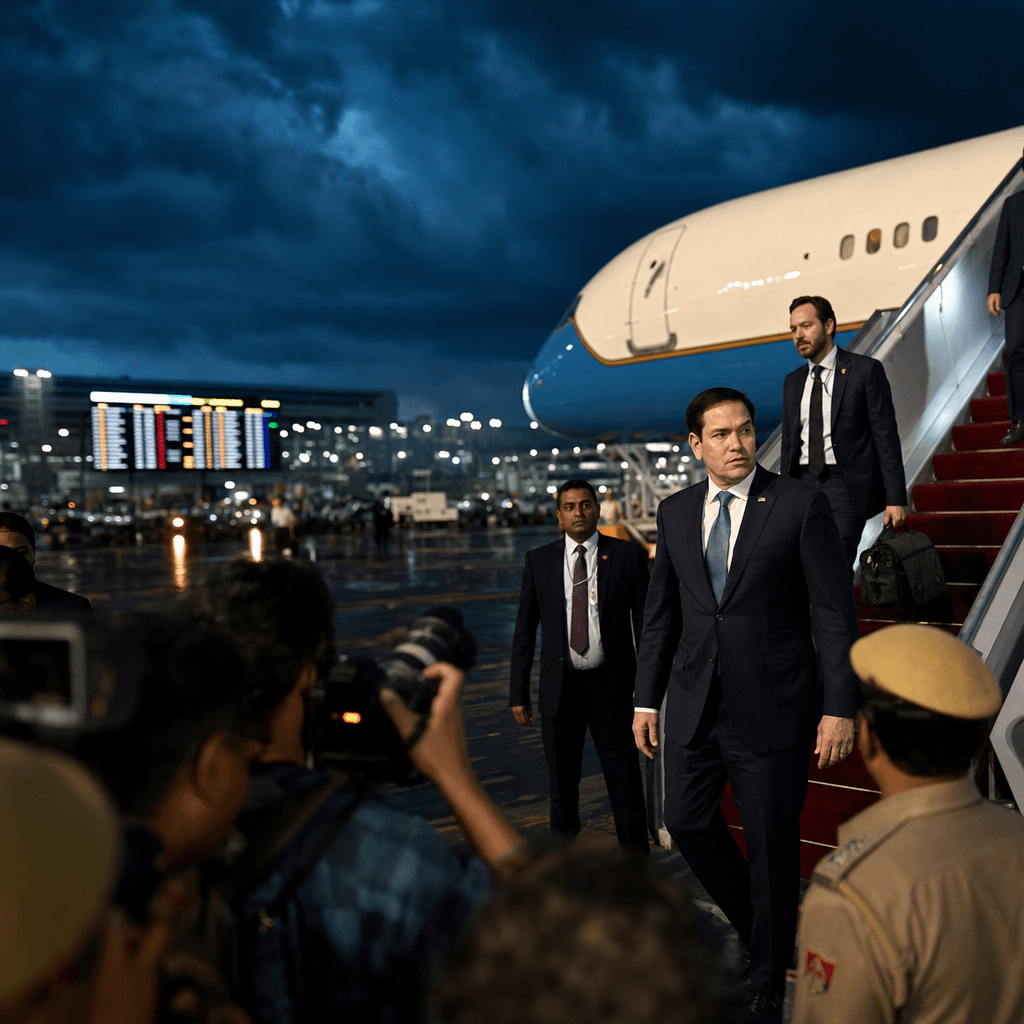
Iran’s airspace lockdown puts Rubio’s Delhi visit on edge
Tehran’s western airspace closure and Rubio’s upbeat tone in Delhi show the same thing: the US-Iran track is now moving fast enough to produce either a deal or another strike.
Iran has temporarily closed the western half of its airspace until May 25 and suspended civil flight permits there, as Washington weighs fresh military action and mediators push to revive stalled US-Iran talks, according to The Indian Express. The message is not just operational; it is leverage. Tehran is signaling that it can raise the cost of escalation immediately, while also showing it still has enough control over the battle space to shape the diplomatic tempo. In Delhi, meanwhile, US Secretary of State Marco Rubio said there had been “some progress” in the talks and suggested there could be something to announce “later today, tomorrow, in a couple days,”
Al Jazeera reported.
Tehran is using the airspace as a pressure valve
The immediate winner from the closure is Tehran’s negotiating position. By constraining civilian aviation and highlighting only eight operational airports, Iran is reminding Washington and regional capitals that the conflict is already disrupting normal movement and commerce, not just military assets, The Indian Express said. That matters because the US threat is now paired with mediation, not pure coercion. Iran’s parliament speaker Mohammad Bagher Qalibaf warned that any new US strike would be “more crushing and bitter” than the first day of war, while Pakistan’s army chief Asim Munir was in Tehran in what multiple outlets described as a mediation push,
The Indian Express and
Al Jazeera reported.
That combination matters. Tehran is not just threatening escalation; it is using controlled disruption to make diplomacy the cheaper option for Washington.
Delhi is now part of the Iran file
Rubio’s India stop is no longer only about trade or the Quad. Reuters says the visit is meant to repair ties strained by tariffs and by Washington’s warmer posture toward Pakistan. But the Iran war has become a direct India issue because it hits energy prices, shipping risk, and the security of Gulf supply lines that India depends on.
That is why Rubio’s remarks in New Delhi matter beyond the nuclear track. If he is right and a breakthrough is close, India gets some relief on energy and logistics. If he is wrong and talks collapse, India faces a more volatile Gulf, more pressure on oil imports, and a harder balancing act between Washington, Moscow, and Gulf suppliers. New Delhi has already been forced to manage the knock-on effects of the conflict while trying to preserve room for maneuver, Al Jazeera reported.
For India, the question is not whether the US and Iran can posture. It is whether they can settle on rules that keep the Strait of Hormuz open and prevent another energy shock. That is why this belongs on the India file as much as the
Global Politics page.
What to watch next
The next decision point is immediate: whether Washington turns Rubio’s “progress” into a draft text or back into a threat. Watch for three things over the next 48–72 hours: a formal US readout from Delhi, any Iranian move to extend or reverse the airspace closure, and whether Pakistan’s mediation yields a second meeting or stalls. If there is no announcement soon, the market will read that as breakdown, not pause.
Discover more

Global Politics
US Seizes Iranian Ship, Tensions Surge
The US seizure of the Iranian ship Touska highlights a shift in control over the Strait of Hormuz, favoring Iran's strategic position.

Conflict & Security
Drone Warfare Killing Aid Workers at Unprec
Over 1,000 humanitarian workers killed in three years as cheap armed drones collapse legal protections. Gaza, Sudan, Ukraine, and DRC see deliberate targeting of aid convoys and hospitals with zero prosecutions.

Global
World Normalises Taliban as Afghan Women Eras
UN data shows Afghan women erased from public life as Russia recognises the Taliban, EU hosts officials in Brussels, and ICC warrants for gender persecution go unenforced.
Conflict & Security
West Africa Food Crisis: Three Shocks in 2026
Conflict, climate extremes, and the Strait of Hormuz closure drive a severe food crisis in West and Central Africa, with fertilizer prices surging 80% and millions displaced.